Amy McMillen - Leaving a Path That Makes Sense (Podcast)
I connected with Amy McMillen in the early stages of Covid when a zoom meetup every night was normal. I was excited to discover she had been writing about her journey leaving a path that made sense and stepping into the unknown.
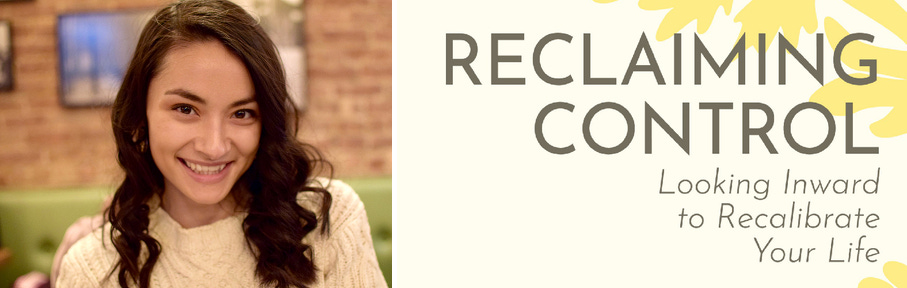
She launched a book about this journey, Reclaiming Control, which I read over two days. I’ve been talking to people about similar journeys with people for the last several years, but to sit down and follow Amy’s journey through a 100+ page book was a new kind of experience.
A year ago I was in the “writing books is so 1900s, why not just write online?” but after reading Amy’s I came away thinking it would be great if there were 100 similar books like this. In my call for more creators, I made a loud call for more creators and this book convinced me its a good thing.
We think that no one will care about our story. But I’ve come to realize that people don’t want to follow your path, they are interested in following someone’s story and saying, “hey I’m not alone!”
I had this feeling when I read this passage in the first chapter:
So, yes, I quit my job. I have zero plans for what I’m doing. If you ask, I’ll only tell you that I’m going to spend some time traveling with my family. Because truth be told, that’s all I know right now. Don’t worry, I am not here to tell you to quit your job and travel the world. In fact, I’d highly advise against it (at least for now)
Podcast Conversation
- 0:00 – Introduction
- 1:12 – How Amy Introduces Herself
- 5:08 – Grappling with what “success” means to her and why she put so much pressure on herself
- 8:45 – The cognitive dissonance of wanting to take a different path and not doing anything about it
- 11:30 – What it was like right before quitting her job “I have zero plans for what I’m doing”
- 15:51 – Moments from the first few months of “non-work”
- 20:10 – The process of writing a book and making sense of her own story and narrative
- 25:00 – GROUP Q&A
- 25:05 – How Amy processes grief and how she thinks about it now
- 27:20 – Mental health & happiness as she made the shift
- 31:15 – What habits help grounded her? Journaling and meditation
- 39:00 – Why she wouldn’t allow herself to question her happiness
- 46:00 – Amy’s go-to reflection questions
- 52:33 – Making money and the creative journey
Three Excerpts From Reclaiming Control by Amy McMillen
“I wanted something different while never having the courage to do anything about it”
When I decided to go to Costa Rica to get certified in permaculture design, all I knew was that I was pursuing an interest. I didn’t know that I would get a glimpse of what it meant to be free.
Sitting in an open classroom made out of bamboo, Scott told us he committed to a desk job years ago after studying economics in college, only to take a road trip throughout Latin America that extended for the next ten years.
Eating her daily diet of mangos, jackfruit, and coconut, Ana shared how she designed apps in San Jose, only to realize that the user experience she was designing didn’t quite align with what her body needed at the time.
Swinging on a hammock outside our bunkhouse, Sarah recalled how in her high fashion career in Australia, she witnessed her team bickering for almost an hour back and forth around how yellow the color of a button on a dress should be. At that moment, she knew she couldn’t do it anymore.
I thought about the many hours I spent in meetings deciding the equivalent of what color buttons should be. I was working with an online system, not dresses, but the sentiment was all the same.
Unlike Sarah, however, I couldn’t pinpoint a specific moment when I decided that I had had enough. My journey instead was a slow-burning cognitive dissonance—a soft underlying knowledge that I wanted something different while never having the courage to do anything about it.
It was probably a week after I started my first full-time job when I was already listening to podcasts about people who had quit their conventional corporate lives to pursue something different. Though I listened to these people’s stories day in and day out, their decisions never seemed accessible to me. I didn’t want to simply quit and travel the world just to travel, nor did I have a successful side hustle that could sustain me, nor did I have a brilliant start-up idea. I felt lost and stuck, simultaneously pulled in a million different directions while feeling empty and blank whenever I thought about what I wanted.
Spending two weeks with over thirty people from all around the world from age twenty-one to seventy or older was the first time in my adult life that I felt surrounded by people who knew how to be free. We were on a ranch in Costa Rica because we wanted to be, not because anyone expected us to be.
How novel it seemed to have conversations beyond how sick and tired you were of your job, how annoyed you were at your boss or team, or to answer, “How are things?” with more than, “You know, same old same old”
I thought finding a new job would be the answer, which led me to explore other positions in tech, product, and venture capital. I’m thankful that I went through this process, which gave me the confidence that if and when I wanted a new job, I would be able to get one. It also taught me that hopping to another job wasn’t quite the answer. I needed to do a lot of internal work on how to control my current thoughts, feelings, actions, and results no matter the circumstances.
The people I met through permaculture not only lived free lives externally, but internally as well. Many days we started class at 7 a.m. and later had evening sessions of group work or extra learning. It wasn’t quite the beaches and waterfalls that my coworkers were probably envisioning my Costa Rica vacation to consist of. In that bamboo classroom, sipping on fresh coffee and eating raw cacao beans to stay awake, we learned about water, soil, fermentation, agroforestry, and composting. With the ranch as a living classroom, we applied the skills immediately.
Externally, our days seemed long and arduous, but we never experienced it that way. Who knows if I will ever use some of the skills I learned? Will I ever need to graft a plant or dig swales? Maybe, maybe not. All I knew was that the low-grade anxiety I learned to live with in my day-to-day life back in New York was gone. To live a life filled with beautiful things you wanted to do and learn—what a thought! With each passing day I soaked in the lives of those around me who were living intentionally, I began to see the possibility that I could do the same.
Living in the jungle with people whose lives were so completely different from mine taught me that I could do something beyond my constructed bubbles of tech, finance, and start-ups. The people showed me there were more possibilities and that these possibilities were possible for me, too.
“This Is My Life”
This is my life now. This is my life now. This is my life now.
I fill the page with these words as I sit on a slab of rock, looking out at a lake in the middle of Wyoming.
I had lived most of my life in preparation for something. In middle school, I was preparing for high school. In high school, I was preparing for college. In college, I was preparing to get a job. After graduating, I turned to what I saw everyone else preparing for, including promotions, next jobs, or graduate school. There’s always a next step.
At first, I wonder what it would be like to press pause for a little bit. Just to catch my breath. What I realize, however, is that I don’t simply want to press pause. I want to live in the present, not as a ghost daydreaming about the future or hung up on the past. I want to allow myself to dream, and then live those dreams in real time.
My shoulders tense and my stomach knots as I think about actually living life and questioning what I want.
I don’t know what I want. I’m too indecisive to live my own life.
Feelings of self-doubt and overwhelm cloud my mind for a bit until I get annoyed. I say, “I don’t know,” to almost everything; I’m even sick of it myself. It’s the same feeling when I’m at a restaurant staring at a huge menu, and the server has already come around three times to ask what I’d like to order. “Just a little more time, please,” I always sheepishly respond.
I toss a pebble into the lake, watching it create ripples upon ripples. Impatience bubbles up inside me, letting me know that my time is up.
This is my life now.
“No longer procrastinate in living life”
Deciding to no longer procrastinate in living life leads me to see things in a different light. I actively choose what I give time, attention, and energy to. I write beautiful stories about watching the sunrise, playing with my niece, and reading by the fireplace. I give my body time and space to rest and heal, knowing I will be more prepared for whatever comes my way.
Transcript
I had a great conversation with Amy McMillen via a live group conversation and we talked about her journey of leaving her full-time job WITHOUT a plan, what it felt like, what she learned and how she ended up documenting it in a beautiful book during the pandemic. Our full conversation, including Q&A can be found here: YouTube Link
Read the full transcript
Paul: Awesome. So Welcome to this conversation about work. We have Canada, San Diego, Chicago, Connecticut in the house, and New York. And welcome to this conversation/podcast, Amy. So I was excited to connect with you and then discover some of your writing, I think back in March or April, early when there was like one live event on Zoom every night that people were a part of. And then discovered some of your writing, saw that you decided to leave your job after a year of working, which is way more impressive than my leaving after 10 years.
And was excited to see just how you're thinking about it. I'm curious about the rise I see in younger people leaving earlier, what that's all about, and just like what the experience was like for you. And then what led, led you to write a book. So welcome to this conversation, Amy. Do you want to give a brief intro in whatever terms you want to share?
Amy McMillen: Yeah, sure. Thanks, Paul. So in terms of introing, it's always hard, I think, to intro myself after I quit my job, because before I used to always say, oh, I work in product, or I'm a product manager, I live in New York City, blah, blah, blah, right? So after that, now I like to say, hey, I'm Amy. I'm currently on a little break taking a creative sabbatical. I like to write, read, do nothing, meditate, and be in nature.
So I, I think that introing ourselves beyond our work is really important. And I'm sure people here can also resonate with that, just really separating our identity beyond that. But yeah, in terms of like the journey of quitting my job only a year in, so I think we can rewind back to when I decided to take that job. And that was my fourth year in college, the fall before I graduated. And that was a time when I was feeling really, really pressured just to like take an offer. It was in October and there was like 8 months before we were graduating, but everyone was signing offers and recruiting and all of that.
And I had a lot on my plate and I was wondering like whether I should take a gap year just to travel because I'd always wanted to do that. Or if I should go to grad school, or if I should, you know, do what I saw mainly what everyone else was doing. And I ended up just taking the easy route, I think, just because it was a really stressful decision and it was a good paycheck and it just seemed like the natural thing that made sense. All my friends were moving to New York, everyone was working in either tech or banking or consulting, and I was just one of them, and that was that. And I had a lot of internal strife around that decision, I think, but then once I made it, I was like, okay, I'm not gonna, I'm not gonna go back on this. What's done is done.
And, you know, moved to New York and had a great time overall. And I go into this a little bit in the book where I was surrounded by these bubbles of the same type of people, right? Pretty much everyone was like me, like from a top college, working in the city, working in these industries, working, working in these environments. And it was very, very hard for me to meet people beyond these bubbles. And I was feeling quite restless, quite dissatisfied with my position, and I thought that taking another position, another job, would be the answer. So I started recruiting, uh, pretty much like 6 months into my role, and that clearly was not the answer.
That wasn't quite what I was looking for, and it took me really for myself to get entirely out of that environment for me to even recognize that, oh, there are other possibilities and there are other ways of living. And I always knew that, but I never thought it would be a possibility for myself as well. Like I never saw myself in the shoes of those people just because I was like, oh, like that's great, they're living their lives, they're living their dreams, but that's not for me. Um, so only when I was out of that, I was able to see that that could be for me as well.
Paul: Yeah, it's, it seems like growing up you were so good at like everything, right? So you, you were literally the top of your class. Do you look back now and kind of realize you had this script of like what you were supposed to do? Um, and. I found another striking thing, like you almost had developed this incredible capacity for pain. And you talk about some of the health issues you faced.
That's pretty powerful. But yeah, what, what did you internalize? Like, what was the script you think you were operating on around like what life was supposed to feel like?
Amy McMillen: Yeah, I always wonder about this because it wasn't so much an external script. Like, yeah, we all hear from society and friends from things like, you know, going to a good college is great and getting the job and whatever. But my parents were never like, do this or do that. They always, I mean, expected excellence, I guess. And they really instilled that from a young age. And I guess being good at things or being smart or being at the top of my class I guess I maybe internalized that expectation of, oh, I have to keep on doing things that will make me look good and will make me stay on top and play that game of prestige because I was so used to being in that prestigious role or like, you know, being valedictorian or like captain of debate team or things like that.
And those little gains just, I guess, probably fed into that, that whole mindset. And it's interesting you bring up that tolerance for pain because I hadn't even really seen it that way. But now that you say that, I think that's true. And partly I thought it was more so my ability to not like suck it up and move on, and maybe that is. And the title of that chapter around health is This Too Shall Pass, and I really internalized that phrase when I was younger. And that's probably— that probably plays into the whole, uh, to the whole pain management and pain tolerance.
Like, okay, this is painful now, but there is there's going to be a time where this is going to get better. And that's kind of the mindset I think I had almost all throughout until last year. Like, yeah, high school is painful. Middle school sucks, but it'll get better. High school sucks, it'll get better. College was okay, but it's an emotional roller coaster for many.
And almost every semester in college, I was like, okay, just got to get through finals, just got to get through like the next thing, the next thing. And it'll get better. And then during work, I was like, okay, when is this gonna stop? Like, there's no next step to get over, uh, unless I make it happen.
Paul: So yeah, and you talk about this slow-burning cognitive dissonance, which resonates with so many of the stories I've seen from people. It's kind of like this little feeling that has always been there and never goes away, probably amplifies, dulls over time. Sometimes it's more intense. But when do you think that first started to appear and when did it become too much to ignore? Hmm.
Amy McMillen: It first started appearing when I was very young, I would say. I think I remember this Maybe starting from like ages 11 or 12, and not in the same way obviously, but something like, like I remember like flipping through like college books and wanting to apply to top colleges in middle school, like when I was 11 or 12, and I always knew that it wasn't something that I really wanted, but I should probably just do it. And I always had that dissonance like, okay, well, why am I going through these actions if it's not really for me? But then I was like, okay, no, this is what I should be doing, so I'm gonna keep on doing it. And that really followed me all the way through, through college. I mean, in college, I, I had my phases of you know, joining the business fraternity and getting really involved in like corporate pre-professional things.
And then I had a complete 180 and was like, no, I don't want to do that. I don't want to be anything like that. And got more involved with social entrepreneurship and nonprofit work and startups. So I was constantly like going back and forth. And I think my, my phases in college really represent that cognitive dissonance because like one semester I was in this and one semester I was in that. And only I think when I started building projects of my own and really starting to surround myself with other like-minded people who were more like values-driven, I started seeing more consistency and more sustainable projects and things that I wanted to be involved in.
And obviously I can only say this looking backwards, and now it makes sense. But at the time I was just, yeah, like really trying to grapple with that dissonance.
Paul: Yeah. So you talk about right before leaving and You say, so yes, I quit my job. I have zero plans for what I'm doing. If you ask, I'll only tell you that I'm gonna spend some time traveling with my family. But truth be told, that's all I know right now. Don't worry, I'm not here to tell you to quit your job and travel the world.
What did your friends and family say with that approach? I know when I left, every single person wants to know your plan. What's the plan? How are you gonna pay rent? Are you gonna build a business? What's the deal?
Are you gonna hire employees? Do you know how much money you'll make? How much— or do you have savings? Like, it's pretty crazy how you taking a bold leap unlocks a lot of uncertainty and discomfort in other people. Talk to me about like when you made this news public in your friends and family and like what the reaction was like.
Amy McMillen: Oh man. Yeah. So So I decided to quit and leave. I think it was around mid-April of 2019. Yeah. So I told my parents and family shortly after and they were completely on board.
They were actually kind of wanting for me to do this for a while. I know, right? Like I was very surprised. And I think that just goes to show, like, I don't know why I was internalizing these expectations from them or I thought they wanted me to do something. For them, I think it was more so like health-related. Like, they really wanted me to focus on my health, and they were just like, you know, come home, like, come stay with us.
I'm like, okay, well, that's not really what I'm going for here. So their, their reaction is probably more selfish than anything. But, um, for like, my sisters were completely on board as well. Like, my middle sister, she actually had like a 2-year hiatus post-graduation and did her own traveling and gap years. So she very much understood where I was coming from, and I think having her already done that kind of also paved the way for me to know that it was gonna be okay, and I could always just find a job like she did right after if, you know, all things failed or if all things succeeded. Friends-wise, I didn't really tell many friends until I was 100% sure that I was going to do this because I didn't really want them to dissuade me or anything like that.
So I, I think I talked to a couple of close friends when I was deciding and got their opinions. And honestly, like, everyone was so, so supportive. I'm so grateful for that. And there were questions for sure, as in like, you know, what's the plan? What are you gonna do? And I think at that point I was pretty comfortable saying that I didn't have a plan.
And my only, my only plans were actually to go to— or I was taking a cross-country road trip, I knew that for sure, over the summer. And then I was I'm gonna be traveling around for a couple of conferences, and then I knew that I was going to China in the fall with my family, or with my mom, to visit my family on that side. And so I told people, you know, like, I have my plans pretty much till October, and I told them not to ask beyond that, and they were, they were okay with that. So I think just having or at least pretending I had the confidence to not have a plan made them okay with it as well. But yeah, I do think that a lot of people start to recognize or unearth certain anxieties when people do something like this because one reaction I got a lot of was, wow, I'm so jealous, like I wish I could do that.
And then, I mean, I wanted to say like, you can, like, I think I experienced that, uh, very much in the first few months.
Paul: Were there any moments that stood out in those first few months of traveling, of kind of just wandering into the unknown? I know I shared, uh, a quote from you, uh, from Rebecca Solnit, and I think about it a lot. It's that thing. Of nature which is totally unknown to you is usually what you need to find, and finding it is a matter of getting lost. Does that resonate with what you experienced?
Amy McMillen: It definitely does. I wish I, I read her book back then. I think it would have been really helpful. But yeah, for sure. And I think, I think my cross-country road trip, like, I was just in complete nowhere in national parks and in nature and in mountains. And just that environment was also super jarring.
Like, I moved out of New York, drove to Virginia, and then like 2 days later I was just, you know, on the road. Um, so it was like very quick turnaround with all of that. And because of that, I think Well, one moment stands out. I think I was— where was this? It was in the Badlands National Park in South Dakota. And there's a sign that says, like, beyond this point, self-reliance is key.
And you can take whatever path you want, but the whole point is that you get beyond your car and beyond the parking lot after this point. And that really stuck out to me because it was like, okay, like I'm on this journey and I'm not sure what path or where I'm going, but what matters is that I'm going beyond the parking lot, right? Like I'm going beyond the familiar and into the unfamiliar. And I think, I mean, the whole point of getting lost is to like unearth that unfamiliarity, right? Surrounding yourself in places where you don't know what's going on and when you don't know what's around you. And that was definitely scary, but I was, I think, intentionally doing that in a way.
So yeah, I was very much prepared for that and, and really wanted to lean in and dive into that. That's not to say I didn't have any second thoughts. Like, I was still applying to jobs at this point. That point, like continuing that dissonance. So I wasn't like 100% in until I don't even know when. Yeah.
Paul: Yeah. At one point, did you decide you wanted to write a book?
Amy McMillen: That happened in August. So a month and a half or a month after I quit. So like I said, I had zero idea what I was going to do. Right. And then I came across this book program called the Creators Institute. And I had known a couple people who had done it through Georgetown University.
And I had a chat with the professor who ran the program and very spontaneously decided to do it. And I had a couple of requirements for my time. And I wanted to like, get to know myself better and really be introspective, and I wanted to do something creative. And those are pretty much the only parameters I put on myself. So once I came across this program, I was like, okay, I've always wanted to write a book. I just didn't know when would be the right time.
And like, why not now? I have the time. That's something I do actually have. And that project meets my two requirements. For what I want to do. And at the time, I didn't really trust myself to do something completely on my own.
So I knew I wanted some external parameters and external accountability. So the program was a really good fit for me at the time. I think you're on mute.
Paul: Yeah, we— so we talked about this before others joined, but I think your book unlocked a couple things for me. One, I think it made me realize that I really resonated with some things in your book that just kind of resonated with me, even if I can't relate to the exact situation, which I think is really powerful. And I'm just thinking like, wow, I wish there were like so many more of these type of books of just kind of these small transitions in life and like sharing these journeys. We tend to only expect to have books from like I was in the bookstore the other day and there are 5 different books of like 78-year-old plus white men billionaires. And it's like, I'm a white dude, but I don't resonate with any of those stories. Like I resonate much more with what I read from you about just like common life stuff.
And then I think the second thing was that I think we think about these— writing a book or writing something is like, who's going to want to write it? Nobody wants to hear this. And I think it's probably just a powerful journey just to go through to get things in that sort of structure. What were the learnings for you through that process?
Amy McMillen: Yeah, definitely. So I think, I mean, throughout the time I kind of frame my whole book writing process as kind of like self-therapy for me because I had to really uncover a lot of the stories and expectations and everything that I had internalized, and I had to like go through memories and journals and really try to look for either patterns or lessons or something like that. And that's a lot of what talk therapy and therapy is, and really trying to like distill my experiences into something that even I resonate with, not like let alone other people. So I think I really I really recognize why people label it as self-help now, the category, because really the author is trying to help themselves get through something. And that was very much my experience. The book was my way of coping with everything, of not even coping, but really creating something of myself and uncovering those stories.
Just going through my life, like present, past, future, all of that. And like the book is just the product of— I mean, there are so many words, so many— like the process is what matters over, I think, what I actually created and the person that I become throughout that process. That is really what mattered to me. Beyond like any results of the actual thing itself. So I'm really glad that you resonated with it. And I think it's always so fascinating because I mean, I've, I've read a lot of, I guess, like self-help transformation psychology books, those kind of things.
And I never really resonated with a lot of their stories. Obviously, I love that whole genre and reading about those things, but I couldn't really find like young people or like women of different backgrounds, different ethnicities, or like mixed people, and I thought that was just something that was lacking from my own personal reading experience, so I decided to really focus on those points which were part of my experience as well.