Ervin Ling On Escaping The Corporate World At 30 To Travel The World
Ervin Ling followed the default path as an actuary, passing test after test. After passing all the tests, he found himself working harder than he was ever working. As he stared at the television and saw his friends on TV during a weekend trip to the Final Four, he realized he didn’t want to keep doing this. He declared (after a few drinks, nonetheless) to his friends, “If UConn wins the national championship, I’m going to quit my job.”
As any good number-driven actuary would, he didn’t quit his job immediately. He took about 18 months to plot his escape from the corporate world. During this time, he re-thought his relationship with money, his possessions and his relationships with friends and family. He ended up traveling around the world for 12 months. Here are some stats from his trip:
- Total USD spent: $24,740
- Total days on the road: 338
- Total countries visited: 38 (including the USA)
- Most days in a single country: 30 (Vietnam)
- Total number of miles traveled: 68,307 (109,925 km) – equivalent to circling the earth 2.7 times
- Air Travel: 51,044 mi (82,143 km)
After this trip, he still felt a pull towards living abroad and now lives and teaches English in Taiwan. This journey has helped him discover and invest a life he could be proud of.
Check out Erv’s site, which includes travel hacking tips, travel suggestions in Taiwan and pictures of food from around the world => ErvTravels.com
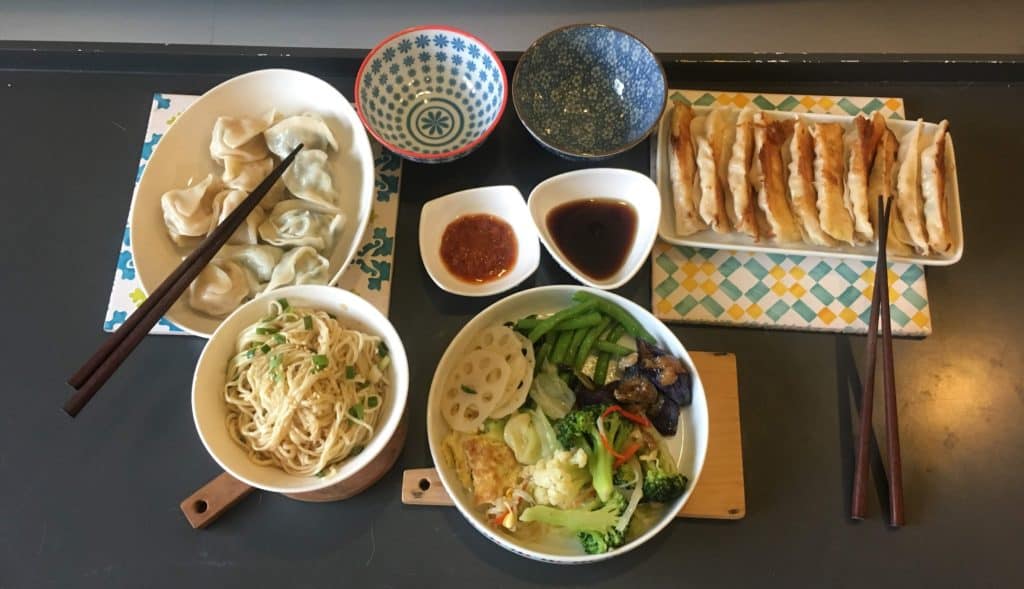
This podcast was filmed and we had a great spread of local Taiwanese food:
You can watch the full video version of the podcast here:
Transcript
Ervin Ling followed the default path as an actuary, passing test after test. After passing all the tests, he found himself working harder than he was ever working.
Read the full transcript
Paul: Here with good friend Ervin Ling, and in Taipei today. This is a live podcast, first one ever with food, but we'll be eating the first part. So we'll be eating some local great Taiwanese food. I might attempt some Chinese sayings. We also have a cat that is around. There's a video if you want to follow along, and we'll be diving into Ervin's story.
Much like me, quit his corporate job when he was 30, traveled the world for a year, has been living in Taiwan for the last year plus, and now teaching English. And we'll talk a bit about how he's reinvented himself here. So welcome to the podcast, Irv.
Ervin Ling: Thank you, Paul. Great to have you here in Taipei. Awesome.
Paul: So what, what are we eating here?
Ervin Ling: Well, here we just have some dumplings, a lot of dumplings, and we have some dry noodles and some vegetables. So this is a basic Taiwanese lunch. It's very quick and it's very cheap. This big spread here costs us about $7, $8.
Paul: Combined, right?
Ervin Ling: Combined. Combined.
Paul: So 3.50 each.
Ervin Ling: Right. This is a pretty well-balanced meal, I would say, and very delicious.
Paul: Awesome. So what— so I've been learning some Chinese.
Ervin Ling: Okay.
Paul: We have fried dumpling here.
Ervin Ling: These are the potstickers.
Paul: So this would be guotie.
Ervin Ling: Guotie.
Paul: Guotie. Awesome.
Ervin Ling: And don't take my Mandarin as the elite because I'm learning as well. Awesome.
Paul: So this is steamed dumpling with chicken.
Ervin Ling: Or is it boiled? Boiled.
Paul: Jiaozi.
Ervin Ling: Boiled are shui jiao.
Paul: Shui jiao. Jiaozi is steamed?
Ervin Ling: Jiaozi is just an overall term for dumpling.
Paul: Oh, all right. Nice. And then noodles, mian.
Ervin Ling: Mian.
Paul: Awesome.
Ervin Ling: And then you can just call this tai as an overall term for vegetables. Or so tight.
Paul: Right? Awesome.
Ervin Ling: How is it?
Paul: Pretty good. So we're gonna try and attempt to ask Irv some questions while we're eating. Definitely an experiment. The cat is in the picture now.
Ervin Ling: That's Haichu.
Paul: Haichu. You quit your job, traveled the world for a year, but I've talked to many people and I'm not sure anyone has been as methodical as you were in planning your leap. You did not just decide I'm gonna leave in a couple months. You decided, I think it was over a year ahead of time, right?
Ervin Ling: A year and a half actually.
Paul: So what was the moment when you were like, okay, I need to make a leap?
Ervin Ling: Well, it was actually a very, very exciting weekend and day that I planned to kind of take this leap. I was in Dallas, Texas for the 2014 Final Four, the national championship, men's basketball, and my alma mater, University of Connecticut Huskies.
Paul: Is that why you wear this shirt?
Ervin Ling: That's exactly why. It's the only UConn thing I have here in Taipei. So they were playing in the national championship. I was down there for the weekend. And just trying to enjoy the weekend with my friends, the atmosphere, all the festivities. And I was also, you know, it was just a weekend where I had to work as well.
Paul: Never fun.
Ervin Ling: Of course not, right? Who wants to work on the weekend? But I understood that, you know, there needed to be things done for my job, their responsibilities. So, you know, during that time, you know, in the mornings I would wake up early, go down the lobby, do what I had to do, send the emails. But then, you know, it came to a point where, you know, I saw that my friends, they were on College GameDay. I saw them in the background.
Paul: Oh man, that sucks.
Ervin Ling: And, you know, I was in the lobby doing my work. So, but it wasn't that exact moment where I said, okay, let's drop everything and go around the world or do something crazy. It was probably right as I was walking into the final game, UConn versus Kentucky. After a few beers and some tailgating, I threw it out there to my group of friends that I was with. If UConn wins the national championship, I'm gonna quit my job.
Paul: Oh my— so I didn't know about the stipulation.
Ervin Ling: Well, it was kind of a joke, obviously, but yeah, after UConn had won and, you know, the whole— all the emotions of the game and, uh, and having the result that we all wanted, wow, I said why not, you know? When they were an 8 seed?
Paul: I, yeah, I think we were definitely an underdog that year. 8?
Ervin Ling: Actually, I think it was a 7 seed because they beat Villanova, who was a 2 seed, round 2. So yeah.
Paul: So let's back up a bit. So you grew up in Connecticut like me. We met in college over 15 years ago. I think both of us were, I guess, what you would call like high achievers, good at tests. Good at school, good at getting grades.
Ervin Ling: I love tests.
Paul: And you, uh, you took a path to be an actuary, took a number of tests. Um, I think there's 8 tests you pass, and that's kind of like your progression through your career. Um, so looking back on like all of that you did, you always had the next test, the next like bump in your career, your salary. Do you wish you had taken a different path, or are you grateful for kind of going through that?
Ervin Ling: I'm certainly grateful for all the opportunities that I was given. You know, I have— my family is from China. They grew up in communist era, and now, you know, I kind of see the differences that growing up in China compared to the US, and there's certainly a lot of differences. So I'm certainly grateful for the opportunities I had to be able to go to UConn, get my degree, get a good job. And the, the process of it, it was pretty structured in my mind. I kind of had it all— I wouldn't say exactly planned out, but I knew that I wanted to go to college, get a degree that would allow me to find a good job and hopefully make some money and all the other steps along the line, which may or may not include getting a house, getting a family, things like that.
Paul: Yeah. I think, I don't know if this resonates. I mean, when I was growing up, there was kind of just an assumption that those things would happen and there's a path. Everything is easy path for you when you're younger with school. You just go to the next grade the next year, but you don't really know how it's going to happen. You just assume that is the path, right?
Ervin Ling: All right. And growing up in a fairly non-traditional, I would say, suburbia, suburban Connecticut home, had a single mom, so I saw how hard she had worked. And I knew that, you know, kind of part of the Chinese culture is you take care of your elders, you know, as they grow older. So that means you gotta make sure you can take care of them.
Paul: Right.
Ervin Ling: And that would mean money.
Paul: Yeah. But interesting, I think like most in American culture, money has become a way to like pay other people to take care of your family now.
Ervin Ling: That's true, yeah, but it's still not that way in China or in Asia in general. My mom actually plans to go back to China when she retires and buy a house there and kind of live in America and China as well. Awesome.
Paul: So UConn won the finals game, you decided you were seriously going to do this. Like, was there a waiting period before you started planning for the trip?
Ervin Ling: Well, first I wanted to figure out exactly what I wanted to do, or if I was going to travel, how long, where I wanted to travel. If I was going to pursue some other path, there's definitely some point of a portion of research and making sure that I was able to do it both financially, probably not financially, physically, but a little bit mentally. Yeah, I mean, it is a big leap coming, you know, from 9 to 5, 8 to 7, in some cases 8 to 8. Yeah, um, to kind of living on the road or just doing something non-traditional.
Paul: Awesome. So you plan the trip, you, you started making preparations. Um, how did just the mindset shift of knowing you were going on this trip change your behavior in the short term even though you're still working? Did it kind of reframe your relationship with money and how you're spending your time?
Ervin Ling: Oh, with money certainly. I knew I had to save money, and I knew that there were some expenses in my life that probably, you know, I certainly don't need within the next year or so before I left. And just kind of how I dealt with my relationships as well, with my friends and my job, of course, and how I would bring this up to my parents, my mom.
Paul: Yeah, so telling your mom, were you scared of doing that?
Ervin Ling: I wouldn't say scared. I would— I was a little apprehensive in terms of how she would react. Um, and I think from her perspective, I don't think she actually knew what was going on. Yeah, I don't think she's ever heard of anybody doing anything like that on Instagram. No. Yeah, she doesn't follow all the travel bloggers, right?
And, um, So, you know, I talked about it with her afterwards. She kind of thought it was, it was a phase, you know, that I would, you know, go out, have fun, do what I had to do, but then I would get back to maybe not the corporate life, but something to progress my life going forward, whether it was getting another full-time job, starting a business, doing something that would make me financially stable.
Paul: Right. So traveling the world for a year, you, so you documented this as any good actuary would do, down to like day by day, meal by meal expenses. And you were living in Chicago and your trip was actually cheaper to live than you were spending in Chicago. Did that surprise you that it was cheaper, or is that something you expected researching and going in?
Ervin Ling: I don't think it surprised me that it was cheaper, but that's also kind of how I like to travel and live. You know, I don't need to stay in hotels. Yeah, and eat fancy dinners, things like that. But also, I'm a pretty frugal person overall, but that didn't stop me from you know, just living life to the fullest when I was, you know, in these exotic places. The big difference I saw was just figuring out what I needed.
Paul: Yeah.
Ervin Ling: And what I— what were excessive. Yeah.
Paul: Did you overpack at the beginning? Certainly.
Ervin Ling: Yeah. After the first stop, I probably dropped maybe a quarter of What I brought. I donated it. That's awesome.
Paul: So what were some of the things that you think you didn't actually need when you were traveling?
Ervin Ling: People might have a different thought about this is a lot of the clothes. Yeah. You can always buy new stuff. I ended up buying a bunch of t-shirts and socks and underwear and things like that. And you can look at it as kind of wasteful. But it's more about, you know, what are necessary expenses.
You know, you need lodging, food, general security. But overall, it was, you know, I think the biggest thing I spent my money on was the travel insurance for the year. Oh wow. Like the single biggest expense. Yeah.
Paul: So how much did your trip cost? Is it around $24,000?
Ervin Ling: I think it was, actually I have to go back to the spreadsheet, my wonderful spreadsheets. I think it was somewhere around there. It could actually, it could be $24,000, $25,000, or $35,000.
Paul: That's still pretty good.
Ervin Ling: And you know, there was a lot of expenses. I had to get a new iPhone because I dropped mine in the ocean. Which actually the travel insurance paid for.
Paul: Oh wow.
Ervin Ling: Good purchase.
Paul: Nice. So what do you think holds people back from doing things like this?
Ervin Ling: Just most— I think just the unknown. They're not exactly sure what's out there. And it doesn't have to be travel. It could be anything that somebody wants to pursue, but afraid because of, you know, the financial insecurity. Whether— I think safety might be a concern to some people, for sure, depending on kind of where you travel, who you're with. Of course, traveling alone is certainly different than traveling with a group of friends.
And other than that, I think, like I said, just the unknown. They're not sure what's gonna happen. But that, you know, that's life. We can get hit by a bus tomorrow and that'd be it.
Paul: So what were the unexpected things when you were traveling? Did you come face to face with that uncertainty and try to figure out, okay, What actually am I doing? It's a pretty big shift from moving from the workforce to just kind of traveling, right? At first it's probably really fun. You're probably trying to meet everyone, but then you're probably settling more into a rhythm. You're grappling with— I think a lot of people have talked about loneliness when they're traveling.
You're kind of around a lot of people but not truly connected or like building those friendships. So how did you grapple with some of those things?
Ervin Ling: I think the big thing is to be flexible and certainly open-minded. And, you know, people say this all the time, go with your gut. And, you know, you can say no. Yeah, you don't have to say yes to kind of every event, every pub crawl, every you know, everything that's going on. I certainly took a lot of kind of me days where I just sat in the hostel or went to a park and read or listened to a podcast, just kind of chill. But other than that, it was more kind of deciding who I wanted to spend my time with.
Yeah, there's a lot of different kinds of travelers. And that's part of kind of being flexible. I was the kind of person where, yeah, I can go to, like I said, a pub crawl with these young 20-year-olds that just, you know, just want to drink and have fun. But I also, you know, I met a monk, I met artists and went to museums.
Paul: So let's talk about the monk. That sounds interesting. What was that like? Where did this happen? What was the—
Ervin Ling: This was in Buenos Aires in Argentina. He was a Hare Krishna monk, and he was kind of in between stays at a monastery. So he was just kind of like me, just traveling around, but in a different kind of— certainly a different way. He— we went to a really nice vegetarian dinner at a Chinese restaurant in Buenos Aires, Argentina, which is a little strange, but I certainly enjoyed it. But, you know, we kind of hung out for a few days, but, you know, I had to go on and he had to go his own separate way, but It's just one of those connections that, that you'll remember, but it's up to you to decide, okay, is this something that was worthwhile? Yeah.
Certainly I've had plenty of other conversations that, you know, I might have just forgotten. Doesn't mean they weren't worthwhile. It was just, you know, maybe not memorable, but it doesn't really take away from who that person is, because they're gonna have the same kind of connections with other people.
Paul: So at what point in this trip were you starting to visualize or see the end of the trip and thinking, oh boy, I have to come up with what I'm gonna do next? Like either in your head you can't do this forever, or it's about finding what is the path forward? All right, when did that start creeping in?
Ervin Ling: Uh, so I kind of had a vague plan of what I was going to do when I finished the trip, and it was an around-the-world trip, so by the time I got to Europe, the only one direction I, you know, could have gone was back to the United States. Yeah. Um, but even before that, I had decided that I wanted to learn Mandarin. I wasn't sure exactly what level I wanted. Obviously it would be great to be fluent, but because my family mostly speaks Mandarin, I wanted to have a better way of communicating with them. My Mandarin was not up to par.
Paul: Yeah, they speak a different dialect at home too, right?
Ervin Ling: That too, but you know, everybody in China speaks Mandarin. Yeah, so there were two places that, you know, I could potentially move to to kind of immerse myself, and that was China or Taiwan. So China was the obvious choice. I have family there. It's, that's, you know, the biggest country, the Shanghai, Beijing, where a lot of— there are a lot of foreigners as well. There's a lot of people that go there to work.
But after visiting Taiwan, I was here for a week during that trip, I kind of felt that, you know, it's a little more comfortable here. It's definitely a pretty good lifestyle.
Paul: Yeah.
Ervin Ling: What would you say, Paul?
Paul: I love it.
Ervin Ling: He loves it here.
Paul: But during your trip, you also went to China, right?
Ervin Ling: Mm-hmm.
Paul: And you spent— you visited some family. And I think, what was it, 1 month, 2 months in China?
Ervin Ling: It was 1 month total. It was 2 separate 2-week stints.
Paul: And what was that like? I mean, was that— that's the longest stretch since you had moved from China when you were very young that you were in China, right?
Ervin Ling: I actually visited every 4 or 5 years when I was going through school. And it's usually for a couple of weeks to see family. You know, it was, it was fair. It was pretty similar to those other trips. You know, they, the Chinese family, they love to feed you and take care of you, take you to see the Chinese doctor, the Eastern medicine. And you know, they were, they were just happy to see me.
And I was entirely grateful to them because they— my grandmother who lives in China did raise me till I was 5 years old. Yeah. So I do have a very close connection with them, even though, you know, there are some communication issues.
Paul: That's awesome. So during that time you're getting better at Chinese, you're also— had you been to Taiwan at that point when you were in China? I had not. Okay, so you're thinking maybe I'll still go to China, but then you ended up going to Taiwan. So when, when you're here, you were also thinking, okay, maybe after my trip I go back to the US for a bit, but then I'd spend some time learning Mandarin a little deeper, right? Right.
Ervin Ling: I would come here. The plan was to come here, find a job teaching English, and the reason I chose that was I think it's the easiest job to find as a foreigner. Right. In an Asian country. So yeah, that was the plan.
Paul: So was there, when you started your trip, did you ever think, okay, I'll just go back to the corporate world or the business world? Or like when you walked out that door that final day, it was September 2015, 2016, 2015?
Ervin Ling: October 1st, actually.
Paul: Like in your head, were you like, this is, I'm never coming to one of these office buildings again? I mean, who knows? Life is long, right?
Ervin Ling: Yeah, that was probably the first thing I was thinking about. Goodbye forever.
Paul: Wow. Okay, so now you're living in Taiwan. You've kind of reinvented your life. Are you happy with this reinvention? Like, what have you found on the other side of like recreating a new life for yourself?
Ervin Ling: Certainly happy.
Paul: I don't even know if you would use such bold terms.
Ervin Ling: I'm certainly happy. I think I found contentment in not only life, but kind of where would I see life in the future. I realize that you don't need a lot to be happy. Yeah, you know, I am here lucky enough to have a job that pays pretty well compared to the locals, and I find it fulfilling for the most part. Yeah, I'm not working— I'm not overly working. I would say probably under 20 hours a week.
Paid work.
Paul: Paid work.
Ervin Ling: But also I'm doing other things that I'm interested in, things that I probably didn't have time for before. Yeah, like what? Photography. We certainly had discussions on our cameras and kind of how to edit and these new tools and diving into all these YouTube videos. There's also, I'm trying to figure out other ways to, like you, do things that, that to make money but not having to go through that whole structured process. Now that's not to say I don't want to go back to kind of the 9-to-5.
I think it's probably more of the work.
Paul: Right.
Ervin Ling: You know, how fulfilling it is, how it's helping people, things like that.
Paul: What are the types of students you're teaching English?
Ervin Ling: So I've taught over the past year and a half, I've taught people aged from 5 to 55. Yeah. So At one, at my first job, it was mostly young professionals and people that wanted to improve their English for either for work, to travel, or they had some proficiency tests that they had to take to get a job or to kind of go take the next step in their studies and their career. What I'm doing now is I'm teaching elementary school students up to junior high as well. And for that, it's totally different, you know, it's more structured, a lot of phonics, making sure the pronunciation is correct. But for me, I've also learned a lot.
For my students. Yeah, I bet. I kind of see, you know, the things that they have to go through to do well in school here, and also after school, you know, in their work when they're, you know, they have to learn English at a late age, kind of like what I'm doing with Chinese. So I definitely— there's a lot of— I wouldn't say empathy, but yeah, you know, I see where they're coming from a lot, and I kind of resonate a lot with you know, the things that they're going through.
Paul: Yeah, have you noticed anything about the language as you— so you kind of knew Chinese, but better than most people. You are pretty much a— I mean, you're a native English speaker, right? What have you noticed, like, differences of the languages as you've gone from like Chinese to English back to Chinese? Anything that's like made you have like, oh wow, this is kind of crazy how different people communicate.
Ervin Ling: I think every language is just so unique. Yeah. That I think every day has a new— there's something new that you learn. So you had that podcast talking about different sounds that people make. Yeah, I just saw something on YouTube the other day where Taiwanese people, they speak a lot differently than mainland China based on some of the tones and different ways they make up words and things like that. Between English and Chinese, I think the biggest thing is probably the gender aspect.
People tend to mix up he and she all the time. And in Chinese, in Chinese, yeah, because they don't have gender-specific sounds.
Paul: And he or she is just tā. Mm-hmm.
Ervin Ling: Tā.
Paul: Got it.
Ervin Ling: Right, it's written differently, so you'd be able to tell when you read it, but when somebody says it, it's ambiguous.
Paul: Oh wow. That must make it really confusing when people are talking about new friends or new relationships when they're talking about them.
Ervin Ling: Certainly.
Paul: Interesting. So I keep asking you questions and you're trying to eat, but—
Ervin Ling: That's fine.
Paul: Try to lengthen the question a bit. But so you're— I mean, you grew up in China very young. You don't really have a lot of memories of it. Mostly grew up in the US, had your Chinese culture at home, probably very similar to like my culture as soon as you lost— or our culture as Connecticut residents as you left the house. And now traveling the world and living back in Taiwan, like, how have you thought about like your cultural identity and like how you think of like home and like the place in the world?
Ervin Ling: Big question. Home is an interesting word. I've always thought of Connecticut as home, actually. And I still kind of do, because that's the place that kind of shaped me the most. I mean, that's where I spent most of my life, right? So that would make sense.
But I think home right now is The place where I'm happy and I'm comfortable. And I'm thousands and thousands of miles away from my quote-unquote comfort group and comfort zone. But that was 5 years ago. And I found myself kind of taking that comfort with me wherever I go. It's a mobile home. Awesome.
Paul: Like a tiny house.
Ervin Ling: Yeah, tiny house on wheels.
Paul: Uh, yeah. And then like, how have you thought about culture? Um, just as like being Chinese, growing up in America, and now being Chinese but also being a Westerner living in Taiwan. Right.
Ervin Ling: Yeah, it's, uh, it's interesting because when I first got here, people They were surprised that I didn't speak Chinese because I am— well, I have the— they say I have an Asian face, right? The Asian face. So, which I do.
Paul: There's like a phrase for that?
Ervin Ling: They just say you look like you should be able to speak Chinese eventually. But then I grew a beard and then they kind of left me alone. So I think it's, I try not to take some of the comments, and they're not meant to be offensive, but it's more demoralizing a little bit, or I kind of feel like I should be able to fit in in a certain way. But I'm happy that I can, I have these different identities. You know, one with my friends, one with my family, one with my girlfriend. I think it's good to, you know, have these different, these faces, these different hats, to borrow a corporate term.
Paul: Yeah, that's interesting in Taiwan. I think, I mean, if I walk anywhere in Taiwan, I'm clearly like the white guy, and they're just like, are you from Britain, Australia, or America?
Ervin Ling: Right.
Paul: And with you, they might be expecting one thing, and then you might be struggling with the language a bit, and they'd be like, what the heck, what are you doing?
Ervin Ling: Yeah, and you get used to it. I think in every— any place, you know, if you've been there a while, if you're here for years and years, you're still gonna get those looks. I'm talking about you. Yeah, right, but Yeah, it's something that I think people should expect, but also it's, it's interesting, certainly interesting to experience for the first time.
Paul: Yeah. So what, what might you tell someone that's like sitting, maybe they're sitting at their desk right now as a lovely subscriber to this podcast and kind of saying, well, this is great, like he didn't have any responsibilities, he can do this. What would you say to somebody that to kind of encourage them, especially someone that might be a little more risk-averse? I think you're definitely somebody I would describe as risk-averse, but also like willing to go on adventures. Like what would, what advice or things you've learned might you share?
Ervin Ling: I think the biggest one is just try to prioritize what, what you value in life. If it's family, then figure out ways to spend more time with them. If it's, you know, if you love working on cars, find a way to incorporate that more into your life. I'm not saying everybody should quit their job and do whatever, but if it's food, find more time to cook or find more time to eat. I mean, I always find time to eat regardless of where and when. So kind of, it doesn't take too long to figure out what's important to you.
Right, and even if it's— if you love your job, then keep doing your job. Yeah, it's more about, you know, what makes you content, what makes you happy.
Paul: Reflecting on work, I have this phrase I call the human side of work. I think it's much more than just work. It's about kind of unlocking creative potential, kind of being who we are, kind of unleashing our curiosity. And just connecting more deeply with people. What does the phrase human at work mean for you?
Ervin Ling: So I think it's these, these stories, learning about kind of the backgrounds of these people. I've listened to most of your podcasts. Yeah. And I just love listening, hearing kind of where people come from, how they got to where they are. Everybody is different in their own unique way, and that's kind of what needs to be, I think what needs to be incorporated more into work, whether you're in an office, on a construction site, in a kitchen somewhere. I think if people get to the human level, learning about people, learning these stories, then I think everybody will just Enjoy life a little more.
I love it.
Paul: Connecting with more people who might be like you. I think a lot of people have told me, either they listen to a podcast or they even talk to me, and it's like, oh, it's so great just to meet someone that shares similar ideas. I think it's such a great time for that and such an opportunity for like organizations and people to really be who they are and connect with those different people. It's a good part to close on. I appreciate you sharing your story and as always being my food guide to Taipei.
Ervin Ling: Glad to be here. Thank you, Paul.