Heather McGowan on learning, adapting & identity in the future of work
Heather McGowan is the most thoughtful writer and speaker I follow on the future of work. She is able to connect the dots between work, culture, society and identity in a way that has captured the attention of many individuals, companies and universities around the world.
She credits much of her interdisciplinary mindset with her own University experience, saying that “every road points back to the Rhode Island School of Design.” Contrary to how many students are now pressured to choose a professional identity, she reflected that during her educational experience, she was “not trained to be anything” and instead taught to embrace a beginner’s mind, focusing on whether or not she was asking the right questions.
She defines learning as “figuring out something you didn’t know before.” While organizations claim to care about learning, many are not willing to embrace failure, letting people admit when wrong and be vulnerable. She has worked with Universities to re-imagine their curriculums toa adapt to many of these changes, leading the strategic design of the Kanbar College of Design, Engineering, and Commerce at Jefferson, and working with Becker College to craft the “Agile Mindset” curriculum. Even though much of her focus is on helping people think about work, she believes that because the Universities massified so much, we have lost touch with a liberal arts tradition in our academies and it’s imperative to reimagine our liberal arts tradition to make it work for our modern world.
In the working world, she focuses on how we can think about learning and work in a more holistic way and often traces a lot of the challenges back to education. She cites research from Gallup showing that: “while 74% of surveyed fifth-graders are engaged with school, just 32% of surveyed 11th-graders are engaged.” Perhaps some of that disengagement is because people aren’t too excited about their job prospects. She worries that organizations in the short-term are still too focused on productivity, which depersonalizes the experience of work. As work increasingly becomes specialized - she calls it “atomization” - she fears that we will increasingly only focus on “explicit knowledge” instead of the deeper tacit knowledge that makes us special.
Her advice for companies:
“If your lens on attracting talent is to create a box called the job, which is an artificial box and then figure out who best fits that box, that is defined as the rear-view mirror. If you look out to your future, where are you going to get the best human potential, how are you going to attract it, how are you going to nurture it, how are you going to develop it?”
Heather’s career is a perfect example of the type of path and work that was not possible in the past. Reflecting on her path she admits “this field just sort of emerged.” As her career has shifted more towards speaking, she has been able to design her life around learning. Through her talks, she is able to get feedback and combined with her own curiosity, it helps her focus on what to learn next.
Ultimately, on the future of work, Heather remains an optimist:
I think if we focus on what humans do best…connecting to humans, and lighting the fire in a human by connecting to their motivational purpose…we’re going to see a huge boom in the future of work.
Some of my favorite articles of hers and links to learn more:
Transcript
Heather McGowan is the most thoughtful writer and speaker I follow on the future of work. She is able to connect the dots between work, culture, society and identity in a way that has captured the attention of many individuals, companies and universities around the world.
Read the full transcript
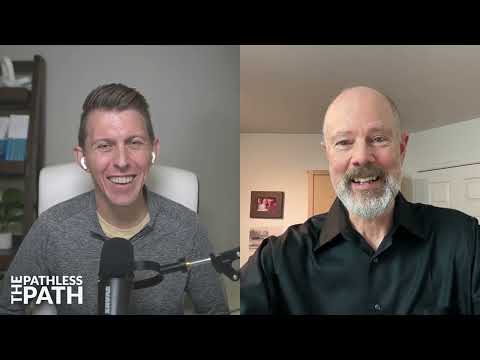
Paul: Today I'm having a conversation with Heather McGowan, who is deeply curious about the disruptive changes happening in education, work, and society. I am really excited to talk to her, mostly because she is one of the deepest thinkers. And when I say deep, she really writes in a truly thoughtful way and reads all the reports to go deep on what a lot of people are talking about as the future of work. She's a speaker, writer, and advisor to leaders on these topics. Welcome to the podcast, Heather.
Heather McGowan: Oh, thank you so much for having me. It's my pleasure to be here with you today, and I look forward to our little journey this morning.
Paul: Fantastic. So there's so much I'm excited to talk to you about. I'm really just impressed with the depth of your research in so many areas. And I'm curious how you started thinking about yourself as somebody that was interested in so many perspectives and fields. And you started as a student in RISD, Rhode Island School of Design, a school that's pretty well known for interdisciplinary thinking. How did that experience as a student shape you early on?
Heather McGowan: Yeah, I think that's a really important distinction. And I probably— every road points back to RISD for my successes in many regards, as well as Babson, but RISD in particular because as I watch, I have nieces in university now and I've advised university presidents, so I've been in the academic environment as an adult for about a decade. And what really strikes me is this idea that people have to pick a future professional self. So you're asking somebody at the age of 17 or 18 to decide what they want to be when they grow up invest tons of money, really debt, over 4 and sometimes 6 years to become that person based upon what they've been exposed to in high school.
And really that comes down to a lot of issues of social mobility, because if your father's a lawyer and your mother's a doctor, or if your father's a janitor and your mother's a kitchen help person, that sort of shapes your view of who you might be in the future. And that really limits your trajectory. So we're seeing a lot of smaller universities that first-generation college students go to that are very focused on that future professional self. So people get locked into this idea that I need to pick a good major, I can't take anything outside of my major, and it locks them into this, this type of thinking that's really a trap. Now my experience going to RISD is my major was industrial design, which is really product design, design thinking, Anything mass-produced.
And when you get trained in that type of education, you're not trained to be anything other than to— are you— ask yourself, are you asking the right question? Where do you look for expertise? So it's a beginner's mind all the time. It's a constant learning. So my first professional job, for example, I designed baby products. I was not a parent.
I had not spent much time around babies. I didn't know the issues, but I had to learn them. And then my second professional job is I designed athletic footwear for Wilson Sporting Goods in tennis. I hadn't played tennis much in my life, but I was designing tennis shoes for professionals. I had to learn what that was all about. I had to learn the manufacturing process, I had to learn the sport, I had to learn the biomechanics.
So there was something about that education that taught you that you're gonna learn for the rest of your life. You're always gonna defer to other fields of expertise. You're gonna have to synthesize a lot of information. You're gonna have to focus on who you're creating value for and figure out what they really need. And that is probably the best training you can find for the future of work.
Paul: [Speaker] Did you find that you and a lot of your peers from RISD were taking those same principles to both designing your life and career? Bill Burnett at Stanford, they've created a whole book out of this, right? Taking design principles for designing your life. But wondering if you've seen some of those things play out with you and some of your peers.
Heather McGowan: I have, I don't think it's a mistake that Airbnb was designed by two RISD grads who had no experience in the hotel industry. And I think John Maeda, after leaving his presidency at RISD, tried to make that argument out in the venture capital community, like put a designer on every venture-backed startup because they're gonna focus on the user, they're gonna ask, are we asking the right questions? And they're gonna constantly look for what they don't know. So I see it certainly in the startup world and I expect to see a lot more of it in the future of work. My peers have gone all over the place. Many of them went, 'cause I graduated in '93, so the web was just coming out.
So many went into the web and usability fields 'cause that was just like the Wild West. Others went into things like kitchen design and architecture. Others went into highly conceptual stuff. So they're all over the place now. It's really cool to watch.
Paul: [Speaker] So you say the future of work is learning and adapting, and not just learning X skills or acquiring specific knowledge. So how do you define learning as you're thinking about it now, both in your own path and for other people to think about?
Heather McGowan: Sure. So learning is essentially figuring out something you didn't know before. So when you look at most of our work structures, how often are we encouraged to say, I was wrong, or I don't know? Just about never. So if you want an organization to be more innovative, and to ask the right questions and to find the new horizons, they have to be able to be vulnerable. Like Brené Brown has this whole thing of vulnerability being the heart of creativity, and I think she's spot on about that.
They also have to be willing to say, I might be wrong about this, or I was wrong about that. There's this talk about fail early and fail often, but they don't really mean it because you can't fail if you already know and you're always right. So the process of learning is sort of this beginner's mind saying, I don't even know what the question is I'm trying to I don't know what I'm going to find the answer to, but I want to find out. Curiosity is at the root of that, and it takes a certain self-confidence to say, I am a professional and you should pay me, but I don't know the answer and I want to find it. And that's a space that I probably got comfortable being at because of my training at RISD, but it's afforded me a wonderful career where I think other people are stuck trying to make sure they know the right answers to a rapidly changing world.
Paul: Well, and I think you write about this in school. We're taught, like, I mean, I just think back to my own experience here. You do a 3-page paper, double-spaced, about topic X, right? If you write about topic Y and if it's a good paper, it's still an F, right?
Heather McGowan: Right.
Paul: But in the working world, that weird topic that you're curious about, it might actually lead to something. That's actually what you want people to do. So what are you seeing in terms of schools thinking about this? Are schools starting to shift, or is it just some of the schools?
Heather McGowan: Certainly not enough of them. I mean, we're so focused on proving learning, and the only way we can prove learning is to codify and transfer some set of existing knowledge, download it into a new human, and then test to see if it was downloaded correctly. That does not prepare that human to go out into the world where they don't know the questions, the language isn't, you know, the knowledge isn't codified and the skills are unknown. So I think our whole kind of we've got to prove learning with standardized tests and stuff has really put us in a pretty horrible trap. It's not to say that fundamental literacies and foundational knowledge are not important, but we have to balance it out.
I recently wrote an article in Forbes called "What if the Future of Work Starts with High School?" and I put it out there and at the bottom of it I asked people to tweet or share otherwise on social media examples beyond the 3 or 4 examples I had in the article. And I haven't been able to go through all of those examples yet, but the ones I included in the article are the Khan Lab Academy, which is the Khan School, and how they've created their own pre-K-12 system, which basically organizes people by independence level rather than age. They work through competencies to make sure you have those foundational literacies and fundamental knowledge Everybody has a passion project, so that's their paper on subject Y.
Everybody is a teacher as well as a learner, so you get that responsibility of agency sort of reinforced, and your own learning becomes better when you can teach somebody else, and it sets up this expectation of lifelong learning that I think is really fabulous.
Paul: Yeah, so you worked at Becker College in Philadelphia. It was a Philadelphia university?
Heather McGowan: Yes, it was Philadelphia University at the time. It has since merged with Thomas Jefferson University, and the combined entity is called Jefferson.
Paul: Yeah, I found it fascinating that just these type of schools are the ones that are really thinking about it. I imagine it has to do with what you're saying before. They have a lot of first-gen students, right, who are really just trying to figure out how to adapt to this world. But maybe you could tell us a little bit about your work with Becker and the agile mindset they're using to frame all their programs, which I think is still very different than what a lot of universities are doing.
Heather McGowan: Yeah, I think in both of those instances, it was Philly U at the time and now it's Jefferson, and as well as Becker, they both felt the burning platform. You know, if you slice up higher education, the elite institutions are protected by a moat called endowment. They don't have to change. They can simply be a sorting process to connect the best and brightest, or families who come from money, whatever the instance may be. And then the The state schools are going through their own process and the bigger schools may be protected by scale. The smaller privates have to figure out how to be unique or they won't be in business.
So what PhillyU had figured out, well, my charge there was when I started working for Steve Spinelli, who's now president of Babson and who was one of the founders of Jiffy Lube, is he came into it as an entrepreneur, came into it very differently. He said, I want to rethink higher education. I want to figure out what liberal and professional education is for the 21st century. And there we created a new college. We, we took 6 schools and turned them into 3 integrated colleges. One of those colleges explicitly focused on innovation.
We combined 18 different undergraduate majors in a core curriculum that taught people transdisciplinarity skills, taught people design thinking, systems thinking, biomimicry, and business models. So they had a foundation that allowed them to orient in their professions and with each other. And then when it came to Becker, which is after that, Becker was organized into paraprofessional and professional programs, so things like veterinary technology and nursing and computer game design. Very, um, students came with a very set idea of, I'm going to be an X and I can't take anything outside of X. So in that case, we created a curriculum that would help them. They can still be on the path to be in veterinary science or nursing or criminal justice or whatever it may be, but they also have a foundation in agile learning.
So that is, you know, change is the norm, starting with that right away, saying things are just going to continue to change. You have to figure out how you learn and adapt. How do you learn? What are your learning styles? How do you work on teams? A lot of self-awareness as well as market awareness.
We worked on business models, we worked on design thinking. So we kind of integrated a lot of the things I had done at Philly, but more specifically to the paraprofessional program. So the agile mindset is adaptability, learning agility, awareness, which is market awareness and self-awareness, and then the real core of it is agency, that learning is going to be your responsibility for life.
Paul: Yeah, and how do you, how do you develop that skill of the mindset of learning is going to be your responsibility for life?
Heather McGowan: Some of it is just being really explicit about how the world's changing around you, which I think most universities are not talking about sufficiently enough from my perspective. They're saying, okay, you're going to go into the allied health field, or you're going to go into the, you know, marketing field, or you're going to go into the sciences, whatever it may be. And things are going to change and technology is going to come up, but it's not expressing as much that technology may consume so much of our work that really reshapes what we do. Our jobs may change, fundamentally change, every 24 to 48 months. We don't know that yet. And we really prepared people for a single point in space when there's going to be a constellation of opportunities.
So the first is to be really explicit about that. Show them examples of things changing around them. And then make them aware when they're learning. So a lot of reflection. What'd you learn in that experience? What role did you play on that team?
How did your contributions come out? How would the market value your skills? Let's look at what's happening in the marketplace, or getting them deeply embedding and understanding what's happening in the industry they're going to go into from the first day they step foot on campus. So it's a lot of awareness kind of stuff.
Paul: Were you seeing at all a tension between almost moving more towards work from the academy, saying, okay, our role here is to get people employed, and losing touch with the liberal arts tradition? Are you seeing this shift in work as a way for the universities to say, okay, maybe we've lost a little touch here with this liberal arts tradition of kind of raising good citizens. How do you— how are you seeing that play out?
Heather McGowan: I actually think it went way too far towards just workforce prep. Yeah, we, we massified higher education between 1960 and the late 1990s, which means we doubled the number of institutions in the US. A lot of it was a community college system, but every junior college turned into a 4-year institution, and every 4-year institution became a university by offering graduate programs. So we swelled all these number of institutions because we said everybody's going to go to college. That isn't necessarily true, and it's not necessarily necessary, and it's not necessarily the right path. But for a period of time, we couldn't get enough workers with predetermined skills and existing knowledge, so we did that.
And along the way, sort of the liberal arts got pushed aside, the great citizenship got pushed aside. I think you can see some of it in our society. We have people who can't decipher fact or fiction. Fake news is something they regularly consume without question. Some of that comes from failures in our education system, but I think that we need a reimagined liberal arts curriculum so that you're— it's really learning the why behind the what, not this is what you need to know, but this is why you need to work through some of these things. So I'm very much for the liberal arts, but I'm for it for its own sake, but I'm also for it as a way to understand the world around you, especially as it's changing so quickly.
Silicon Valley's been saying for the last couple of years or more that they hire more liberal arts graduates than they do technical graduates because they know how to think and question.
Paul: Right. So how do you think about learning in your own path right now? I mean, you're busy with a lot of stuff, but how do you think about either taking breaks for learning new things using reflection as a way to figure out what's coming out of the things you're doing and things like that.
Heather McGowan: Learning is my job. It's my job. So about 18 months ago, I went from primarily a career in consulting with some speaking on the side to 100% speaking. So all I do now is speak at corporations, foundations, nonprofits, universities, community colleges, conferences. So in order to be worthy of those talks, I have to learn a lot. I can't give the same talk over again.
Every talk I do is different. Everyone's bespoke to the audience. So I have to learn about, okay, so who is in my audience? What is it they understand? What is it they need to understand? My host, what's important to them?
How do I connect to those points? And then I just read all day long. I use LinkedIn, I use Flipboard, I use the network I've developed. And then when I stand on stage, I'm wrong sometimes. I'm corrected sometimes. So that's a really interesting way to learn, is to have someone in an audience of, you know, 500 to 3,000 people say, I think you're wrong about that, and then step back and say, you know what, you're right, and I'm going to fix that.
Paul: Are you headed in any set direction? Are you letting kind of the conversations that emerge from these talks what you're reading kind of shape where it's headed?
Heather McGowan: I'm listening to figure out where, where it's headed. So my mantra has always been the future work is learning and adapting. I've been saying that probably for 5 or 6 years now, maybe more than that. But about 6, 9 months ago, I started noticing that the only thing moving faster than technology, which is technology is driving that necessity to learn and adapt, is is some changes in culture. And those changes in culture are fracturing our society because those changes have been politicized. They're not political, but they've been politicized.
And I gave a talk at the CUSP conference where I said, okay, I'm going to— the CUSP conference in Chicago is sort of anybody in the field of design, and they sort of expand that to anything in the world can be designed. Talk about anything you want. And I said, okay, I'm going to design an entirely new talk with nothing I've ever talked about before, and I'm going to focus on these shifting factors of culture, which I think are really changing identity. And identify, I think it's 12 or 15 different parameters around the way the world is changing, around how we answer the questions, who are you, what do you do, and where are you from. And I think that since I started doing that, I integrate a little bit of the identity bit in all of my talks. And it's the thing everybody gravitates to.
So I'm moving more and exploring that. So I listen to what the audience is interested in. And then I follow up on, on more of that. So I let them lead me.
Paul: Yeah, it— I mean, in a lot of my research, it definitely seems like our identities, especially in the US, as workers, especially for people who are maybe more professional class, it's become really central to who we are, and at the loss of some other things, right? A lot of local communities that just aren't as connected anymore. What's resonating most in terms of both things people are excited about in terms of identity and some of the more painful things that come up for people? Because I know this can be a pretty fraught topic.
Heather McGowan: Um, it's been, uh, since I've been talking about identity, which is probably like— I'd say it's such— I started in October, is that like 6, 9 months ago— that, um, people want to talk about it. And even the people who feel under siege want to talk about it. So I was in the Midwest giving a talk to an audience of 500 or 600 people, and I was talking about we're moving from a white majority to a white minority. We're going from a Judeo-Christian norm, which is really Christian norm, to a plurality of religions or absence of religion in many cases. We're changing on factors of gender from fixed and binary to fluid. We're changing on factors of family structures, and we're changing on factors of leadership.
We had sort of a white male patriarchy, and now we We have much more diversity in leadership. And there was a gentleman, older white male gentleman, sitting in the front row with his arms crossed. And I thought, you know, giving me a look. And so I stepped off stage and he came, rushed right up to me, and I thought, oh boy. And he said, you've got to keep talking about that. I said, excuse me?
And he said, I'm a white Christian straight male and I've been feeling lost for the last year or two. And nobody's put language around how things are changing around me, but I don't know where I fit anymore. And we need to figure that out rather than just politicizing. We need to figure it out. So you were talking about fraying fabric in our community. Look at what's happening with social media.
So you may not know your neighbors in your neighborhood, but you may be really close to people on social media you've never met because they share your political or your socioeconomic or your vocational or cultural views. So we start going into these bubbles where we just hear back from people who confirm what is often our biases, and we don't connect to the people who are around us. We're spending 51% of our time online right now in the developed world.
Paul: How does that map to the workplace? I mean, I think a lot of companies right now are thinking about diversity. But I mean, some companies are doing this well, but a lot are only thinking in metrics and it's not about bringing your whole self to work yet, which I think some of the sharper companies are thinking about. How do you bring that whole self to work? How do you bring who you really want to be? How do you bring these conflicting identities, political, personal, family?
How have you seen organizations dealing with this? Because I mean, the people I talk to, it's frustrating and they don't know the answers.
Heather McGowan: Yeah, I mean, we're particularly divided politically right now, and so we can't have those conversations at work. And that makes sense. And I have to dance around that when I'm giving a talk because I'll get close to a perspective on a subject and I've got to, you know, kind of skip backwards so that I make sure that I'm not making— I'm not revealing a political view because it's not really relevant. Often in what I'm doing. But one of the things I think is really interesting is we've created these technology tools and they're just tools. And we started with hand tools.
Now we have tools that have actual intelligence in them. And this artificial cognition, as we start forming teams and giving these tools tasks to run autonomously, the answers we're getting back seem to be surprising us because we've found that If most AI teams are white males, which is what it's been, it comes back with all these funky answers where it rejects diversity or it misclassifies something. And so our technology tools have given us a vision into— it's a window to ourselves that for some reason we haven't seen before. So I think the tools are going to dictate more diversity in a way we probably should have done on our own, but however we get there. And then, so that's on the tool side, because I think that's a really interesting window.
And then on the other side is that studies have started showing over the last several years that, you know, if you have diversity in your senior management, your financial returns are superior. If you've got at least one female board member, you're diverse, your financial returns are superior. And it's not because minority employees are superior or female supported employees are superior. What it is is that you have to check your blind spots. So if white females were the norm, then we'd be talking about why we need more white males. Or if African American people were the norm, we'd have to talk about why we need more white people.
It's just we started with white males, now we need to add diversity because it requires us to deal in facts and as opposed to assumptions. It requires us to check our blind spots because the more perspectives you have, the fewer blind spots you have. And I think that's where you get better innovation, superior financial returns, better fabric in your company.
Paul: Well, that's a fascinating point around the technology. And I think a lot of times the technology, it gives us answers that just confirm our biases. Right. And then when we control the information, we can control what we want to see. Right. But this is giving us those surprising answers.
I almost feel like the technology needs to be like, hey, maybe you guys should just talk to each other instead of looking at some tools and really just have a conversation. I've been asking people in companies, when's the last time you just kind of sat down with somebody you work with and like had a 2-hour conversation, really figure out like what drives this person? And people will be like, oh, that's a pretty good idea.
Heather McGowan: Yeah, I think the technology tools are giving us some really important feedback. On ourselves. So I applaud the disasters we're seeing in the ways that they're giving us some insight. But the human connection is a really good point. So when we move from the second to the third industrial revolution, in that whole process, we made the human worker a depersonalized unit of productivity. The more and more we could just measure them by output, to the extent we could do that, and we depersonalize them.
So we don't want to hear about your your dog or your cat or your husband or your wife or your kids or your home life or your views or what you care about. Just keep working. Like, don't chit-chat. Don't connect as humans. And in that process, the human became more and more disengaged. So Gallup's research on this is it's costing us $450 to $550 billion a year because so many of us are actively disengaged.
They looked into the change from primary school to high school. Students are— 74% of students are engaged in 5th grade, but only 32% are by the time they're seniors in high school. So we're just pounding all the curiosity and humanness and the real raw energy that comes from motivation and being engaged out of students before they even reach the age of 20. Then we put them in the workforce and it gets worse. So as technology can take over more of what's routine and predictable and humans can be liberated, I think if we focus on what humans do best, which are connecting to humans and lighting the fire in a human by connecting to what their motivational purpose is, which is the driver behind agency and learning, we're gonna see this huge boom in, in work. I think we're on the wrong track right now because we're still measuring productivity in humans, but I am optimistic.
This is what makes me optimistic about the future of work.
Paul: Yeah, I think I share some of that optimism too. I was thinking about this point before our call because you write a lot about atomization of work, which I think loosely means work's being broken up into smaller tasks. And other people have written about this. You could also call it specialization. And I think the downside of this, I mean, it's great for like running a firm. You can run it more efficiently.
You can be more profitable. People can specialize and become domain experts. But what happens is people become abstracted from the work. Or don't really know what the connection is to the neighbor sitting next door who is managing some report there on other random report. So, I think when they're, we're in this awkward period where people are still doing some of these jobs that have been atomized, right? That might be done by computers in the future.
And it's just a lot of frustration in the workforce now. And then on the other hand, freelancers, like, I'm out here, I can take all these, what you would call atoms, right? Work type A, work type B, work tool C, all these things and kind of build a pretty interesting creative life for myself. But it's not really possible for a lot of people, especially in large organizations.
Heather McGowan: Yeah, I mean, my original theory on atomization was it was the, the last human step towards automation. So it was the piece you could break apart and it could be done in isolation anywhere in the world, probably to the lowest cost provider. Um, and then as it was understood more through the atomization process, it would then be able to be codified and then be automated. I don't know that that's always true, but one of the things I think that's happened along the way is in our obsession to drive more productivity out of an existing business model, we shed as much as we can atomization as in what's available to automation. That makes it more efficient. And that makes a business model that would otherwise be broken still relevant.
But what happens along the way, both to the organization that's running out that business model and to the workers who are doing that atomized work, is we are only paying attention to the explicit knowledge, which is a small percentage of work. So we know how to do what we know how to do. We now have a cheaper way to get done what we know how to do. But that leaves the whole field of things we could potentially do in an organization, either in a new business model or in that whole workforce now that you don't have in the organization to have those serendipitous collaborations that launch a new product or service line. They're now off spinning on their own. We need to figure out if every company is going to become a platform, how is it that we capture some of that tacit knowledge in individuals and capture it back into work?
And I think for individuals, there's so much learning that takes place around the atomized work. So you as a worker, how do you replenish yourself? How do you say, okay, I did that task or that series of tasks. And sometimes the things you do in one task inform tasks somewhere else. So you are learning, you are improving across things, but somebody's missing the massive output of tacit knowledge that you've developed. And if you can figure out, I mean, I've figured out how to use it as a speaker.
So I have figured out a way to capture it, But I think a lot of people will miss that real premium of the knowledge they've developed.
Paul: Yeah. So maybe you can, I mean, I, I'm happy to share definition, but tacit knowledge, I think this is something surprisingly number of people don't fully understand, right? This is almost like the hidden secret sauce of human potential. And it's, it's really, it kind of describes like your your parent who makes this homemade recipe that is just perfect when they make it, right? There's no way to really capture that essence and no way for them to even explain how they do it. This is kind of the secret of, or the way to measure what you learn, but we can't really measure it.
So maybe you could say a little bit more about tacit knowledge and what the major problem is of basically matching that knowledge to work people can actually do.
Heather McGowan: Sure, so explicit knowledge is something you can explain in such a way that it can be broken off and atomized, and most often it can also be automated. And it's also, when you look at school, explicit knowledge is the stuff we can test you on because here's the information, you spit it back to us in the right order, that's correct, we all understand what it is. Tacit knowledge is harder to get your hands around. It's things like recipes where there's sort of something that happens in the process that you can't exactly describe. Innovation is a tacit experience because you don't know where it's going and you're not sure what element made it possible or magical. And I think that there's so much of tacit knowledge in work that we don't even know what percentage is, but I'm going to guess it's probably north of 50% of work is tacit.
And we just don't have any idea how to capture that. So we're atomizing as much as we can, and in learning, we're standardized testing as much as we can. So we get our answer on that explicit stuff, and that's the stuff we'll be able to automate. And there's some forms of emerging technology that can spit out some sort of tacit knowledge, but it's up to the human to make meaning out of that. And I think that it's a difficult thing to describe, but it's a really important thing to start to understand.
Paul: Yeah. So maybe talk a little bit about some of the tacit knowledge of you using that as a speaker. What, what are some of the things you've realized, maybe pieces that emerged over the years that kind of came together and enabled you? I think one of your pieces is being like brilliant at creating PowerPoint frameworks and probably all these other pieces that are coming together that you can combine in such a way that's uniquely you.
Heather McGowan: Yeah, so if you take like one of my talks, they're usually like 25 minutes to 35 minutes long. You could probably take that talk and say, here's the pile of data that was in that talk. Right. That was the data that either I said or I made reference to or which was included. That's the explicit knowledge in the talk. Tacit knowledge is how do I synthesize that data and show a picture of it in such a way that somebody understands something they didn't understand before and understands where they fit in it and what to do about it.
Because I think one of the greatest challenges of the future of work and one of the things that I've, I think, found some success in is people are just completely freaked out and overwhelmed. There's a torrent of data coming at them. There are people out there telling them they're going to be a useless class of humans and you got to run from these technology tools. There's something to the fact that there's certain jobs that will go away and ones that probably should go away. But there's this whole new horizon of work out there. But in order to understand where you play in it, you have to understand these huge tectonic shifts taking place.
And that's where I use visuals and storytelling and connecting one visual to the next visual and one analogy to the next analogy that brings you through that data in a way that I don't think a robot can replace me right away by just spitting out the data. It's about how the data is organized and told in a story and visualized and the journey you go through.
Paul: I'd love to shift to how companies are responding to these things and how a company can think about it. But maybe first starting, have there been any companies you've worked with either in your consulting work prior or through your speaking that have just really impressed you with how they've made a big shift in the way they're thinking and doing things?
Heather McGowan: Yeah, a number of them. And I, you know, I probably can't applaud enough of them. There are a lot of them that are really trying. AT&T comes to mind because AT&T, the workers that joined AT&T when they were formed, you needed a high school education, if that. If you could climb the telephone pole, you could have a job. Now those polls are in the cloud.
They need software engineers. They need data analysts. They need cybersecurity. They need a whole different field of things. And so they took their 250,000-person workforce and developed training programs to help people adapt. And they started by saying not, here's the job and you should fit into that job.
They said, here's an assessment of your skills and interests, and here are all the potential jobs you could do. "Along the way, here are all the things you need to learn to move from job A to B, C, or D." And then they say, "Job B, C, or D, this is the outlook for that job." So it's not a one-time retraining. They make it very clear, the next job you may move into may last 5 years, 7 years, 10 years, and then you're going to have to be retrained again. So they give people that real transparency. They give them the learning. So I'm really impressed by what they did.
And by their own admission, they started that process because they had figured out financially it just would cost less to invest $1 billion to create the training programs than shed most of their workforce to hire a new workforce. Along the way, their engagement has gone through the roof because here's a company that's trying to figure out how to keep you as an employee and keep the tacit knowledge by giving you new explicit knowledge. So that's impressive. Autodesk is a company that makes software that's in many of the things around us. It's software that runs movies, it's software that allows us to build buildings, it's software that helps us create products.
They used to just push software into universities and say, "If we can get everybody using our software for architecture, our software for movies, or our software for product, then they'll be trained on it and that's what they'll use when they go into the marketplace." They stepped back from that probably 4 or 5 years ago and said, "All of our software is free for universities." and we are now in the business of the future of learning things and the future of making things. And that our software enables learning and learning is part of work. And so that's our new position. So instead of training people to use the tool so that they'll use the tool, they put it out there and said, let me help you learn from and with the tool. And our job is to be the handrail of the future that helps you do that. I just think that's incredible.
Probably many more, but those are, those are two that impress me.
Paul: I love that. As a former engineer in college, we just wanted to play with different softwares. And I remember sitting in a computer lab with people and we were trying to like break into this software because we couldn't afford it. Right. But we just wanted to use it. And I mean, that makes perfect sense, right?
You want to put it in the hands of the people that are actually going to be using it in the workforce. What are you thinking about in terms of like your evolution in terms of, is it speaking now? I think, I think that's actually pretty cool how you've set it up, right? Like you're a driven learner and the speaking kind of enables you to have these stretches where you can go deep and then test it, get feedback and keep learning. Um, how are you thinking about continuing that? Is it, is this a good fit for you for a while or?
What's energizing you?
Heather McGowan: It's— I never would have picked it if somebody said in high school you got to pick a career and stick to it. This never would have ever been on, you know, my father was an accountant, my mother was in fashion and marketing. I didn't go towards any of, any of those things. My parents' vocations had nothing to do with what I wanted to do, and this field just sort of emerged. I have to say, I have had a lot of jobs in my life, and I think only one was an advertised job before I became involved. So I've took the RISD mantra, and I would go have lunch with people, and they're like, I have a problem, maybe you can help me with it.
And then a job would form around me. And I think on a macro scale, the speaking has kind of evolved around me. And it does give me an opportunity. Basically, people pay me to learn. I mean, I'm in Boston today. I'm off the road for a rare week this week.
And that gives me opportunities to do podcast interviews and create new content and do readings. So I go through this intensive period when I'm off the road and then when I'm on the road, I deliver bespoke messages to different audiences and I come back and I reflect upon what I need to change for different audiences, where I need to add content, what book I need to read next, and there's usually a huge pile by my nightstand.
Paul: Yeah, there seems to be almost countless knowledge coming out about the future of work, some worthwhile, a lot less so. But what are some of your big influences right now or rabbit holes you're diving into?
Heather McGowan: I think there's a lot to be figured out around leadership. There's a lot to be figured out around gender. I think we're starting to understand some things around gender and in particular how we're codifying a confidence gap in girls and then women. I just started including some of this stuff in my talk. Like, for example, girls outperform boys in school through— by a wide margin and a widening margin over the last 30 years.
Paul: Yeah, it's pretty dramatic.
Heather McGowan: Yeah, women get more bachelor's degrees than men. Women far outnumber men in master's and PhDs, yet they're a small percentage of our leadership HP did a study that if a new position opens up and you can go for a promotion, a man will do it if he has 60% of the skills, a woman will do it only if she has a full 100%. And then Dunning of Dunning-Kruger did a study asking women and men on their perception on their abilities. He said, I really want to understand the perception versus the competence. So took a few thousand men and women and said, Here's a simple 10-question scientific reasoning quiz. Before you begin, tell me what you think your competence is in scientific reasoning.
And the women came out, I want to say like 5.8 or 6.1 on a scale of 1 to 10. That's how they rated themselves. Men rated themselves about 7.5. They all took the test. When they were done, Dunning said, okay, your test scores were great, without giving them the results, and said, would you like to enter them in a competition 79% of men said they would, 49% of women said they would, and their answers were almost identical in score. So we're— we are codifying a confidence gap in women when we really need more women in the workforce.
And it's not just a lean in, we have to figure out how we're codifying that and undo that. Research by Vivian Ming, Dr. Vivian Ming, from— she has a PhD from Carnegie Mellon— said, I think there's a tax on being different. She looked at 122 million LinkedIn profiles, narrowed it down to a specific job and a specific gender. She found almost 5,000 Jose's and 7,000 Joe's, very similar name, but it gives you a distinct difference on what their ethnic background may be. To work in the same field, which I believe was software engineering or something like that, Jose had to have a master's degree and Joe could do the same job without a bachelor's degree.
That's a tax on being different that she estimates costs between $500,000 and $1 million. And it's not just the structural disadvantage that creates. It's a loss of human potential. Right. So I'm hopeful that we correct some of those things. But bringing them to light, like the way we are doing through our technology tools telling us the importance of diversity, encourages me.
As frustrating as that information is, once it becomes explicit, we have to do something about it.
Paul: I think it forces us to really question some of these things like, does a bachelor's degree from X school really matter? I think they do matter, but there's a huge but because there's probably 100 people, like actually probably thousands more globally that have the potential to do such extraordinary things in the world. And that's kind of what motivates me as well. Interesting thing I'm seeing, I do some online courses. Most of the people enrolling in these and paying for them are not what you would say the rich countries are. US, Britain, Australia.
It's countries like India, Malaysia, Saudi Arabia. And it's really just fascinating. I mean, there's so many people out there that are just taking learning into their own hands and looking at things completely different. And I'm I find it pretty exciting.
Heather McGowan: I think the more we can widen the access to education for everybody would be better, but at the same time we've got to come up with a better proxy than just a degree as a barrier to get someone in the workforce. Similarly, past experience, as the speed of change accelerates, we're not going to— we're in moonshot phase, you know, we couldn't hire an experienced moonshot— moonwalker the first time we went to the moon. We're going to be finding that true of many of our jobs. We're going to have to think of different metrics in attracting and evaluating talent.
Paul: Well, yeah, and I think it comes back to things you were talking about before, right? The reason Joe or Jose from accounting can't adjust to your job in accounting is because the context is completely different and they don't have that tacit knowledge. And I think when we get smarter about some of those things, we can start at least asking the deeper questions and getting to know people So hopefully share some of your optimism and really appreciate a lot of the work you've done to raise and go deeper around some of these ideas. Is there anywhere you want people to point to or any thoughts you want to leave people with?
Heather McGowan: I think there's a lot of incredible talent out there. Don't overlook it. You know, if your lens on attracting talent is to create a box called a job, which is an artificial box. And then figure out who best fits that box, that's probably defined by the rearview mirror. And if you look out to your future, where are you going to get the best human potential? How are you going to attract it?
How are you going to nurture it? How are you going to develop it? It's a completely different lens. And I'm inspired by some of the work that Enrique is doing by Hacking HR. He's got an organization that's doing global summits. Looking at how can we think about human resources, which is the entry point for talent, differently.
So I would encourage you to follow Enrique's work in Hacking HR. I think there's a lot of people out there to follow. LinkedIn is a great place to connect to learning communities. I put as much stuff as I can on either my LinkedIn profile or my personal website, which is heathermcgowan.com. So if you're listening to this and you got a question or a violent disagreement, because that's an opportunity for me to learn, let me know.
Paul: Fantastic. I will link everything up and really appreciate your time today.
Heather McGowan: Thank you very much. My pleasure.