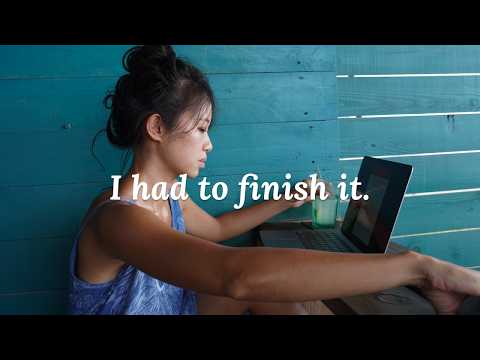
Angie Wang - My Partner On This Crazy Journey
I interviewed my wife, Angie, who has gone through a major career change and has launched a number of creative experiments and projects over the past couple of years. She reflected on what its been like going along this journey alongside me and grappling with success, identity, being a woman in Taiwan and creating in public.
Video Version Of The Interview: Watch The Interview on Youtube
If you like conversations like this, join my weekly e-mail which is an exploration of life, work, creativity and a contemplation on what matters: Boundless Newsletter
…
You can use one of the several products I endorse and I’ll receive a small affiliate fee from the company.
ConvertKit
I tried Mailchimp and a few others before landing on ConvertKit for e-mail automation. The UX is intuitive and easy to manage. I really like it a lot though I’m probably not even maximizing its potential. If you sign up using this link I’ll get 30% of your monthly fee forever (which is kind of crazy!).
Podia
I also use Podia for my Reinvent Course. I like both Teachable and Podia but Podia is probably better if you are just getting started and don’t want to get lost in customizing the pages. Their referral deal is super generous for me 30% of your monthly fees forever, so I’ll be a huge supporter of your course ;-) Pro Tip: Click my link and then sign up for a free trial. If you wait a few days to commit, then they’ll offer you a 15% lifetime discount in the first two weeks.
Teachable:
I also use Teachable for my Think Like A Strategy Consultant course. It works quite well as well, though Podia is a little more slick for more recent design and using a simple editor. If you click here I’ll get a 30% cut of your monthly fee - same deal as Podia!
Transcript
I interviewed my wife, Angie, who has gone through a major career change and has launched a number of creative experiments and projects over the past couple of years. She reflected on what its been like going along this journey alongside me and grappling with success, identity, being a woman in Taiwan and creating in public.
Read the full transcript
Paul: This episode was a special one for me. I got to interview my wife, who has been on a creative journey of her own for quite a bit now, and I've gotten to observe her journey, a lot of the struggles she's faced, and a lot of the cool things she's experienced as well over the last 2 years. And seeing how she's dealt with trying to create different businesses online, grappling with what does she actually want to do, how does she match that with the desire to be seen as successful, and how that plays out in different cultures. She coming from Taiwan and also being with somebody, me, who's from the US, and how those interplay. It was a really fun discussion. I hope you enjoy it.
And without further ado, Angie Wang. Angie Wang, Wang Yu Shou, welcome to the Combo Reimagine Work and Curious Barbell podcast. It's been about a year since you started your own podcast. This is going to be a deep dive into your creative journey, uh, what that's meant to you, what you've learned along the way, and a way for me to ask you all the questions I always ask you. And, uh, you don't, uh, want to go super deep. So I have you trapped here in the interview.
We're going to dive in. Um, and Angie is also, of course, uh, my wife.
Angie Wang: Yeah, thank you, Paul. And for the audience of Curious Barbell, welcome to Curious Barbell Podcast. Paul is the host of Reimagine Work, who is also my dear life partner. And just like Paul said, during the daily conversation, he'll want to try to ask me deeper about how I feel about my creative journey. But since you are already in an intimate relationship, it's really hard to talk about those stuff because it's seeing each other every day and you just get so fed up with thinking about these things with, so not to mention talking about with your partner. So here I give you the full legitimacy on asking whatever you want to ask.
Paul: Awesome. So let— I know you like deep conversations, so let's just start in the meat of it. Talk to me about turning 30.
Angie Wang: It was very unexpected. So that was 2 years ago. And I don't know about other women in other countries, but in Taiwan I know a lot of women like me who has a huge anxiety on turning 30, basically because we're in a generation of like, we don't want to get married and we want to build our own career, but we sort of get thrown into the unknown of like, so what the hell should we do? When I was 28 or 29, I was extremely nervous about turning 30. But then things sort of just like went well, so I felt like, okay, I'm in office job, paid pretty well, even though I had some frustrations, and I really love powerlifting. I don't need to— I don't really need to change anything now.
My life is pretty great. And I remember 29th, the last day of 29th, still pretty great. And when I was about to go to sleep, I was gonna set my alarm, and I see the alarm tick to the midnight of me turning 30, and it's just all of a sudden my world collapsed. It's all the persuasion of all the, like, I'm trying to persuade myself life is great, just it doesn't work anymore. I feel like I'm fooling myself around for the past 30 years, and I finally found my passion and just not doing anything about it. I feel very frustrated with myself.
I feel very disappointed in myself. But I mean, what am I gonna do? So I just put down the emotion, I cried a little bit, and I sort of like get very frightened and I go to sleep. The next day, Monday, I went to work. Immediately when I opened my office door, I just start bawling like crazy. And that's the time I know that I couldn't hold it anymore.
I need to quick— I need a career change. It doesn't follow that smoothly. The career change doesn't happen immediately, but it's like a long process. And I met Paul, and then we falling in love, then we get married.
Paul: That's jumping over a lot of details, but what, I mean, what were, what was the mismatch between the expectations of like, okay, I think we have somewhat similar but different narratives around like who is a successful person. What was that narrative you were telling yourself? Maybe you were deceiving yourself a little about being happy with that. What was it and what was the disconnect?
Angie Wang: I think like for me, being successful is very frustrating for me because I don't want to be the successful person I think who are successful, meaning like maybe the VP or our company, people who are leading the trend of artificial intelligence, people who are suited up wearing very nice high heels going to the meeting. And I remember I was talking to super impressive women in our company, and I wanted to be like them. I wanted me, myself, wanting to be like them. I want to have that desire, but I couldn't.
Paul: It'd be easier, right?
Angie Wang: I don't know if it would be easier. Just like, I want to puke when I think that if I need to act like them. But still, I still want to act like them because that's the cool way to do. That's a more mainstream way to do. I grew— I am from like a literature and sociology background. Most of my friends are super hipster-ish.
They travel around the world, they do translation projects, they go hiking whenever, whenever they want, they go backpacking, they earn about— earn a lot of money for the next few months and just go traveling. For me, that's what I aspire to be, but that's not like a cool or successful version of what people will call a successful life.
Paul: Yeah, I think the hard thing too is like you started on this track and like you went to an Ivy League school in the US, which everyone else focuses on. For you, it was a bit more of a challenging ride, but then you come back, you're working for this think tank, you're working in consulting, and you might want to shift. Like financially, you had some savings, you could have just done that, right? And you can go get freelancing jobs, but like you were in that identity and kind of performing in a role and like it can be really hard to actually take the first steps of that. So do you, thinking back now, were there first steps even though you didn't realize it at the time? Oh wow, it's really obvious this was the first time I actually started walking towards something that felt different.
Angie Wang: I think is when I know potentially after I redesigning your life, for our work, Eagle Spooks. Potentially, if there is a slight chance that I might change my career into something that is so wonderful, just wandering around the world, I want to do something related to fitness. And potentially, I might need to show my— prove myself that I would physically capable of doing that. And I have the knowledge and I have the passion to teach people. So what would they require? They would require going on a competition getting a certificate.
So I do that, but at the moment, those are— they are thoughts in your head, but those are not— this is the rational steps I need to take in order to make a career change. It's only through doing all those stuff and looking back that you're like, oh shit, I did pave myself a path to do the things I want to do later in life.
Paul: So the first step for you was entering a fitness competition? Talk to me about that.
Angie Wang: It was—
Paul: and this was pre-30, post-30?
Angie Wang: It was pre-30, probably 4 months before 30. Um, I basically oriented my whole life around the competition I'm going to join. So I calculate like the nutrition-wise, how do I need to on the competition day how do I want my meals to be organized? And that's what I'm going to implement in my office life. So my office life is like secondary to my goal at that time. So I need to wake up at a certain time, go to sleep at a certain time, eat certain food, not have any caffeine intake despite the fact that I just want to fall asleep in the meeting.
And so I just don't care about other people look at me in the office. So like, people were like going to the meeting at 11, and I would just I was just like eating my protein breakfast at that time. We have a culture in Taiwan that you dine and eat lunch together to show that you're part of the team. And I just skipped the lunch. And when people are hanging out together, I'm alone. And when it's 2:00 PM, people are coming back from lunch break, they're going to meeting, I just start my lunch because that's more like the ideal mealing time for my competition, so like, I really just couldn't care less about my office work.
I remember just sneaking into my personal trainer certificate textbook and just reading through it while my supervisor was not next to me. And it was like the best moment of my life, knowing that it's like you are in a situation of despair, but knowing that you are doing something that is hopeful. And not fully in, step into that career change yet. So you're sort of like in between. You don't have to like care so much of responsibility in work, and you're working fully for— working on something fully for yourself. That's like a very huge empowerment for me.
And that was— that also posed a lot of contrast before I quit my job and after I really stepped into that career I thought I wanted.
Paul: Yeah. And if you're skipping meals, something big must be happening.
Angie Wang: Yeah, because in Taiwan we love eating. We don't say, "How are you?" We actually say, "Have you eaten?" as our greeting. And Paul sort of got like startled by all the stuff we do around eating as a culture and a representation of how much we love each other.
Paul: The food is fantastic, but it's a bit much. So, all right, so you, looking back, like an outsider would say, okay, this person is clearly headed in a new direction. Cognitively, maybe you didn't, maybe the awareness moment for you was at 30. So then you start, you decide you're gonna make a career change. You apply to a fitness trainer, and I was there for all this. It was pretty amazing to watch.
I think you thought like, oh, I can't, get a job anywhere, and then you got a job at the gym you actually wanted to work on, which was a really cool learning environment for you.
Angie Wang: Um, I have to correct you, you were not there when all those things happened. You were like the post, post-chaotic era.
Paul: No, no, I mean like the applying to the gym, but yeah, before that I think you— there was a lot more like self-doubt and insecurity, right?
Angie Wang: Right. I want to point out the differences that you're another is because that is the reason why I later was able to step into the career more confidently. As a female in Asia, we're trying to still hold on to this gender equality. We are already making our own salary, but we still want approval from family. And we still want approval from a potential loved one in the future. And we also want to be like this, oh, like the strong women in the career, but we also want to be loved.
And for us, in order to be loved in Asia is being soft, being cute, being lovable, lovely. And so I was always in that struggle when I was wanting to change my career. I was dating like different people for that time period who were always like, are you sure? If you do that thing, then there is a mismatch between our social status. Because being a personal trainer is very different from being a consultant, for example. And I remember while after I stepped into the office on that date I turned 30, I sent out a bunch of resumes.
And then I was interviewing for this sports science analytics plus gym, and it was like in between if I know I get accepted or not. I went down my first trip to Chiang Mai alone, and I was just like crying so hard in Chiang Mai because I was like, I'm so stupid, I'm doing something that no one is approved of. I have a huge fight with my family, they don't agree on making the— making a decision, and I just sort of jump into it and make the adventure. But I don't even know that I already let my boss know I'm quitting, but I don't even know if I get accepted into another place or not. And basically I'm in a place where no one loves me. So it was really painful until I met you.
And then you tell me that you're just like, oh, why would you stay in an office job? I mean, like, why? Before being In a respectable office position is a way to earn the badge of love. But if I'm in a relationship with Paul, being courageous to make a decision— oh, I want to cry— make a decision for yourself is what is a way that I can— it's not like a way I can be loved, but being able to be my true self also earn me love. And that's what made me think that, oh shit, this relationship is so fucking cool. I can't believe it.
He really just supports me. And he doesn't support me while having a struggle of like, I should let Angie go, I should let Angie do whatever she wants. But of course you should go for it because that's the right thing to do for you.
Paul: Yeah, I mean, for me, I grew up around strong women. And then the American belief is like, you should do what you want. So I've been so used to like friends like blowing up their careers or shifting and like going after things that would make 'em more happy. So when I met you, it's like, yeah, of course, why not co-experiment? Plus I'm obviously a little on the, I'm a little on the crazy end myself, even for like go follow your dreams American culture. For me, it's just like I die inside if I don't see people fully alive or energized.
And like, that to me is not worth compromising, even in the short term, for perceived approval. Even if we're getting the approval and we're making people comfortable, I think deep down people really do want us to thrive. We just don't have the social frameworks to articulate that. And I may be wrong for your culture. It may not be there yet.
Angie Wang: And like, I remember Paul was telling me that, oh, I grew up with strong women. I still couldn't like— I haven't met his family yet, and I was still in a framework of thinking about what is a strong woman is like. So I imagine Paul like grew up with a bunch of like badass consultant women who is like kicking ass in the business world and being cold-blooded, super rational, not loving. And I think it's only after I realized the strong woman you talk about is someone who is capable to love other people unconditionally, someone who is emotionally strong and know what is the true value of leading a valuable human life. That's the time I realized, oh, yeah, he grew up with this value of base everything on love.
And what he thinks is that being lovable, or being like, um, the people he wants to support, the people he wants to love, the people he thinks is going to be his close friends, close family members, are all those who act on the principle of love. Yeah, that's why I keep falling in love with you.
Paul: We don't want to make this too sappy.
Angie Wang: Yeah, we don't always start not letting love because yesterday you tried to interview me and I just had this breakdown and I said, no, I don't want to be interviewed anymore because I have this struggle of like, I'm going on my creative journey, but I'm not earning any money. And we can talk about that later.
Paul: Yeah, we'll dive into that. I think One more thing on that, like I'm not even doing anything special, I'm just doing like what my parents did for me was just like fully support whatever the heck I ever did and like tell me yes, yes, yes, of course, of course, of course, we support you. That's all I know how to do. I mean, that's what drives me. I wish we had more of that in the world. But yeah, let's talk about like some of the things you're doing.
You took the leap to become a fitness trainer. You got in an environment where you were learning, you were coaching clients, and I think you discovered, like, this was not a surprise for me having gone on my own creative journey as well, like, you still had this energy inside, like, which you had to get out there. Talk to me about that.
Angie Wang: Right, one of the things that I'm most struggling about being a personal trainer is I consider myself as a multi-dimensional background, like a very diverse interest. I still want to know more about human behavior. I'm interested in tech. I thought I was interested in tech. It was interesting because, turn out, I don't. And I am capable of like doing deep interviews.
And being a personal trainer at that time, I felt I have to abandon all the other sides of myself. But I think Throughout my creative journeys, I realized putting yourself in the identity is the most dangerous thing because then you will conform yourself to what people think that role should do instead of consider what you want to do based on who you are. And I think that is like that sort of, I have to ignore all the other sides of me when I go into a certain career, is a huge mistake. And, but you keep encouraging me to try different stuff. So when I go into the gym, I was proposing some creative projects. I interviewed the gym owners and team members to know more about their deep life history because I really enjoyed knowing more about people under, under those superficial conversations.
And I really want to do a podcast because it was through listening to podcasts Hearing about how people are willing to be brave and vulnerable, that inspired me to do all the actions I took before. But I was so doubting myself. I was like, I mean, growing up in this culture, we're always told to be humble, to be like, try to find a middle way, not to brag about yourself. And in Taiwan, fitness industry is a very hierarchical industry where you respect people who who founded businesses before you in the military way, which is very crazy. And so I was like, oh, who, who do I think I am? Like, how do I deserve to use the time of people who are like more advanced than me in the careers?
I don't know anything. I don't know much about fitness professional knowledge compared to other people who enter the industry for more than 10 years. How dare I think I have the capacity to interview them. That sort of structure about thinking myself as a person in relation to other people just paralyzed me. And I wouldn't be able to launch the podcast if I never joined Paul's Reinvent. And before I joined the course, I'm still thinking, ah, what should I do?
I like everyone wants to launch a podcast. No, no, no, no, not podcast. It's too much. Maybe I'll just launch like a landing page for myself, launch a new service that's not really core to like who I really, what I really want to do. So I don't have to feel like if I'm not successful, then I'm failing as a person instead of failing as a project. But I think just through the course of like listening to other people sharing from around the world, give me more courage.
So I made a commitment of I'm going to launch my podcast and Paul was super helpful in launch. Helping me setting up everything. I launched the podcast and it's been an unimaginable journey for me. This is totally transforming, but not transforming into like a better person, but transforming into someone who finally understands that there is no hierarchical relationship between human beings. We are all equal in a sense that everyone just wants to be loved. Everyone is super vulnerable.
And so like I was able to see this through this creative journey despite there are so many ups and downs.
Paul: Yeah, I think I encounter this all the time. I'm the annoying friend that pushes everyone to like create and share and do things that scare them, um, because I've seen there are hidden benefits on the other side, which you can't predict. Uh, talk to me about the fears. You had about starting something, putting your voice out there, versus what's the reality on the other side, including some of the learning you discovered?
Angie Wang: Right, fear setting is definitely one thing that solved the last puzzle before I launched my podcast. And a lot of things like, oh, how should I do the logistics? How should I do the interview itself? How should I make a cover? What should the tagline on the COVID be like? Those thoughts will be trapped in my head for like a whole year.
And that's sort of my weakness too. I think I tend to think about the possibility of difficulty of doing things instead of just stepping into the things and solve it. And being able to write those down made me realize, oh shit, I can actually just do I can do it in 30 minutes. And I think one of the most important points I realized in the reflection is I want to be able to feel like I can overcome fear and do something. Or my later understanding is I can act on something with fear inside me. And I don't want to let the chance slip again because if I want to do something and I don't do it, it was just going to be a transferable, repeatable pattern in my life going on.
Paul: Yeah.
Angie Wang: And I want to know what it's like to act on my fear, to start a project that I'm so scared of, and knowing that there are still also like there are risks, there are potential benefits, risks, including that I might destroy the relationship if I don't prepare the projects well. People might really hate me. People might really think I'm stupid. But I also realized, oh wait, the journey is about finding a community who really identify with your value. Doesn't mean that your value is right or wrong, right? But a distinct value you have.
You as a personal being, you share the same struggle, you share the same aspiration as them. For me, it's wanting to find them. And I do get criticized and I will get criticized, but that also shows that they are not going to be part of the people who share the same struggle or aspiration as me. Yeah.
Paul: And it's probably been, what, 99% positive?
Angie Wang: Right. Well, we are a non-conflict culture, so most of the time people will criticize that. Yeah. Hidden.
Paul: Yeah, I mean, I definitely resonate with that sentiment. I started my podcast like 3 years ago and I just thought to myself, like, who the hell am I? Why am I starting a podcast? We don't need more podcasts. I think people think of themselves competing with like NPR, who has like 100 people working on This American Life versus just themselves. Like, I'm not trying to be famous.
Some people do with their podcasts, but what I realized is the biggest benefits were learning. I learned how to video edit, I learned how to audio edit. I made a ton of friends who were like, hell yeah, this is cool. You obviously are still figuring out what you're doing, but I want to come along the ride with you. Keep going. And really, I don't hear from that many people about the podcast.
I think you have like a lot more fans Um, but even just like one person reaching out being like, I listen to all your podcasts. It's like, what? Really? All right. I'm gonna follow this strain of curiosity. And like, I don't care if it ever is successful in a traditional sense, but it's like, it's just one of those things in life that's like, okay, this is worth doing.
Right.
Angie Wang: I think it's interesting that comparison when you say that you, in the States you don't need another podcast. People criticize it that way.
Paul: Yeah, it was so early in Taiwan.
Angie Wang: When I was launching it, I have the same fear, like, oh my God, Tim Ferriss is doing a podcast. Like, who am I to do that podcast? And I remember I launched like an Instagram Live story asking if I launch a podcast, what would you be interested about? And no one replied me. And I take it as a sign of like, no one cares. Who do you think you are?
And turns out, I remember I was so afraid of launching a podcast also because I was under another company. I'm an employee of a company. Launching a podcast is like, oh, I'm afraid that my employer will think that I'm taking over, I'm trying to compete against his business. And so I walk into the gym and then like people were asking me, what is podcast? That's the time I realized all the fear that I imagined was all in my head.
Paul: Yeah, it was still really early in Taiwan. And I think you've just, you've kind of emerged with your podcast with a lot of other, especially women you've connected with who are creating and like sharing their voices boldly and rebelling against what you were talking about earlier of like, I need to be in part of this hierarchy. And pay my dues, and that is the only way to earn social respect, right? And it's really cool watching this like ecosystem of creators. Like one of our friends Emily is like starting her own podcast company in Taiwan too, and it's like, I'm like, hell yes. It's like these Taiwanese women are like kicking ass and I love it.
Angie Wang: Yeah, and like When you said that when you launch a podcast, you don't want to be famous, and when I launched my podcast, I also think to myself, oh, I don't want to be famous, I just want to make my friends. But then turns out there are just so many different sides of you. You thought you're just like— you thought you want to be this sincere, honest person who want to do this altruistic project, but there are times that you just couldn't deny that, oh, I am just like anyone else. I care about this Social Tentacles and the Yearning Octopus.
Paul: Yeah, Tim Urban's article about how to choose a career.
Angie Wang: Right. I do want to get social approval. I do feel, in addition for feeling moved, I do feel proud of myself when people send me messages like how this episode changed your life. And I think it's been a debate between different sides of me during the creative journey. It's really hard to just be really honest with myself. So that's something that definitely still learning.
Paul: Yeah. It's, it's so hard to figure out what you want, but sometimes the things you want aren't visible to other people. Like I started receiving emails about my writing early on in my journey and like, those were so cool. That was the highlight. It was like, I want connection. I wanna be part of something.
Part of something, and it really brought that alive for me. But that is not as legible as my former job title as a strategy consultant. Everyone else can see that and they get joy out of that, but I was totally unattached with that by the end of my journey, right?
Angie Wang: I remember you told me before I changed my career, you said that when you are a consultant, no one gives a shit about what you do, but people say thank you to you for other projects that you do.
Paul: Yeah, the writing and stuff.
Angie Wang: Exactly how I feel. And if you're in an office job, you do one thing good, that's your responsibility.
Paul: You just do it and you're done.
Angie Wang: But if you fail, you're a fucking loser. But if you're a personal trainer, you give people a session, they feel better working out at the gym, they say thank you. They text you afterwards, say how ecstatic they feel about their body. You're doing a podcast people do thank you about how you're willing to do time for free for a project to inspire other people. And that's something that is— that will really change about how you think about the world.
Paul: Yeah, I think you were kind of surprised at the impact you could have with people with some of the coaching. I think in your mind you're like, okay, 10 years and I'll be an expert and then I can finally help people. But you really had an impact with a certain type of client pretty immediately. How did— like, has your mindset shifted and like your ability to help people?
Angie Wang: Uh, I'm still working on that. That's definitely not like a one night or one incident that will flip the whole perception of the world thing. I think it's building up, like Even with doing podcasts, I do get some evidence that I might not be as bad as I think. It's really a build-up process. One day you think you're so proud of SEO, you're so proud of yourself, you're invincible, you can do any podcast you want, interview any guests you want, and then the next day you just feel like, holy shit, I'm so small. Who am I?
Why would I think about that yesterday? It's not true. It's really a debating process. I mean, I can always evolve into a different version of myself, but it's definitely a dynamic process. It's not a straight linear line.
Paul: Yeah, and I think that's one of the challenges of a creative journey, because things can be going great and it can bring alive parts in yourself, and then you receive one comment and it's like crushes you, right? And it blows you off, and it— you're always battling these questions of self-doubt, because the inherent truth of a creative journey is that you're wandering into the unknown, like the Pathless Path, as we like to say. Um, how have you dealt with that uncertainty, um, of like not knowing where anything is leading and like not having any grasp on like, okay, how am I going to make money? How am I going to, uh, achieve some of these goals I have for myself to be like this entrepreneur or things like that?
Angie Wang: I haven't, I haven't figured it out yet. Yeah, I remember for me, um, I was listening to your podcast with Steph Smith and she talked about like we always copy other people's life and aspirations. For me, I thought, okay, I step out of the office job, I set up being just being a personal trainer. I'm really on a creative journey. I'm creating everything myself. I want a very distinctive type of life that is fully grown out of Angie, which is I'm a digital nomad, travel around the world, I sell online course about fitness, and I write articles, inspire people, and I do— I build subscription-based community to earn money.
And I'm so unique unique that you cannot find any other person like this in Taiwan. But turns out, who's copying? Who am I copying?
Paul: It's Paul.
Angie Wang: I didn't realize that I was copying Paul all the time. Like, how do I come up with online course? How do I come up with paid community? It's because I have like a mentor figure who happened to be my lover, who gave me all the available options on the market of how to make money as a digital nomad, as a like digital entrepreneur. And so that's a very surprising moment for me. I was really shocked.
I felt I was fully grown into an independent human being that is so creative that is not copyable. Turns out I'm just copying other people. So I, I really don't know like what's the next step I will take. I, when I set out to be traveling around the world with you. For me, a successful me is being able to blend into the digital nomad community and casually drop the sentence, oh, um, oh, I just run my online course. Yeah, this is like giving money.
It's like this type of like not struggling, making money easy is the successful type of me. And I remember when I launched, I finally overcome my fear of launching my online course, I was so proud of myself. Like, I did it. I see the first money coming into the PayPal and I cry in the car in Canary Island. And then I'm like crushing it, creating courses with my partner who I met on the podcast. And then when the class end, I was just hit by this disappointment.
Paul: Yeah.
Angie Wang: What am I doing? It's so empty. Like, do I really like this? I just love the identity and love the possibility that I can tell people. But now when I tell people I run an online course, I don't even feel any joy or excitement in that.
Paul: Yeah, I mean, that's the hardest thing is like, what I've realized is you need to find things you actually want to keep doing. It just happens that like a couple of the things I do, 90% of what I do doesn't make any money or isn't like traditionally successful, but it brings me alive. And then like 10% overlaps with like, oh, this actually can make some money. And it's funny how like you internalize, oh, I'll just take the same path, yet I'm also telling you I have no idea what I'm doing. And I always would tell you, like, you just need to find things you want to keep doing, which I think when you're at the beginning of your journey is so hard, right? Because you do have that pressure to like want to make money.
Then you make the money and you're like, oh crap, I don't want to do this full time. But I also don't know what I want. So The pressure is, okay, grasp onto this or wander into the unknown. And you kind of chose to wander into the unknown again, which is probably terrifying.
Angie Wang: And like, for me, I was reading the Tim Urban's article the other day, and that really blew my mind. Just being able to analyze—
Paul: just tell us a little about it.
Angie Wang: It's like When you think about before, when I think about money, it was me and money. But the Tim Urban article, How to Choose a Career, actually talks about different sides of your relationship with money. So for me, I'm actually not super familiar with the different tentacles you want to talk about. I mean, like—
Paul: Well, it's like your yearnings. It talks about your yearnings, right? So we all have these desires for love, for belonging, for financial security, for safety, right? And he basically just forces you, okay, stack rank these. You can't have them all. One's gonna overpower others.
For me, it's like freedom and community, creativity, and those just like crush everything else. I always choose freedom over money. And I've continually done that. And it's made it very clear for me. And those might shift. As our dynamic and family situation changes.
But yeah, those are the yearnings. And it sounds like you, that kind of resonated with you, that framing.
Angie Wang: Right. And especially the money part. Like for me, it's always very obvious for me that I don't aim for earning tons of money. If I can survive, then I'm happy.
Paul: But you still beat yourself up for not earning a ton of money, which is Right, because that's the other tentacle.
Angie Wang: Yeah. That is the other yearning that is trying to grab my attention, which is the social side, the family side, and how I impose myself. Like, I want— it's a norm and an expectation and a way to express love that you will be able to provide your family a certain amount of money as a way to show you love them. No matter how much the money— the amount of money is, even it's just $100, $200, you'll be very happy because your parents can boast about it with other people. But I didn't do that, and I feel shame about that.
Paul: Yeah.
Angie Wang: And I don't care about money, but I want to be able to match that side, the social side of money, not my personal year— not my personal value, but like that side. And I also, this is really a restraint I put on myself. Before this podcast started, I wanted Paul to ask me about what it's like to be a female entrepreneur. And Paul said, this is a sensitive question. Why would I ask that? Like in America, this is like really not appropriate.
But that's me. That's how I think about everything in terms of gender. I give myself a lot of restrictions, which I don't even know if other people have, which is like, I am I'm from Taiwan, which structure, like on a global economy structure, our salary pay scale is way less than America. I'm married to American husband who is white. Now I fall into this very stereotypical, like you heard that you went to Chiang Mai and then you talk about the digital nomad, they will tell you, oh yeah, I dated this girl I really love, but turns out she just like any other girls, their whole family expect me as the only white guy to provide income for the whole family. So I couldn't do it.
And I was just like, oh, holy shit, if I'm dating Paul and not making any money, then I'm sort of give myself, render myself into those stereotype, which is not true at all because my family doesn't need a support. They need symbolic reward, but they don't want me, they don't need the material support. And Just being in a relationship with you, knowing that you will support me, but knowing also knowing that I couldn't be the badass Asian woman that I want to be kills me. So there will be a day where I'm living my perfect life. I'm painting stones and I went to work out. I mean locals and I go swimming.
There is no urge of earning money and just totally let go of the need that I need to earn money. And the next day I just feel so shameful of myself. How dare I not to keep working on the online course? How dare I just let my husband share, care, like take care of all the burden of economy needs that we might have in the future?
Paul: Yeah, and I think it's a weird time. I mean, I talk about this a lot on my podcast, which is that you can make money and not have to sell your time, right? So I I can make money from my course while I sleep. And I'm not really like suffering, working away, showing up 8 hours every day. And I think there's this huge disconnect in society where like, this is going to be potential for more and more people, even remote companies are gonna be working asynchronously. And I'm not going on a work rant, I'll tie this back back.
But yeah, and what I see from that is like, okay, there is value in letting people's creativity flourish. However, to let that creativity flourish, you need to paint rocks on a random Tuesday or work out in the middle of the day. And that is so revolutionary compared to the system system we're coming from of like the main way to make money in society was to do the Monday through Friday job. And that is like full-time employment is freaking awesome. People don't give it enough credit. It is like the perfect container to like not have to worry about income and trade for some of your time and still have a pretty good life and a lot of your needs But it's not for everyone and there's way more options than ever.
But I think like that beginning path is so hard to navigate. When I showed up in Taiwan, I lost my freelance consultants and I was basically just wandering around reading books. And that's like incidentally when I met you, which is like, life throws you crazy things when you create space space in your life. But like navigating that is so hard. Like those first 3 months in Taiwan, I felt like shit. I felt like a loser for not making money.
It was like, okay, it's not that bad because my cost of living is lower than $1,000 a month. But like, it was just like, I know I need to like trust this process. Like everything is telling me to like create space, experiment on things and let it happen. And I really just kind of like let go of the financial goals. Now I think I had more savings than you, but yeah, I mean, talk about like giving yourself permission to explore. Like, I think that's been really hard for you.
Whereas like I was, I kind of let myself explore for like 6 or 7 months, if not more, probably like 9 to 10 months of like an entire year stretch. And that's when I incidentally launched a bunch of things that later made money. But there's no playbook. I don't know how to tell you how to do that. How do you think about navigating that?
Angie Wang: I think right now I'm really trying to pay attention to how I feel about energy at the moment. Before and post the moment, which means that I started to try to think about what are the projects that I do before that I feel energized, during that I feel energized, and after that I also feel energized. I don't feel drained, I don't feel someone is taking something away from me. And I think those are the stuff that I really want to work on, like study group, meaningful podcast, not a podcast I feel like I should do in order to attract people, but the people who I'm really curious about. And that's one thing I'm trying to implement now. But I just want to like bring back to what we discussed before.
I think it's highly relational to the situation, the dynamic situation you're in. I think sometimes we aspire to be be in this person who is on a tunnel or like a different book chapters of life that is written only about ourselves. So our struggle is about ourselves. We do these things up and down. We like this and then we don't like it. But then the thing is, when you are leading everyday life, for me, it's highly dependent on and very relational to what is happening around me.
So for example, when we were in Canary, we were both— you were in, you're in some health situation, so you weren't able to work. And because we're both now earning money, I feel less stress.
Paul: Yeah.
Angie Wang: Now we're, we're in Mexico, you start to get back on track again. So you start, you dedicate a lot of hours a day to build your stuff. And then I feel guilty because I see you're working and I'm not. But do I want to be fully dedicated into the work mode that I was at when I was creating my course? I was a vicious human being to my lover, because if someone wants to interrupt me or someone wants some quality time from me and I'm still on the way to building course, I would just get so mad. And so I want to match my expectation from myself to earn money, but if that metric gets higher in score, my metric for loving my loved one and spending quality time with my loved one, the score is lower.
Paul: So like, well, the stakes are so high. Like you said before, like the stakes are like, I want to be able to provide and show my love through money. Like that actually is really, really high stakes. Stake. Like working on your project, being really upset when somebody interrupts you, that is, that's like life. Like being able to show your love, you're not just interrupting somebody working on a graphic they're creating, you're interrupting, I'm interrupting somebody that's like, this is everything, this is my life legacy, right?
And I think that can be a challenge for for many people is like, how do I lower the stakes and like play? Like, you have some rocks over here you're painting, and it like, to me, it's like you're clearly like putting love into these things in a very playful way. And it's like, this is probably something you could sell, but like you're not even worried about that yet because you're just like trying to have fun with it.
Angie Wang: Well, that's a very good point because I do start to feel stress when I think about the possibility that I'm going to sell them, right?
Paul: But you don't want to— the key is like, how do you not get tied to that? Which is so hard in today's world because you show it to someone, right? We've showed it to a couple people and like, people are like, you could sell that. Like, we're so obsessed with like what can be sold.
Angie Wang: Like, some things probably shouldn't be sold, but right, it's I wanted to create a space where I can just have fun and not think about monetary. But since I don't have any projects at hand that I wanted that is like have a very steady income stream, I started to think about if there's possibility in everything I do that I was having fun with. So when I just started rock painting, the first few days I was like so at peace with myself. I listened to podcasts while I paint my rock You have to be very careful about the weight you put on the rug. It's a very focused moment. And then the Day of the Dead is coming.
We're in Oaxaca. It's a huge celebration day. And I started to think about, wait, maybe I can go purchase some masks or boxes or bags and then put it into a Day of the Dead decoration and then sell them on the road. And then I started to feel so wanted to vomit. I was like, who do I think I am? How do I dare to sell this stuff?
What if people laugh at me on the street? Am I going to say, "Hola, come check out my stuff." That is so embarrassing. And I was just like, do every human has to go through this struggle? You can never stop this cycle of enjoying something and then wanting to earn money out of it and then hate it and then go on to the next stuff.
Paul: Well, this is why full-time employment is great. People, right? You work for a company and you, you don't really have to put your full self out there. You can just kind of do a job and I mean, that's why it works for like so many people.
Angie Wang: You know, like some certain moments I, I feel in my, on my creative journey, I will say maybe it's better to get a full-time job because I remember before I quit my job while I was preparing for a certification, I have hope, but I don't have grasping. For my office work. So I was really at peace with myself. I remember when I was meditating, I can always go into a very present state. But right now when I meditate, I just think about, am I gonna make money, make money?
Paul: Well, it's like, I think that's the challenge, right? I was kind of the driver to leave Taiwan. I mean, it's something you wanted to do too, and you're fully on board, but To me, it's this constant kind of like, like challenge to the world that like there, there might be more to life than making money and our job. And I mean, this has always been my strand, but it's like living in different cultures, being uncomfortable. Like we're in a really cool resort town, but most people we know would not be uncomfortable with how we're living because everything is not smooth and perfect. Like, things break down.
Like, we lose power, we lose internet, we're driving on a dirt road, we're driving in weird crazy places, we don't know what's going on. Um, I got electrocuted by the shower. It's like, it— on the surface it's like that perfect reality, but like, it looks perfect on the external, and it's amazing. Like, I— but the upside for me is actually stepping into the unknown and the discomfort. And like, my bet is that there's some value in life to exploring, going on adventures, being uncomfortable that might benefit me in the future while also like helping bring me alive in the present. I mean, how do you think about that?
It sounds like the pressure for like money and like your identity has overpowered, um, that for you, which I know is a deep drive in you because like at your heart you're a literature and poet person. Like everything is poetic and alive for you.
Angie Wang: Um, could you reframe the question again?
Paul: Yeah, so I mean, how do you— like for me there's a deeper journey of like there is more to life than work and making money. If you observe many people, you would think the opposite was true, that work is the center of life. How do you remind yourself that there are these like deeper things that can't be valued?
Angie Wang: I think it's the opposite. Is that how do I remind remind myself that money is really not a thing I care, because I always feel a huge draw to me to all the other stuff in life. Being able to just say, like you said, so that'll emerge naturally. Um, that's always like the center of like, I always have this vagabonding spirit that I want to just travel around the world. But also like what you said, like putting yourself into uncomfortable situation, that was something that I would than expected. When I wanted to go travel around the world before I met you, I think about Mexico too because it's such an exotic— it's such a good, a perfect destination for vagabonding.
But then when we were really in this— I wouldn't call it resort town, it's pretty misleading. It's a fish village.
Paul: It's like a fishing village that's turning into a resort town.
Angie Wang: I wouldn't—
Paul: yeah, there's not really any resorts here.
Angie Wang: When I think about vagabonding in Mexico, I think I imagine it to be as clean as Taipei and as no insect as Taipei.
Paul: Nothing's as clean as Taipei.
Angie Wang: And the road condition is perfect. So when we are driving on a dirt road, when I fall down in the the sand under my bike, or when we are waking up in the middle of the night, going to the bathroom and step on different insects, or waking up with my hand up because I've been bitten by, potentially bitten by a scorpion. Those are not in my imagination of a vagabonding life. I have a pretty good imagination.
Paul: It was only the good things.
Angie Wang: Right. So, but I'm just being very grateful keep— I have to keep reminding myself that I'm in Mexico and this is really like a dream comes true. Um, it's been a little bit hard for me this day because the insecurity of money just keep hitting me. And there will be a time I'm so trapped that I couldn't— I was riding on my motorbike and then we're passing through this beautiful gulf and beaches and the sunshine just glowing on the beach. I just feel miserable. And that's not— I don't think that's— I don't think that's healthy.
You're in a paradise and you feel miserable. So it's totally trapped in my head. I've been doing study group, like meditation study group, with one of our good friends Travis. And I think they all boil down to like, really, what I do now can end myself Nothing you can do now can end your suffering? No, that's the question I ask. What can I do now to end my suffering?
And when I ask myself that question, everything becomes so clear. It's not about making money. Making money and build online course, having a steady income stream is not going to end my suffering if I cannot feel love and feel I have the capacity to love people. And so like being able to be really open-minded to this question is something I'm practicing and something I am trying to implement when I feel struggle.
Paul: Yeah, yeah, I think, I mean, some people glorify the digital nomad life. It's like, that's a dream, working from the beach, but you do it for a week, you're on vacation. You do it for a month, you're just living in another place. You adjust, you settle into your routine, and then all your problems emerge again, right? Our own, our mental, your mental struggle doesn't stay where you left. It comes with you.
And, uh, if anything, it's amplified because you can be so uncomfortable, right?
Angie Wang: I would say it's still a dream life. For me. But what's shocking for me is I have to practice to remind myself it's a dream life, to get out of my head.
Paul: Yeah, that's beautiful. So I mean, what— how are you thinking about the next chapters of your journey?
Angie Wang: You keep asking me questions that I have no answer.
Paul: You don't— I mean, you don't— I mean, I think that's a good answer. I think sometimes when you know what you're doing is when you are definitely gonna trap yourself, because when you're on these journeys, like, the most interesting things are the ones that surprise you.
Angie Wang: Mm-hmm. Um, I think our road trip in the US, the 3 weeks that I totally disconnect from social media, give me a a lot of realization and deep understanding of what I like and what I don't like. So being able to be brave to say no to the project I already know I don't like is my next step. Because I hate Instagram, but I'm still doing Instagram posts. Why? I don't know.
I hate myself for doing that. And I really love book club, but I feel like I lose that momentum, and I want— I need to pick up the one moment and to have things come back again. And I want to be more playful. And one thing that I told you, my epiphany— I think I'm going to write the book about— it's called Being Playful Is a Radical Act.
Paul: Because I like it. Do it, publish it.
Angie Wang: Because like, you heard so many people talk about why Life is not worth living if you cannot have fun in it.
Paul: Yeah.
Angie Wang: But the truth is, you leave. I leave every moment most of the time to avoid suffering or just bring myself into another suffering. Even if I want to be playful and say, like, painting rock or just roaming on the street, like, impose myself in a world and culture and language that I don't understand, I still couldn't be enjoying the moment. And when I do, I have to make a huge determination of, okay, I'm going to live this day in the type of emotional state I want. And when I feel despair, when I feel struggling, I have to let it go. It's really something that needs practice.
It's really something radical because you can always fall back to the struggling mode that I can victimize myself and I can I can blame on other people and I can blame myself for not doing well, but if you just switch that off, you found yourself walking out on the street, different colors and smells that you were never exposed to before, people are smiling at you, you can always develop an instant connection with a human being around me. You just need to be radical and determined enough to turn it off, and that's something For me, there is really no next project. There's only like what type of emotional states and what type of existence I want to be in now. And I think that's for me, that's the next step.
Paul: That's awesome, I love it. I'll buy the book. What advice would you give to your 30-year-old self now?
Angie Wang: I think just relax a bit. Everything— not— I know that's— that seems— at that time, I took every decision as a— as the ultimate solution to life. If I can change my career, if I can quit my job, if I can be a digital nomad. But now that I know life is a continuous struggle. There's no use to put such a high stake on that. Just be chill.
Paul: What do you think your future self would say to you now?
Angie Wang: Try your best to love people who deserve your love instead of working on Matrix debt. They don't care.