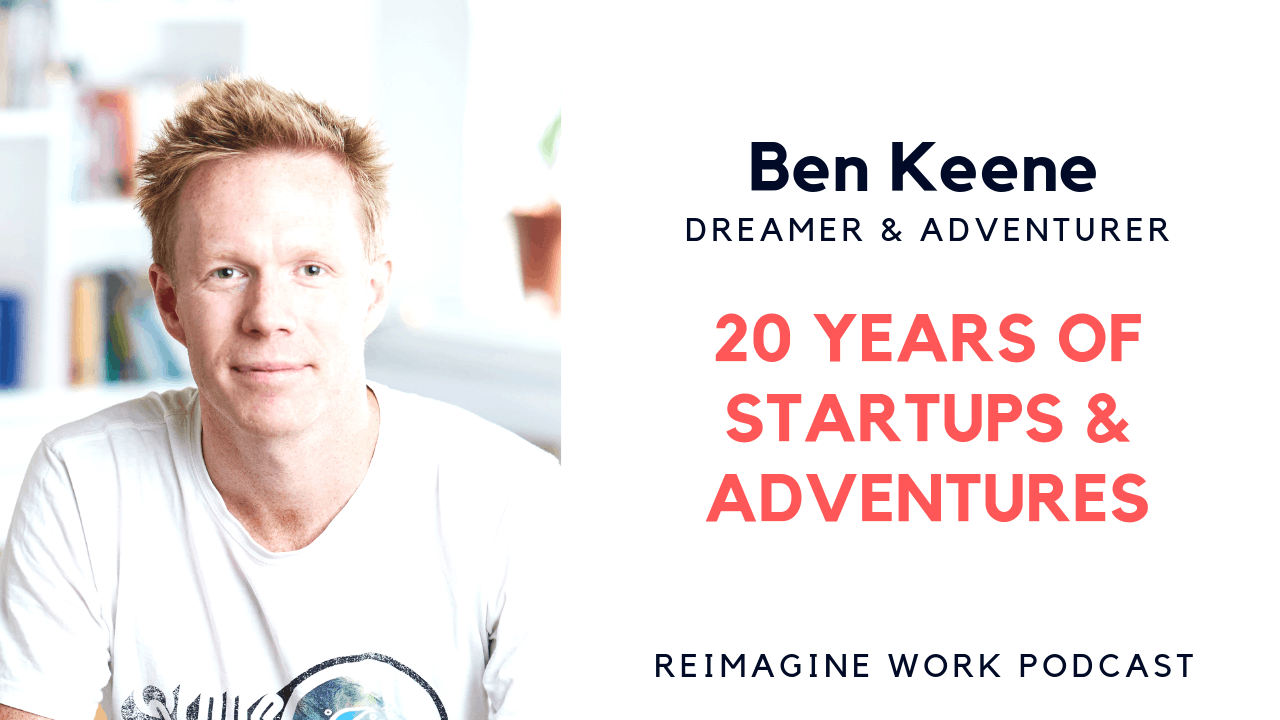
#175 20 Families as a "Traveling Village - Nikolaj Astrup on his experiment living in Thailand, Vietnam, and Japan with 20 families from around the world
Transcript
Paul talks with Nikolaj Astrup about traveling with a rotating village of families, living across Thailand, Vietnam, and Japan, and what happens when community, education, and place are redesigned together.
Read the full transcript
Paul: Today I'm talking with Nikolaj Astrup. He is the co-founder of Traveling Village, which took 20 families— he can correct me if that is the right number— but 20 families to 3 different cities over 4 months earlier this year in 2024. They went to Vietnam, Thailand, and Japan. Uh, wanted to explore on this call with him how it went, some of the lessons learned, and see what he's planning for the future. So, uh, welcome to this conversation, Nikolaj.
Nikolaj Astrup: Thank you so much.
Paul: Awesome. So I'd love just to, uh, start with like what inspired wanting to create this.
Nikolaj Astrup: Yeah, I think there's probably different things, but one thing was that we were traveling full-time before having kids, and then having kids, we had this like pretty normal, I guess, nesting thing. We wanted to go back home and build a home and stuff like that. But of course, we still had the travel bug and we wanted to travel. So we continued to travel quite a lot, but with a base at home here in Denmark. And then when we had our second child, we went on a 6-month trip. And then there was kind of— it was kind of not lonely because we met some nice people, but it was we could feel that it was not really sustainable to just keep traveling alone and just fly into a new city, Airbnb, and meet new people.
There was definitely something missing. And we kind of had this idea from before having kids when we were traveling full-time and people were questioning, what are you going to do when you have kids and stuff like that? And we would normally just reply, we will just bring our friends, then we will keep traveling. And then we did our long trip for 6 months with 2 kids. And of course there was not a lot of our friends who could join 6 months of traveling. So this idea came back to us that we should just create some kind of group.
Yeah, so that was the idea, and then we were just studying a lot about communities and how do we want to live, and we read a lot about co-housing. So, but we were not kind of ready to live in co-housing because, you know, we are Generation Freedom, so we want a lot of freedom. But we took a lot of the principles from co-housing, like for example how many people and we like the whole idea about being more a village and not so much like a group trip. So that's why we aim for 20 families. And because of Edward, we were 19 families, sadly, but hopefully he will join next time. Yeah, so that was kind of the idea.
So the idea, we had it in like 2017, I think, and it kind of developed different ways, and, you know, this is the result.
Paul: Wait, so you first came up with the idea in 2017?
Nikolaj Astrup: Yeah, just before expecting our first kid, and we were kind of done with traveling, or, you know, or we were planning on having a kid. We started with the rough idea, and the idea had different, different versions, um, and then, you know, we did our, our trip alone, and then we, we took the idea again and, and said, okay, you know, it was just like one of those ideas that keeps coming back. Yeah, you know, and at some point, you know, you can't walk around with an idea for 10 years, you have to act on it at some point.
Paul: So, so year 7, you arrive in, uh, Vietnam, uh, it's day 1, like how did that feel?
Nikolaj Astrup: That was pretty crazy because there was a lot of people that we had, that we kind of felt that we knew because we had so much time on like these calls. And then suddenly they were there in real life. And then the first day were like super crazy because there were 5 families living in one, one like co-living setup, but where there was some problems with that location. There was mold. So it was like all tossed up the first day and they all came to our co-living place where we were 7 families and we all had like this random dinner together and it was like a super crazy first day, but it was super nice and, you know, like really beautiful that we were all like, there was like a village feeling on the first day. Uh, but it was pretty crazy.
Paul: Yeah. It's, uh, it's, were there families that hadn't traveled? Because I mean, if you have traveled, you, you always encounter things that go wrong, so you sort of expect it. But I guess like bringing together a bunch of different families, it, uh, you're gonna have that times 20.
Nikolaj Astrup: Yeah. I think. I think most families were quite experienced with traveling, but still it's just so much meeting so many new people and you have to take care of your kids and you want to talk with the new people and you have to take care of the kids' needs and all of the logistics. Some people were arriving on that first day, so they didn't have a few days for settling in and stuff like that. So, uh, but it worked out and it was pretty nice. I think it was a pretty good start to the whole thing.
Paul: That's awesome.
Nikolaj Astrup: Yeah.
Paul: And so talk to me about, um, what was the setup like? How, how did you coordinate like childcare, education, like coworking, all these different things? And I'm sure that evolved a bit as you went, given it was the first one.
Nikolaj Astrup: Yeah, the whole idea was to keep it pretty simple and not have a lot of, you know, we didn't have like a built-in school or daycare. It was pretty much built on Slack and a shared calendar and some basic things that we agreed on. So for example, we agreed on having communal meals twice a week. We had work groups that work with different kind of things, um, for example finance, infrastructure, communal meals and stuff like that. Um, and then we also try to, to make a community zone in each town where we said like, this is in this city, this is where we're gonna stay, try to find a place close or near to this place. Um, so The dream was to be within walkable distance, but that's of course a little bit difficult.
So we didn't really have a childcare set up and people had different ways they were trying to solve that. We had a lot of people this time who were on a sabbatical, traveling, taking a break from work. So some did it to actually be with their kids a lot. And then we had like maybe 40% of the adults, they worked, but it was not a lot of people working full-time. And I think for next time you would build in maybe not full-scale daycare or school, but you, you would need something to so that those get, uh, like a break because it was, it was a little bit hard. Yeah.
We had one American couple working full-time US time, so they were working during the night.
Paul: Wow.
Nikolaj Astrup: And they were, they were, they were really close to quitting a few times, but they, they lasted the whole thing. And we actually got my wife Michelle's sister. She's pretty young, 21. We got her in in month 2, and she took care of that daughter, uh, in the morning.
Paul: So cool.
Nikolaj Astrup: Yeah, so it kind of worked out, but it was, it was pretty hard. Yeah.
Paul: What were some of the— what was it like with all the kids? Like, what were some— what were some of the things that went really well? What were some of the things that were some of the challenges?
Nikolaj Astrup: I think, you know, One of the good things was that we were 70 people, so I think it was 34, 36 kids, and each age bracket, there was kind of enough kids. So like for all kids, there were enough kids to play with. And my feeling is that all of the kids and the adults too, they kind of found more than one that they connected with. So that was super cool to see the kids just playing together. And that was kind of the idea to be enough people so it's not so sensitive. For example, if you were just a handful of families traveling and one family, they quit or they are just sick or they're taking a small trip, then there would be kids left with no one to play with.
But here it was not sensitive. For those kind of things. So it kind of worked out with the kids. Um, and, and, um, kids don't need a lot, you know. They— you could see that when we just had like a, like a field of grass and they had a lot of time, then it was perfect for them. So you do— it doesn't seem like you have to build a huge structure and stuff like that for them.
When they could just be together and just play and there were less logistics, then they were having a blast. So that was pretty cool to see. Plus some of the kids learning like languages and connecting with kids from, you know, around the world. That was super fun to see. And, and across ages too. I think that was super nice.
Um, yeah.
Paul: What were some of the like hypotheses you had in your mind about um, even like how your family works, and then how did this experience change how you're thinking about your family's path in the future?
Nikolaj Astrup: I definitely— we were on some kind of search for community, but the definition of community being very way— like, like not clear. We, we weren't really sure what kind of community. Should it just be here where we're living now? Should we do more here? Or should we live in co-housing?
Paul: Or—
Nikolaj Astrup: so it was kind of a community experiment for us personally to see if, you know, is it just a nice idea or is it actually worth pursuing? And I think that was the clear conclusion that that it was valuable for us with a more intentional community, like committing to a community. So that's definitely— I think this experience has helped us decide that we want to go down like that path.
Paul: Nice. And yeah, what does that future look like? Is it once a year for 4 months, or are you looking to sort of turn this into something that's longer time periods.
Nikolaj Astrup: Yeah, the whole problem with this project is that it's just, you know, for a period. And, you know, we kind of, you know, as, as a family with our kids, we, we also need more permanent community. And, you know, we actually, you know, we, we have enough friends, you know, we just need the everyday community the village feeling. So that's the downside of this project, is that it's only for 4 months. Yeah. Then you invest a lot of resources and time in people, and then you all split up again.
And I think that we, we want to keep this project as an experiment, and we want to do it every year or every second year, and we want to do— test out new ideas and go to new places and meet new people. But at the same time, we want to try to build something more permanent. And I think we actually just a few days ago took the decision that we want to build a similar project, but going to a declining village in Europe, try to find 20, 30 families from around the world and get them all to move to the same village, um, on a more permanent basis. Um, so I think, you know, without this project, we wouldn't pursue that path. So, um, yeah, so I think that's the decision that we took.
Paul: That's awesome. Yeah, it's, it's kind of scary to do that without doing the first step, right? And like actually proving, oh, people are actually interested, and then in this and it changes a lot of perspectives. But what, what sort of gave you that confidence that like, oh, boulder thing is possible and something I want to be doing with my life? Because that's a pretty big commitment.
Nikolaj Astrup: Yeah, I, I think that traveling village was kind of, at least now, was kind of really low risk. Putting that project out. You know, we just created a website and, you know, it was very— it was a very rough idea and we were kind of just searching for families who would help define it more clearly and help create it. So I didn't really feel that there was a lot of risk involved. And I've been self-employed for like 18 years. And I created so many stupid startups and stuff that didn't work out.
So this was kind of, uh, you know, uh, this was closer to our values and what we wanted as a family. So, um, yeah, so it wasn't like when we first took the decision, uh, you know, but it, but it was like a thing that we had to agree on as a family because we took a lot of time off paid work to do this nonprofit. So yeah, but I guess you have to take it step by step because before this project, I, I had like a travel company doing retreats for startups and stuff like that. I was running that for 5 years before having kids. So we were traveling around with that doing like 1-week retreats in Spain and Morocco and Thailand and stuff like that. So that was like, we did one week thing, thing, and now we did like a 4-month thing with families.
And, you know, so now the next step is doing something bigger and more like permanent, which, which is harder when it's like you have to commit to a physical location.
Paul: Yeah, there's a lot of interesting experiments happening in the US now. There's a group, Cabin, And, um, uh, Devin Zuegel is trying to build a community in California, Esmeralda. Um, but yeah, are there other communities you're sort of looking to that you get inspiration from?
Nikolaj Astrup: Milan? There's so many, there's so many popping up, you know, there's, there's a lot of, uh, small groups traveling with a teacher, you know, 7 families sharing the cost of a traveling teacher.
Paul: Wow.
Nikolaj Astrup: But I think what inspires me the most is here in Denmark we have a long history of co-housing projects, like grassroots projects being built up from the '60s and '70s. And there's so many cool places just here in Denmark where they put a lot of thoughts in the the architecture, the communal spaces. So because there's so many years now of experience, there's so many kind of best practices that you can use. And I'm not sure that like a 2030 family co-housing project is exactly the right thing for us, but I think that's super cool. And there's so many things that we can learn from it. And there's, you know, in the US there's people, Cul-de-Sac, I think it's called, like where they're building a whole neighborhood.
You know, I love those kind of projects. So yeah, I'm kind of inspired by them all from the physical to the traveling and the alternative schools. There's so many alternative schools popping up. Yeah.
Paul: Nice. Why not just do something in Denmark if there's a history of that?
Nikolaj Astrup: I don't know if you've been here during the winter, but it's pretty cold.
Paul: It's true, I have, I have. Yeah, there's not much sunlight.
Nikolaj Astrup: Yeah, no, we actually have, you know, we, we live really nice here. We have a really nice neighborhood and a really nice community here. But it's only during the summers. We have a communal yard and the kids are playing around and it's so nice here during the summers. But as soon as the weather changes, it's just, it's done. And people go back to their apartments and yeah.
And we want to do something where the people who sign up for it, they do it with more intentionality. Like they kind of commit to community and we can do, then you can do cooler stuff together, I think.
Paul: So 20 families, how was that in terms of like number of people? I mean, if you go much bigger, the order of complexity gets a lot crazier.
Nikolaj Astrup: Yeah.
Paul: And it sounded like it was a good number in terms of like everyone is able to find at least like their other person, adults and kids. But yeah, would you expand it or shrink it if you were to do just the traveling one again?
Nikolaj Astrup: I think, I think there were so many things that you could change. And but I think the number of people was pretty spot on. It's, it's, it's enough people. So, you know, there's someone you connect to. You connect with. It's not really sensitive if people are dropping out or getting sick or, you know, stuff like that.
But it's not so many that, you know, it's too much. You really fast, you know, the names of all of them and the kids, they know the whole group. It's also important that, for example, we have a quite sensitive son, so you have to really design experiences and communities with thinking about, you know, people who are not like extroverts and where big group things can be more difficult. So we were kind of thinking a lot about him in the design process, and it kind of, kind of worked out for him really well that he, um, he pretty fast, he knew like all of the names, all of the kids and their dolls and stuff like that. So I think the number of people worked out pretty well. If you are more people, then it's really difficult to get the whole group together.
And I don't think a village, you shouldn't be together the whole group. Um, but, uh, you need sometimes where the whole group connects. Um, and we, and we had communal meals twice a week. Which was maybe a little bit too much. But I think if you were a lot more people, then it would be completely crazy with those big meetups.
Paul: Yeah, you said there would be some other things you'd change. What specifically stands out if you had to give one or two things?
Nikolaj Astrup: I think, you know, the physical environment you're in is so important.
Paul: Uh, yeah, it seemed— I was following it along. It seemed like the Thailand one wasn't your favorite location.
Nikolaj Astrup: Yeah, that was the favorite one for the kids because we were all living in the same place and they were just running around naked at the beach and just going crazy and just being crazy kids. And, um, that was kind of my dream that we could all have the community just outside the door. But I think for a lot of the adults, it was kind of rough because the place we were in was not that good. The temperature was just too hot and we didn't have a good communal space and stuff like that. And, uh, it, you know, so one thing I would change would be going to more second-tier places, um, like after the most touristic, uh, path. Because it makes no— like, that made sense for this version because we needed logistics and we didn't need to make it super hard to plan.
But it makes a lot of sense to go where our money has a bigger, like, like, more value, um, and where the local people appreciate it more. Yeah, but The big thing would be like the structure, like how do you live? Like my dream would be that we could all live in our own space, our own real apartment or house, but being walkable distance to the community. And this time we were kind of like my family, we lived in like just one room for 4 months, like in, in hotels because we wanted to do co-living. But it's not sustainable for us with two small kids to just live in one room. It was too much.
Paul: Makes sense.
Nikolaj Astrup: So the walkability, maybe, you know, I would love to have like a communal space for the whole group to default to where we could go, which is insanely difficult to find when you're just in a place for 30, 35 days. The idea I have right now is to go like further out in smaller villages and then, you know, rent a big field and then rent like a huge tent, like a huge circus tent or something, and we could use that. But yeah, the walkability and better, better living spaces for people.
Paul: Awesome. What, uh, what are the plans for Village 2?
Nikolaj Astrup: I think the Village 2 plan right now is to plan it at some point. Uh, I think we are, you know, as a family, we are totally convinced that we want to do it again, but we are still— it's just been one, one month or 5 weeks since we arrived home. So we're kind of still landing, uh, still digesting. And so we definitely want to do it again, but I think we still need to digest the whole experience and look at the things. And especially if it's a nonprofit project, like what the first time, it was so exciting creating it, you know, like getting people together and this is all new and it was like an It was a really special feeling traveling out and meeting up for the first time, and that would of course be less exciting the second time, you know, if it's just a copy. So what kind of things would you, would you change so it would be exciting the next time too, or what can you improve?
It's also difficult because I don't want to make it into this perfect project because one of the The design principle was that it should be kind of— there would be difficult things. It would not just be an easy vacation on the beach. We have to go through some kind of hardship together because that connects the community somehow.
Paul: Yeah, that makes sense. And would Village 2, you think, be more of like a prototyping of the long-term vision or just sort of another version of this? Because I imagine it'd be a really good way of like trying to find families who would actually want to do the longer-term thing too.
Nikolaj Astrup: Exactly, exactly. That's my, that's my thought right now is to try to combine those two projects. So maybe do a traveling village where we only go to Europe, but a part of the project, or at least the setup, is that we could also research for more permanent places. So maybe you go on the traveling village, but you maybe you would like to also find the permanent, uh, that's kind of this overlap between the projects, so you could combine them a little bit. So yeah, that's my idea now, that we would go to Europe and, and then do a lot of like village, like research.
Paul: That's awesome. Milan asked, how do you learn about these emerging experiments? Like, are there good resources you recommend? I, this is something I've actually been digging into as well. It's very like word of mouth and one-off. But there, there does seem to be a growing ecosystem of this.
I can share some links in the chat later too. Like Supernuclear by Phil Levin. He's writing a lot of interesting stuff around this. Cabin is a community starting, started in the US. I know John Hillis who founded that, but yeah, any other like specific recommendations for where to find ideas around this kind of stuff?
Nikolaj Astrup: I think it's kind of one of those rabbit holes where you start following one guy and then he You know, it's, it's a whole like grassroots thing, you know, where, you know, Paul, you're sharing projects and stuff, you know, so then you find the next person and then suddenly you're following 300 people, you know, within the same space. But I would say that, that there are, if, if we're talking about the like the more traveling part, then there's a lot of Facebook groups And it's especially like the moms, they are like doing a lot of, there's a lot of world schooling hubs and there's so many projects. Some of them are just like one-off, but there are some who are traveling longer term. For me personally, it's like a combination of the Facebook group, the whole world schooling, unschooling, homeschooling community.
Then I follow a lot of co-housing projects more in the architectural space, the urban planning space. And then there's this connection with all of the makers or startup people because there's a lot of those kind of people. They are living kind of alternatively or when like nominally. And then a lot of those people are having kids now, you know, and they are kind of searching for different projects. So it's kind of this combination of different pillars or different worlds where there's some connections between them. Oh, you're, you're muted.
Paul: That's what I'm finding, as well. Let's see if we have any other questions from the group. You can either put it in the chat or just unmute yourself and ask the questions. Any questions for Nikolaj?
Nikolaj Astrup: Yeah. I have— I'm curious, Nikolaj, now that the, you know, the village is over and everyone's kind of gone back to their separate ways, I know most families have either arrived home and are kind of spring cleaning and getting everything set up or still working on that. Um, are you still all kind of, you know, keeping in touch and chatting, or is everyone collectively kind of like, we need some space for the next month to to figure out our family. Yeah, it probably varies a little bit from person to person, but we have a WhatsApp group that's, you know, where people are sharing quite a lot and staying in touch. And like, yeah, and we had— there was some families staying in Japan, traveling together for, I think, more than one month.
And I know that some families have made travel plans together and shared those plans so people could join from— I think it's from November or something like that. Um, the problem is of course that, you know, you could have the intentions of staying connected and, and stuff like that, but we're all going back home or moving on, and we're all busy with different things, and we're all living far away from each other. So it is probably one of those things where in long term it's going to be really difficult to stay connected. But luckily a lot of these families are maybe not traveling full time, but they are having big periods of their life where they are traveling. And a lot of those families love the social part. So I think we'll see a lot of the families who went on this trip meet up and join and share their travel plans.
So for now it's still on, but it will probably, I think that's natural that the communication will decline, but it feels like we have friends around the world now and I hope and I think that all feel welcome to come to our place in Denmark and we can go to the US and we could do an amazing road trip and meet you guys and 6 more families and stuff like that. So, um, yeah, so hopefully we will stay connected.
Paul: That's awesome. What around— more around the, the kids, I know there are kids of pretty wide ranges. What were people doing practically for like homeschooling and things like that?
Nikolaj Astrup: You had, you had some families doing more structured schoolwork in the first part of the day. And they did that by themselves. Uh, but most families here were like unschooling, I would say mostly. Um, and then we also had quite a lot of families doing like a sabbatical, longer trip kind of thing. So where they also took a break from school. So some, some are going back to school, I hope, and I think that it was, you know, one lesson from the whole thing was that, you know, these kids, they learn quite a lot if they're just in a nice environment.
You don't need to give them a lot of— you actually don't need to teach them that much, you know. So yeah, yeah.
Paul: What, what are— I'm curious, generally, what are some of the scripts that, I mean, you've been self-employed for 18 years, so you've been doing this longer than me, but, and I know Denmark is a very sort of like traditional path culture, similar to the US. Like what are, what are some of the scripts you're seeing among other parents, people in your community that you're seeing people are questioning or rethinking?
Nikolaj Astrup: I think we are pretty lucky as a family here because we are It's, it's really, we really want to go into unschooling, homeschooling direction.
Paul: Yeah.
Nikolaj Astrup: And there has been the last years, there has been, there's definitely a development, a community growing here in Denmark. Um, it's super, super niche and it's not big enough right now that you could do for-profit pro, like projects here. Uh, it would be really difficult for us to create a, like a learning center or an unschooling thing here because there's not enough families and traditional schools are subsidized so much. So it's really difficult to do alternative things, but there is a big like grassroots community growing. So it's not that difficult to connect with other people doing something similar. The problem here is we have one of the world records for, I don't know, world, but in Europe with small kids going to daycare when they're pretty small.
So you have a lot of people here in Denmark who want and designed their life to have the kids home when they're really small. So that's a big part of the community. But as soon as it's school age, they drop off and they go to normal school. So the whole homeschooling community is, that's, that's still really small here, really neat, like niche. And there's not, there's not like really a place in the country where people are moving to or they're going to. I think the US, there's the community is bigger.
Paul: Yeah, for sure. Awesome. Any other questions from the community? John wants to know, where do we sign up? I think travelingvillage.com, there's a sign up now, but any other, um, tips for people? Do you, do you think the second one is gonna be like too many people interested?
Nikolaj Astrup: Yeah, I think, yeah, yeah, I hope so. But I think the first village we actually had, uh, combining all, we had 79 families applying at one point. Um, we actually had 8 families drop out. Um, we had them signed up in February or March or something like that, and then during the summer we had 7 or 8 families drop out. Yeah, makes sense. So we improved the whole signup process, the questions and stuff like that.
Yeah, so I hope that will be enough for Village 2, but it depends on how crazy we decide on creating it.
Paul: Yeah, I guess the challenge is always people's schedules. Milan also asked if you're curious about building more than one hub. In the future? And I guess that kind of relates to my question of like, why not try to make this like a business or try to find some sort of funding?
Nikolaj Astrup: Yeah, yeah. And, and I'm still thinking about that and doing that like direction. It's still pretty new to me, the whole thing. And it was just like an experiment and it was an experiment for our family. But definitely, if it's going to be sustainable in the long run, it has to be, you know, you have to work more permanently with the locations, local partners, and you have to make it for-profit. It's not going to be sustainable to do it in the long run, a non-profit, I think.
Um, and I kind of like the idea about having different hubs and, you know, a winter hub and a summer hub, as Milan writes. So that's definitely one idea. Another idea is to try to create, you know, just the platform. I know that's a, like, a crappy word, but like, to, to give the tools so more people could create villages and stuff like that. Um, but I also just like the idea about the whole thing just being, you know, for fun, and it's an experiment, and we're just trying stuff out, and, you know, I think it's a little bit complex when it involves your own kids, because you want to have that, your own kids and their need as, as your main compass.
So that's what's keeping me back right now for doing it more for profit is that, you know, then would I take decisions for, because it's better business if we go to this place, twice a year, you know, and I want to keep the kids' needs and our family's well-being as the main compass. Um, so there's so many ways, directions that it could take, and it's almost too much. I, uh, so it's so difficult to kind of decide what to do.
Paul: Yeah, I imagine it's the kind of thing where people are very happy that like you're the leader and want to follow you, but then also on the leader's side, like, there's— that's a lot of responsibility. Yeah.
Nikolaj Astrup: And it's, it's when you have something that's kind of a small momentum and then, you know, it's easy to act on the momentum and all of the positive vibes and reactions. And but we also, we have to remember our own, like, what do we want to do as a family? For the next years. And my wife is working too. She's self-employed too. And, you know, this project could easily take up a lot of time and then, you know, her focus stuff, you know, they get less attention.
So yeah, so it's kind of difficult, you know?
Paul: Yeah, you don't want to create a full-time job for yourself.
Nikolaj Astrup: No, that would be the worst. Awesome.
Paul: Any more questions from the group? I think we covered most of the questions people are asking.
Nikolaj Astrup: Awesome.