What happens six months (and three months) before you quit? - Michael Ashcroft
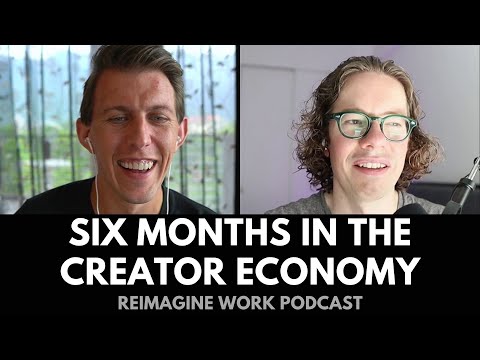
I talked with Michael Ashcroft six months before he was planning to quit his job. We talked about his plan to quit his job, what was going through his mind, his fears and what he expected might happen.
We then chatted again three months later after he submitted his notice and checked in on how he felt
Transcript
I talked with Michael Ashcroft six months before he was planning to quit his job. We talked about his plan to quit his job, what was going through his mind, his fears and what he expected might happen.
Read the full transcript
Paul: I am talking with Michael Ashcroft today. We are doing a bit of an experiment. Uh, I have been navigating the self-employment journey for the last 3+ years and connected with many people, including people like Michael on Twitter, who is contemplating taking his own leap. I think he is, um, on his way to making a leap. And we thought it'd be fun to document what the journey looks like. So I want to talk with Michael today before he's taking his leap, as he's preparing, how he's thinking about it, what he's afraid of.
And then we're going to do another interview maybe before he takes the leap and then after and kind of see what changed, what evolved. So welcome to this experiment podcast episode exploration, Michael.
Michael Ashcroft: Thank you very much. It's going to be good fun, I think, to have different snapshots of this journey that I'm going on, particularly given that we're doing this almost in secret from the rest of the world at this point. And then in the future, it'll all come out at once. It should be good fun.
Paul: Talk to me about your story you have about who you are today.
Michael Ashcroft: Sure, good question. So, um, I guess there's a couple of, uh, ways into this, different perspectives on the same narrative. I'll give you the, uh, the conventional professional one first, um, and then we can dig a bit deeper. So right now I am an engagement manager at KPMG. Uh, I work in infrastructure advisory, working for many clients in the energy system, how they navigate the transition to what we call net zero carbon emissions, which is a big initiative in the UK, part of the decarbonization plan. I've been working for the last 10 years in energy system innovation, physics, all that kind of thing.
So it's kind of, it's a very, quite mainstream seeming. I can attach it to things like innovation is just green spaces. This is part of my narrative. I've always been the guy who's worked on climate change type things. Now at the same time, there's a kind of secret life on the side that's, I guess, quite public on Twitter, so it's not that secret, but it's secret from the people at work, which is that I'm also a life coach. I'm a design technique teacher.
I'm particularly interested in stuff like undoing coercion as we apply it to ourselves, helping unlock the innate capacities that we have. And I really think that as we scale up the undoing that we've placed on ourselves, that would unlock much broader and more effective capacities within ourselves that are currently being impeded by different kinds of programming. So that's the other half that I'm working on on the side at the moment and hope to branch out into one day.
Paul: So when did this secret personality start to emerge?
Michael Ashcroft: I mean, there's always been the secret side personality. It's just kind of had different shapes over the years. I guess I started the Alexander Technique training when I was 26, so in 2014. I didn't know where it would go. It was just like a hobby that I just kept going back to. And as I progressed up the corporate ladder, I found myself kind of enjoying it less and less.
I had a burnout experience around when I turned 30. 31. Um, and ever since then I've not really recovered. Um, so I think I haven't really healed from that.
Paul: And how old are you now?
Michael Ashcroft: I'm 32. So it was when I was, I turned 30 and burnt out basically, um, pretty much the same time.
Paul: What do you mean by burnout? I, my working hypothesis is that when people are talking about burnout, they are really talking about something that is like a disconnect, right? There's, there's some part that was either believing the narrative of a career mindset or who they were as a person. And then something kind of breaks, right? Some people have described it as like the soul, right? You're realizing the soul has been numbed.
And then burnout is really the slow kind of like, this would be like the David White view of things. What is burnout for you?
Michael Ashcroft: So my experience was quite stark. I'd been working pretty intensely for about 4 months, kind of the 70, 80 hour week mark, which basically just means kind of go home, turn the laptop on, weekend, turn the laptop on kind of thing. I didn't have to, but there was various reasons I kind of felt like I should. And then one morning, I kind of just woke up and I was basically dissociated. So I was looking at my laptop and it didn't make sense conceptually. I was looking at a bright screen of colors and shapes, but I couldn't make sense of the meaning behind any of these things.
So I was just like looking at, you know, literally like not emails, but like shapes of letters. And I couldn't go beyond that. And I went to the doctor and I just, I didn't know what was going on. It was quite scary. And that actually took me a few weeks to get back to a kind of sensible baseline, and then a few months to get back to kind of working, workable baseline. And I still think that in the work context, I now have a kind of shield mechanism that prevents me from really fully engaging because I know that that's possible.
So I'm still at 75% capacity all the time in the corporate office, that kind of— my own stuff, I'm fine, but in that context, there's a kind of a handbrake is still on a little bit.
Paul: Wow. What have people noticed at work?
Michael Ashcroft: So I've changed jobs since then. That was my old employer. People definitely noticed at the time because I had to say things. I think in my current position, people probably think I'm— what's my perception— that I'm a little bit lazy, that I'm not kind of playing the game that they're all playing because they often will work stupid hours from my perspective. Or that I just have very firm boundaries, which is true, I do. So either they think I'm immature with my energy or they think I'm a slacker.
It's hard to tell. We don't really talk about this stuff particularly openly.
Paul: How have you made sense of that experience? What is— because I think a big part of— I had probably not as an acute burnout, situation, but I resonate with almost being frozen. Right. Um, and I really had to kind of understand where that came from for me. For me, it was, I had kind of become a person I didn't like, and that scared me so deeply that I was almost frozen to continue. Um, like I was so scared to keep going to find out what would happen to me.
Like I was giving over power to the system. Um, and that was kind of the trigger. I like had to escape and I didn't have as much of a plan. And we'll talk about what your plan is, but what's been the narrative for you for like sense-making of that?
Michael Ashcroft: I feel like it was a message from a part of me that knows or knew better than the rest of me knew at the time. Kind of, this is not the path. And I've always dreamed of having a portfolio career, being free of the structure of employment, but I wasn't really doing anything towards it materially. And then this happened and I just suddenly realized that I'd never forecast myself 5 years into the future and thought, yeah, I want my boss's job, or I want their boss's job. I'd never wanted that. And this was just a kind of being hit around the face by myself.
Kind of reminder of, hey, I'm gonna make you suffer for a while so that you finally take this thing seriously. And it's been drawn out. It's lasted a few years of long dark night of the soul kind of thing, which I now think I'm emerging from. That kind of identity conflict was definitely quite a strong one.
Paul: Yeah. One thing that jumps out with the things you're creating, I think you're sharing things around the Alexander Technique. I think you're sharing things around writing, your own journey of making sense of what happened. And I just get a sense of seriousness with what you're writing about. Like, this matters. Like, this stuff matters, right?
And I think that is really impressive to see because there's, there's so many things pushing people to not share. To not put themselves out there and just to keep people— people are happier if people kind of don't make noise, just put their head down and go with the flow. Does that resonate with how you've kind of thrown yourself into all these things you're creating?
Michael Ashcroft: Yeah, very much so. And it wasn't planned. It's entirely emergent. So last year I took Building a Second Brain and then went through Write of Passage about this time last year, and I realized that I could share my process. And by sharing my process, I discovered my process. I discovered what works and what I like, and all this stuff just kind of happened by itself.
If I, you know, I couldn't have coached myself into this, I think. And similarly, with the Alexander Technique stuff, it's probably the worst thing you could pick if you wanted to create a kind of online business thing. There's no language around it that makes any sense. It's niche, it's obscure, it's terribly named, and it's almost like a wordless experience anyway, even in person. So I would not have picked this, and yet here I am, because it just kind of, it kept coming up and I was like, oh, this is cool, I like this, I'll just see what happens, and then here I am. About to launch a course on it.
But I didn't kind of think, oh, I'm going to do a course on design technique. It just kind of kept coming up. It's like, talk about this, talk about this, talk about this.
Paul: Right. Yeah. I mean, that resonates with me. I think my approach has been, how do I go as slow as possible while still listening to the signals? Right. There's all this tendency to be, you have to make money, you have to scale, you have to take advantage of every opportunity.
And I've kind of, I see those opportunities and I kind of just block it, say, okay, not yet.
Michael Ashcroft: All right.
Paul: I need to hear from a few more people. And then people start saying, okay, this is resonating. And then that's kind of my own cue to say, okay, is this something I want to actually do?
Michael Ashcroft: All right.
Paul: I'm going to focus on it. Um, so it seems like these things are resonating with people. You've started to make money doing things on the side, which I think is a huge first step for people. I made a little bit of money on the side doing random things, but even that just gave me confidence that I can make money in a non-paycheck way, that like it was possible. So where are you on your journey and what do you see as next, even if you don't have set timelines?
Michael Ashcroft: Yeah, it's a funny one because I can see myself holding on to both identities at once and the old one hasn't let go yet. So right now where I am is I spent the last couple of months doing these taster calls with people from around Twitter, which has been great. I've done about 30 now. And I operated them on a generosity model, so pay what you want kind of thing. I think it's more than $1,000 now people have donated, which is just amazing. Given that I didn't necessarily ask, charge them for this.
It's just they wanted to give me a contribution. I'm also coaching people. So I've got 3 or 4 clients who I coach in my evenings, kind of the 8 PM UK thing, people in the US, which is great. And I'm building this online course based on the calls I've done, which it kind of just reproduces the structure of the call and is designed basically to kind of remove the need for me to be there. Because I now have a long list of people who want the call, but I haven't got time for that. So my plan is to launch that and do some coaching at the same time and have that support me on an ongoing basis.
In terms of timelines, I'm a little bit caught up because like there's certain dates at KPMG where all your sign-on bonus will release itself at this date, the annual bonus is on this date, there are these projects going on and Honestly, in the context of haven't yet proven that I have anything to jump to, expensive flat here in London, and old identities, the actual quitting moment is a terrifying prospect. It's fine to build stuff on the side and that's kind of fun, but then like it suddenly becomes real and that's not quite there yet. But I have a provisional date of end October for when I resign in my mind.
Paul: Yeah. I found that most people I know, there's no perfect date. The way the corporate world is set up is it's almost— there's almost always a looming deadline in which you'll get more money, even just the monthly paycheck or weekly or however it's paid. Right. It can be so big that it's like, okay, another month I'll save this, another month I'll save this. There's no like right moment.
I'm the worst person to take advice from. I left after like 2.5 years, and if I just stayed, I would have made another bonus and another, um, kept some of my sign-on bonus, which is pretty sizable. Um, but yeah, so October, what are you afraid of?
Michael Ashcroft: I'm afraid that the whole thing won't work. Um, even though I have now plenty of proof points, I've built a lot before taking the leap. I guess I'm afraid that for some reason this whole thing is an illusion in some way. I think a bigger fear though actually is that whatever it is that's stopping me from performing highly and enjoying my corporate jobs will show up in the side thing, if you like. So currently it's not my job, it's a hobby, therefore it's fun and free and easy. But suddenly when I have to support myself with coaching and courses and freelance consulting or whatever else it might be, I'll feel like that coercion element again and kind of resist and then suddenly find myself without a regular paycheck or sick leave or whatever else to fall back on if I need it.
So that's probably one of the big fears as well.
Paul: And that's real. I think I've experienced both. I think a general feeling of this might not work, what happens if I can't support myself doesn't really go away, but I've almost come to see it as a feature. I've kind of tamed it a little, but I see it as a feature. Now it's basically reminding me that I am responsible for my life in a way that I didn't get as a paycheck employee. Um, even though I was, I was just kind of a little blind to it.
Right. You can get fired, but from knowledge jobs, it's not that easy. You need to put in a little effort to get fired.
Michael Ashcroft: Oh, totally. Yeah, no, it would be quite impressive at this point to get fired, I think.
Paul: And the second fear, that's a hard one too. I think that's something I've really been afraid of. I'm constantly talking about this with my wife too. It's like we can't create jobs for ourselves. We need to keep this playful, fun, engaging, and aligned with like the things we actually want to keep doing. For me, I'm willing to compromise a lot of money to make sure that happens, not pursue consulting projects that could pay me more, make me feel more financially secure, not pursue things at a faster rate that might make things more stable.
Do you, have you ever gone through the exercise of, so I have two statements I typically have people go through when they're about to take a leap to freelances. Like, I, and you fill up these statements. It's like, I am still a good person as long as I earn X this year. Have you gone through that mental exercise?
Michael Ashcroft: I've not, I've not. Yeah, no, I haven't. I think I have some implicit beliefs in there. And I think from what I've been saying to friends and family, I've been kind of benchmarking against my base salary currently, which is silly because that's a fairly large number. But it's kind of how many coaching clients or sales of coaching courses would I have to do to meet that number? That's kind of where our benchmark is.
It's not coming down. No bonus, no annual leave, no healthcare, whatever. But it's still benchmarked against my current number that hits my account every month. If you like, that isn't sustainable. I think they'll have to come down for a while. And if it goes up again, then cool, but I need to make that adjustment.
Paul: Yeah. Well, that's why I like the exercise because you actually have to write it down. And if you're about to write your former salary, you're like, wait a second. And then the other statement is, how many months are you comfortable going without earning an income?
Michael Ashcroft: Yeah. Okay. I haven't done that one either. I've thought about it and honestly, it's not long without earning any income. I think this is why I've been putting so much work into building up stuff on the side, because I mean, my background is not particularly wealthy. And I've, I've only been earning highly for a couple of years.
I was at high cost. So my savings is fine. I could last like a year. If I sold everything. But I don't think— I don't want to do that because it took me so long to get here. It took me 10 years of working to get to a point where I could last 1 without working.
I don't want to go another 10 years, have to earn 1 more year off, if you like. So I have quite— I guess I do have quite high money anxiety on that if I look at it from that perspective.
Paul: Yeah, I think so. The way I looked at it was I I worked backwards and I said, okay, what does my life cost? What does a good life cost? And then I said, okay. And this was when I was in New York. So it was actually pretty high, but it was a lot less than what I was making.
And I said, okay, this is what the life costs. I have that much in savings. This will give me about a year of this life. And if I don't earn any money, this is kind of an investment in just life, like living. Um, and then when I left, I actually dramatically lowered my cost of living, so that got extended. Um, and then I started to make money and I said, okay, now it's like, let's keep this going for 5 years, right?
Um, but I think when you're in your shoes, you're very just Like the first 3 months are going to be terrifying. Like how, how are you prepping for that or thinking about it?
Michael Ashcroft: So I guess there's a few big things that are aligning kind of naturally. So I rent a nice one-bed place in London. The contract ends in April, which is roughly when, if I were to stay until my bonus, which I probably won't do, then it would be the same time. So at that point I wouldn't renew. I'd have, I would say I wouldn't take on another 2-year expensive contract. I'd go somewhere else.
And it just brings up all of this, oh, I'm quitting my 10-year job, my career, if you like. I'm leaving my home for the last 3 years. And then what? So I think what I'm doing is just building up enough of a picture of what then what looks like enough of a financial buffer. I could, I could totally quit now. Forgo those 2 bonus points and just hope for the best and I'll be fine probably.
But I am finding myself, and I know, build up an emergency fund. I use YNAB, like how many months ahead can I fill up all my budget categories, if you like? How much revenue can I already get from coaching? How many, like, can I get a course out there and prove already that I'll generate this much money? All of these things before I let myself do this, um, even though I know I could do it now and probably survive.
Paul: Yeah. And would people help you if you ran out of money?
Michael Ashcroft: Yeah, totally. Um, but there's a feeling of failure in that.
Paul: Yeah.
Michael Ashcroft: Isn't that weird, right?
Paul: That we think of that as failure?
Michael Ashcroft: Yeah. Cause it's like, If I'm going to take such a big risk and leap and then fall flat on my face, that kind of implies I didn't think it through or that I'd let go of, you know, particularly in a pandemic, right? I mean, people are being laid off left, right, and center. I'm— me and my colleagues are very much like, we're very lucky to have jobs. We're very safe and protected from all this stuff. And you're going to quit in the middle of this?
It's very easy to then kind of look back and think, well, that was dumb, wasn't it? And I guess I want to avoid finding myself a situation where I didn't give myself enough runway, I didn't think it through enough, and I end up just having to come back to another job that I didn't necessarily want because it didn't work out.
Paul: It's been incredibly helpful to, one, make friends. And I think it's something you probably have done better than I did. I think there's a better ecosystem around doing what you're about to do. Now than there was 3 or 4 years ago. How are you thinking about just your friendships and like your current friends who are gonna probably— I imagine most of your friends will stay in the corporate world for the rest of their life. Um, how are you thinking about that?
New friendships, how you want to live in the future, or are these just things you don't want to think about because they're too uncertain and stressful?
Michael Ashcroft: I am thinking about it. I guess I'm fortunate that most of my friends in London are actually like, they're international. They're not British. So Italian, my girlfriend's French. Most of my friends are from Europe actually, which means that there's always been this idea in my mind that they might just go home at any point. It's very much like being from nowhere rather than being from here kind of vibe in my life.
And at the same time, I think I'm— I don't know, for some reason the generation that I am, we are growing up with the internet. Making friends online isn't impossible. There's a way of doing it. We're having a conversation because of very— we had various touch points, we reached out, and that was good. So I'm making loads of friends via Twitter, plenty who I met in real life as well. And I kind of have this confidence now that that could just carry on and I would meet new people when life restructures.
So I'd hang on to the old friends who I'm going to stay in touch with. Some will fall away and others will kind of emerge and that's fine. But I guess as you were saying, when you did this, there was no ecosystem of this part of Twitter, shall we call it, where you can kind of trust that that exists. So I guess you were kind of more alone in your journey than I would be going into it now. So that feels very different.
Paul: I found out about, uh, K. Hee. I don't know if you know him, but, uh, about what was it, 6 months after I left at a conference. And then I read his story and I was like, oh my God, there are more humans like me who blew up a life that made sense. And It was such a key part to my journey. And I think there's a shared vulnerability when I talk to other self-employed people, it's like, oh, hey, you don't know what the future looks like for your life too.
So let's form a deep friendship just in case we actually need each other. Um, but in a genuine way, it's not like a, um, understanding, whereas like full-time paid knowledge work is a very, very unique setup in history. People are making enough such that they almost don't have to rely on any relationships to get their needs.
Michael Ashcroft: Yeah.
Paul: Did you find that change as you started to make more money?
Michael Ashcroft: Oh, interesting. So I definitely, I can now live on my own, which was a big change from earlier on when I had to share either with friends or with partners. Yeah, actually I have found that, and I can see it continuing, that the more I earn, the more I could become insular, the more I could rely on food delivery services and just kind of stop doing the things that make humans human. And of course, when you do that, the time available can easily fill up with more work. So you earn more such that you can pay for someone to clean your house, that you can pay for someone to make meals for you, that kind of thing. And you realize that you're part of this— it's not quite the rat race, but you're paying for things that you wouldn't otherwise need if you didn't do the job you were doing.
So it's interesting to see how that will unwind itself as well. Suddenly when the idea, the opportunity for connection with people, um, the opportunity to do more things for myself will reemerge.
Paul: What's your prediction for how you think this will go for you?
Michael Ashcroft: I, I'm quietly confident actually. Um, there's a couple of big unknowns. Um, so I don't know what my living situation will look like, but I'm sure I'll figure it out. But I, I think, I feel like I've proven enough to myself now through side experiments, and I have enough of a following, for example, that I can survive for long enough. And once I've let go of the, the job situation, I have a suspicion that a whole bunch of energy will get unlocked. And I'll just start doing things and creating things and talking to people and going to places and whatever else that I cannot fundamentally imagine right now.
And it'll be that stuff. That shapes my life going forward. And what I'm doing now is a kind of— I want to keep coaching, I want to keep making courses, I want to keep teaching design technique, but it's not all I want to do. And I'm curious, like, what else will show up. And that's why I'm doing this. It's in service of that guy that I'm doing all this, I think.
Paul: Yeah, it's, uh, I read this book, uh, Rebecca Solnit's, uh, book, A Field Guide to Getting Lost. And I think one thing that like knocked me away was her quote is, "The thing that nature of which is totally unknown to you is usually what you need to find. And finding it is a matter of getting lost." And it's, it's so good. And I don't think anything captures, uh, what happened to me better than that. But I became lost without the intention of getting lost. And I feel so lucky that that happened to me.
And that, that is so hard to articulate. And I think it's so cool that there are people that are talking about these things now, and you're kind of going into it knowing that you might get lost, but there could be something on the other side. I have this model of taking a leap, which is, um, people, a lot of people struggle at work and have this desire to escape. And that's kind of like the certain pain, right? And then leaving on your own is like this uncertain pain, right? And most people are going to choose the certain pain over the uncertain pain.
And that makes perfect sense. But the only thing that tips the scales to go towards the uncertain pain is if you pair it with a certain sense that you might find something interesting. And it sounds like that's where you are now, which is really cool.
Michael Ashcroft: Yeah. I've always had this, call it an implicit sense of you should just do this. Don't ask why, just believe me and you'll find out when you get there kind of thing. That's how I went into Alexander Technique. I had my first session and found it baffling. But I was like, oh, this is really important.
Keep going. You'll find out later why this is important. And I think now I am, maybe I will even more in a few years' time. So I definitely have learned to trust that mechanism. And at the same time, I think for your model, if you've experienced the kind of the pain of the certain pain in a certain perspective, and suddenly you realize that it's intolerable over your entire working life, it's like, oh, it's this every day for 40 years, if not worse, because I'll be moving up and more responsibility, more stressed. And you just think, uh, no, I don't want that, thank you very much.
I'll go and explore the uncertain pain and the uncertain benefits for the I can't keep doing the known pain in this way and then look back and think, well, I wish I hadn't done that.
Paul: So fast forward from that part about 3 months later, and Michael has just quit his job. Let's check in and see how he feels.
Michael Ashcroft: So where we are now is that today is what, Sunday, 15th November, and I just resigned from my corporate job, um, on the Wednesday just gone.
Paul: Wednesday.
Michael Ashcroft: So I am on Wednesday. Yeah, it's very fresh. So yeah, so very much like in the notice period, which in the UK is 3 months for me. Um, and yeah, gearing up for a massive life change, honestly.
Paul: That is, uh, so talk me through like that day. How are you feeling going into it? How did you decide that day? And, uh, What were some of the like expectations versus reality that happened?
Michael Ashcroft: Yeah, it was, it's an interesting one because I've, I've had it on my mind for a while. Obviously we spoke a few months ago and it's been in the background. And the thing that actually caused me to pull the trigger was quite mundane in its way. I think there had to be a catalyst and that was the fact that, so I live in a one-bedroom flat here in London. It's quite expensive. And the lease on it expires in March.
So I'd have to renew it for another like 18 months, 24 months, and commit myself to a high income to be able to afford this place. I was like, I don't want that. I don't want to renew this place. And then layering into that, like, actually, I don't want to leave this flat at the same time as I leave the job. I want a good month's clearance just living here. So I can kind of decompress and think about what I want to do and live off savings or whatever.
And then I just suddenly realized, oh, that's now, like I have to quit now kind of thing. I just misjudged the date. So I looked at my lease and was like, oh, I should just quit now then. Okay. So I did basically. And in terms of actually quitting, it was, I mean, I've done that a couple of times now, but it's never not weird.
Yeah. So I went through, like I spoke to a couple of my trusted colleagues and I let them know um, like working up to the director, um, who was surprised. Um, I think no one tends to quit the month before the bonus comes in. Um, it's quite an unusual time. Um, and then I filled in a form, and of course it was a form because that's as impersonal as it could possibly be, right? And, and so it goes.
So that's, that's it.
Paul: So you actually giving up your bonus by leaving now?
Michael Ashcroft: So I would be if there were a bonus. But one of the, I guess you could say, benefits of COVID Yeah, there's a couple of things, and one is that the annual results have been delayed, so they're not even saying if there'll be a bonus. But they've said to be like, look, there's no bonus. If there is, it'd be tiny. Um, so it's actually quite nice in that way because I'm not hanging around now waiting for something. It's like I'm just assuming there's zero and being done with it.
Paul: Yeah. It, it's funny how that could work too, right? I think if there was like a fixed amount, you would have the sense that you were losing something or, um, missing out on it as opposed to, well, every— nobody's getting anything, so there's nothing to lose.
Michael Ashcroft: Yeah, exactly. It really is funny, like when you start to think about leaving, you start to see the the structures they have in place. So like bonuses in December, and if you quit before December paycheck, then you don't get the bonus. And then the promotions are biannually in April and October. So there's always like something just on the horizon that they create you should stay for. It's just so well done.
Paul: Yeah, I think some companies even— I mean, my former company was, they tell you your bonus in December and then they wouldn't pay it till the middle of February. So you had to stay around until then, and then by the end of February you're only like 9 months away from figuring out what your next bonus was. So it was a bit, yeah, a bit of a trap. So what did people say to you? Like, were there any— because you're leaving not for another job, which in the corporate world, consulting world, is not something that most people would be comfortable with.
Michael Ashcroft: Right. So it was funny because one of the first questions after the bombshell was like, so where are you going?
Paul: Right.
Michael Ashcroft: And it wasn't—
Paul: what's the next step?
Michael Ashcroft: Yeah. And I think the partner in my team was most baffled by the idea that I'm not going to either another economics consultancy or a regulated network company. Like, there's, there's more to life than that kind of thing. So there was a bit of a shock, um, when I said I'm actually going to make online courses and be a coach and go traveling and take a year out kind of thing. And I'm framing it a little bit like a career break as for the conversational purposes. Yeah, because I've been working now for 10 years, um, like it's all in the same industry essentially.
It's not weird to take a year off. Um, and yeah, I think that, that's fine. Um, I think everyone has said it's a weird time to go traveling, isn't it, Michael? Um, yeah, because like Yeah, fair enough. But it's just been a funny kind of nod to the fact that this is a weird time to do this, but that's not the only reason I'm doing it.
Paul: So, well, that's actually interesting. You said it's normal to take a career break because in the US work culture, that would— I don't think that would be the case. I'm seeing more of it, but it's very, very abnormal to actually take a career break.
Michael Ashcroft: So I wouldn't say it's common. But it's not unheard of. It's something that I know some people who have done it, and then they've come back and carried on with their, you know, different job, they've carried on with the ladder, if you like. So framing it that way, I think people kind of latch on to it. It's worked out quite well in that regard, I think. I think saying, like, I'm going off to make online courses, that would be outside the understanding of people, right?
I need something to kind of like, I'm doing that as well, but the main reason is actually this thing, right?
Paul: Yeah, it's funny how we, we still need those career narratives. I think when I was leaving, it was I'm going to be a freelance consultant, and that was something people understood. I think deep down I knew there was something else that might emerge, um, but I can't really say like, oh, I just want like more time to kind of like wander and and see what life brings me. People are like, crap, that's kind of crazy. But I did have a lot of weird reactions and it never occurred to me that what I was doing was weird until I left. People would say things like, oh man, I wish I could do what you're doing, but like, how would I pay rent?
And these were people that made much more money than me. And I would— I couldn't make sense of it because I was like, well, of course they have more money. But I think people conceptualize like, I need to make money this month for this much expenses, which is something that's very specific to kind of career-minded people.
Michael Ashcroft: Yes, agreed. And I've been careful not to frame things in a way that get my colleagues defensive. Like if I start saying stuff like, well, you know, this whole thing is bullshit, right? Then I'm not going to get a particularly great reaction or like make them question their choices too much. I don't want to come across as condescending or like they've made bad choices or like I'm judging them. So finding kind of a middle ground there has been useful.
And just on your point around the mindset shift around like, yeah, how would I pay rent is something that is in my head a lot as well. So I think I'm grateful in many ways that this lease here is ending. So like I'll be here for a month of high cost and then something else will have to happen and I can deal with that. But I still have in my mind, there's a kind of anxiety of like, how am I gonna structure my coaching and online courses and whatever to directly replace my corporate income?
Paul: I even, even though like in my head I intellectually knew I had savings and money didn't matter, it was still this like dollar amount I had in my mind. This is what I made last year. I'm always thinking, oh, I'm making less than last year. It was in my mind so deeply. And the thing that changed it for me was not actually matching that amount or anything, it was becoming comfortable with living on less. So it was actually cutting my expenses and realizing I could.
It was kind of this like, oh, I always had this hidden move, but I didn't know because the increasing salaries kept me from making these kind of decisions.
Michael Ashcroft: Yeah.
Paul: Which is to say, we'll, we'll have to check back in in 6 months and like see how your mind has shifted on this. But I think that mindset is totally normal, um, in terms of how you're going into it.
Michael Ashcroft: Yeah, I'm looking forward to that actually, because like right now I think that my mindset is very similar to what it was in August when we last had a conversation. Like, it hasn't really sunk in yet that I've just quit my job and that in a few months' time I will be both homeless and unemployed compared to like now, as far as I'm concerned. Um, so yeah, the transformation that will come up, I think, just by not having a job, not living in the place that I could only afford by having the job, and like service to my job, you know, kind of a total work kind of thing. Um, it's gonna be really interesting, um, and just watching it unfold and kind of undo itself with time.
Paul: Yeah, I mean, what are you scared of the most? Like, what, what, what are you worrying about the most, um, right now?
Michael Ashcroft: I think I'm worried that I will get what I want and then realize that I don't want it. Maybe like I'm looking for something and then like I get it and like, oh, this isn't it. What have I done? That kind of thing.
Paul: Yeah. There's this weird tension of kind of saying, here's the things I'm going after. Here's why I'm doing this. And then wanting to actually be consistent with what you say. I think we all have this impulse. And then for me, especially in the first couple of years, it's like, what if I'm bullshitting myself?
What if I don't actually want this? Like, that will be so embarrassing if I, like, go back and get a job. And a lot of my writing now, I talk about the benefits of exploring alternative work. And I've had friends say to me, like, you can't ever go back and get a full-time job. You're the one person that gives me hope. And I'm like, oh crap, what kind of trap have I created for myself?
Michael Ashcroft: I know what you mean. And I found myself doing lots of like rationalization in my mind of like, how would I come back into work if I do? I first of all, even reminding myself, look, I've had a 10-year career. It's pretty good. Even if I like fail at this thing, I will sort of have that year off that I was framing it as, and that would be useful in itself. But then I think as well, like, okay, I've had a year to think about what I really want.
I might come back into a job I like more. I've had more time to think about like the right kind of job. And even like the next layer of rationalization is like, look, I'd also built, if not like an amazing online course, I'll have something. And that will like be a side income that I can use to like reduce the need for a high income corporate job or do a 4-day week and that kind of thing. So like all these like excuses to myself of like, no, it's okay that you're quitting and doing this thing because you can like tell the, tell a story later on that will make sense.
Paul: Yeah, well, the, the career story impulse is so strong, and to like not have a story, especially when you're living in a place like London, can feel like you're crazy. I think this, this has been one benefit of me kind of like living in different places around the world instead of like New York or Boston is like, I'm not spending all my time around people who are like, well, what are you doing? What are you going to do next? Aren't you worried about money? Are you worried about the next step? And, um, kind of give myself space to like breathe and kind of just realize that there are more stories than just that one progression.
Michael Ashcroft: Yeah, exactly. There's, there's, there's two things that come up for me there. One is just a funny story from today, and that my girlfriend is applying for British citizenship, like, right now, and she needs, like, some, um, like, referees, basically. So, like, I'm British, I can say, yes, I know this person. And I asked for, like, the occupation, like, my occupation. And today I wrote strategy consultant.
I'm like, it's a good thing you asked me now and not in 3 months when I'll be, like, life coach and course creator. That doesn't look very good on forms. Right?
Paul: Yeah. Yeah. The bureaucracies always want to know your occupation. This happens to me all the time. Like if you go to the doctor, you have to fill out occupation, right? And I want to just be like, I don't even know what to put anymore.
I don't know what my occupation is. It's basically like hacking a living, but I'm not going to write that. I typically just write Consultant, because that's broad enough to mean everything and nothing.
Michael Ashcroft: Yeah. Yeah. Some kind of vagrant. Exactly. Play around with those words. But yeah, there's something really powerful there.
You're right about the narrative that we're held in. So like all of my friends have these full-time jobs and they've been coming with me on this journey and I've been kind of like, not even convincing them, but like kind of gently taking them on my journey so that now I can see what I'm doing. But a year or two ago, they were just like, very confusing. So I've had to like take my closest friends on this path that I'm going on and now they kind of get it and believe that I can do it. But most people, it's just so outside their experience.
Paul: Yeah. And what about like parents or family members? Or is anyone like, they're usually the most stressed about these kind of leaps.
Michael Ashcroft: I think actually I'm very lucky with this one because my parents are very supportive, only inasmuch as the fact that I think I've, I've made some good choices in the past that scared them. Like, oh, I quit that job to do that job, or I did that and it worked out fine. So their view now is just like, look, you seem to know what you're doing, just have fun, that kind of thing. But also because like my career has been very different from theirs. Yeah. So I've been much more— I don't use some high-flying, but like having a career that like is high status, um, they didn't really have that.
So I already stepped into a different world to some extent that they, they couldn't quite track, they couldn't understand for a long time. So now it's just like, oh, he's just doing his thing, sure. Um, which is quite— it's quite nice to not have to like argue back or justify or defend myself with them.
Paul: And so how much time do you have left, uh, at your job, and how are you thinking about the transition now?
Michael Ashcroft: I have about 2 and a half months, so I'll be done end of January.
Paul: Oh wow, so do you have to give that much notice?
Michael Ashcroft: Yeah, contractually it's 3-month notice period.
Paul: Oh my god, this is where the US is so different. Like, yeah, I, I actually did negotiate like a longer leave, but my boss was like trying to rush me out the door.
Michael Ashcroft: Typically, people try to keep you for longer.
Paul: Yeah, typically people leave in like 2 weeks, um, in the US. Um, that's like—
Michael Ashcroft: so I find that scary.
Paul: Yeah, yeah.
Michael Ashcroft: Okay, no, I'm grateful for the 3 months because it gives a sense of like a slow transition. Um, although what it does mean is that it's hard to maintain motivation, I think.
Paul: Yeah, almost impossible actually.
Michael Ashcroft: Yeah, I have a strong sense of like certain projects I'm doing, I just like, I just want this to be done. I don't want to be doing this anymore. This is not my long term. And yet I'm gonna be paid, you know, a big chunk of cash still for that 3 months. So it's hard to argue too much.
Paul: Yeah, anything else on your mind right now or that you want to say to your future self that you'll listen back to?
Michael Ashcroft: To my future self. Wow. Um, I guess my feeling right now is like reassure him that don't worry, you've thought this through. Everything's gonna be fine. Um, I know you're unemployed and about to be like leaving your house, but don't worry, it'll be okay. There are plenty of safeties.
Actually, one thing I will share is, um, I did Tim Ferriss's fear setting exercise. And that was so clarifying. That was so good. Just to get all the worries down, all the things I could do to prevent the worst cases and make it better if they do happen. But then just like the best part was like, what if this works? And what if I don't do this?
Like 3 years' time, if I don't do this, like, oh, that's a terrible life. I can't live with that. I can't deal with that. Okay, this is fine. This is good to go.
Paul: Yeah, that's like one of the things I recommend. I created a template for for people to use for this. It's one of the things I push people to do when they're taking a leap. And I think two things from that. Well, one is just the research on regrets. People regret the choices they didn't make rather than the choices they did make, because researchers found that people actually can just make choices to fix their mistakes.
Um, and then on the Tim Ferriss, So basically asks like, what are you doing? What might go wrong? How do you mitigate those? What are the benefits of a half success? And I think that is the most interesting thing, like one of the benefits of a half success, or even if you don't succeed fully. And there's so many, right?
And then it starts bubbling up your imagination and you're like, oh my God, there's all these things like I have to go do this. But yeah, that's such a cool exercise. And then it brings in the final part, which is like, what if you didn't do this?
Michael Ashcroft: Yes.
Paul: And most people, yeah, most people that do this find it such a powerful exercise. So I'll link up to it as well.
Michael Ashcroft: Yeah, for sure. I felt like it was talking to my subconscious almost. It's like it shifted things internally. That were just like worried and now they're not worried. Yeah. And it's, yeah, it's great.
Very happy with that one.