Daniel Vassallo - The Self-Employment Meta Game (Podcast)
Dan Vassallo walked away from a $500k a year salary at Amazon to become self-employed. He didn’t do this to make more money and he didn’t do this to trade the identity of a successful worker for the identity of a successful founder.
He did it because he couldn’t quiet the feeling that there was a bit more than this path was offering him. Increasingly people like Dan, people on paths that “make sense” are walking away earlier in their careers. In the past someone Dan might have stuck it out and tried to become a Senior Vice President.
Yet he wanted out.
Dan found that early in his career his “motivation was off the charts.” He gained increasing responsibility and with that, promotions, money, and status. He also had a pretty good life. As he says:
My work–life balance was good too, despite Amazon’s reputation. I didn’t need to prove myself anymore, and I could get everything done in 40 hours a week. My team worked from home one day a week, and I rarely opened my laptop at night or weekends.
So why would he leave?
…despite all this, my motivation to go to work each morning was decreasing — almost in an inverse trend to my career and income growth
He was scared that if he kept going he would lose a part of himself that was important. So he set himself a goal,
My target is to cover my family’s expenses before I run out of savings while doing something that intrinsically motivates me.
Too Much Runway
It turns out that running out of savings was not a real risk. He underestimated how motivated he would be once he left self-employment and the number of different ways he could make money.
Dan was ready to leave two years before he did but he delayed it because he wanted to build more savings. He wishes he had left earlier and thinks that “too much runway” can even be counter-productive.
Small Bets
Dan’s initial plan when he became self-employed was to build a startup. He focused on building a software-based business but quickly realized that this was a lot of time to focus on one thing with very low odds of success.
Instead, he could raise his odds of success by pursuing a series of “small bets” and instead of trying to optimize and maximize, he found that he could attribute all his success “to quitting the wrong things.”
One example was a tweet thread on how to use AWS that he turned into a 173-page e-book that helped him make more than $100,000 selling knowledge products online.
Keeping The Game Going
Many people who think about taking a leap to self-employment imagine that its about trying to replace your current income or make money. Yet for many people that take the leap, they realize that this new way of living is something that they really enjoy and that their willingness to compromise to keep it that way increases.
This shifts the perspective from making money to lowering your chance of ruin. Spending on things you might not even question with a steady salary suddenly becomes frivolous expenses and in many cases, not missed.
As Dan says, “If you like the self-employed lifestyle, you need extreme risk aversion, not extreme risk taking. You’re not trying to maximize profits. You want to avoid having this lifestyle taken away from you.”
Transcript
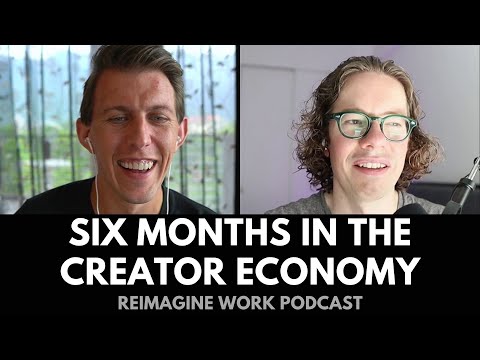
I had a delightful conversation with Daniel Vassallo a self-employed creator for the last three years who seems to have gone through many of the same "a-has" as I have. He walked away from Amazon despite making an absurd salary of $500,000 a year.
Read the full transcript
Paul: Today I'm talking with Daniel Vassallo, who is a solo creator making a living by building a portfolio of small bets, as he says. He left a high-paying job at Amazon to step into a new chapter and has found some success. But what I'm really excited to talk about with you today, Daniel, is how you're thinking about the journey, kind of those deeper principles, navigating the uncertainty and thinking about all these things that you seem to really be contemplating and thinking pretty thoughtfully and long-term. So excited to dive into those today. Welcome to the podcast, Daniel.
Dan Vassallo: Yeah. Hi Paul. Thanks for having me.
Paul: I'd love to maybe just get the cliff notes of your story working in big tech and you left, I think in 2018 to go out and carve your own path and maybe something worth touching on, which jumped out in your articles that resonated with my journey is that you found that the learning super exciting in the first few years of your corporate journey, and then it was just so stagnant. So maybe you can talk about that and just give the cliff notes of—
Dan Vassallo: Yeah, absolutely. Yeah. So I always loved software and programming. I've been doing it since I was a little kid basically. And I think like many people that, who loved computers, I aspired to working in software. I grew up in Europe and the start of my career, I was working in a couple of small companies.
But I think after 2 or 3 years, I started to realize that maybe I might be missing out on, you know, seeing how the sausage is made in the big places. And back then, this was late 2000s, right? I was reading— there was no social media as we know it today, but I was reading blogs of other, you know, people explaining what they were doing at companies like Microsoft and Amazon and Google. And I was sort of inspired to that journey. I never considered myself as somebody who would stick in a big corporate bureaucratic place. So there was already some resistance, but I think when I weighed all the pros and cons, I thought it was worth taking, worth trying it out at least.
So long story short, I joined Amazon. I managed, I got lucky through the interview process. I know it's a bit of a lottery, but I managed to get in as a junior engineer. This was back in 2010. And I think as you explained that initially, I was learning a lot and seeing many different ways of creating software that I wasn't really exposed to. And that was fun.
And there was lots of challenges. But I think sort of the law of diminishing returns started to sort of manifest itself very clearly. I think pretty much after a couple of years, I was really feeling like you know, the excitement was wearing off and the curiosity and the learning opportunities. But to counter with that, the strange phenomenon that happened was that, which I didn't really experience in my sort of smaller companies that I worked for, my compensation was increasing significantly. Like I was almost doubling every year. I was getting promoted a lot.
Basically I was invited to move from Ireland to Seattle. It was a good opportunity. This was all happened like in the first 2 or 3 years. So sort of one part of me was feeling already sort of the impulse to change. On the other side, sort of my rational brain was sort of holding me back and thinking this is probably the best part if I wanted to maximize financial expectation, right? You know, I ended up in a situation where 5 years in, I was making close to $400,000, which was insane, much way, way more higher than I expected.
You know, I joined big tech with the expectation of just making 6 figures. That was sort of my goal. So the fact that things were going so well, when you start thinking about them rationally, you start thinking, oh, if I'm going to leave and do something on my own, just the first year of not earning any income is already going to put me, you know, minus $400K in opportunity cost, like, and then the following year. So you'll never probably make up the gap. But I think sort of to fast forward another couple of years, I stuck around for 8 years in total. I think at one point I realized that I looked back at my life, Basically, the fact that things happened quickly, I think, helped me in a way that I didn't really forget what life was just 3, 4 years before.
And I realized that, first of all, it wasn't that different. Sure, I had more money in the bank, I had some, a bit more peace of mind. But my lifestyle wasn't really improving. If anything, I felt that it was probably getting worse. I was feeling less motivated to go to work. I was working on fewer things that I liked.
I was having less time to myself. I have a young family as well. I have two kids, 3 and 6-year-olds now, right? So I was spending less time with them. So basically I was realizing, you know, I can't keep postponing this decision of making a change, otherwise I would never make it. So long story short, yeah, I took the plunge and this is where we are.
Paul: So you say that, but I talk to a lot of people and as soon as the money gets over a certain point, it seems as there's some balance thrown off in which they just don't want to make a change. Yeah. Where does that come from in you? Is there like a deeper, like you said going in, you didn't expect to stay there, but is there a deeper kind of reflective practice or a way you think about things that enabled you to— it seems like it was somewhat of an easy decision to say you're going to do something else.
Dan Vassallo: No, it wasn't that easy. It still took me literally 3 or 4 years of between sort of almost setting my mind of doing it until actually doing it. But I think what I started to realize recently is that I think we humans in general, I think we get confused by this arrangement where we have the ability to accumulate money, accumulate savings, accumulate wealth, status, or other things. I think we were probably designed to be hunter-gatherers, to go find food and eat off what we catch today and maybe yesterday. The idea of accumulating lots of stuff and lots of wealth is new to us. I think there is That's why it doesn't feel natural to refrain from accumulating, because I think when we have the opportunity to accumulate something, we tend to just keep doing it.
But I think there's a limit to— I think like many things in life, at some point you exceed that point where it starts to harm you more than benefits you. I think optimizing your life for maximizing your, you know, the numbers in your bank account is definitely a foolish way to live, right? I mean, sort of, there's many other things and many other dimensions that you'd be trading off for that aspect.
Paul: Yeah. I think you tweeted about this. You said relentless ambition is not in our nature. What do you, what do you know as a European that's different about leisure than perhaps your American peers knew?
Dan Vassallo: Yeah, good point. Yes, I think I grew up in quite a different— like I was telling my wife recently, it's funny because I remember at high school, lots of my friends used to say, I just want to become a postman, or I just want to go work in the tire shop with my dad. I mean, it was very common to do to aspire to do just mundane things. And back then, I'll admit that I wasn't, I felt differently. I wanted to do bigger things. So I probably had a much more American attitude when I was sort of 17, 18.
But now that I moved here, I think again, like it's just almost taken to an extreme that is unhealthy. I like it, don't get me wrong. I think it's, I prefer that my kids are growing up here, like, you know, where there's a very optimistic outlook, you can do whatever you want. I like that. That attitude towards life. I think the dangerous or the insidious attitude is where you believe you have some potential, right?
And your only purpose in life is just to fulfill it, right? And I think it's even more dangerous when sort of you determine this potential very early in life where you basically don't really know yourself, don't really know anything, right? Relatively speaking, right? So I think this idea of choosing one path and choosing it when you're like 16, 17, and just take it at all costs, and you just keep, you know, you just put your blinds on and just keep going in the direction, is again, like, not a great, not a very wise strategy to deal with life.
Paul: That resonates too with my experience. I think I had achieved a bunch of successes and was making really good money in strategy consulting, and everyone around me takes that as evidence of, oh, you're good at this and this is what you should be doing. And I'm there deeply confused, like, what the heck am I doing? Like, I'm making PowerPoint slides. Yeah, how much, how much of this do we need? Yeah.
And that, that tension is, I think a lot of people avoid that conversation, but it's interesting. I think in the last year, more people are paying attention to that voice deeper down. I've had a lot of people reach out to me about like, what the hell is the point of all this work we're doing?
Dan Vassallo: Absolutely.
Paul: Have you had people reach out to you similarly?
Dan Vassallo: Oh yeah, absolutely.
Paul: I think Amazon employees are notorious for like wanting to quit at all times and then getting promoted.
Dan Vassallo: Yes, yes, no, absolutely. It's a strategy and it worked with me as well. I was about to quit like 2 years before and again, like I was given another bag of money and given my own project and I stayed another couple of years. No, no, I think sort of this is a little bit how I managed to build a little bit of an audience on Twitter because I started talking about these things and many people, I think, sort of as we're talking, right, this is something that that resonates with them and they like to follow somebody who's doing it and they like to ask questions because I agree it's not an easy decision, especially when you have a family, right? And you have other things going on, right? It's a dilemma.
I appreciate that. But no, I think as you mentioned, like COVID and sort of this helps people re-evaluate their expectations, like re-evaluate what's meaningful, like the, you know, and sort of ask yourself, as you're saying, like, what's the point? And think about these things, which sometimes unfortunately we just go through life without really considering.
Paul: Yeah. What are the questions you orient around now?
Dan Vassallo: It's a continuous process, right? Actually, 2 years ago, right when I took the plunge, I wasn't even sure what I was going to do. I just realized that I didn't want to do that anymore, that I've written off the big tech chapter from my life. I was almost certain I would never go back. You know, you can never really say never, but sort of that was my attitude, but I still didn't really know what I wanted to do. And in fact, I thought I was just going to bootstrap a software business and just focus 100% on that.
And I evolved that attitude and mentality a lot. And I think now, sort of 2 years later, and this was a gradual process along the way, I think the questions that I'm asking myself regularly nowadays is like, is what I'm doing improving my life or my lifestyle or the life of my family? I think I sort of— this is probably the main question. And this type of question typically helps you to understand what is enough as well, because there's always an unlimited amount of things I could be doing, both in work, both in hobbies, both in other things. But then you start asking yourself, I mean, should I spend another 4 hours on this? Will it improve my life or materially improve it?
And if it's no, sort of, you could just not do it, right? And typically when I talk about these things, people always ask like, what's but this way you will never grow. Like this way you will never learn new things. But then I think my answer is, I mean, what obligation do I even have to keep growing, right? Or to keep learning if I'm not enjoying it or, you know, it's not improving my life. It's sort of, there's this expectation that we shall always keep growing forever or keep learning or keep doing it for, you know, as if we're obligated to.
Yeah.
Paul: And that has a very corporate People think of that in a very corporate way too, right? They think of growth as up and to the right, right? Either in salary, promotion, compensation. But like, I've found a lot of the weirdest things to like grow— I don't know if grow is the right word— are the ones that you're never going to be able to measure, right? The depth of your relationships. Writing is something I've really gone deeper into as I've had space and time to explore.
And I don't know if there's ever any endpoint in writing.
Dan Vassallo: Absolutely.
Paul: It doesn't seem as there is, but I think you're similar in that. For me, it's like I just want to find the things that seem to fulfill my life. One, there's no way of measuring that, which can be a mind just like that is so hard to grasp. And then just keep doing it. And then people who aren't in this mode can get really confused because they just want to know, okay, but how much money do you want to make?
Dan Vassallo: Yeah, yeah, absolutely. No, I completely agree. I think sort of if I were to put it in the words, probably I think what you would— what I try to do is just to build my own story. I think that's what really gives you satisfaction, like a story of your life that you're really proud of. And you're not necessarily growing anything to the top, right? As you said, you're just navigating things, right?
You change things, you move to other direction, you still try to improve things, right? Don't get me wrong, but sort of whatever happens happens, right? And you're just treating life as an adventure, right? Rather than a competition that you're trying to win. Or to reach to some expectation. You know, you just wake up every day and whatever, whatever happens, you face it and you face it in the, in the best way you can.
Paul: I love that. Take me back to right before you left your job. What were you afraid of at the time? And looking back now, what, what was kind of overrated to be fearful of? And maybe what were the things you should have thought more about?
Dan Vassallo: Yeah, I think at the time, I think my expectations and reality ended up being very different. I think at the time what I feared most was that I was going to miss working as a team with people, right, and collaborating. And I figured it's going to be very hard to replicate that kind of, you know, environment that, that despite all the bad things, I think the corporate world tends to give you to some degree, right, of being working towards something with a group of people. It turned out that sort of I managed to recreate quite a bit of that, mostly not exactly it's the same, but mostly to online communities. And before COVID I used to still meet with people occasionally. So I was still ended up doing some projects with a partner, right?
So some element of collaboration still happened in my life. What I definitely overvalued and I tried to— that I thought was going to be very important, which ended up being completely different, was accumulating a very healthy amount of savings. At the time, probably I would have left maybe 2 years earlier if I didn't really think that I really needed to build a very, very big runway. That's how I tried to rationalize about taking the plunge. I thought I'm going to have like 5 years worth of saving, worth of expenses saved. So if I make no income for 5 years, I'm still okay without really touching sort of my lifestyle.
But I think it was a very reductionist almost approach. It was too simplistic, right? In reality, I think our psychology doesn't really work that way. Even though I had this nice fancy spreadsheet with my savings account and my monthly burn rate, and I was tracking on the line that I was expecting, I think 6 months in, I think the subconscious really starts to nag you about, you know, you really should be going and finding something to make an income, right? And it's literally something that starts to keep you up at night. And I think this goes back to our nature as, you know, as wild hunter-gatherers, that we're not accustomed to just live off sort of our accumulated resources.
And, you know, maybe there's a way to deal with it better than than I was managing. But I think what I realized is that, I think at least in my case, I felt like the best way to actually deal with that nagging feeling was actually to treat my survival and this lifestyle much more urgently. I wasn't just now planning 5 years in the future. I set my mind, you know, I need to make some money like next month, right? And that's changed my psychology significantly. I mean, the level of peace of mind I had as soon as I made the first $1,000, even though it was far less than my monthly bill, but this was the difference from complete uncertainty of how I'm going to make some money on my own from actually making something.
And you know, once you're making something, you start believing that you can make more of it, right? So It's like a big change in peace of mind. So yeah, I think that's definitely something that I underappreciated, the dealing with uncertainty part.
Paul: You almost had too much runway.
Dan Vassallo: I think so, yes, probably. I mean, it's funny because I keep bringing up this thing, this principle of nonlinearity, almost everything that's good for us at some point starts to harm And sometimes it's crazy to talk about money and wealth like that because it's hard to imagine having too much money, too much runway, too much optionality. But it really happens, right? I think it really confuses us. This is not really a new idea, right? I mean, many creators and artists say that constraints help them a lot, right?
So it's sort of I think it's a similar thing.
Paul: Yeah, it's funny. I think I had a similar thing. I went, I did freelancing in my first 6 to 9 months and that was a great on-ramp just to like earn money and build confidence that I could like hack a living. I also realized that if I really needed money, I would walk down the street and get a job at a bar. Like we have far more opportunities than we imagine.
Dan Vassallo: Exactly.
Paul: But no amount of money I had ever had or saved up would've actually enabled me to grapple with that financial insecurity of not having a steady paycheck. And yeah, it seems like the only way to experience that is to literally go through it. There's no like shortcut, there's no million.
Dan Vassallo: I think so. Yeah.
Paul: Like, cuz even if you had like $10 million, you're still gonna go leave a job and then, I mean, what I experienced is at one point I went 3 or 4 months without earning any income and I'm just like, who am I? What the hell am I doing? Am I a loser? Like, I'm so stupid for leaving this job. And then you look around, you're like, wait, I'm biking around on a Tuesday. This is pretty sweet.
Let's try and keep this going.
Dan Vassallo: Exactly. And no, no, very good. And in fact, I try to summarize sort of I think I tweeted about this. It's sort of like now sort of my goal is almost to just not have this lifestyle taken away from me. Again, it's like one of those questions that I ask myself.
Paul: I can read it. I pulled it out because it really resonated with me. If you like the self-employed lifestyle, you need extreme risk aversion, not extreme risk taking. You're not trying to maximize profits. You wanna avoid having this lifestyle taken away from you. Oh, that's so good.
Like, that's like so me right now. I'm 3 and a half years in now and like, I will do so much to like not have this freedom and flexibility and creativity taken from me.
Dan Vassallo: And I think this, this, this tweet, I think touches on, on a point which I think I, I made the mistake as well in, in, in the very beginning as sort of my self-employment journey in being probably a bit too optimistic about the odds of success. Of whatever we're trying to do. And again, like this is one of those lessons of dealing with uncertainty that it's hard to learn until you experience it. But I think basically nowadays I give a lot of weight to the odds of something working out, right? Rather than just foolishly deluding myself that, you know, I'm good at this, so it should work. right?
And I think that's what I meant by you need extreme risk aversion, right? Other than to just be ambitious and just, you know, be very idealistic and I just want to, you know, I have this big idea and I want to make it happen. I think you should probably take it from the self-preservation aspect, right? I just want to survive. What am I going to do, right? To maintain this lifestyle and then you build up from there, right?
Again, like, and then I think once you have build some base of sustainability, you can take some more ambitious, more speculative risks, but you need sort of this, you almost need to do it the opposite way of how many people in software tend to do it, which they start with the ambition and they try to make it work. I think you should start with your reality, see what you have, what your odds are, what your opportunities are, start with those and then build up from there.
Paul: Yeah, and I think a lot of individuals and I was listening to your Indie Hackers podcast and you basically were describing yourself as a business unit with like a balance sheet and like projected incomes and your spending. And I think a lot of self-employed freelancers think of themselves as businesses and this is probably a mistake because that is risky, right? To invest 2 years in a business and like hopefully have some future potential outcome and you're not making great money along the way. That is risky. But in a self-employed path, you can kind of take the approach as you've done. You call it small bets and basically put yourself in 15 different directions.
And when, when did that first dawn on you? I think It dawned on me pretty early because I landed a couple random gigs on a freelance platform. Like, one was holding a sign in a park, and then I got paid to write, and then I got paid for consulting, and I'm like, oh my God, my imagination for what's possible was so tiny.
Dan Vassallo: Yeah, no, similar, similar story actually. As I sort of— I started, so I started with sort of with a very ambitious project, like I'm saying, you know, people shouldn't do, but it's something that would take years to start generating meaningful income. And then I think 6, not even 6 months, probably 4 months in, I already started having my doubts. Basically, originally my sort of my rough plan was that I had like a list of preferences, I wanted to do a software business first. If that didn't work out, I might want to try doing some consulting. If that didn't work out, I might try to acquire an existing business.
If that didn't work out, I might write a book. Like I had a list of plan A, plan B, plan C, plan D. So I started executing plan A, basically. That's how I approached it at first.
Paul: Was it just business stuff on your list? Did you have preferences like for your life?
Dan Vassallo: I think it was, I was stating it just as business stuff initially. Basically, I think it was a list of preferences of how I wanted to make a living. I think, you know, my life was still in the mix, right? And I think my life, my preferred lifestyle informed what was sort of the priorities of those preferences, but it wasn't really, at the time, at least, it wasn't really, I wasn't thinking that complex. And I think at one point, I think about 4 months in of executing Plan A, I started wondering, when will I know when I should move to Plan B? I mean, what signals should I be looking for?
What if it seems like Plan A is working, but it's going to take a long time? What if it ends up taking too much time? What if another opportunity comes up? Should I just— And I started having all these uncertainties. And I think this is where I started to realize that I just need to have something else to hedge my risks and hedge my situation. And I think similarly to your situation, I happen to have a friend that pretty much asked me if I knew somebody who would help them with some software development work.
And I offered him like, what if I help you a little bit, like 10 hours a month, not even a week, literally just a few hours a month. And you know, we agreed to that arrangement and as soon as we were saying earlier, as soon as I got that first check of $1,000 or $1,500, it made a big impact psychologically, right? Now I had something to rely on. If I wanted to, I could do 20 hours instead of 10 hours, right? Or I could find another gig like this and I could still continue to experiment. So that's how I— that was the point where I pretty much changed my attitude completely.
Instead of plan A, plan B, plan C, I said, let me just do them all at once, right? And see what works, what I like doing. And I think it's a really healthy attitude, right? And there's trade-offs, obviously, you know, you're not focusing 100% on something, but there's so many hidden benefits that people don't realize. First of all, I think you're increasing your luck surface area significantly. I mean, the thing that's worked out the best for me creating info products.
Like I made, I think I made $220,000 pretty much in the last 12 months from this, something that I never completely imagined I would like doing, I would make money from it, but it turned out to be completely the opposite, highly financially successful. And I really enjoy it nowadays. I enjoy everything about it, creating info products, talking about them, working with other people, doing them. It's fascinating how much you discover. But in addition to just increasing your surface area of finding things that work, I think it also helps with motivation, believe it or not. I think no matter how much you like something, if you're doing it day after day, at some point you'd want to take a break and think about something else.
I think having 3, 4 things happening at the same time just allows you to just alternate attention. When I'm fed up from this, you know, there's 4 other things that I could just jump into, right? And it's just silly, really good, right? For, you know, I don't feel like doing this today, I'm just going to do this and you're still productive, but, and you're still motivated, you still get the energy from the sort of free intrinsic motivation of doing something that you just want to do, not that you have to do, right? So this is sort of my idea of building a portfolio. Strategy, right?
Other than— because I think especially people in software tended to like to look at two options. Either, you know, do something extremely ambitious, go the VC funding route, like try to change the world, extremely low odds, like you have 1 in 1,000 odds or 1 in 100 of making it work. Like slightly somewhere in between, there's like this bootstrapping approach where you just want to have your bootstrap business, but it's still typically a single business. And I think I'm doing something to another end, that was like just a portfolio of activities that you're just, you're looking at your lifestyle first and trying to preserve that and just doing whatever it takes to maximize the odds of keeping it. Yeah.
Paul: And what are the constraints you put on your time? I noticed you said you were pretty much free after 10 today. How do you design your workday and your time?
Dan Vassallo: Yeah, so I really like, and this is part of my lifestyle design, not necessarily something I'm doing for work, I really like to just have blank and uncommitted time.
Paul: Same, I love that.
Dan Vassallo: It's definitely something. Yeah, I like waking up in the morning and not having anything planned, you know, as little as possible. In reality, there's always, I spend like half an hour looking at emails and doing, but I like to keep that as minimal as possible. Just because I like this way of living where, you know, I just, you know, think a little bit what I do, what do I feel like doing, and I browse Twitter a little bit and I like let myself get inspired. And which is very different, this is a very different way of working from typical employment, but I feel, I don't know if this is for everybody to be honest, but it's definitely feels the right way for me. I mean, I'm almost certain at this point.
So yeah, in terms of time, I definitely, and again, like no hard rules, right? But I definitely, when I'm weighing options or considering what to pursue and what not to pursue, something that's going to commit me to a particular time slot or to a particular location or something like that, I would definitely weigh it down significantly. Again, like to give a counterexample, I don't know if you're aware, but I did take like a quarter-time gig with Gumroad, the company, which did commit my time a little bit, but it was still flexible enough that it made sense to me. And there were other conditions and other benefits, so it's still sort of something that I weigh in together. But yeah, sort of time is definitely something that's important in my mix of dimensions to optimize.
Paul: Yeah, I think that's a key insight too. A lot of this lifestyle is not for a lot of people. And for some reason, there is this new space for— it sounds like you're pretty similar to me. I don't like waking up at alarm clock. I like to just let my morning kind of like flow and then let the day emerge, which to some people that is terrifying.
Dan Vassallo: Yeah, I— no, no, I agree. And I think—
Paul: and it also just requires a faith that, like, a general optimistic mindset towards life, I think, underlies all of that.
Dan Vassallo: Absolutely. I think, I think, um, again, like, it's, it's one of those things that you learn how to deal with uncertainty and ambiguity. And, um, I, I agree with you. I think you need some faith, and I think you get that faith a little bit from living through it. That is basically— yeah, I don't know how 2021 is going to evolve for me. Like, I have no idea what I'm going to be doing, and I'm fine with that just because I think it's a mix of— I think this is important that I don't want to not mention that there's some comfort in that I know that the basics are still covered for at least another year, and there's something already ongoing.
Otherwise, I might be approaching it much more urgently. But I think it's like, that's continuously evolving dynamic where definitely my sense of urgency is different than it was a year ago when I was in that period where I just wanted to make some income now, like literally next month. Now I'm happy to not make any income generating activities, you know, this month or next month or the following month. But I think this is something that's really, really surprised me actually, is that the fact that my income is variable, right? I think it's actually starting to help me. Like the fact that, for example, December started looking like it was going to be like my slowest month ever, like since at least for the last 13 months, it's pretty much prompted me to create something new.
And then suddenly then became one of my best, right? It's sort of that. Stressor, like that helpful stressor that sort of, I think, keeps, like, the almost like keeps you in check of working enough, but still allowing you to not work more than enough, right? Is that then once I got that going, right, and now I don't really need to think about anything for the next month or two, but probably by March I think I'm starting, I will start to get an another stressor to start thinking about something more urgently. In reality, I'm always thinking, right? I'm always just looking for opportunities, looking for inspiration to strike.
But I think when that urgency aspect, so there's like inspiration, you need opportunity, and sometimes you need like a sense of urgency. Like when those three things combine, it's like what prompts action.
Paul: Yeah. You're making me reflect. I created this course that's been pretty successful in 2020 and I created this 2 years ago, basically after a stretch of 3 months of not earning any income.
Dan Vassallo: Yeah.
Paul: And it was both the urgency to like, oh my God, like I'm going to have to move back in with my parents or let's create something I actually am pulled towards and just see what happens. And yeah. It's kind of funny how that happens. I also have a, like when my income varies dramatically, I'll adjust the cost side. Like I'm a little more flexible with my housing and lifestyle. I don't have kids.
It's just me and my wife. So like when income's like going down, we'll like cut costs on housing and going out. And then when it goes up, we'll scale it up a little more, but it helps keep you humble. Too, because you're not like this special person making a big salary.
Dan Vassallo: I think, and this is something that I think many people don't get, but I think actually variable income is helping me in my peace of mind, believe it or not, much more than when I had a stable income. I think stable income sort of hides the risks almost. I mean, you're making so much, but you know that something could happen, it could drop to zero, Well, sure, you know, you could probably find another job. But there's like the coupling between your efforts and your income and what's working and what's not working tends to be decoupled when you're getting a steady paycheck, right? Every month. Whereas now it's much more tightly coupled, right?
I mean, I did something in December and then sort of leaping the benefits now. And sort of, I think, figuring out how to find yourself in this dynamic, it just makes you much more, I think, robust to uncertainty and to whatever destiny throws at you. Which sort of paradoxically helps with peace of mind, even though there's like, You, even though things are not as predictable as they used to be, that is just this, this, this belief that whatever happens, I'll figure out something.
Paul: It's hard to wrap your head around. Do you, do you index? Do you have like a number in mind that's either like, this is what I need to live a good life, or do you still index to former salaries you made? And do you think about that over like a— I still like mentally do that. Because it's hard to avoid the obvious in your head, like over a 12-month or 18-month basis.
Dan Vassallo: I, you know, I do my best to avoid it, to be honest, and I think I'm managing to. I'm really— I think the only thing I'm indexing, the main thing maybe at least, is literally very frequently, you know, almost every day, I ask myself, is this the life I should be living? I mean, should I be here? Should I be doing something different? And I adjust from there. I think basically I try to avoid falling into the traps of past anchors and what other people are doing.
And even that sometimes, like, I mean, it's very cliché to say you shouldn't be looking at what others are doing. I think I think probably it's okay to look for as long as you just treat it as just inspiration, right? I mean, I look at what my neighbors are doing because I ask myself, I mean, is it better than what I have? Should I be doing something like that? As long as it doesn't, as long as you're careful to not let it sort of, you know, end up being jealousy, but just inspiration, I think it's healthy. And so I think I'm not indexing on anything in particular apart from trying to keep my eyes open and not to delude myself.
Because I think this is the problem, right? I think if you— when I used to work at Amazon, my impression was that many people that I was working with, myself included, were generally unsatisfied with their lifestyle. They were working, you know, 14, 16 hours a day. They had kids that they weren't seeing, that they're like always stressed out, their bosses are always asking things from them. But I think probably if you ask anyone, nobody would admit it. So I fell in that trap as well.
For a period of time, I felt like things are great. I'm choosing to do this because it's a good opportunity. So I think I try to be careful not to fall into that trap now, where things are not good, but I'm just deluding myself because I just wanted to make it good. So it's probably, if I were to say I'm indexing about something, it's like, I just try to make sure that I'm not falling into these logical fallacies or whatever psychological things we tend to fall into, to not end up in that state.
Paul: Yeah, I think it's definitely a blind spot. I think people have a lot of insecurity about money. So if you make good money, there's a certain amount of shame in saying you're not happy. Like you, you never wanna be seen as ungrateful. And I think that absolutely, that probably blocks a bunch of existential crises.
Dan Vassallo: Yeah, absolutely. No, very good point. I completely agree. And it's, it's like one of those, yeah, paradoxical things that you raise a good point around what do you work on, right?
Paul: And I love how you're framing it. You're getting inspired, but you're not doing what everyone else is doing, right? Like newsletters are popular. I love writing a newsletter. I've been doing it for a few years. It happened to become a thing people aim towards as I was doing it, which kind of cracked me up.
But you noted you experimented with starting a newsletter and then you're like, I actually don't like this. Just because it's a popular thing to do, it doesn't mean I should actually do it.
Dan Vassallo: No, I think the newsletter actually is a very good example because So I started sort of building a bit of a following on Twitter and I really enjoyed Twitter because I felt like no obligation of how frequently I should be tweeting. People are just following me for free and it was like the medium itself was very compatible with how I like to express myself and write as soon as inspiration strikes. Then I started to sort of, as you mentioned, I started seeing other people sort of building a much more healthier audience on mailing lists by delivering sort of content regularly. And I was, you know, a consumer as well of some good newsletters that I enjoyed. And I was starting asking myself, should I be doing something like this?
But then I started reflecting and I started imagining myself, you know, either committing, whether implicitly or explicitly, like to writing something every Friday or every month. I was feeling again, like this is probably not something I I would enjoy doing, right? It's, you know, I don't want to write on a schedule or don't want to produce on a schedule. So even though I started to see the opportunity even for a paid newsletter over time, sort of this was holding me back, right? And I think rightfully so, because I think it might have sort of— I would have been pursuing something that I very likely wouldn't have liked. Nevertheless, believe it or not, just 2 weeks ago, I launched something that is pretty much a paid newsletter product.
And I think, so this is an example where I still kept thinking about it, and I still kept sort of asking myself, is this something that could work if I do it differently?
And I think long story short, what ended up happening I hired an accountant recently and every month I was giving him an update about, you know, my new income streams and what's changed since last month and I was writing these what looked like monthly newsletters to my accountant about sort of my profit and loss of what I should, what I'm thinking about doing next week and next month and what happened last month and what changed and I was thinking this is interesting, I think maybe Basically, I have an audience of people that aspire to do something like I'm doing, and I thought maybe my audience would enjoy this type of content, and I'm doing it anyway to my account, and probably with a little bit more polish, I could do a paid newsletter. So I launched this product called Profit and Loss, which is a mix of a monthly newsletter with some community aspects.
I'm basically giving almost what public companies do in their quarterly investor relations, quarterly reports. I'm giving my own monthly report about my business activities. Then I take comments and questions and I answer everyone's things. It's the first month that I'm doing it. It's still an experiment, but basically I think it's an interesting example because I started skeptical. Well, actually, I started optimistic, but then I became skeptical, but then I still kept an open mind about it, and I find an arrangement that seems like it could work.
So I think it's a good example of not writing down something completely and keep testing it without committing to anything.
Paul: I was checking out your Circle community as well, and I thought that was fascinating, but probably not for the reasons people are expecting. I thought it was fascinating because of how you used that tool. I've never seen anyone use that tool in the way you did. You basically created a public channel and then paired it with a private channel that you could sign up for. That's like, that, that's really innovative. And I think there's a lot of potential for people who can kind of see the tools and then make them work for them rather than just trying to copy paste what other people might be doing.
Dan Vassallo: And I think the inspiration for arranging it like that again came from my own reluctance to do things that I didn't feel like doing. Basically, again, like I was intrigued by the idea of building a community. I almost already have a community on Twitter, but it's not very well organized. That's just people showing up in my comments. And I was seeing the potential. But then I was feeling reluctant to build a community where I need to create lots of channels and I need to put content in them and I need to think about, you know, I need to make it look active.
That felt like, felt like wasn't something that I would enjoy doing. So I said, let me make myself the topic, the only topic, just, you know, and it was sort of almost the spillover of my Twitter community. That's how I seeded the 10 Minute Chillout, basically on Twitter, you know, On Twitter, I can only write 280 characters. If you have— if you want me to answer things that are longer, go over here. And it started to get a little bit of a life. Not— I wouldn't actually say it's starting to get a life on its own.
Let's say to get enough momentum that it feels like people that land in there can read probably for a couple of hours of content. And then there's the other paid product, which is much more— which is another dimension, which I'm sharing pretty much all my financial details, like almost full transparency and all-access entry to my professional life, right? Where again, like, it's sort of— I'm still— it's still not a completely open community. It's still topic. I— and that private community, only I can post topics. People can only post comments on my topics.
So I still keep it constrained. And But I think it also keeps— the nice thing about it is like it keeps the options open to eventually open it up more. But again, like on my own terms, I'm not really trying to force it. That's something that I generally dislike doing, trying to force something to happen.
Paul: I love it. How do you grapple with the moments of uncertainty still? I think like we've talked about, the uncertainty never goes away and there's always kind of an unknown. You have, you have some, you have like the Gumroad thing. It's somewhat stable, but I mean, that could end too. How do you like think about navigating this like space of not knowing?
Like, I think it's so hard to describe this. Like I've tried. To write about it, but I still struggle to bring it alive for people.
Dan Vassallo: No, and unfortunately, I don't think I have a great answer again, except for, I think it's just a muscle that gets better as you use it. I think that's probably the best example that I have. I think as you mentioned at the beginning, no amount of reading and hearing other people's stories, I think would have helped me with sort of realizing how to deal with it. First of all, I think because there's many different dimensions in our context and our circumstances that affect different people differently. But I think again, like, it's just— and this is probably— I think this is something that, you know, the modern life sort of conditions us to almost we try to squeeze uncertainty out of our life completely.
And we almost, I think we probably, if we have any instincts that sort of we're born with to deal with uncertainty, we probably lose it along the way, just because we're always doing things to like make things more predictable, less uncertainty. Like, but I think once you take the plunge and go into the different universe where things are just very nebulous, very uncertain, I think you start to exercise another part of your brain that becomes— that was probably dormant for a long time. And I think like anything else, it's just a muscle that you start basically becoming sensitive to other things that you'd never really noticed, sensitive to what is actually a real risk. I think this is another mistake that people make when they're in a steady job, I mean, the risks that people see are very different than the risks that I see right now.
They're not really the risks of, you know, I am not really exposed to the risk of, you know, ending up homeless or whatever, right? Whereas sort of people tend to bring that up sometimes when they're like leaving their job, like, what if I get financially ruined? And I think it's easy to protect against that outcome, like, because there's fallbacks that are very likely that you can fall back to. So I think, yeah, it's hard to explain, but I think if I were to give one general piece of advice, probably something that will probably help lots of people, even if they're not really yet willing to take the plunge and just quit completely, it's probably just to take a one-year sabbatical, right? Or try to one year paid time off, try to find that arrangement and just have nothing planned.
Like, don't do it with like, you're going to spend like the first week doing this and saying, but just go in, just jump into the unknown. Yeah, because I think then you start to discover what gives you motivation, what gives you energy, what you dislike. You haven't committed to anything, right? So you start sort of bumping around and you start sort of exercising this ability to discover. Things about yourself, things about what you're good at doing, things that are viable, the probability of things. Again, which like we almost lose the ability to evaluate, you know, when we start to eliminate uncertainty because there's no point in thinking in probabilities if everything is predictable.
But once you're in this unpredictable world, should I do this or that? Well, what's the most likely thing to work? I think, again, I did this mistake in the beginning. I was too optimistic in the beginning about what will work. Now, I think I'm much more calibrated now that I've suffered some losses on my own skin. I see this with many other people.
I don't think I'm generalizing too much from myself. I think many people probably— it makes sense to you and people like us that have done this journey for a year or two, like that, that you start seeing them much more sensitive, much more aware of probabilities of how to deal with, with the unpredictable.
Paul: I love the idea of one-year break. I think it is probably more important to do than people think.
Dan Vassallo: Thank you.
Paul: And I think doing it in your 30s is an incredible time to do it. Or at least somewhere after your 30s because your ego brain has slowed down a little bit. Yeah. You may have built some skills and you kind of know the people in your life that matter to you and it gives you a little more stable foundation. But almost 100% of the people I've talked to who've just taken a sabbatical have stuff open up in them about what they're interested in, what matters to them. That surprised them.
And yeah, man, it's just sitting there for people. And I, I want to help people navigate that if they do want to take these leaps. But yeah, me and Daniel, me and Daniel are saying it's worth it.
Dan Vassallo: And, and I think I heard that first. I think probably somebody that's popular and made this a bit more popular was Tim Ferriss, like in The 4-Hour Workweek. He recommends this like this. Take an advance from your retirement, which is an interesting idea. Instead of just retiring at 65 and you take it all in bulk, take a year from the future and do it now, which I think is an interesting way to think about it if you want sort of like a way to reason about it.
Paul: Yeah, and I pair that with a— like, if I'm losing money, I just say that's a gift from my former self.
Dan Vassallo: Exactly.
Paul: My former corporate self is gifting me money to take a pre-retirement.
Dan Vassallo: Exactly.