Bryan Victor, Unconventional Singaporean on creating his own education through wedding planning, year-long travel & creating a visual animation studio
Bryan Victor has never taken a traditional path but he doesn’t know any other way. Perhaps that is why he started his own podcast in Singapore, Misfits, which interviews unconventional Singaporeans. At 20, he saved up $10,000 while he was serving required military time and decided he would travel the world for a year. During the trip, he realized this was all the “schooling” he needed (see 10 things I learned). After learning how he could live simply on very little money, he knew that this opened up many options for him. He knew that he would always value flexibility over maximizing income, learning this lesson earlier than others.
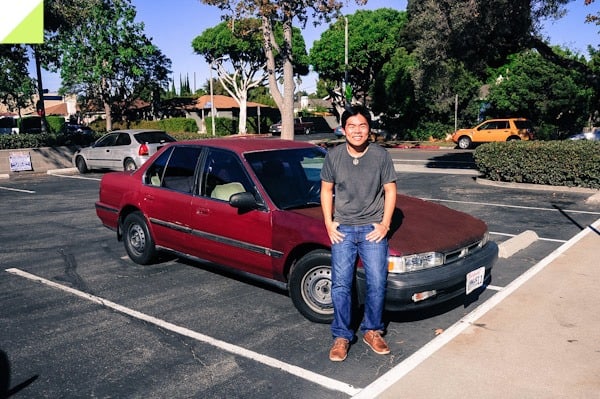
Regardless of any position towards “formal” schooling, his chosen path, wedding planning, wasn’t something you learned at school. He knew he had to create his own internship. So before his trip, he wrote to 50 American wedding planners (the best, he says), to ask if he could work with them. One person gave him a chance and he was able to learn while making enough money to live.
Going back to Singapore, he couldn’t get anyone to hire him, so he realized he was “forced” to create his own wedding planning business. In the process, he became named one of Singapore’s Top 10 Wedding Planners (though he argues there weren’t that many anyway!).
After proving he could make it, he started dabbling with a side business, 2D animation and founded Sage Animation. He decided to give the wedding planning business away as a gift and was able to find one person (out of 40) that he thought would do a great job.

Bryan has been fascinated with understanding what makes him happy. As he was on another trip in the United States, he was drawn to another project (motivated by the #vanlife movement) to build a liveable van for himself. While he accomplished the feat, he found that he was overcome with a “something-like depression” feeling after he achieved it. While he thought he had everything, it led to a new and deeper curiosity in what actually leads to happiness. This tweetstorm summarizes his latest working thoughts on the topic:
How to Be Happy (without being rich):
— Bryan Victor (@bryanvictorlim) November 20, 2018
Books & Other Resources Mentioned:
- Jose Villa - Wedding Photographer
- Seth Godin
- Tim Ferriss
- Antifragile
- Naval Ravikant Podcast on Farnham Street
- Solve For Happy
- SEO That Works Course
- Vanessa Van Edwards - People School
Transcript
Bryan Victor has never taken a traditional path but he doesn’t know any other way. Perhaps that is why he started his own podcast in Singapore, Misfits , which interviews unconventional Singaporeans.
Read the full transcript
Paul: Welcome to The Pathless Path, exploring the human side of work. I'm your host, Paul Millerd, and I'm fascinated with how we can imagine past the default path to do things that matter. I have conversations with entrepreneurs, freelancers, and thinkers who are questioning the role of work in our lives who are thinking about how we can unlock creative potential in ourselves and organizations and are carving new paths in the world to create a more human future of work. If you want to support the podcast, check out the Patreon link in the show notes. And for more information, go to BoundlessPod.com. Today I'm speaking with Bryan Victor, who I'm talking with from Singapore.
I'm not sure I can adequately describe him by any labels, probably agrees with me, but I'd call him a self-taught learner who's always looking to experiment, grow, and evolve. I've been lucky to spend time with him, get to know him as a friend. He's been a beatboxer, wedding planner, and now runs a 2D animation video studio. Welcome to the podcast, Bryan.
Bryan Victor's Education: Well, thank you, Paul, for inviting me.
Paul: So as people can probably tell from the intro, lots I'm curious to dive into. You have such a fascinating path. I'd first want to just backtrack and talk to you about learning. I think I see you as somebody that's very good at learning new things, but what's the first thing if you think back to just growing up, like what's something you taught yourself or you were drawn to?
Bryan Victor's Education: Right. As we were speaking earlier, actually, the first thing I would say my curiosity really piqued what was magic actually. I remember being wowed by the card tricks that everyone else is being wowed by, and the avenue was there. Like you could pay a certain amount and then you can learn this card trick. There was no YouTube back then. So that was that.
I think that was the first thing I got started on was magic cut tricks, I think like everyone else, I don't know. And then I guess the story continues. I don't know, I don't know specifically if there's one trick that I learned that I'm like really impressed the heck out of. But I guess it was magic, if anything.
Paul: How did growing up in Singapore shape kind of your perspective on the world and who who you were becoming as an adult, or even not shape your perspective?
Bryan Victor's Education: I think the question I only have answers to when I started traveling, right? 'Cause you can't read the label from inside the jar. You don't know how is it like from other people. So when I embark on my around the world trip for a year, I think back in 2012, I just kind of realized We live in, Singapore is truly amazing. I mean, for those of you who haven't heard of Singapore before, when my first trip out to California, I was writing emails, I was sending it out to these wedding planners in California, because I wanted to be a wedding planner. So I was like, why don't I go to some of the most amazing wedding planners in the world, which are all sort of congregated in California.
California. And you know, when you go to them, you quickly realize that people love Singapore together with China. But the good thing that—
Paul: If you've been to both, they're very different places.
Bryan Victor's Education: Very different places. Yeah, but a good thing that I have going for me is that I have a blog back then called Hella Good. So, for those who actually bothered to click on the link to see what I have to do, they will know that like, hey, you know, this guy is a bit different, right? So, they might still think I'm part of China, but it's like maybe this guy is kind of creative, right? And then after I went out to California, I mean, things such as being able to speak English badly or understanding it really helps. Living in an environment where things work.
Singapore is among one of the 4 countries in the world where people actually don't complain about their government.
Paul: One of the four?
Bryan Victor's Education: Yeah, one of the four, according to my friend who runs a hostel. So I think that was Singapore, I think it was Sweden, Norway, and I don't know, what's the last one? Maybe Bhutan, I guess.
Paul: Wow, that's not true in America.
Bryan Victor's Education: So accommodation, I mean the reason why we don't complain is things truly do run well in Singapore. It's really hard to find things that are bad. I mean, of course there are, but then once you know why they make certain decisions, you start realizing that, hey, that's probably the best thing they can do. And sometimes there's no perfect, right? We are all trying to figure out this first world problems. No one has found a perfect solution.
But if anything in Singapore, we see that our government is trying And so far it's like pretty good, like 80% there, you know, and I can do the last 20%. And then the question that we always ask ourselves is that, do we want to be Malaysia? And then we'll be like, I guess it's a no-brainer answer. So coming back to your question, I think it's really a mixture of like, you know, growing up in a system that works. Growing up in a place that speak English, and both of that combining together. And for me, I never really got stuck into this whole follow the rule box, because things that I like to do doesn't follow the rule.
Like, you just look at magic, right? It is how we bend the rules to trick people. So I don't know, maybe that grounding helps in that sense.
Paul: Grown up like bending the rules, or at least attracted to taking a different path. So I think most, all men have to serve in the military in Singapore. Is that right?
Bryan Victor's Education: Yeah, 2 years.
Paul: And so you're serving in the military, you go into that at 18, I think.
Bryan Victor's Education: And 18, 19. Yeah.
Paul: You talk about you decided you couldn't leave the office or something like that. And you said you just started to moonlight and do projects on the side. Tell me about the thought process of thinking about that and like where you were at that time.
Bryan Victor's Education: So then I was 18, 19, and I think the context needs to be given before, right? Because I was already a tour guide for Singapore Duck Tours. I was the one telling people what's there, what's on your left, what's on your right. And then also on top of that, I was working in a job where I was setting up sound systems and then being there and, you know, manning the microphone, the levels, and playing some music for the events. Right? So, um, when you were in the army, I wasn't a high-ranking official or anything, and neither do I want to be.
Uh, so I get paid very minimal amount, and that would be about, I think the last I checked was 400 when I left per month. So that would be equivalent to about, you know, $320 US a month, right? Um, which is nothing. Um, and, and, but the, the, the, the reason why, the main reason why I moved, like, other than the fact that there was already momentum there, so it was easy, the job was already there, I was being asked for. It's also because I want to go on this 1-year road trip, you know. I want to like save up money.
Paul: Yeah, where did you get the idea for that?
Bryan Victor's Education: Oh man, so I really want to go to Mexico. And before that it wasn't a year, I mean, it was just like, okay, I want to go to this place. And it was like, I have one friend, her name is Linda Sule. She's really amazing and she is quite the hippie. And she sort of like just gave me the idea that, hey, people who are traveling are kind of cool and no one ever regretted, no one ever regretted, you know, taking a road trip ever, right? You know, traveling.
And so it's a no-brainer, it's no-brainer. But then the courage really comes from Linda who made me like buy my one-way ticket. And then once that is like bought and everything else, you know, like the big rock, medium rock, small rock analogy, everything just falls into place.
Paul: So you start moonlighting on the side to earn money to save for this trip. How were you thinking about things at least compared to some of your peers?
Bryan Victor's Education: Very simply, I wanted to put in the least amount of effort in military. So everyone, like, you know, there's the people who want to be the officers, they go do that. And then I just want to do the least, but I was motivated by something else.
Paul: How were you thinking about it? Were you just thinking, okay, 1 year and then like back to Singapore and figure it out? Or were you not even thinking that far?
Bryan Victor's Education: Right, I think what the trip does beautifully for me was that before joining army, I was doing events, right? I was setting up sound systems. Them, you know, being in different areas of the events industry. And what I saw really quickly was that they kind of all follow a template. You know, you have this annual company dinner and dance, they call it in Singapore, and it's really just one guy, you know, show and dance, and then a bunch of people hahaha laughing, and it's a lot of like pointing, like, oh, you know, like, you go up on stage, you go on stage, and then it's like that being repeated, like, you know, for however many times. I was like, yeah, I'm good at this, I can do this, but I can't handle doing the same thing.
It's just like, I'm just absolutely bored out of my mind. And so now that I know I'm good at this, this is one down. So it's like, how can I, you know, figure out what I'm good at and then adding creativity to this? And then wedding was the answer actually. So it was part of the career path to go to California and somehow that sort of fit into the geographical location of like, I really want to go to Mexico. And then like California is just over were there, and I was just like, oh great, fantastic.
And I could go intern in California for some time and then go to Mexico and do the rest of South America. So that was the thing, as much as it is, that was the school of life, I guess, because there isn't a wedding school.
Paul: There's got to be more around the weddings. You don't just go from hosting events and saying, I want to plan weddings. Planning weddings is not something I think most people are drawn to. Like, where does that come from?
Bryan Victor's Education: Oh man, if anything, you need to help let— show people this photographer, amazing photographer. His name is José José Villa. José Villa. Villa? Villa. Put it down.
So he only shoots like film photos. and just have this beautiful dreamy feel. But what you want to do is not to see his works now. So go to his blog, but go see his work from maybe 2012. And those are the times where this lady called Joy Thigpen coined the word wedding styling. So she revolutionized the entire industry of wedding.
And I was just dumbfounded when I saw his work. And it's just really inspiring, and there's nothing like that in Singapore. Basically a combination of like, well, who are this couple and how can I translate that into a wedding and personalizing it? And it's nothing flashy. And as you can see, there's no template for this. It's all personalized, it's all creative.
So this guy, like looking at his photo, I was like inspired and then the connection was there. It's like, oh, maybe wedding could be a thing that I could explore. Or, and then combining that with traveling.
Paul: You have this pull towards wedding planning. Pretty amazing how you're drawn to it. I mean, just the— I mean, you were lighting up as you were describing that. It was pretty cool.
Bryan Victor's Education: Oh, it's amazing. It is.
Paul: How do you actually go about this, right? Do you— talk to me through like some of the practical actual steps you took because you can't just show up to wedding planners in California and say, I'm here.
Bryan Victor's Education: I mean, there wasn't too much of a strategic thing that I do, but guess what works, right? So I just, I knew that, you know, like, I don't know where they are, and I don't wanna just go show up. It's pretty rude of me to do that. So it was just like email, you know, like you email these people. And pretty much it was just cold email, and I think that it was like 50 that I cold emailed, right? And I didn't even like, you know, To some people, think it's a lot.
To me, it's just like, but you just send it all out, you know, like you gotta like throw, like, and, and, and there's maybe like one or two that like, okay, great, like you seem cool, you know, the opening like fits. And, and it's really Heather from Amorology, uh, that like gave me a chance and like met up with me. And then, you know, um, and then that solidified, uh, my trip to visit her. In San Diego, but it was just like cold email, like X times 50, like, you know, just go through the list and say why you like them and like, you know, what's this journey about and you know, how you can help and hopefully they reply. That's about it.
Paul: So you kind of created your own internship.
Bryan Victor's Education: Yeah, unknowingly.
Paul: Did, well, did the person that ended up taking you on, did they ever tell you why they were attracted to bringing somebody on that job? Just emailing from Singapore?
Bryan Victor's Education: Oh, so what's cool about them is that, so they are family, little boutique, like, run unit out of their house, right? So they actually have interns from Europe before, so they are open to people writing to them, like, you know, so they have taken on people before. That said, I understand that it is a pretty abnormal thing in most of American society, but I think I think what's really cool about it is that in the wedding industry, it is like a bubble on its own. People are really nice and it is also their passion to do this thing and if it earns money, it's great. So I think it's just a general, I'm not here to make a ton of money, I'm here to do the work that I love and then money is just part of it that comes back to me because of the work I love. And hence, you are also attracted to people who come to you from like, you know, who enjoy this work, not for the money.
I mean, I'm speculating, but—
Paul: Talk to me about some of the other lessons or things you learned on this 1-year trip. And you were about 20 at the time, is that right?
Bryan Victor's Education: Yeah. Wow. The trip itself, I mean, I recommend anyone to do solo backpacking, like, as young as they can, and preferably at a time where they have no money. That's the best.
Paul: Because the thing you did it for, you did it for $10,000.
Bryan Victor's Education: Hmm. Yeah, that's correct. So I budget about like $600 USD a month. Yeah. Yeah. On my trip, which sounds impossible.
But I actually did it, right? So, and also I think my friend Linda did help and the introduction of Couchsurfing to me did help a lot too on saving on accommodation. I think the biggest thing about this entire trip looking back is that it teaches me fundamentally that I only need $600 USD to be happy.
Paul: That's an incredible lesson.
Bryan Victor's Education: Yeah, and it's not something that you plan for, right? And it's really hard to tell people that, it's really hard. I tell people to go travel early, and it's not a lesson that I learned, you know, if I can learn if I have money later, because when you have money, you naturally tend to go Airbnb, you look for things that are a bit comfortable, right? But it actually requires a little hurdle to actually enjoy, you know, couchsurfing, living in someone's house, and enjoying that. But once you're able to do that, once you're able to set your expectation of what you need to be that low, what you can do, the possibilities is actually way bigger. Because now you don't need like $2,000 to survive, you only need $600 to survive very happily.
And that gives you unlimited opportunities to pursue anything that you're interested in.
Paul: Yeah, and do you think that's a big reason why you've been able to make so many shifts?
Bryan Victor's Education: Yeah, I mean, yeah, I think so. I mean, just looking back, I mean, there's nothing holding you back, right? I think a lot of excuses really comes down to, you know, when people want to try to do this big shit, it's really money, yeah. That's one of the biggest things. And if you, I think, because I can, survive happily with very little, then I'm able to just, oh, if I don't like this, then I'll just move on to the next thing. It's fine.
Life's good. But then there's a whole other can of things that we could go on further to that if you want to.
Paul: So how does one go from traveling the world for a year on $10,000 to becoming a top 10 wedding planner in Singapore?
Bryan Victor's Education: I came back, wanting to start the studio of mine. I'm just like, okay, I'm ready to go start it. Went to several wedding planners in Singapore, tried to get internship from them, couldn't. So literally I'm forced to just go start this thing. What I learned was that because I have this story of I've worked with some of the best in the US, I managed to be able to put together a bunch of very talented individuals here in Singapore and create a concept style shoot that luckily enough ended up in some of the top magazines and online publications here in town. And once you have that credibility going, and actually my first clients come from, you know, the editorial style shoot for The Wedding Scoop, which is the online publication that featured me.
And then it just and then it's just go, it's on up and up.
Paul: That's amazing.
Bryan Victor's Education: And I think within like, I think 1 or 2 years, I became the top 10. And I also jokingly tell people that there probably is only 10 planners here in Singapore.
Paul: Yeah, it's a smaller place.
Bryan Victor's Education: Yeah.
Paul: When and how did you decide to shut that down and pursue something else?
Bryan Victor's Education: Right, so when I became top 10, you know, and you know, wedding planning being able to, to allow me to survive, you know, earn enough to be comfortable. I just look around my friends who are also some of the top 10 wedding planners, and it's just, you start asking yourself the question of like, well, like, do you want to continue like to do this for the rest of your life? Which is fine, it's great. Or do you want to try something else? And I mean, it's a hard decision to make, right? But what made it easier was that like, I didn't really close the business right away after the decision.
What I did was that I tried to find another source of income on top of wedding planning. That was then when I built Misfits and when I built Sage Animation. When Sage Animation took off, the financial part of the problem was solved. It became a lot easier to shut down. Then the question becomes, how do I shut it down? And it's like, do you just literally pause the thing and just probably put the email in, say, hey, I'm not doing it anymore, thank you for the inquiry, or do I want to give it away or sell it?
Most people would want to sell it, but to be honest, I didn't start the wedding planning business to make money. I started because I enjoy doing it. And so I wanted, I gave it away, right? So I announced it on Facebook that, you know, if there's anybody who have a dream of becoming a wedding planner, they are able to inherit like all my reputation and website and everything that I've done already. And yeah, and that's the story. So about 40 people wrote in, you know, I looked through all the applications and I spoke to maybe 10 of them.
And I feel that this is one person that, you know, really might be able to succeed down the road. So I linked her up with some of my friends who are the top 10 wedding planners. And so she had mentors, you know, on her side and gave the entire business away.
Paul: That's amazing. What an incredible gift.
Bryan Victor's Education: Yeah, I mean, she's now— she's going to be starting, I think, like maybe this right now, like next month she's going to have her first actual client that she got, so fingers crossed.
Paul: Notably missing in your story is a set of credentials from a university. Now is this— and I don't think it seems abnormal to you, but to a lot of people who are wired to look for like experience on a resume, credentials from universities, grad schools, things like that. Was that ever something you thought about, or did you challenge yourself to kind of think about learning in different ways?
Bryan Victor's Education: I think so. So it's super normal, firstly, for people to want, like, you know, a university degree and all that. Thankfully, I'm in an industry where there's no university degree for it. But to be honest, there are courses out there that one can take, but I only know them after I came back from my internship in California. So I really inherently think that I could do it. So the part now is how can I convince someone to pay me the money to plan their wedding where I have not planned any wedding for myself before, you know, because most— a lot of these wedding planners are actually married, you know, and also most of them are female.
Thankfully, in the US, some of the best wedding planners are gay. So I fall into that category, but I'm not gay. So it makes it a lot easier in the wedding industry to not have a degree. But that said, after being in the wedding industry, after witnessing all these wedding planners and being able to have the real-world references that people actually do pay me money, you actually don't need a resume or a degree. And I'll tell you the reason why. The reason why anyone needs a degree is to tell the employer, is to signal to the employer you can do the work.
And if you can't, even if you have the degree, you get fired down the road. So if you can prove to them you can do the work, then the degree doesn't matter anymore. So then the question is, if you are someone who wants to get work from this employer, how can you prove that you can do the work? And the answer is super simple. Do free work.
Paul: Yeah, I think you frame it as either do full price work or free work. And I think free work is underrated. It's just a way if you position it as a learning opportunity and super humble and say, I'm trying to learn, can I get feedback? But I'm going to kick ass on this. It can be super powerful.
Bryan Victor's Education: If you can't do the work, then maybe you can't get a degree. But all I'm saying is that degree is useless. You might be able to get hired. But if you really can't do the work, they're gonna fire you real quick, you know.
Paul: Or maybe not. Some people can hang around in organizations for a long time.
Bryan Victor's Education: Yeah, I know, he must have some super good soft skills then. Do you—
Paul: so how do you think about learning now? Who— like, you're still a huge learner. You're almost a voracious reader and consumer of information. Who do you look to for, like, who are your modern professors that you follow?
Bryan Victor's Education: I mean, I don't think of it very intentionally to be a learner. I think of it just like, you know, like, what am I curious about and go do that? Or like, what do I want to achieve? And what are some of the things I need to know to be able to do that, right? And so I don't learn for learning's sake. I learn because it's fun.
Fun, you know, and I learned because it hits the objective that I want to get. So who are some of the folks I look up to when it comes to telling me interesting and fun things to learn? Currently, there is Seth Godin, and I think we both like him a lot. Naval Ravikant, who's just absolutely obnoxious. Tim Ferriss, of course. And some of the lesser-known ones are actually very topic-specific, right?
So right now, like, I'm learning SEO, and I really just go ahead and look for who is the best out there. I don't, I don't care about the rest because, to be honest, you don't have that much time, right? You just want to learn from the best. And now that I have the ability to afford it, I just like, you know, pay for someone's course. Most of the time, most of the courses are actually all free material. But the thing about a course is that it's arranged in a way where it actually gives you progression to have the basic building blocks to understand how the topic works.
So I'm learning SEO right now. I just signed up for SEO That Works under Brian Dean, and I just want to say that that course is phenomenal. Yeah. And before that, I'm like really bad at people. Like I'm so bad at people skills. So, so I gotta like take a course on that.
Right. So I took up Vanessa Van Edwards People School. Yeah. So she's great. You know, I mean, I'm maybe not perfect, but no one actually had made like a people, a soft skill course. I think she's the one that took the first step at that.
There'll be more coming out. But you know, she's the best out there, so I pay for it, and yeah, it's pretty good. I enjoy it for anyone who wants to be better at people skills.
Paul: Talk to me about your most recent trip in the US. I think you took another extended trip in the US last year, and there's a story about a van, so maybe you can take us to the van.
Bryan Victor's Education: Yeah. So that was actually like the, The trip before, so not the most recent one, the most recent one was the Portland where I went to the World Domination Summit. So the one before, I went, I flew to Las Vegas. So my business is good, the animation business, and it allows me to just work on the computer. So I was like, I really want to do this van, it's on my bucket list. Oh my God, so cool, you know, you look at all this video van life and look at people like on the beach, and I was like, okay, great, I'm gonna do this.
So flew into Vegas, I made me and a friend Spencer who was on a conference. And so we met up to catch up with him. And then subsequently I went to like find a van on Craigslist, met a Mexican gangster, no shit, right? So he came out, you know, with singlets and all that. But the van was legit, it checked out. It was very sketchy.
I got it for $1,500.
Paul: Cash, I'm sure.
Bryan Victor's Education: Cash, yeah, cash. And then, so I actually, we thought it was like stolen and some shit, right? So we were very like, you know, I was like, man, like really, you know, you sure this is cool? You know, we got a mechanic in, we drove it around, okay, this is cool. And then the stolen part, we had to like, I had to go down to DMV just to make sure it checked out, right? And the guy, then we were like, hey, why don't we go to DMV together?
And then she's like, no, I got stuff to do. I'm not gonna like go DMV and queue up with you. I was like, whoa, then that's not cool. How do you know that this is not stolen and all that?
Paul: You didn't know as a Singaporean that our DMV doesn't work like probably Singapore's does.
Bryan Victor's Education: I don't know. I just need to know that I'm able to get the ownership, right?
Paul: Yeah, right, correct.
Bryan Victor's Education: Anyway, went through the whole ordeal, bought the van. Met up with a Couchsurfer, Randy, super cool, and borrowed me a lot of tools. So I go to Home Depot and start decking up the van. A month later, the van was built into a camper van and I drove out to California and the plan was to go up to Vancouver. On my way out, the van's very ghetto, there's no toilets in them, so the only way to do toilet is to buy a gym membership from, I think, what's that, 24 Hour Fitness? Yeah.
It's very ghetto. I would then, on my first night, very excited, drive out to California, go to the beach, camped out. Coolest thing ever. You open that and it's like, whoa, beach view, so good. And then the next morning I'll go to the gym, hit it up, and then work for half a day, and then like, let's go, let's go back out. And the second day I'm just like, oh, maybe I'm just gonna forget, it's kind of like half an hour away, let me just stay here in the gym.
I park in the car park since tomorrow if I wanna go to the toilet, I'm just going to do it like easily, you know, because the gym is here. And then, and then the third night, same thing happened. And I never ever wanted to drive down the fucking beach anymore. I was just like, man, well, like, if I— well, the whole plan is to drive down to the beach, right? You know, because that's the life.
Paul: Yeah.
Bryan Victor's Education: And that was also the point where I like checked off every single thing on my bucket list, like everything. Like, this is, this is the last one. There's nothing else that I really want to do. And so it was just like, oh, what's next? And I mean, of course there's like a ton of cool shit that still could be done, right? But what's really hard for me was that I'm trying to figure out like, how do I sequence what to do next, right?
And I don't have a criteria that that I could plan other than, okay, this is fun. But they're all fun, right? So it's really hard and I can't afford all of them.
Paul: Talk to me a little bit about that moment. I think you've said you were pretty down in that moment.
Bryan Victor's Education: I don't know if it's like depression or whatnot, but it's just like, you know, you get this excitement when you want to do things, when you're aiming for things and when you get there, you are really happy about it. And that's the next thing. I was kind of like, whoa, what the fuck do I do next? This is, I mean, when you say depression, I mean, I don't know, there's probably people who are more depressed than me, but it was definitely a lack of excitement for sure. So I was just trying to find what's the attribution to it, right? And one of the costs might be because it's just lonely at the bed.
There's no one but me, you know. After you watch, finish all the videos and the books, there's nothing else left. So, this dream that I had of living in the van, instantaneously, a week later, become like, oh, actually I don't really quite like this thing. But I still have like another 3 months to go and slowly enjoy my trip out on, you know, going up California and then to Vancouver. Thankfully, before I had my internship at California, so I made a couple of good friends, wedding planners. They hosted me in Santa Barbara, hosted me in San Francisco, so I guess they are friends.
It sort of got better, but then you know it's kind of like a patch. I don't want to be dependent on my friends to make me feel better. I need to be inherently feeling good. So, it went down this whole path of like, "Oh, let me like go buy some books to read it." So there was the, you know, Simon Sinek, Start With Why, there was Tony Robbins, there was like Eckhart Tolle. And to be honest, it's just like, it's confusing as shit.
Paul: That's a great way to describe like the American self-help books.
Bryan Victor's Education: Yeah, and there's a lot of like question. It's like, "Oh, you just need to be grateful." I'm like, "Okay, you know, I'm grateful." I feel good now, but like, but it still doesn't solve the inherent problem of like, you know, why am I feeling this way to start with? To begin with, what's the baseline, you know? Um, uh, how, how, how can I build my criteria of what to do next, you know? And I started looking at people who are retired, right? And the truth is, when I, when I look at people who are retired, you realize that a lot of them actually go through similar situations.
Um, but the whole idea about purpose is that you, like, you know, there's this whole notion in society right now that says, oh, you need a purpose. You need a passion, you need a calling. And I was looking at these people who are retired. I don't think like some of them have any purpose. It's just like, oh, just go about my day, you know, like my grandkids. And you know, I don't see that as like an inherent, like purpose.
This is my purpose of life to hang out with my grandkids.
Paul: At least in the like modern business context of purpose.
Bryan Victor's Education: Yeah. So, so, so I really, I can see that some loopholes in that, in that period. Right. And so I was just like, I need to, I literally need to rebuild my philosophy and my way of thinking and this modern way of self-help thinking, it's not working out. It has this loophole because there's people elsewhere. That's happy without purpose.
So how do they do it? So I spoke to some, emailed over some people who wrote books about retirement, and it went on a while until I stumbled upon a couple of really interesting resources. So one of them is this book called Solve for Happy, you know, like solve an equation. By Mo Gawdat, I'm butchering his name, G-A-W-D-A-T, and he pretty much had everything again. So he works at Google, best company in the world, he's the chief business officer on the time of departure at Google X, right? Doing the most incredible project, the most purposeful project, and earning good money working one of the greatest companies in the world, and yet he was feeling down too.
So I was like, oh, this story seems very like, you know, seems like me. So after digging through his book, and it makes a lot of sense, a lot of what he says about happiness, the idea is that we are solving for it wrongly. The equation is set up wrong. And he had this theory inside which is really cool. It basically that when we go partying, when we go drinking, we are momentarily like stunning our brain to like enjoy the moment, but it's just like a plaster, you know, like a Band-Aid over your wounds. Like once that's done, you know, you don't feel good anymore.
So you need the baseline, the inherent integrity of the thing's got to be good. Then the partying is okay, the drinking is okay, it's like a supplement. But if you use it as an escape, then it works when you're there, but then once you're back to, you know, when you wake up from partying, you feel like shit. So that doesn't work. I don't want to butcher the book, it's a really good book. And another resource that I also think is really good is just the podcast with Nabeel Ravikant.
On Phanam Street. So I'll link it. That's amazing, man. Yeah, so I pretty much built my entire thesis of understanding about humans, our brains, using those two as baseline, and then like further doing my research. And now I'm in a pretty good place.
Paul: What do you mean by that? You built your whole system. What does that actually mean?
Bryan Victor's Education: Bring that alive for us. My understanding of philosophy and happiness, I think. So, one of my criteria of that is just that this system needs to be antifragile.
Paul: Yeah.
Bryan Victor's Education: A very popular book by Nassim Taleb. If I'm in different situation, I should technically still feel happy. So, if I go party, I feel happy. Then I don't party, I'm not happy. So this philosophy is not antifragile, right? Or if I have a purpose, I'm happy, but then now I break my, I break my legs.
Um, I'm not happy then. No, I can't fulfill my purpose. Then I'm not so happy now.
Paul: And that's a big shift for people, right? I think people traditionally think, oh, once I'm in this position, once I get to this status, once I have this much money, I will then be happy, right?
Bryan Victor's Education: Yeah. So much of it is untrue. Uh, if you just look at astronauts who, you know, went to the moon and they come back feeling super depressed, you look at, um, gold medalist, Olympic gold medalist, after winning the gold, they are super depressed. So, so those things doesn't work anymore. That's the fundamental flaw that the first thing you find out.
Paul: So what changes did you make?
Bryan Victor's Education: I don't think it's— I don't think it's changes externally, it's more internal changes. And I think once— I mean, you can link to the Twitter feed, right? Because that's my— all my entire thinking chiseled down into it. But basically, that basically on My understanding is that it's about mastering desires. You can't run away from desire because desire is what gets you out of bed. Desire is what gets you to do things.
Paul: Right. So very Buddhist.
Bryan Victor's Education: Yeah. But if, but no, but no, then again, you see, there's a lot of people who think that Buddhism is about not desiring and not catching. And I think it's completely wrong, right? Because then I think desire brings like really good emotions. You know, you want this thing, you go get it. But it's the attachment that you have with the desire that, um, that causes you to feel bad, like suffer through this thing, because when you can't get it, you suffer.
So it's how can you master your desiring? And when you are suffering, being able to detach from it so that you don't suffer. I don't know, does that make sense?
Paul: Is there an example in your life that you made that shift?
Bryan Victor's Education: No, there's no one example, but basically like whenever I'm feeling down, whenever I'm feeling, you know, being attacked by someone or being insulted by someone, it's like, what did the person say that affects me? So what's the story I'm telling myself that affects me? Because words can't hurt you, right? There's this line on my Twitter feed, if you think words can hurt you, you'll live a life of pain and misery. Because words inherently can't hurt you. It's what meaning you give to those words that allow you to hurt you.
So, whenever I'm feeling being insulted, I would just shift my perspective in looking at it that way. What are my identities being attacked right now? And if this is true, what can I do to make this person feel better or make myself feel better? Then the recovery is really quick. You know, I mean, is that a good example? I don't know.
Paul: I think so. And I think, I mean, even I might offer something from what you shared before is you've been able to abandon identities in your path or journey. You were quote unquote a wedding planner, right? But then you kind of abandoned that and just carved a new path. And you almost proved to yourself that you don't actually need that attachment. Does that resonate?
Bryan Victor's Education: Yeah. But I mean that, I mean that I don't even have that knowledge when I was a wedding planner, but now looking back, yeah, for sure. 100%. Right. But as much as it is now, whenever I say like, oh, um, maybe what I see is correct. It's true.
You know, like if people disagree with me, uh, I will feel very angry. Right. But now I can look about what they say and say, oh, okay. Does this person make sense? You know, like, Like, you know, so I'm very objective in that. So they're not attacking me, they're actually just making what I'm writing better because now I can edit, now I can edit myself, and I can have a more accurate map of reality.
Paul: So I know you're always somebody looking for new experiments, new goals. What experiments are you trying to run over the next year on yourself or just learning-wise?
Bryan Victor's Education: A lot. So number 1 is the SEO thing. Really interesting, the best thing that I learned from the course is about how do you— so a lot of time people create this content about 5 ways to do this thing, 10 ways to do that thing. Works, it works until it doesn't work because the bar of content is just getting higher and higher. So the question is, how can you create great content? And great content is actually not defined by you, it's defined from does people want to read this, right?
So how can you create content that makes people want to read? And so the cornerstone of what Brian Dean teaches is that do not create content for your clients, create content for the expert, right? So basically, if I'm doing an animation piece, how do you— hacks of, you know, like the favorite hacks of all the animators, I would want to be able to— this content should have value for expert animators in Disney or Pixar, And then once they think, yeah, exactly right. Once they think it's cool, then everyone else would think it's cool because the bar is raised so high, right? And they will, most people want to link to it because this are the, you know, the cutting-edge stuff. And what's more, what's cooler is that can you create a roundup?
So roundup is taking these experts and getting them to share their tips with you. So inherently this piece itself, because Paul, now you're invested in this piece because you shared a piece of advice here that you think is really good. So you want to promote it to your clients, to your other, your audience as well. But then more than that, there's 10 other people who you also personally think are experts in this field of maybe reshaping, you know, our identities or, you know, path of learning, right? So by the content structure of this piece, is inherently going to be more viral than a normal piece. So that's something that I learned from Ryan Deane, which I think is very valuable.
So firstly, it's to create content like that and what they call power pages and to see if the SEO actually goes up. So that's the first experiment that I'll say. And then I'm on Heavy Body by Jersey Gregorek, 62-year-old, I think 63 now, Olympic weightlifter. So he have a exercise program, the Happy Body, and basically it's a light aerobics exercise that you do every morning and you will get more flexible and hopefully I wouldn't be an old man anymore.
Paul: For the guests, I traveled with Bryan a month ago and he was slowing down physically and shouldn't be for somebody in his late 20s. So I wish you the best on that.
Bryan Victor's Education: Yeah, it's showing progress.
Paul: So physical, let's go back to the SEO one. So you're thinking about it in a different way though. Like tell people what the experiment you want to run is.
Bryan Victor's Education: So basically the SEO thing is to up my game for my own personal website, the Sage Animation thing. And once there's incoming lead, and right now there's really incoming leads coming in, which is super cool, right? But once I can rank it to like top 3, then I'm done with running it, and that could be a case study by itself if I were to be doing the next thing, which is the 100 Days vlog, right? So, there's 3 business ideas, and one is Google Ads, AdWords, and then there's Facebook Ads, and there's SEO. So, basically I want to start a business and grow it to $10K a month profit in 100 days, which to me is quite a stretch, but I like, you know, I like to push myself a little bit. So right now I've eliminated Facebook ads.
So it's either SEO or Google Ads. I'm gonna record how I build it. Like, you know, I'm gonna release every single email script, show people what I do every day. Hopefully other people allow me to be able to record the sales meeting. And yeah, hopefully if everything goes well, it will be somewhere in the early part of 2019 next year.