Hannah Wei on her nomadic life, competing in her first Muay Thai fight, dealing with burnout & tinder experiments
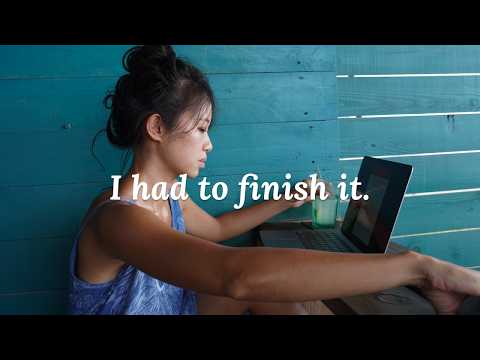
Hannah Wei has been living as a digital nomad for the last four years traveling across the US, Canada and Southeast Asia. When she is not working as a product consultant, she trains in Muay Thai, photographs people, and collaborates on local initiatives.
Her transition to a nomad life might have been a bit more natural than for overs after growing up all over the world. She was born in China, ended up moving to was somewhat familiar after being born in China and living across the world - attending nine different schools before entering high school.
She ended up attending University in Canada but left early and built her first company when she was 21. She ended up dealing with burnout and after several years in Toronto, she decided to sell her stuff and head out on a nomadic adventure. Four years later, she is still on that adventure and still trying to make sense of how to balance success, creativity and community as she travels the globe.
In our conversation, we touch on many things, including:
- Her upbringing in China and move to the US
- Her creative inspirations as a child and how it evolved as she got older
- Her experiment to code a bot to swipe on Tinder and tell people’s stories
- What she has learned from Muay Thai
- Her decision to compete in a professional Muay Thai fight in Thailand
- What Muay Thai that has taught her about burnout, performance and success
- How she defines success as a nomad depending on the region she is in
Follow Hannah
Transcript
Hannah Wei has been living as a digital nomad for the last four years traveling across the US, Canada and Southeast Asia. When she is not working as a product consultant, she trains in Muay Thai, photographs people, and collaborates on local initiatives.
Read the full transcript
Paul: Today I'm having a conversation with Hannah Wei, who is a product consultant working with teams in emerging markets. She hailed from the startup world and built her first company at 21. And these days she travels across global communities and is a bit of a nomad, much like myself, and we'll dive into that. When she is not working, she trains in Muay Thai, photographs people, and collaborates on local initiatives. Welcome to the podcast, Hannah.
Hannah Wei: Hi Paul, thanks for having me. I'm really excited to dig into our conversation about the future of work, and I listen to some of your podcasts and It sounds like a much-needed conversation these days. So yeah, I'm really happy to be here and speak with everyone.
Paul: Fantastic. And I'm looking forward to diving into your journey, especially because you have been a bit of a nomad your whole life. So maybe you can give us a little background on— you were a nomad before even working was part of your life.
Hannah Wei: Yeah. So when I grew up, my parents were immigrants and my dad, he was studying law when I was little and they had a collaboration with the University of Syracuse from China. He's— we're all— our family is from China. And growing up, my dad emigrated to Syracuse when I was 6 and eventually he brought myself and my mom over. So during my childhood, I traveled around a lot. I went to 9 different schools before I even came to high school in Canada.
So, I lived in China, lived in the US, and lived in Canada, and during the middle, you know, I traveled back. So, I actually got educated in both Eastern and Western cultures. I guess I've been a nomad my whole life.
Paul: So, you said you've been painting and drawing and developing your skills as an artist since you were 10. I love that you just give a very specific age. What was happening around 10 years old and maybe what were some of your influences?
Hannah Wei: So that's a great question. I realized that when I was little, I was traveling a lot, but I was also introverted, so it was hard for me to connect with others in my class. I wasn't the class clown. I didn't go out and crack jokes and talk a lot. So my way of connecting with people was through making things with my hands. And usually that's like crayons or whatever art supplies are available.
So that would just make sure for every place that I go to, I leave behind a project or, um, or I get into these, these art phases and, and people would bond with me. So for me, being an artist when I was young was a It was a huge influence on just self-confidence and self-development.
Paul: So you ended up moving around a bit and then ended up in college at Queen's College in Canada. Is that—
Hannah Wei: Yep, Queen's University.
Paul: I believe you ended up leaving school. Maybe you can talk to me about where your mindset was at that point in your life and how you were thinking about things.
Hannah Wei: Yeah, so when I went to university, I decided to go into computer science. As an immigrant, I saw how hard my parents worked. My mom at one point worked 3 jobs while she was also getting a degree on the side. And my dad was laid off from Nortel during the tech bust. And so our whole family was struggling at that time. And for me, I thought about going into graphics design, you know, that's tangential to art at the time.
That was very irresponsible. So I decided to make a sacrifice and go into technology. Um, and when I got to university, I just found that like there's, there's not much for me to do. Like I was used to working with my hands, I was used to learning on the job, and I was used to working on projects. But university kind of— it was like traumatizing. I was like, oh my gosh, everybody's just waiting around for 4 years to pass before you actually get to, like, put your skills to test.
So I was very unhappy, and eventually I left. Um, during my internship, I found a couple of folks that I really bonded with on my internship, and then we ended up building a startup together. It was called Visualize Me, and that was, uh, it was back in 2011, and I was just entering my third year.
Paul: Coding and computer science. I've always been fascinated because if, if you're majoring in that, you find out pretty quickly that you can just go make stuff yourself or people will hire you. I always wonder how people stay in those degree programs. Was that kind of your thinking at the time?
Hannah Wei: So I feel like there's two types of people who go into these programs. Like on one end you have the makers and it's like what you described, that's somebody who wants to go ahead and just build things. And then on the other hand, you have the more academia focus who are more, I guess, like, you know, they like math, they like theory, and they're very in-depth into algorithms and they have the patience to stay in that system. And for me, like, I don't have that patience, right? Like, I want to build things, I want feedback, I want to speak to the people that I build things for.
Paul: Right. How did your mindset about creativity and art shift as you moved into starting your own firm and into the tech world?
Hannah Wei: I found that because I am creative before I got into tech, I always figured that, you know, I will put that aside and then come back to it at a later date. Like, that was kind of a naive thought. But as I got deeper into entrepreneurship, I saw that everybody's creative. They just express it in different ways, right? Like you get some people who write songs, they crack jokes, they write poetry, they have humor, they have a good sense of fashion. That's, that's all part of their creative expression.
And like podcasts are creative too. So I found that, you know, I didn't have to put that part of me away. Instead, you know, I can, I can embrace that as somebody who's entrepreneurial.
Paul: Did that play a role in leading to some of the stressful situations you had in working?
Hannah Wei: Yeah, for sure. I think when I was young, when I was younger, I try to be better at this now, but when I was younger, I wanted to like get my hands in every pot, you know, like I wanted to be hands-on for everything. So as a co-founder, you can absolutely do that and burn yourself out. And that's exactly what happens. So what I, what I was doing at the time was we were 3 people and we were building a startup and we didn't have a designer, but all of us were technical. So I was playing 2 roles.
I was designing and interviewing customers, doing the research side of things, but I was also taking care of the front end, the look and feel of the product and actually shipping code. And that, you know, it was just like a lot of jobs. And as a co-founder, you kind of accept that because everybody else is doing that. But however, I'm, I'm also very passionate about sports and athletics, so I was also trying to train. So it was just too much at once, um, and eventually my body just gave out. I got anemia and I couldn't, like, I couldn't train, I couldn't think clearly.
And I didn't realize at the time I burned out. I thought I was just like sick.
Paul: I feel like there's more of a conversation around maybe working a little less, at least in the startup communities, but it's still that narrative that it's basically all in, right? Was there a sense of that or was there even a discussion that everyone should be working as much as possible at the time, or did nobody really even question what they were doing?
Hannah Wei: You know what, at that time, I'm really thankful that we're having these burnout conversations now because it's so long overdue. At that time, everybody's, uh, their, their, you know, vision of an entrepreneur is somebody who wakes up and like just pulls out their laptop and starts crunching away until the minute before they head to bed. Like, that was literally— I remember going into, um, I won't name any names, but an investor's meeting, and they had, uh, they had a sort of a party at the back and it was like 2 o'clock in the morning. Shit you not. We were at this investor meeting at 2 o'clock in the morning and there were people working. Exactly.
I didn't know at the time. Nobody knew at the time. We were like, wow, these are very dedicated workers. And they were part of their cohort.
Paul: Wow. Yeah. Like everything I know now, it's I do not want people making investment or financial decisions at 2 AM in the morning.
Hannah Wei: Yeah, absolutely. But I guess their strategy, I mean, investors see it differently, right? Like if these guys don't make it, one out of their 20, 50 people in the cohort might make it. That's what they're banking on.
Paul: So you've learned a lot about burnout after going through this. And it seems like you've also learned a different perspective. You've been training in Muay Thai for a long time. What do you reflect back on and think about in terms of burnout from both the mental and physical standpoint?
Hannah Wei: So I'm happy you asked that question because I'm sure you have, you have some thoughts about burnout too. So in terms of Muay Thai, what I learned was that a lot of us going into Muay Thai come from very similar backgrounds that I do, like immigrants, people who have been through struggle, and And they're like trying to find meaning through this activity. And the strength— the difference between the Muay Thai training versus like just a straight-up, uh, startup culture is that like people have their backs in Muay Thai. Um, a lot of times we talk about recovery, we talk about things like getting a massage every other day. If you're in Thailand, those are very doable and and not too expensive. We have team dinners, we bring food to each other when people are injured or they're just not having a good time.
So we support each other through the stages of recovery, not just, not just pushing hard, not just like in the ring performance-based. So there is, there's like two sides to, to making sure that we all perform.
Paul: Wow. Yeah, I mean, just thinking about that now, if somebody's burned out from work or needs a break or needs a rest, you basically just ignore their existence, right? They're gone. Yeah, they're, they're not there. It's like, um, wow, that's, that's pretty, uh, fascinating.
Hannah Wei: Yeah. I'm curious about your experience too. Like, it— is that what you found in the workplace? Because I haven't been in a corporate or, or work environment for a while.
Paul: Yeah, so I was more on the corporate side. I think some of the— I definitely experienced burnout, but I think in a different way. It wasn't as much extended hours as much as basically spending a large percentage of my time working on things that were either destroying my creative energy or were just utter nonsense, right? And I think that can wear you thin when you basically, and I experienced this more in, I think probably one or two specific older companies that were very rigid cultures. They have a certain way of doing things and everyone kind of just feels powerless to these ways of doing things. And if you question these, it can make you start to seem a little bit insane.
Or so eventually you keep fighting or you leave the company or you give up a little and you give in to doing these things, even though they can be frustrating. I think in— I actually had a lot of great experiences too in places like McKinsey where you do things with your team and they're giving you feedback and pushing you to the next level. And that's almost the opposite of burnout. It energizes you when people are believing in you and pushing you. But it's when you're giving your team something and they're like, this is great, but you need to check all the 35 spelling mistakes I highlighted. It just makes you feel terrible and kind of destroys whatever creative energy you had.
So I think there are a lot of subtle types of— I don't know what to call it. It's almost like creative energy destruction. Um, that seems to— that seems to resonate with people and what people really want. Like, they want that energy. Um, I imagine in Muay Thai you've had experiences where it's very intense and you're— you might be like physically exhausted, but I'm guessing there's a certain like mental energy you might have at the end of a session. Does that resonate at all?
Hannah Wei: Yes, absolutely. So in psychology it's called psychological safety. And quite a few, uh, I guess coaches and, and leaders have been writing about psychological safety. I'm really glad like these literature have been coming out and addressing the workplace issues. So this is what we have in, uh, when I train at Muay Thai camps, that we have just, just fundamental psychological safety that impacts everybody who comes through So what that means is like, even though you're tired, you know that everybody else is tired too. So you don't feel alone and you feel like you can lean on other people for support.
For us, for some of the days that we have training there, I mean, we can go up to like 5 hours of training a day. It's absolutely essential to feel like after training you can just lie down in a ring and just like break down the session that we had or just talk about whatever with your teammates. And as you mentioned before, like sometimes in, in the workplace, like when you mention that you're tired or you're burning out, people just kind of ignore you. Like even your boss would, would say like, oh, just take a day off, don't— right, I won't ask any questions, right? But it's like sometimes you need people to, to come up and ask how you're feeling and how you're doing. And that's what we have in Muay Thai.
Paul: That's fascinating. And I Imagine the stakes are different too, right? You don't want to hold back on being incredibly direct with somebody in a fighting sense, right? Because if they're making mistakes, they're going to really hurt themselves or hurt you, right? So you— I mean, I imagine just the stakes of needing to tell people things are a lot higher and a lot more important to be direct and honest.
Hannah Wei: Yeah, absolutely. I find that there's a certain type of people who come to train who are like a little more egotistical. Uh, sometimes they're not very self-aware and they just kind of like hide the fact that maybe they're struggling a lot, maybe they're not really achieving what, what they've sought out to do, but they're, they're trying to like play it cool. And like experienced martial artists, coaches, trainers, whatever, they can tell And their job is to tell you, hey, maybe you should, you know, like slice off that edge a little and make sure that you work on the fundamentals. And it's really humbling. Like that experience, like I went through it, a lot of my peers went through it.
It's that process of just this tight feedback loop of just being honest with each other.
Paul: Yeah, so maybe we jump into this now. You, um, we can almost go forward and then backtrack a bit, but you ended up leaving Toronto in 2015 and have been on a nomadic journey for the last 4 years. But on that journey, you, I think last year was it, you embedded yourself in the Muay Thai community in Thailand and decided to do one of your first fights. So maybe we could talk about that and then we can backtrack and dive into the nomadic journey.
Hannah Wei: Sure. Yeah, it's actually very tied together. So I guess we can, we can go into that first too. I actually started training for my first professional— like, all these fights in Thailand are considered professional because they're 5 rounds. So I started training for one in 2015, right after I left Toronto. That was my goal, like, I— because I I burned out before, um, and during 2015 I knew that, okay, I had the time now to, to train properly and give this phase of my life the proper, uh, space to play out.
So I dedicated myself to the Muay Thai training life and community in Thailand. Unfortunately, I didn't get to fight that time because I fell off a motorbike and injured myself. Yeah, it was, uh, it was— that was a really bad episode. And afterwards, I actually burned out again from trying to pull my life back together. I was struggling mentally, I was struggling emotionally and physically as well. So everything kind of crashed down.
And then last year, end of last year, I got to a point in my life again where I'm like, okay, now I've built a stronger community I've built a sustainable career for now, and it's time. It's time for me to go at this again because I really want that first fight in Thailand. So I went, I went there in November, and I trained, um, for a fight in April, actually. So I fought exactly 2 months ago. April 3rd was my fight.
Paul: Wow. And how did you do?
Hannah Wei: Oh, I won. I won after 5 rounds. It was such a great experience. And I found that the whole journey of me training and prioritizing my nomadic lifestyle kind of led to that fight. And I'm glad that it wasn't an easy fight. Because we went at each other for 5 rounds and we were both so tired at the end, but I came out on top.
So I'm really happy.
Paul: That's great. Now you're an undefeated, uh, Muay Thai fighter. If, if you retire now.
Hannah Wei: If I retire now, which I'm not gonna do.
Paul: So I'd love to dive back to, um, dive into going back to Toronto in 2015. And you wrote this essay when you were leaving which I'll link up to, which I thought was pretty awesome. And you ponder to yourself, will this trip put your life on hold or will it help move you towards something bigger? I'm wondering how that quote sits with you now and how you think about it.
Hannah Wei: Right. So that's a really good question. And I've written a bit more about the nomadic journey since. I have like a series of letters where I like explore that question. But now I think I, I have a much more holistic view on what travel does and doesn't do for you. And I think for, for different people, people travel for different reasons.
Um, and a lot of people when they start to travel, and that was the case for me in 2015, was to, to solve a problem. You know, like the grass is always greener on the other side syndrome. Like you kind of see people who are already traveling, you're like, oh wow, like they seem to have their shit together. Maybe if I just buy a one-way ticket, I might eventually have my shit together. Um, but what I learned through the, the process of becoming nomadic is that, um, you can fall into this danger of just experiencing too much and not having enough time to reflect. So you can actually burn out from traveling.
Which is like, which is like what, what I ended up— what ended up happening. I was like, oh my God, I'm back at square one. Um, so what I learned through all that, all that process was like, you know, it's, it's a really good challenge. The nomadic lifestyle is a really good challenge to, uh, not only like structure your days but also question the environment that you put yourself in and how does it help you achieve your goals and how does it align with your values. And I feel like that's, that's a real privilege that travel gives me, and I can make good decisions or bad decisions, um, based on that.
Paul: Yeah, that, that definitely resonates with me as well. I think, uh, some people are actually surprised because I'm not like the I kind of left at a weird point in my career where I left at 33 to go travel and it wasn't really to solve anything. I was kind of happy. It was just that there was this deeper pull towards there's got to be something more than just doing a 40-year career, right? And I've, I've, I think I did a lot of more faster-paced travel when I first started, but now it's like I totally like doing nothing for for a couple weeks, getting in a routine.
Hannah Wei: Me too. Before I shake it up.
Paul: So how has your conception of work changed now that you've been on the road for 4 years?
Hannah Wei: Yeah, that's a great question. I guess I've always been entrepreneurial, so work for me means a lot of things. As a working nomadic, I like I feel like work is more holistic these days. For example, me going out and training, that's considered work. Anything that burns my cognitive or physical or mental emotional energy, that's considered work for me. But sometimes, you know, that doesn't mean that I get monetary value out of it, but it means I get other sorts of value out of it, like community bonding, investing in my network, investing in my learning process, skills.
And it kind of ties back to like what, what's the privilege of being a nomad is to choose the environment where you can quote unquote work to get the best, uh, to get what, what you set out to do, either from a goals perspective or like from relationships perspective.
Paul: Yeah. And how do you think about starting new projects or new experiments?
Hannah Wei: So I try to work on a project for every location that I'm in, and I'm kind of like you too. Like, I prefer slow-paced travel more than fast-paced. For me, for, for every place that I stay in, like, I have about 5 places in the world now, they all center around a theme. So for example, when I'm staying in Vancouver, I work on arts and photography projects because that's where my network of models and makeup artists and collaborators are for those projects. When I'm in Toronto, I'm more reflective and I try to work on working for clients, make strides in my career. And a lot of my startup network is here, so I try to take advantage of that.
Yeah, for, for, for other places like Thailand, it's— that's more Muay Thai. So when I go there, my quote-unquote project is to have a fight. And then for bigger cities like New York and San Francisco and Singapore, those aren't really project-based, but those are more like short bursts where I go there and set up a bunch of meetings and try to either get good feedback or make friends or pull in new clients, for example. So I try to like structure it that way, um, so that I'm not like looking for things to do, but I already have things to do once I land.
Paul: Yeah, I love that. I, I'm gonna try and steal that and come up with, uh, things. I, I think that's super helpful. Um, just because I, I think I came back from Taiwan, uh, last week and I find, I find it a bit disorienting to go from there and like the life I'm trying to build there and all of a sudden I'm here and I don't have any of that here, right?
Hannah Wei: Mm-hmm.
Paul: And it's like, okay, what am I doing here? How do I, Who am I here? What is my role? What is my contribution? And it's challenging and it's definitely a privilege, as you say, to be living like this, but it brings different types of questions than other people might be dealing with.
Hannah Wei: Yeah, sure. Yeah, that's totally right. Like you have this like sort of cognitive dissonance when you travel from one environment to the other and you totally have to reorient. Like, for me, a lot of the challenge is like when you're living in Asia, you're very communal, um, like the Muay Thai community. Like, I'm sure you've experienced in Taiwan as well, everybody's checking up on each other and you hang out in big groups. But here it's very individualistic.
So, you know, for me, every time I come back, even though I've done a couple of times already, I always go through this minor crisis like, oh my God, what am I gonna do all alone? This house is so big. Who am I? So I totally can relate.
Paul: Yeah. What are some of the reflections you've had just in terms of being embedded in two different cultures, growing up in China and also growing up in Canada, in the US? I know I've experienced a lot of this just in terms of there are deep fundamental differences in terms of how people just assume of how to engage with people in terms of whether it's even defaulting to like a group. Wellness or individual wellness, it leads to a lot of big differences. But how has that influenced you and how you see your role, your work, your life in different environments?
Hannah Wei: Mm-hmm, that's a great question. So recently I've been reflecting on the idea of introvert versus extrovert. I know that for at least in the Western culture, we talk about this in like, you frame it as like, oh, you're an introvert, so we should optimize for like one-to-one meetings, um, less group activity, less socialization after work and whatnot, and kind of build your work life around those traits. But as I've lived in Asia and experienced communal life, I kind of like turned that concept on its head because I, I'm an introvert, but when I'm in Asia, I'm very open to, to living with my community and just sharing a lot of time together. And I don't feel burned out from socialization as I do, for example, at a big conference here.
So I think there's, there's like different nuances and how we interpret introversion, extroversion, and feel like somebody who travels between these two cultures, we kind of have the upper hand to know ourselves better and place ourselves in situations where we can say, hey, I'm introverted, but I can join this group and I can contribute.
Paul: Right. Yeah, that's fascinating. I'd love to shift now to an experiment you wrote about which just cracked me up and I think was also illuminating, which was your experiment on Tinder. So you set up a bot. I'm going to link up to the article. Like, people should definitely read this.
You set up a bot.
Hannah Wei: I'm glad you enjoyed it.
Paul: You set up a bot to auto-swipe people, send people responses, but your goal really was to find people to take photos of, but it seems deeper to walk away with some incredible experiences and unexpected lessons. Maybe you can talk to us about why you decided to do that and some of the lessons you took away.
Hannah Wei: Yeah, I love that experiment. To be honest, when I first started, I just wanted to see who would take up my offer. Like, what I did was when I went to San Francisco, and that was after my first trip from Thailand, I experienced that that disconnect, right? Like what we talked about, oh, now you're in a Western culture and so everybody's kind of living, doing their own thing. There's no sense of community. So I got really lonely, you know.
It wasn't that I was on Tinder to look for dates. I just wanted to hang out with people who are a bit outside of the, the tech bubble because I was kind of getting sick of that. So then I was like, well, what can I offer Besides dates, well, I can offer to take people's photos because a lot of the photos that I see on the guy's profile, I'm sure I can do a better job than what they have. So that's how I set it up, the bot, in the beginning. And then as the experiment progressed on, I realized, hey, these people don't necessarily need a Tinder photo, a lot of people approach me because they want to represent themselves in a way that makes them feel proud. And that was like the huge fundamental lesson of just my creative career in general.
Like this idea of getting to know somebody and drawing out their their inner creativity, their expression of what they're proud of, that, that is like what drives my work. So from that experiment, I kind of like solidified, okay, this is, this is why I make art.
Paul: That's amazing. I've experienced something similar just with podcasts in, in that people want to be able to tell their stories and often just don't have somebody asking them about their life for an hour. Right. Um, or the two-way conversation can go off on tangents, but, uh, it's, I love it because like I actually want to be having these kinds of conversations and sometimes it can be hard to just dive in and ask people these really deep questions.
Hannah Wei: Uh-huh.
Paul: But it's just been so cool to like share stories of people and have them be proud of it. I hope they're proud of it. Um, but that, that's really what drives me. Creating these things. So it sounds like you found something similar through photography and some of the other creative projects you've—
Hannah Wei: Yeah, yeah. I guess for me, I've always connected with people well through projects and art. I mean, I really admire people like yourself who can host podcasts. I feel like I don't have the verbal energy to do that, but I can make art. So that's what I try to do in Vancouver as well, connecting with a more female audience. There's a lot of models there who work part-time down in Hollywood and spend the rest of the time in Vancouver, and they're just looking to connect.
Paul: Yeah, well, I would say the same thing about you. Like, a lot of the stuff you're creating, I'm like, I can't do any of that. It's so challenging. So right back at you. And I'd love to pull out a line you wrote about that experiment. You have to create a moment.
'in order to inspire people to fall into it.' I think that, like, I just love that quote that you wrote. Like, what does that mean? Like, bring that alive for us.
Hannah Wei: Sure, I'll try. It's been a while. So for me, I think it goes back to the idea that everyone is capable of expressing themselves creatively, and maybe their current situation the current environment doesn't accommodate that. So for example, my favorite client for that experiment was a US veteran. He's been deployed 3 times and he was barely 30 years old. So you could imagine what a life he's been through.
So his, his entire adult identity was this soldier. And the reason why he reached out to me and I learned that as we did our photo shoot was that he wanted to see himself outside of the uniform. Like the photos weren't even for Tinder. He wanted to hang a photo of himself in his room so that he can look at it and remind himself every night that I exist outside of the uniform. I am somebody who's not a soldier. Uh, so that for me was huge.
And like, for me to have the honor of bringing that identity, or inspiring him to bring out that identity out of him through our photo shoot— like, we did a really fun photo shoot where we like explored hidden pathways in China and like pretended to be like cops and thieves and whatnot, and it ended up to be really fun. And like beautiful photos came out of it. And that's kind of That's what inspired me to write that line. Like, this is what it should be about when you connect with people on a deeper level to create something.
Paul: You've written about how you define success and doing year-end reflections, and you've also started an integrity report, which I love the idea of that. I was reading a bit about that and the inspiration for that idea. But how are you— how do you think about reflection and success as you keep this journey alive?
Hannah Wei: I'm glad you asked that. And like, thank you for sharing your template for the integrity inventory, because I'm just starting that. For— in terms of reflection in general, I've been journaling for about 2 years now, and I use this like modified bullet journal. My clients think it's crazy. They say it's like ants. They say it's ants marching on a page because my handwriting is tiny.
But for me, it centers me because I travel every couple months and change environments and change contexts. My journal and the reflection that comes with it is sort of like a constant for me. So it centers me every time, especially when I change these contexts, I can bring with the lessons that I've learned before the months that I've, that led up to this transition into this new phase. So for me, I try to, I try to journal every week, and I try to do a longer reflection every month to, to say like, okay, what have I accomplished and whatnot. And recently, this is where The Integrity Report comes in, um, that's over a longer period of time. That's like 6 months to a year, um, to reassess my values and, and just hold myself accountable to see like if I'm in the long term, if I'm living according to my values and what can I do differently.
Paul: Yeah. And what are those questions? I think that's from James Clear, right?
Hannah Wei: Mhm. Mhm. So I'm still working on the, uh, uh, the integrity report, but I can talk more about my year-end review. Um, that one I spent a long time with, uh, because it was around the time when I decided to, um, to go full in to, to train for my fight. So I was approaching, I was approaching a time where I'm like, okay, I need to question why am I doing this if this is in alignment with my values. So I ask questions like, um, for every, for every month in a year, what was the most prominent, like, emotion that I felt and why?
And then I asked questions on like, okay, what's, uh, who am I thankful for, what communities have impacted me? So it was It was just an overall reflection to give me a better sense of like, um, what support do I have going on and going forward? Um, what values do I assign to them?
Paul: I love those questions. I'm definitely going to take a couple of them in as well. And I think what I've found is working self-employed as a nomad, these almost become imperative because you've opted out of traditional markers of success. Uh, which is fine, but you actually need to come up with, uh, new questions or new guardrails to guide what you actually want to be doing.
Hannah Wei: Yeah, I absolutely agree. And I see that, uh, right now I live with a friend who's working in the government, and they have these questions that they answer. Like, they have like year-end reviews, they have performance reviews, they have personality tests. So they have all these like guardrails handed to them and it absolutely helps them with reflection. And as you said, as freelancers and as independents, we don't have those resources handed to us. So we have to make our own by our own rules.
And right now I'm actually working with a coach to refine mine.
Paul: Fantastic. And what, uh, where do you want to point people to? Like what creative projects do you want them to check out or, uh, learn more about what you're doing?
Hannah Wei: Right now I'm editing a couple of my writing pieces. So if you're interested in following along my journey, I suggest following me on Twitter and I will be sharing my writing. I try to share my writing about every couple months or so, but these days I'm trying to work on putting them all together into like one blog. Um, so my handle is HerLifeInPixels on Twitter.
Paul: Fantastic. And I will link that up. Uh, anything else you want to share with us or, uh, thoughts, uh, from your journey?
Hannah Wei: Yeah, I'm actually curious to hear about what you've learned from your experience with, uh, the integrity inventory that you've been doing, because I took a look at your format, and I was like, wow, that's really thorough, and I'm wondering how you came up with that.
Paul: Yeah, so I think you're talking about the, uh, the values inventory, right? Um, yeah, I'm gonna pull it up right now. So what I did is, uh, I was working with— so I've been doing career coaching for like 4 or 5 years, and I found, at least for me, what I like doing is get getting deep to the fundamental questions like right away, like what matters in life? And then you can figure out like, how are you actually behaving in your life? And is it actually aligned with what you said? And then there's two possibilities, right?
It's either you don't actually care about the things you say you care about, or you can— you should change your behavior to align with the things you do actually care about. So that was kind of the driver for me. I found that a lot of different values inventories were not very good. There's, it's almost like if something exists, we assume it's like thoughtful and well done.
Hannah Wei: Yes.
Paul: Whereas I come at it with more of an engineer's perspective or thinking that, well, why, why is it like this? And there was something called My Values Inventory I was using, but it, it seemed very American in the sense of like making money and like outward success. And I wanted to simplify it and just get down to like, what are the things that really matter? Like when people, when you get down to it and people really like their eyes light up when they tell you about it. Um, so I did that. I took some stuff from Simon Sinek.
I, um, basically found like 4 or 5 different values inventories and then created a list. Um, and it's basically an exercise to rank them once and then from the ones you say are very important, figure out what those top 5 are. Um, and then you can do it for personal and work, uh, or just one and compare like what are those, um, what are those, uh, values. And then, and then starts the real work, right? It's right figuring out if you say you care about courage, like, how does that play out in your life? Or if you say you care about financial security, how does, how does that play out in your life?
And is that really the value you want to guide your behavior, or is it something else?
Hannah Wei: I like how, how you structured as like there's this stuff that you say you care about, and there's the accountability factor of like, what do you actually do? And I think that's really important for reflection. So a lot of people like end up— they end up reading self-help books and think like, oh yeah, I agree with this, you know. But then sometimes that doesn't necessarily lead to change or action. So absolutely, I can definitely see the value in that. Um, and along those lines, I guess, um, for accountability, I'd love to share my, my Notion workspace.
So I've been doing these reflections publicly on Notion, setting up the template, plus inviting others along and then publicly sharing them. So if anybody who's listening wants to join in, I would absolutely love to have anyone on my workspace and doing all these reflections together.
Paul: Yeah, we'll link that up and hopefully some people join. I know I want to join already, so come on. And, um, if people want to learn more, like you mentioned before, they can find you at Twitter and Her Life in Pixels. Is that right?
Hannah Wei: Uh-huh, Her Life in Pixels.
Paul: Yeah, fantastic. So follow her, follow her, uh, writing. Um, I appreciate your time today, Hannah, and I definitely urge people to check out a lot of your work and creative, um, pursuits. I find them definitely inspiring, and keep up the work and hope the journey keeps going.
Hannah Wei: Well, thank you so much, Paul. It's been such a pleasure to have this conversation with you. Um, it's, it's great to hear where you come from and straight to like just dive deeply into these questions, uh, that I— when I looked at them, I was like, wow, like I'm really excited to answer these. So I'm, I'm hoping they give insights to whoever's listening. And if anybody has any questions, feel free to reach out.