John Zeratsky on what living on a boat for 18 months taught him about work, belonging, comfort & money
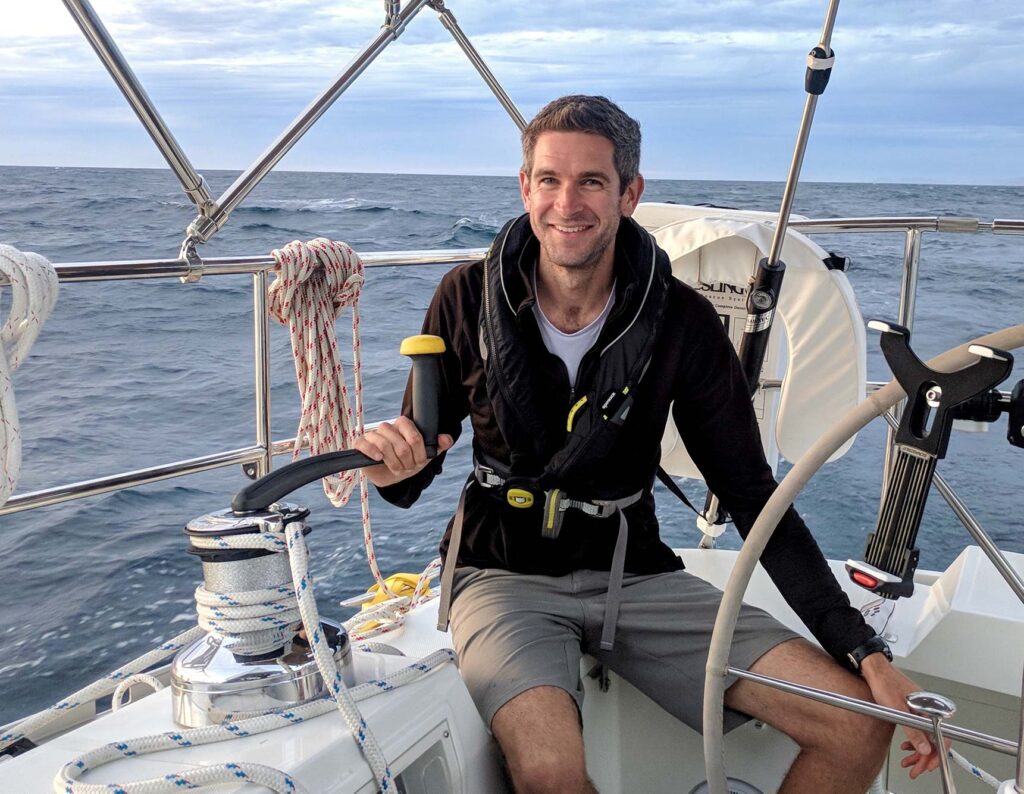
John Zeratsky was a designer in the tech industry has worked with hundreds of startups in his time at Google Ventures. He’s also obsessed with redesigning time and thinking about what matters in life. Earlier this year he just got back from 18 months living on his boat sailing around Central America, which he wrote about in an article titled “What quitting my job to sail around central america taught me about fulfillment.”
John describes himself as “risk averse” but after being influenced by different perspectives on risk (including thoughts from the incredibly thoughtful Brian Koppelman) he realized that he could take smaller steps to test out a bigger leap. So in advance of taking the trip, him and his wife avoided the trappings of lifestyle creep by saving 50% of their salaries and avoiding the urge to upgrade their apartment. As a way to test whether they would like a longer sailing trip or not, they took smaller trips, going for a two week trip and a two month trip before heading out. This helped them learn about how they would feel and practice some of the skills they would need while living on the boat.
In this conversation we talk about:
- Growing up in a small lake community
- His love of sailing growing up
- Why him and his wife change their mind on taking the trip in 2015
- Rethinking convenience and comfort
- What comforts are worth paying for
- Belonging and community
- How his relationship with money has changed
- How him and his wife are structuring their life to work how they want
- The one change that helps people be less addicted to their phones
Links Mentioned:
Transcript
John Zeratsky was a designer in the tech industry has worked with hundreds of startups in his time at Google Ventures. He’s also obsessed with redesigning time and thinking about what matters in life.
Read the full transcript
Paul: Today I'm having a conversation with John Zoratsky. He was a designer in the tech industry and he's worked with hundreds of startups with his time at Google Ventures. He's obsessed with the redesigning time and thinking about what matters in life. He spent 18 months living on his boat sailing around Central America, and we're going to dive into the essay he wrote about that called What Quitting My Job to Sail Around Central America Taught Me About Fulfillment. Welcome to the podcast, John.
John Zeratsky: Thanks a lot for having me.
Paul: So I'd love to start with growing up. I am recording this from my hometown of 4,000 people. And you write a bit about returning to Wisconsin where you are now, but you grew up in a really small town of 1,000 people.
John Zeratsky: Yeah.
Paul: Take me back to growing up. Like, what was life like then?
John Zeratsky: So I grew up in this town called Green Lake, which is, which is on a lake. And it's kind of a, it's kind of a summer vacation destination. So But I lived there year round. My family is from there, and most of my family still lives there. And so we were, we were townies, you know, we were like, we were the locals. And, and every summer the town would fill up with people from mostly from Chicago, but also from Milwaukee.
And so for, for 3 months, the town felt a lot bigger than it really was. And there was sort of an energy and there was sort of a I had this sense from all of the people who would come to Green Lake for the summer that there were bigger things out there. I wasn't sheltered by any means, and we took vacations and stuff, but my dad ran and still runs a small manufacturing business, and so it's not like, It's not like we had in my family big connections to big companies or big cities or anything like that. So one thing that really stands out about growing up was just sort of this sense of a bigger world that I had little glimpses of or little bits of access to via the people who would come to our town in the summer. At the same time, the other thing that I really remember that I think has had an impact on me is I went to a really small small school.
I had 30, uh, 36 kids in my class and only 32 graduated, uh, which gives you a sense of the kind of place it was. And, um, and I, I was always kind of like a nerdy, unpopular kid, you know. I, I did well in school and I was into like band and like stuff like that. So I wasn't a great athlete, I wasn't I didn't check the boxes of what it meant to be cool or popular in that environment. And so I think that the places that I got validation or encouragement from, from my parents and from other adults, and to some extent from my peers, especially as I got older and got a little bit more savvy, were like projects, were like, places where I could be creative and I could kind of focus my energy on becoming really immersed in something, becoming great at something.
And so I used that in school and I was the valedictorian of my class, but I also got super into music and I got super into different kinds of design and writing and a bunch of other projects. And I think that Having the validation, having the encouragement to pursue those types of things became sort of my MO. That sort of became my default mode. And so when I grew up, got through college, started working, I continued to pursue those types of projects, projects that really reward deep focus, creative thinking, and so on.
Paul: So we'll definitely move forward and dive into the break you took sailing around, but I often find when adults take breaks that a lot of these things from childhood reemerge. Are there any projects that pop into your mind that you worked on as a kid that have kind of reemerged now?
John Zeratsky: The break that we took, which was a sailing trip, that is really a direct result of the way that I grew up. I grew up like I said, in this town on a lake, yeah, and sailing and boating and swimming and all that stuff was definitely a part of how I grew up. And at the time, like, when I was a kid, I was a competitive sailor, so I raced. We would like go to the other, like, neighboring lakes and like the other kids would sail and we would all sail together. You know, it's just like a traveling, you know, Little League team or whatever, but sailing in these tiny little boats. And so, you know, it was always framed as a competitive thing with, it was very outcome-focused, you know, so it was like the goal of a race is to win.
But despite that, along the way, I managed to develop a real love for sailing, for being on the water. And I also developed kind of a taste for the, the mechanical and systems side of boats and fixing them and maintaining them and making sure they were working properly. And so one of the things that a lot of people like about sailing, myself included, is that it really is a lifelong pursuit. It doesn't depend 100% on physical strength or fitness, although that's certainly an important part of it. But it's something that I was just able to continued to grow and develop through my childhood as a, as a, you know, like a younger adult. And then, you know, I'm 36 now.
And so, like, you know, it's very much still, um, something that I care about. And, and, you know, in some ways, leaving our jobs and going on this big sailing trip was like a very, uh, dramatic break, you know, this, this leap into something new. But in other ways It really felt like just a continuation, a build of things that I had enjoyed my entire life.
Paul: Maybe let's dive into that. What was the lead-up to deciding to make this? Maybe we even step back a couple of years from it. Was there a growing sense of maybe there's something more than just this career stuff? I know you had worked in Chicago and San Fran, two pretty intense cities, but yeah, maybe talk to me about that evolution of some of the years leading up to eventually taking this trip.
John Zeratsky: My wife and I, we both, we did what you're supposed to do. We were, you know, kind of rule-following type of kids. And so when we graduated from college on a Saturday, I guess probably was, we both started working on Monday. You know, it was like, we, we, which is good. I mean, we were very like fortunate to have jobs lined up right away. We were fortunate to graduate at, you know, in years where the economy was strong and so on.
But we started— by the time we got into our, like, early 30s, we started to have this feeling that, like, we— that we just wanted to do something different, that we just, you know, that the uninterrupted string of school, school, school, work, work, work was, I guess, starting to get old. And so at the same time, we also had this feeling that maybe San Francisco wasn't gonna be our forever home. It's a place where largely these days, and I think even over the past decades, it's a place that people go to be ambitious, to pursue careers and, and money and, um, and status. And, you know, we didn't necessarily relate to that, even though that was why we moved there. You know, we moved there because of my work, but we started to feel like we were on a somewhat divergent path. And at the same time, like, a bunch of people that we knew had started to leave San Francisco.
We don't have kids, but a lot of our friends do. And so people were leaving either either going to the suburbs or moving across the country or back to wherever they were from because they felt that that was better for their kids, for their families. And so we found ourselves after 8 years in San Francisco with this feeling like, why are we here? We could be anywhere. We could be doing anything. A big part of all of this that maybe we'll touch on is money and we were we always saved a lot of money and we built a portfolio that could partially fund our life even if we weren't working.
And so, you know, we're sort of looking at this situation like, well, why here? Why not go and try something else? So that was sort of how we were feeling. And then, you know, like I said, I kind of had this natural build of interest in boats and sailing and traveling. And it just, you know, it didn't so much click together as just sort of generally kind of all fell into place. And from that point, it was really just a few years of like kind of more intense planning and, you know, work to actually, you know, be able to leave and take the trip.
Paul: Yeah, I've almost started to think of cities, especially some of the more expensive ones. I spent 10 years in Boston and New York as, I mean, they're amazing places to go. They're almost like career incubators. It's like, go spend 10 years there, but then get out. I think, I think I experienced some of the disconnect, uh, you did when like friends would start leaving and you look around and be like, wait, I thought I was here for the friends, but they're leaving. And if I'm not here for the money and the power, what am I doing, right?
It's, um, but I think there's tremendous benefits to being in these environments, but there's, there's a challenge when you start creating that deeper sense of belonging, which we'll also get to.
John Zeratsky: Yeah. Yeah. And I, you know, despite growing up in a small town, or maybe because of it, I love cities. And from after, after growing up, I went to University of Wisconsin-Madison, and Madison's like, I don't know, a couple hundred thousand people. So it's a small city, but I like to say that it's a, it's a microcosm of a real city because they have like one of everything. You know, they don't have like a whole, a whole like, you know, Korean neighborhood, but they definitely have like a few like really solid like Korean restaurants.
So, so especially if you're not accustomed to living in a city, you, um, you know, when I went to Madison, I was like, oh, okay, this is what cities are like. And, um, and so I very much still, uh, love living in a city and I live in Milwaukee now. But yeah, I totally see what you're saying where there's a certain type of city I think or maybe certain pockets within certain types of cities where I think it is very difficult to feel like you really belong there especially if you're not from there. If you came there during a time in which a lot of other people were coming. For sort of career transient reasons of ambition or striving.
Paul: How long before you eventually left did you start planning? And maybe walk us through some of the more practical steps. I talk to a lot of people who are taking leaps and a lot of people think it's just this like, "All right, I wake up. I'm leaving one day." I think the people that manage to do something like this end up putting a little more planning and kind of staying in place for longer than people expect.
John Zeratsky: Definitely. Yeah. And, and I'm, I'm pretty risk-averse by nature, which for a while I thought was— I thought that was a bad thing because I was working in the tech industry. I was— I worked at a startup. I was working with startups in my role at Google Ventures. And so I was kind of steeped in this world that sort of romanticized risk-taking and these bold moves, these leaps.
But that wasn't me. And one thing that kind of turned that thinking around was listening to an interview with— I think it's Brian Koppelman, who's a screenwriter. Yeah, it might have been a different screenwriter, but it was definitely like that type of creative role where you often hear these stories of, you know, and then I just decided to move to LA and start over, you know, whatever, pursue my dream. And he had such an interesting way of talking about his own story and giving advice to people who are starting out, which is like, don't take the big leap. If you want to get into the pool, don't just run and jump. Walk up to the edge and like tiptoe your way in because it's going to, it's going to enable you to, to learn as you go and build up such a valuable base of knowledge and expertise.
You're going to be able to see how you feel about it before you've made that commitment. And you're going to be able to— you're going to be operating from a place of stability because you can build up, you know, whether it's in your investments or whether it's something about your living situation or even just kind of a stable day job that enables you to go and take these risks, that's a much better approach. And that was kind of a transformative moment for me hearing that from somebody who, if you looked from a distance, you might think, oh, this is a guy who went and took a big risk. And that's very much how we approached leaving San Francisco and going sailing. I've mentioned now money a couple of times, and so we were saving in the neighborhood of 50% of our income most of the time.
Being in San Francisco, we were making good money, but we really resisted a lot of the lifestyle inflation or lifestyle upgrades. So we stayed in our same apartment. We had the same old used Volvo for a long time. So that was a big part of it. We knew that there was a certain set of skills that we would need to do this kind of travel. Some of them being very technical, things around maintaining the boat, fixing things on the boat.
Others being more related to self-sufficiency, comfort with being able to prepare food and being able to just kind of think about having the supplies and having the things that we would need. And so we just kind of began to nudge our life, even though we were living, we could have just gone and run to the corner store anytime we wanted. We sort of began to nudge our life in this direction of self-sufficiency and self-responsibility. And I think tried to like, we wanted to make sure that we enjoyed the, elements of that lifestyle. We wanted to make sure that we would enjoy the process rather than just dreaming about some glorious future and jumping into it.
Paul: What are one or two of the experiments or ways you thought about building skills in that period that you reflect back on that were really helpful?
John Zeratsky: A lot of it was really just doing mini versions of what we, what we were planning. So we had, um, we had— before we left on the big sailing trip, we had a different boat, and we would take like small sailing trips first. Just like, we would go somewhere for one night. We would like sail somewhere inside of San Francisco Bay and like anchor on— anchor the boat. And like, we would bring everything that we needed to like make dinner on the boat and like, you know, have everything set up. And we would do that, and then we would go home the next day.
And then like Later that year, we would do that for like a long weekend and then for a week and then for 2 weeks. And then a couple years before we left on the big trip, we went for 2 months. We like took the boat all the way down the California coast from San Francisco as far as Catalina Island and then came back. So all of the skills around maintaining the boat, living aboard, cooking, managing our use of power and water were really essential. Yeah, and those have a direct connection to the specific type of trip that we were taking.
They're not like these universal skills, but I think there's this, for us anyway, there was this element of even if the application had been different, even if we weren't on a boat, There was sort of this— there was this undercurrent of trying to shift our life away from relying on conveniences and delivery services and things like that toward, you know, being responsible for kind of the essentials of life ourselves.
Paul: Well, I love that approach. I think just in terms of trying anything new, it's almost— I think sometimes we make the mental mistake of thinking, oh, well, I want that and I'm just going to go do it all in, right? I think sometimes people think about this as job changes, right? They're like, I want to be a yoga instructor, I'm just going to go all in. It's like, maybe you should teach one class first, do a month of classes. Um, I did a similar thing with traveling.
Um, I've been living in Asia, but I did a one-month trip first, and during the trip it was like, okay, there's something here, I could do this a little longer. I did 3 months, and now it's— I don't know how long the journey is, but I know I'm comfortable with many different ways of living now.
John Zeratsky: Yeah, definitely. And that's something that I, I write about a lot in, in written about in both, both my books, Make Time and Sprint. This idea of prototyping changes before you commit to them and about having kind of an experimental mindset, even if you're, even if it's something as small as just making a change to your morning routine. I think a lot of the books and articles and things that are out there about self-help and time management or whatever, I think they over-dramatize sort of the big sweeping overnight change, and they're also extremely prescriptive about these very kind of complicated and rigid checklists you need to follow. I really think that people should experiment with one small change and try it for one day and see how it goes and then reflect on how it went and tweak it the next day.
I think when you operate in that way, you can really work your way up to some pretty major life changes. That's what my wife and I did. Also, there's always a point when you do need to make a leap, but when you have been through this gradual process of experimentation and prototyping, you're so much more confident about that leap that it doesn't feel like a big leap.
Paul: Yeah, I love that. It's also no coincidence you're a designer in your work, and I think for me, design thinking was a big mind shift for me as well. I did— I read the book Designing Your Life, which comes out of the Stanford Design School and is a similar approach to prototyping. Prototyping different lives and even just having conversations with people living different lives. And I think that's one of the things I hope to do through this podcast is give people a sampling of, okay, here are different, uh, ways to live, here's how they approached it. But yeah, like you said, I'm very wary of like the prescription, uh, just because a lot of these shifts are mental, right?
And you need to really feel your way through it and see what the experience is actually like.
John Zeratsky: Yeah, and, and that connects back to what I said about growing up in, in the small town and how because there were so many visitors, I kind of had these glimpses into other people's lives, um, that were very different from how I was growing up. And there were, you know, when I was trying to figure out what I wanted to do in terms of work, there were, there were these key moments where somebody who, you know, was like a friend of my parents, or, you know, I knew their, their daughter or their son or whatever, but maybe they worked in an advertising agency in Chicago or something like that. And being able to just talk to that person, um, and, and understand, like, wow, that's a, that's a whole world. Like, like, there are people who, who sit and, like, do, you know, creative work and think up cool ideas and make things on computers all day long.
Like, That was something as simple as that for a kid who doesn't have access to those things otherwise is really, really helpful. Sometimes, you know, and when I talk to students or people who, you know, younger people who are trying to figure out what they want to do, I always try to keep that in mind. I try to remember that to me, this is not a big deal to speak with them, and my life is my life. It's normal to me, but I try to remember how I felt as a kid kind of getting those glimpses because it is, like you said, it is really helpful just to know that there are other approaches out there. And sometimes even in lieu of you trying them out yourselves, by seeing them, you can very quickly have a sense of like, yeah, that's for me, or no, maybe not.
Paul: Right. So you, you said there was still a leap, right? And this was the same for me. Maybe talk to us about that specific day, or even I'd be curious about like the day after you decided to make this leap. Like, where was your head at? What was the conversation between you and your wife?
John Zeratsky: I'm trying to remember. There are, there are some moments that I remember, although I don't know if they're exactly that moment. Um, one moment that I remember is when we decided not to make the leap, because we had planned to do this 2 years before we did. So we left San Francisco on our boat in 2017, but we had originally planned to leave in 2015. And I remember the fall before And just as a little bit of like kind of sailing-related side note, people who are doing these types of trips, they almost always leave in the fall because you want to get south before the winter comes, but you can't leave too early because if you leave during the summer, then you're sailing south into the hurricane zone, which is not safe. So people usually leave in the fall.
And so we were going to leave in the fall of 2015, and the year before, 2 things happened. My wife got, she was offered a big promotion at work, a job she was really excited about, and I could see that the opportunity to write the Sprint book, my first book, that that was on the horizon. I didn't yet know if it was gonna happen, but it was at least there. And so I remember very vividly the moment when we decided that we were not going to take the leap in 2015, which was hard. That was a very bittersweet, almost heartbreaking moment, even though I participated in that decision. It's not like something happened to me, but it was still a hard decision.
But I think ultimately it was really good because it sort of tested my, my resolve or kind of helped keep me honest about whether I really wanted to make this change, and so I had to sort of redouble my efforts. But I also think that it refocused me on the process. So not the outcome, not the specific vision of us sailing with palm trees in the background, but like, okay, now there's going to be 2 more years of this working and Preparing and prototyping and saving money and learning skills and whatever. And do I— how do I feel about doing 2 more years of that? And I found out that I, I was excited to have 2 more years of that, which then just made me feel that much better and that much more confident about, about taking the leap.
Paul: Wow. So this is going to be a leading question. Do you think that the pursuit of comfort and convenience are natural and inevitable?
John Zeratsky: I do. Yeah, I think that inevitable is— that's an interesting word.
Paul: This is a quote from your— yeah, we— so you say, we view the pursuit of comfort and convenience as natural and inevitable.
John Zeratsky: Yeah, the reason I wrote that is because The evolution of human civilization and economies and all the ways in which our lives are objectively better today than they would have been 100 years ago or 1,000 years ago are really related to comfort and convenience. And not in trivial ways, but in really substantial ways. Machines that allow us to do work more quickly, or sanitation, things that keep us safe and healthy, cars, things that enable us to— that allow us to spend more of our time on things that are important to us. And so I think that there's a very, very strong pull toward seeking those conveniences and comforts because in general, big picture, they have led to good things for us. And so I do think they— I think that that pull is inevitable.
I think that it's a— I think it's very basic, it's something that's kind of deep within us, but I don't necessarily think that we need to submit to that pull. That's the world that we live in and those are the forces that exist, but I think that even though it feels like a very fixed, unchangeable force, we can choose to push back against it and we can choose the line, we can choose the level of comfort and convenience, that works for us, that makes our lives better without becoming almost an end unto itself, where we're working more to make money to afford certain comforts and conveniences that we only need to afford so that we can work more. And so I think we have the power to find that line for ourselves, but I think that there's something very deep and very primal about that urge toward seeking these things out.
Paul: Yeah, I really think that is one of the core modern challenges, right? To figure out where— what is the level of comfort and convenience you're seeking? We're all seeking it at some level, right? We're not going to go build a fire, although some people might. We're not going to build a fire most of the time instead of cooking something in an oven. But yeah, what is the level of comfort and convenience you need that you can reach, and then you can kind settle.
John Zeratsky: Yeah.
Paul: Did you find when you went on your journey that you kind of had a level and then maybe it dropped even lower than you thought?
John Zeratsky: Living on a sailboat is in general not super comfortable and not super convenient. It wasn't a shock to us because we knew those things. Again, we had kind of prototyped what that was gonna be like. But it made us much more aware of what our baseline level of comfort and convenience had been. And I think what was really, really interesting about it was then after being on the boat for about 8 months, we came to Wisconsin and we actually, we lived here last summer for about 6 months during the hurricane season. And we could sort of, it was really interesting 'cause we started from this new baseline of, okay, we cook all of our own food.
The water that comes out of the tap is not unlimited. If, you know, we clean everything ourselves, we fix everything ourselves. That was our new baseline when we got off the boat and came to Milwaukee last summer. And then we got to just like, we got to intentionally and selectively ratchet that level back up. And we got to see what that felt like and which things felt good and which things didn't feel good. And one of the defaults that we kind of snapped back into was ordering delivery.
So like in San Francisco, when we were both working a bunch, we would use, you know, all sorts of delivery apps to get food brought to us. But when we were in Milwaukee and we weren't working in those full-time office jobs, we found that that particular convenience didn't feel good. It didn't— it's not like it bought us back time from something that we didn't like doing because we like cooking. And it didn't feel like it was quite worth the money and didn't feel like it was really enabling anything special for us. On the other hand, there were conveniences that were really amazing and eye-opening to see. And we don't even think of them as conveniences, but like having internet that's always on, you know, like high-speed internet and not having to like go and find a place to connect to the internet, but just having it at home.
You can just get so much done, you know, assuming the things you need to do are online. Of course, it brings with it its challenges too. It can be very distracting living in a home that doesn't require constant maintenance because the boat requires constant maintenance, which for the most part I enjoy. But we live in a condo now, and so we don't have— it's not even like a house where we have a roof and gutters and our own furnace. We live in a condo building where a lot of that stuff is taken care of. My wife and I both saw that when we added those conveniences back into our life, it freed up a lot of time for us to focus on projects, on contributing to things that we really cared about and things that were really satisfying.
And so that was a pretty eye-opening process. And we then went back to the boat for about 5 months last winter, and we just returned to Milwaukee about a month ago. And so we're trying to like, you know, find that line again. We're trying to find that balance where the conveniences allow us to spend time on things that we care about, but they don't— we don't go overboard. We don't get carried away just, you know, seeking things that are convenient or comfortable just because they're there.
Paul: Yeah, so you mentioned contributing and doing the things you're drawn to. How has your mindset about work shifted? It sounds like you're working independently now, your wife as well. How are you guys thinking about that and just designing work around your lives right now?
John Zeratsky: Generally speaking, we were both super lucky. We had great jobs. The work that we were doing was connected to things that we cared about. My wife worked in healthcare. She worked for a small biotech company that made drugs for very rare genetic diseases. So the work that she did helped patients find treatments for these fatal diseases that they had.
So it was truly life-changing work. I worked at Google Ventures, and my job there was to work with the companies that we had invested in. I was sort of a consultant. I would go in and I would help them whether they were trying to launch a new product or reach new kinds of customers. I was there to sort of facilitate them reaching their goals and finding the answers to the questions they had about their business. And so that was very rewarding because it's, it's, you know, it's helping people with their life's work.
So, you know, in general, we were super lucky, but we— I think that we wanted to have more control over what we said yes or no to. When you work for an organization, there's a, you know, the— you may have some degree of control, but, but, you know, there are certain things you just have to do, um, and there's certain things you just can't do.
Paul: That's why they pay the salary, so they can ask you to do those things you're, uh, excited at a level or two about.
John Zeratsky: Exactly. Yeah. And, and also, um, and this was much more of an issue for my wife, but, um, like, they also get to ask you or tell you when to do them. Which for her sometimes meant being on international flights over the weekend to go and be somewhere for a 3-day conference. She likes to say that she saw the inside of conference rooms all over the world because she traveled a ton and she went to some really cool places, but for the most part, it was to go to meetings or go to conferences. So yeah, we cared about what we were doing, but we wanted to find ways to reframe that and structure it so that we had more control over what we were doing and when we were doing it.
So as a part of preparing to go on the sailing trip, we knew that we would need to save money and invest it in ways that would be kind of a sustainable portfolio that could continue to fund our travels. And that's a good example of something that we developed an appreciation for that was decoupled from the specific outcome. So it started because we knew we wanted to go on this sailing trip, but we also realized that having this financial footing would enable us to do other things. Have other types of freedom. And then we combined that with moving to a place that has a very low cost of living, a place where the culture is much less competitive, much more communal, and where there just seems to be greater access and opportunity to get involved in things. And so my wife, last summer, she was volunteering with a nonprofit here in Milwaukee that helps people get access to healthcare.
And this fall, she's starting a master's in public health program at the University of Wisconsin-Milwaukee. And I have been able to focus my time and my energy around the parts of my work that, that I loved the most, which were helping people rethink the defaults of how they're spending time at work, but also in their personal lives so that they can put their priorities first, so that they can do the things that they want to do. And I'm still kind of piecing together what that is all going to look like and the specifics of how I will pursue that work. But because of going through this series of transitions and because of the kind of the core base, the stability that we built for ourselves, I've been able to make that shift.
Paul: Right. So maybe we can talk a little bit about money. How has your concept of money changed from doing this, not earning that steady income? Maybe have you shifted an expectation of what you actually need? And maybe talk a little bit about that and the role it plays with freeing up time.
John Zeratsky: Yeah, it's some— you know, I write a lot about how people can make better use of their time, and the, the people in this, this community that has sort of formed around, around my work, they are, they are routinely telling me, you know, I've, I've made these changes to my devices, for example, removing email, removing social media, removing the news from my phone, and And I'm getting an hour a day back. I'm getting 2 hours a day back because all those little slices of, I pull out my phone and do a quick check and then half an hour later, I realize that I've just been mindlessly scrolling. People reclaim those slices and they put them together into real time. And that's a very real and very valuable thing. But at some point, you run up against this wall of economic reality, which is you need money to live in our society.
You said you're not going to go build a fire, and so assuming you're not going to great, great lengths to be outside the economic system, you need money to live in our world. You need to work. Most people need to work to make that money, and so I think that the next natural step after you've reclaimed control of your time and your attention is thinking about how you can use your money to buy even more control over your time by generating, by, you know, creating investments and having assets that produce income that actually kind of take the place of your salary, your paycheck, so that you aren't— you don't necessarily have to be on somebody else's schedule. You don't have to work a certain number of hours if that's not what you want to do. There's a writer named Tanya Hester who has a great blog called Our Next Life, and she calls it the work-optional life.
So it's not that you won't work or that you can't work, but it's just that it's optional. You can choose the types of work that you want to do. And so I think that's like the kind of really big picture thing about money for me is that I stopped thinking about how much is coming in every month and what am I spending that on, and I started thinking much more about how much is in the pot and What percentage of that can I safely spend each month or each year just to support kind of the basic essentials of life? And then looking at sort of the degree of freedom that that creates. Related to the question about establishing the baseline for comforts and conveniences, another big thing that happened for us was when we were When we were living on the boat, we spent very little money for the most part because we were often in places where there was really nowhere to spend money.
And we found that our kind of instincts about the ways we spent money had totally changed. And there was this really, this moment that is crystallized in my brain. We were in Costa Rica and we had just sailed to Costa Rica. We had just arrived there. And this particular town that we were in, in order to get cleared into the country, to pass through immigration and stuff, you actually had to take a bus or a taxi or whatever. You had to go to the airport, which was, I don't know, it wasn't far, but it was 20 minutes or something.
And we went to the airport and we found the right person who could like take our passports and like, you know, process us, you know, in and clear us into the country. But it took them a while. And so we were there, my wife and I, and we were there with two other friends who had also come on their boat. And there was like a little store and I was like, oh, I'm gonna go grab like a bottle of water and something to eat. And so I like go over there and I like grab a bottle of water and I grab like a granola bar or something and I go to pay and it's like, it was like $16 or I don't know, it was like, it was just some, it was much more money than I expected it to be. And I was like, like it really rattled me.
I was like, this is, this is crazy. You know, I've, I've gone from spending no money to now, you know, some water and a snack is $16. "$16." I've already seen that change now that we're back. In my old life, if I was traveling and I needed that, I wouldn't have thought about it. I would have just handed the credit card and whatever. Anyway, that was a moment that really captured for me the way that my feelings about spending money had changed.
My wife and I We often talk about it as like spending that feels good versus spending that doesn't feel good. And there's really no relationship to the amount of money, the number of dollars. Like, we have spent lots and lots of money on things that we feel great about. And we have spent— there have been little purchases like that that are relatively small, but just really rattled us in terms of the, the sort of the trade-off of convenience and value. With money. So yeah, that's another, another way that things kind of got reframed.
Paul: Yeah, I think for me I've had a flip that's happened, which is I look at that $16 and I say, would I want to work a little more for this if I did this every week? And the clear answer is like, no, I don't want— I don't want to be working to support a $16— depends how hungry you are, I guess, but I don't want to be supporting a weekly $16 water and food. Yeah, it's— I've also gotten to that point too where it's like, what are the things I can spend money on that bring me crazy amounts of joy, right?
John Zeratsky: Yeah.
Paul: And I— that's where I challenge people because people will come to me and be like, well, you can't just expect everyone to live like you as a minimalist. Like, I'm very happy living like this, but my pushback is, okay, you, you spend all this money, but like, what are the elements of that that you don't get a lot of value at? And like, Can you double or triple the things that you are getting a ton of value out of and really get a little more joy out of those things?
John Zeratsky: Yeah, totally. I think the best place to look for those things is in our fixed expenses, in our living expenses, our rent or our mortgage, transportation. Do we own a car? Do we own 2 cars? How do we get around? Any kind of ongoing month-to-month commitments that we have, whether it be cable television or, you know, a membership or subscription or something like that.
And part of why those things are so, so like powerful or so successful as, as businesses is that once you get used to— yeah, once you get used to spending that money, it just happens automatically. But that's why they also represent such great opportunities for us as individuals who are trying to to change our relationship with money. And so, you know, when we were in San Francisco, we, we moved out there in 2012— sorry, 2010. And we were pretty like, you know, we had sticker shock. We were pretty surprised by how expensive it was even then coming from Chicago. And so we rented like basically the cheapest apartment that we felt was, was adequate.
And then we just didn't move. We, we could have moved, we could have spent more money. Um, but that one decision, um, or rather that series of decisions that we made, you know, every time we thought, should we move now? Let's stay. Um, that had a way, way bigger impact than the, like, you know, skipping the daily latte or whatever, you know, sort of more, um, you know, discretionary expenses people often focus on. And so, yeah, I totally agree with, with your perspective on, trimming back on the things that don't bring value to your life so that you can spend more money on the things that really are important to you.
I think especially when you can do that in the realm of fixed ongoing expenses, that stuff can add up super quickly.
Paul: What are your plans moving forward? Are you still thinking about how to balance this? Are you guys going back to Pineapple, which you called the boat?
John Zeratsky: We're not. We're actually— the boat is on the market, so Pineapple is for sale, and my wife is going to be starting this master's program studying public health starting in the fall, and I'm excited to build a business around my work, around writing, speaking, teaching, helping people. Make time for what matters at work with their teams, but also in their individual lives. And I don't know exactly what that is all going to look like, but I'm excited to figure it out. Despite working with entrepreneurs pretty much my whole career, I've never actually built a business myself. Technically, I did have a— I had a little web design company when I was in college, but I was It was very much like kind of a fly-by-night type operation.
I've been exposed to all these and learned from all these smart entrepreneurs over the years, and so I'm just excited to apply some of those things to my own business.
Paul: Definitely relates. I think some people are always searching for, "Well, what do you do now?" It's basically, I just say, waking up every day and trying to figure out what's next. And I think for me, I've tried to just do a lot of different experiments, see how I feel, see what resonates, see what seems like something worth doing a little more.
John Zeratsky: Yeah.
Paul: Are you taking a similar approach of doing experiments? I know you've done workshops, you've done writing, but do you guys try a bunch of different things? Like, when you woke up today, like, what— where did you spend your time?
John Zeratsky: Well, when I woke up today, I had something that I was really excited to work on that I hadn't had time for for like a few weeks, which was contributing an article to this website. It's a website, I think it's just called My Morning Routine, maybe Morning Routines. Anyway, it's like this amazing website that's kind of a library of Morning Routine site. No, it's Michael, Michael Zander, I think is his name. But he's got like hundreds of interviews with, with writers and entrepreneurs and, you know, people in all different walks of life. And he invited me to contribute to the site like a couple of months ago.
And we've been— my wife and I just got back from from being on the boat, and we have been moving in and getting settled and stuff. And so I— it pains me because I haven't had the— you know, here I write about making time for things that matter, and I haven't had the time to actually sit down and, you know, write this interview. And today was the first day that I actually had time. So I was excited to do that. In general, I would say that I I have been experimenting quite a bit and I will continue to, although I think there's different phases that I go through where I kind of very much as you might do in a design process where you diverge and then you converge around the most promising ideas. I go through phases in my life where I diverge and I try a lot of different things and then I converge.
I focus on the ones that I'm most excited about or seem like they're going to help people the most. So I feel like I'm kind of emerging from that phase where I was very much focused on trying lots of stuff, and I've got a pretty good sense of the things that I'm going to focus on going forward.
Paul: Maybe we can touch briefly on your book Make Time. You wrote a lot about things we can do in our life to free up time. We're personally obsessed with how we can kind of redesign time. Is there anything that jumps out that shocked you when you started digging in about time? I mean, one of the things that's been eye-opening for me is just seeing an Eastern philosophy of time, which is like time is less linear than in the West. And just the fact that there could be different ways of thinking about it.
John Zeratsky: Yeah, that's interesting. A lot of So Make Time is a book that Jake Knapp and I wrote together. We also wrote Sprint, which is the book about the 5-day design sprint process that we developed at Google Ventures. They're both books about redesigning time, about rethinking the defaults of how we spend time so that we can focus on the things that are important to us. A lot of the lessons in Make Time came from our own experimentation. We, we were both working inside of Google, which is a company that is great in many, many ways, but also expects and requires that you're, you're always connected, you're always on.
There are myriad types of communication and systems and tools that you need to stay on top of and processes that have to happen. And it's a place that can honestly be very difficult to get real work done in if you're not intentional about how you spend your time. So we— that, that was kind of a shared struggle that we had. And so we started experimenting and kind of comparing notes on what was working for us. But this work really got kicked into overdrive when we started doing the design sprints because we could assemble a team within one of the startups that we had invested in, and Google Ventures has now invested in, I think, upwards of 400 companies. But at the time we were there, it was, you know, by the time we left, it was around 300.
And we worked with Slack, and we worked with 23andMe, and Uber, and Pocket, and Medium, and really interesting companies. And we would bring them together for a design sprint, and we it was almost like a laboratory because we got to tinker with the way that that team spent time within the confines of this very specific process. So for parts of each day, for this 5 days in a row doing this sprint, we were the, you know, we, we set the rules, we set the boundaries. And so that's when we really started to see how things worked, not just for us, but for other people. And you mentioned like the, you know, sort of the, The idea that not all time is linear and that there's not just one way to perceive the passage of time.
And we totally saw that in sprints because you take people who are working every day on something they care about, on a mission that they care about, but are maybe not happy with the progress they're making. You bring them together and by changing a few of the defaults, for example, by getting people off of devices, having them work face-to-face, having them work individually on certain steps and then kind of sharing with the group in other steps, it was like time slowed down because people were able to get so much more done in those 5 days than they had previously been able to do in weeks or even months of business as usual, of normal work. That really drove home a lot of the key lessons about what works for people, and then those kind of became the pillars of Make Time.
Paul: Are there one or two phone hacks we can do to kind of protect our time that seem to resonate with people when they try them? Or it doesn't even have to be cell phones, but just thinking about our digital worlds we're in. Really hard just to stay focused and not get sucked in by these things.
John Zeratsky: It really is. Yeah. And we, Jake and I, we know as well as anybody that there's an entire industry of people who are trying to make our devices and the apps and websites that we use on those devices as seamless and friction-free and delightful as possible. You know, they want it to be as, as simple as possible to grab your phone, unlock it, open Twitter, whatever it might be, Instagram, refresh, and get something good out of it. And so our philosophy is to find ways to create barriers to distraction, so to add friction back into what has been optimized and engineered to be a very friction-free process. And so there's a lot of hacks and tips out that you can find on the web about your phone, and people will say, well, turn off your notifications or make the screen grayscale or move your apps to a different home screen or whatever.
And those things all create a little bit of friction, but the one change that across the board seems to really help people is just removing the apps. Maybe not every single distracting app, but we often encourage people to figure out what their distraction kryptonite is, that one app that every time they look at it, the time just sort of disappears and they wonder what they've been doing for the last half an hour. Once you know what that is, experiment with removing the app completely from your phone. When you do that, you don't have to worry about notifications. You don't have to worry about background refreshes. You don't have to worry about using willpower to resist checking it.
And then to apply that principle to our computers, to our laptops, the tactic that we suggest is to log out of those sites and to change your password to like a random string and put that password in a password manager app. So for me, I don't have— Twitter is probably my distraction kryptonite. That's the thing that I feel kind of pulled toward. That really sucks up my time if I let it. And so I don't have it on my phone, which helps a lot. On my computer, right now, if I were to pop open a new tab in my browser and type in twitter.com, I would get hit with a login screen.
And in order to log in, I would have to open my password manager. I use 1Password. I'd have to unlock that. I'd have to look for Twitter. I'd have to copy that password. I'd have to go back to the browser, paste the password, and then sign in.
And sometimes I do all that stuff because Twitter is useful, and I enjoy it, but it's enough friction to break the mindless reactive cycle of just popping open that browser tab and going to Twitter whenever I have a down minute.
Paul: I like that. I use a similar approach on mobile, but I think I'm going to embrace that on the desktop. I just use the browser if I need to go any to anything, and I realize this is kind of annoying to use, so I just end up using it less.
John Zeratsky: Exactly, yeah. And I think it's, you know, like, you know, I worked in tech and I still work with a lot of people who are in tech, and, you know, I consult with tech startups from time to time. And, you know, I love technology. I think that the things we're able to do today with our devices are absolutely amazing. And so I don't want to, like, I don't want to kill that stuff. I don't want that stuff to go away.
But these things are tools and we should be using them as tools. We should not let them use us.
Paul: So I'd love to close with just jumping back to something you wrote in your article. And you close with the thought that you urge people, but you don't really say follow your advice, to see for themselves. And you just talk about just going out into the world to see what are the different lives to live, what are the different ways. Maybe you can say a little bit more about what that phrase means to you, seeing for yourself.
John Zeratsky: One of the things that I saw a lot when I was working with startups was that, was that people, myself included, we just have no idea what's going to happen when we try something new. We think we know, we think we can predict it, we can analyze it and do research and whatever, But there's— I think there's always going to be an element of, of the unknown when it comes to our experience as humans because it's so complex. And so, you know, I saw that a lot in startups because people would say, oh, we're going to create this new thing and it's going to solve this problem for people. It's going to be amazing. And then they would launch it and then it wouldn't go according to plan because either people didn't have that problem or they, they they didn't understand it or they didn't care enough or whatever.
And I think that's really been— that's a lesson that I have seen apply in other aspects of my life as well. There have been specific goals that I've had. For example, when I was much earlier in my career, I thought that I wanted to start my own company, my own tech startup. And And I held on to that goal so strongly. And then I started to, to become friends with and work with a lot of startup founders and realized I didn't want that at all. That wasn't the life that I wanted for myself.
And so I think I realized that whether it's a small change or a big change, we need to see for ourselves. We need to find ways of exposing ourselves to the experience of others, but more importantly, we need to find ways of experimenting with our own lives, with prototyping changes in our own lives so that we— that when we're contemplating these big changes, we know we're on the right path. We know that we are investing our time, our resources, our money, whatever that might be, in changes that really make sense to us.
Paul: I love that. Where do you want to send people if they want to learn more about your workshops, some of your books you've written?
John Zeratsky: Sure. People should check out maketime.blog. That's the website for Make Time, not just the book, but kind of the whole philosophy, the whole movement. We've got articles, tools, resources, the books, and anything new we do, events, workshops, stuff like that. It'll all It'll all live there. And I can't resist telling people to follow me on Twitter.
If you reply, if you send me a tweet, I will not see it right away because I don't have Twitter on my phone. I try to just look once a day, but I do, in all seriousness, I do really enjoy Twitter. I love, especially love hearing from people who have been thinking about these things, who have read about this stuff, who are trying to make changes in their own lives. So follow me on Twitter. My username is Jazer, J-A-Z-E-R.