David Perell on The Scripts of School and Becoming an Internet Citizen | The Pathless Path Podcast
This post was graciously written by Podcasts Recapped who is creating thoughtful recaps of some of the most interesting podcasts on the internet. I highly recommend following their site!
Who Is David Perell?
David Perell (@david_perell) is a writer, teacher, and podcaster. David’s online course, Write of Passage, has been taken by more than 500 students from more than 40 countries and from companies like Intel, Google, and Twitter. The five-week course draws on David’s experience writing online, building an audience, and his interviews with more than 100 people on his North Star Podcast. Each interview explores the methods and principles of successful creators, artists, and entrepreneurs. His podcast guests include astrophysicist Neil deGrasse Tyson, author Seth Godin, and economist Tyler Cowen.
Podcast Summary
Paul Millerd and David Perell discuss childhood obsessions, growing as a person, challenging cultural norms, earning a living as an online creator, writing online, the act of creation and much more.
- 0:00 – intro
- 1:23 – David Intro
- 1:56 – Stories & scripts
- 4:15 – David’s curiosity and obsession growing up
- 8:00 – David’s role models growing up
- 11:00 – What do David’s parents think now?
- 13:25 – Paul gets into reading
- 13:55 – The spark of coming alive
- 17:00 – Taking yourself seriously
- 18:42 – Ernest Becker The Denial of Death & Heroism
- 20:00 – Caring in a world that doesn’t want you to care
- 25:00 – The Act of Creation
- 27:40 – David’s first day after getting fired
- 29:30 – Casey Neistat & Deciding to do 114 Youtube Videos
- 31:10 – Worst plan for two years, best plan for ten
- 32:00 – Aiming high with a podcast
- 34:00 – Older people as mentors
- 36:00 – Neil DeGrasse Tyson on the podcast
- 39:00 – Money & parent’s support
- 40:20 – Hard work at the beginning of a path
- 41:30 – Uncertainty at the start
- 42:20 – Having faith
- 44:10 – Path role models
- 45:50 – Discovering @culturaltutor on Twitter
- 48:35 – The broken scripts of school
- 50:00 – Different levels of liking your work
- 51:00 – Where David focuses now
- 53:45 – TOP - Talent, Organization & Passion
- 55:38 – The danger of following scripts
- 56:10 – Remote work & written culture
- 57:30 – Living in the future
- 1:00:00 – Successful people are not as busy as you expect
- 1:01:00 – Creating space for writing
- 1:02:30 – Bezos’ reversible decisions
- 1:03:05 – Society as a Big Company
- 1:06:30 – David’s current relationship to money
- 1:09:35 – @TiagoForte on putting money to use
- 1:10:35 – Shame, money, and selling things online
- 1:12:30 – Why people appear scammy on the internet
- 1:15:50 – Is David underselling Write of Passage
- 1:17:30 – David’s next steps
Key Takeaways
- The education system does not reward curiosity. The education system optimizes for obedience and turning things in on time
- We can’t change the fact that we are going to die, but we can transcend it by becoming the hero of our own story
- The ultimate act of rebellion is to care in a world that doesn’t want you to care
- If you don’t have God, everything in your life is a public relations campaign
- With a lack of heroes, the act of creating is the ultimate heroic act
- David told his parents “I’ve got the worst plan for two years, but the best plan for ten”
- One of the biggest secrets of the world - people are disproportionally willing to help young people who are curious, have agency, and are willing to learn
- The fundamental script of our education system is that you will do well if you become good at doing things you don’t want to do. Why do we spend so much time doing things we don’t want to do?
- Successful people are not nearly as busy as people would expect
- We shouldn’t run away from wealth and go back in time, but we need to ask hard questions about the modern world that is so soul-crushing
- Money is only as useful as the things you do with it
Challenging Society’s Stories & Scripts
- David’s internalized scripts for himself were that he was destined for failure, and would grow up with lots of anxiety
- David grew up in Silicon Valley. One morning, his best friend came to school in a limousine. He turned to his father and said “Dad, are we poor?”
- This experience created a script of needing money
- As a teenager and young college student, David wasn’t a great student, nor was he dedicated to improving himself. After college, he changed how he viewed himself
- James Clear, the author of Atomic Habits, articulated the importance of changing one’s perception of themselves in order to become who they want to be
- However, one thing that David had going for him was a desire to learn, and an innate curiosity
- Unfortunately, the education system does not reward curiosity. The education system optimizes for obedience and turning things in on time.
- As kids, both David and Paul would get very curious at very niche subjects. Both are highly interested in sports, among other topics
- However, Paul’s curiosities were more “acceptable” because he was a better student at the time
- David’s physics teacher told David that in twenty years of teaching, they never had parents that were more concerned about their child’s future than with David
- Ultimately, David’s parents were supportive of his interests and were very pleasantly surprised with David’s ability to leverage his passions to create his own pathless path
Pursuing Knowledge & Personal Growth
- Paul didn’t start reading until his senior year of college. He was inspired by storytelling that used data
- During the first week of a New York City college summer internship, David had the sudden realization “This week I realized I know nothing”.
- David realized his college professors were not helping him to learn. He began to pursue alternative methods to learn (blogs, podcasts, etc.)
- David felt like he was sleepwalking for the first twenty years of his life. Ultimately, he realized that he had agency over his decisions and outcomes
- Jocko Willink recently discussed this topic on the Huberman Lab Podcast “developing our sense of self is partially the realization that we can have some form of impact on the world”
- David read Denial of Death and realized he needed to take himself and his life seriously
- “We can’t change the fact that we are going to die, but we can transcend it by becoming the hero of our own story”
- The ultimate act of rebellion is to care in a world that doesn’t want you to care
Caring in a world that doesn’t want you to care
- Once you start to care, there is no turning back
- Why are people so afraid to say that they care?
- Religion: Having a God is like having something stable in your life
- If you don’t have God, everything in your life is a public relations campaign
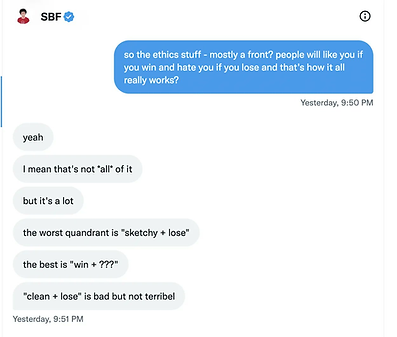
- SBF leaked texts: ESG and morality is all a performance for others
- In the world of social media, critique of others has increased
- People who are cynical know the cost of everything and the value of nothing
- Peter Thiel: there is a decline of heroes
- We used to have heroes to look up to. Our heroes today are people like Elon Musk, who are very polarizing
- It is interesting to note that superhero movies from Marvel and DC have become so popular amid these trends
- The act of creation is the ultimate heroic act
Write of Passage Helps People Become Citizens Of The Internet
- Many people start writing to improve their resume for their traditional career path
- Many times, people end of pursuing a pathless path by writing online
- What is happening is that the things that we think we care about are not the things that we truly care about
- Writing is torturous when moving against the instinctual brain, but blissful when moving with it
David’s Pathless Path Started With Getting Laid Off and Ended up With Him Telling His Dad, “I have the worst plan for two years, best plan for ten”
- David previously worked in Sales, where he was laid off
- David’s boss told him “I need you to stop thinking about Jeff Bezos and start focusing on your job”
- David cared about the evolving level trends of communications and how to reinvent how we communicate in the digital age
- David sulked the first two weeks after being laid off. But then he found the famous Youtuber Casey Neistat
- David began to make a 4-6 minute YouTube video every single day for 114 days straight
- By day 70, David realized that all the time he spent editing videos he should spend reading so that he could learn more. Ultimately, David realized he wanted to be a writer versus a YouTuber
- David told his parents “I’ve got the worst plan for two years, but the best plan for ten”
David Aimed High With His Podcast, The North Star
- David aimed high from the inception of his podcast - hoping to get the best guests
- One of the biggest secrets of the world - people are disproportionally willing to help young people who are curious, have agency, and are willing to learn
- If you are young, hungry, curious, and willing to learn people will help you
- Robert Greene in The Art of Seduction - people want to be part of a great story
- Part of the reason that David loved golf was so that he could spend more time with established and successful people - it was a shortcut to wisdom
- Half of success in life is who you know
- David would ask people to go out for coffee or lunch and was told no. But when he invited people onto his podcast, he was successful
- Once he got Neil DeGrasse Tyson on his podcast, he was able to get other famous guests
- After every interview, ask for an introduction to other people
Handling Finances on a Pathless Path
- Paul did not expect to be so afraid of money and expenses when he left the corporate world
- David started doing consulting work and had some financial help from his family
- David knew he had a good plan, it would just take some time
Building momentum (Speed vs Force)
- If you have a penny, it needs to go incredibly fast to impact anything
- But if you have something large like a train, it can move slowly and still have a large impact
- Through acceleration and continuous work, David created mass. It takes time to build up momentum
- Paul found it difficult to communicate his progress to his friends and family “I’m broke, I’m not making money, I can’t prove anything, but I think I’m onto something”
- Having faith and intuition is so important. Yet, many people don’t lean into their intuition
- You may be wrong about the details, but correct about the long-term vision
- From the beginning, Steve Jobs always wanted to remove fans from inside computers so that they would run quietly and look sleek and simplistic
- Early on, these intuitions hurt him. Later on, the sleek view became popular
Role Models
- Seth Godin
- Ryan Holiday has a relentless pursuit of doing the work
- Ryan Holiday’s book, Discipline is Destiny, was a number two bestseller. He immediately got back to work on his new book
- Tyler Cowen is very aligned with his career and interests - he truly cares about what he is doing
- When you start making progress in something you truly care about, further progress becomes effortless and fluid
- The Cultural Tutor is an anonymous Twitter account. It turns out, the owner of the account was working sweeping the floors of Mcdonald’s and as a part-time security guard
- The account has been growing incredibly quickly. David told the owner to continue to work diligently “The winds of the stream will not always be at your back”
Doing things you are good at
- The fundamental script of our education system is that you will do well if you become good at doing things you don’t want to do
- The fundamental script of The Pathless Path is that you will do well by pursuing things that interest you
- Why do we spend so much time doing things that we don’t like doing?
- Liking things at different levels:
- This work is easy to me and makes me come alive
- This work brings me meaning and satisfaction
- I am on a quest to make this happen - it is my destiny
- We must identify the things that truly bring us alive
David’s Priorities
- Marketing: Podcasting, YouTube Videos, Content Creation, Writing
- By writing, David is expanding the frontier of his company and actively creating new ideas
- Recruiting: Given recent layoffs, this is one of the best times to recruit new people
- David stays extremely close to his direct reports in order to learn and stay close to the daily operations
- With the help of a Chief of Staff, David wants to get very good at communicating with his company
- The point of running a company is to do the things that you care about and delegate the rest
Talent Organization Passion (TOP)
- David looks for competency in all three components: Talent, Organization, and Passion
- Without passion, people get burnt out and leave
- The more narrowly you can define talent and passion, the better off everyone is
- It is surprising that many people get excited about things that they may not care about
- For example, some people get excited about budget and financing. Others might be more interested in marketing and SEO
Work of the Future
- Remote work is a return to intentional communication and culture
- David constantly thinks in 3-5 years in the future
- From there, David has his team break the vision into actionable plans
- Running a company brings lots of imposter syndrome
- Founders are both underrated and overrated
- Many times, successful people are not nearly as busy as people would expect
- Paul is obsessive about protecting his time
- It is impossible to generate ideas while you are constantly busy
- Every morning, David has strict writing time
- David has a profile for his computer that only gives access to writing tools - no notifications. It is essentially a digital typewriter
- People behave how you train them - David wants to be removed from decision making
- Jeff Bezos type 1/type 2 decisions
- The vast majority of decisions are reversible
- David prefers a bias for action
Society as a company
- People are constantly looking for approval
- We are moving to a world that is run by bureaucrats
- Humans go crazy when they don’t feel valued or needed
- Society is inundated with bullshit jobs
- There is something about large companies with all the perks that is entirely soul crushing
- We shouldn’t run away from wealth and go back in time, but we need to ask hard questions about the modern world that is so soul-crushing
Thoughts on Money
- Money is both the most and least real thing
- It is the baseline of how we survive; as well as totally meaningless after a certain point
- The most greedy thing is to make a bunch of money and do nothing with it
- Money is only as useful as the things you do with it
- David doesn’t understand multi-company entrepreneurs. Building more won’t make them happy
- David wants to build one entity that is both the means and the end
- David wants Write of Passage to make a lot of money so that he can invest it back into the company
- In order to make Write of Passage the best it can be, it needs to make money
- Money, if used properly, can create and impact the real world
- Paul didn’t realize that he had shame around money
- The person making 6 figures at a big bank defrauding consumers is seen as a success
- Meanwhile, someone who is working on their own project on the internet is met with skepticism
- After seeing an old overweight corporate executive in New York City, David made the conscious decision to never be that way
- Marvin Bower - if we charge the most, we will have the most and best clients
- Steve Jobs “We can’t just be a great product organization. We have to become a great marketing organization”.
Transcript
This episode was a delight. I've been following David's journey since 2017 and he was one of the fellow internet weirdos I saw on a similar path that didn't quite make sense.
Read the full transcript
Paul: Welcome to The Pathless Path. I'm Paul Millerd, and in this podcast, we examine the invisible scripts that run our lives and dare to imagine new stories for work and life. Today I am talking with David Perel, who has generously hosted this podcast, my podcast, in his beautiful studio. Incredible space. Excited to talk to you today. I've been following your journey for a few years and have been lucky to get to know you behind the scenes and am inspired by what you're up to.
You are the creator of Rite of Passage. You are a naturalized citizen of the internet and excited to talk to you today. Welcome to the podcast, David.
Hearts: Thanks, man. I'm really excited to be here.
Paul: The question I start out with with everyone is what are the stories and scripts you grew up with that told you this is what I need to do as an adult to be seen as a successful person in the world?
Hearts: So you were asking me about that before we started the interview and I told you, I don't know how I'm going to answer this and I still don't know how I'm going to answer this. So we're, so we'll see where we end up. But I think that there's a few things. I think the first thing is, uh, family. The second thing is place, and then the third thing is probably influences. Uh, so I think that family is a big one.
Um, my dad worked really hard and was in a lot of lawsuits growing up, a lot of patent lawsuits, which was no fun. And I think that there was a lot of dark stories on my dad's side of the family that I think I sort of inherited. And I really had to sort of break free of those. I sort of thought I was destined for failure. I thought it wasn't going to amount to much. And, uh, I just, my dad had a lot of anxiety growing up because of some of the circumstances he was in.
So I think that was, that was really difficult. And I remember a conversation where like we really, uh, we're, we're, we're fine. Like, you know, we didn't really want for anything, but for whatever reason, maybe it was the people I surrounded myself with. And I think this will lead into the next thing, which is place growing up in Silicon Valley during this time of a tremendous boom. I grew up in San Francisco, born in '94, and I mean, that was in that area, one of the largest wealth creation ever. And I remember in high school, uh, my best friend came to school in a limo one morning because his dad, uh, was a part owner of a company that sold for $750 million.
And I remember having this conversation with my dad. I must have been like 8, 10 years old. So this was before that, but I remember saying, dad, are we poor? And I remember that so vividly. I was in the front seat of the car and I think that that created the script of like needing money. Money's really important.
And that sort of combined with this fear of failure was tricky. And then I also wasn't a good student, so my grades were terrible. I, I, uh, got in trouble a lot as a kid. And so basically I was in this sort of dark place of not really liking myself for many years. And then I graduate college and begin to change a lot of the stories in my head.
Paul: You posted this picture of this report where you describe how a plane works, and I'm reading this and it's like the curiosity is exploding off the page.
Hearts: Mm-hmm.
Paul: So at the same time, you've talked a lot about how you struggled in school, but I'm looking at that and like, this is clear signs of like aliveness, curiosity, like What was the disconnect there?
Hearts: Well, I actually think that's very easy to, to answer that school doesn't reward aliveness and curiosity. Like, that is so obviously not what school is optimizing for. School's optimizing for obedience. It's optimizing for people who follow directions, who turn things in on time, who are extremely conscientious. And I'm not those things, but I am alive and curious. And that, that report was 6th grade.
And my teacher, Ms. Peterson, she assigned us this project called the iSearch. And I basically do the iSearch for a living now. And we're launching this high school program. And the, the, the, the program Liftoff is inspired by this project, the iSearch. And what you were allowed to do was have a couple months to research whatever you wanted, whatever you wanted.
And so we had just done a trip from to Europe. And I remember we were moving through airports and I was just mesmerized by, by airplanes. Everything from the way that you can look at a board at an airport and you can be in Istanbul, you can be in Sydney, Australia, you can be in Cape Town, South Africa, just from one place you can go to all these other places. That was mesmerizing. And then also just flight. I used to kick and scream every Saturday morning to basically say, hey dad, can you take me to the airport?
Can you take me to the airport? I was just obsessed with airplanes. And one thing you were talking about, alive and curious. The other thing that I really had was determination. So when, uh, when I was a kid, there was this place called the Hiller Aviation Museum. If you've lived in the Bay Area, you've driven by it.
San Carlos on 101. It'll be on the east side of the highway. And they had this game on the second floor and you could basically sit down and they had one of those old computers, ones that sort of preceded those colorful Macintosh ones. And so I went up and the game was you would pretend to be an air traffic controller. And so basically it was super simple. So you'd start off and you would land and sort of direct the airplanes into, into the runway.
And then the game would just get more difficult because there'd be more and more airplanes. So you get more and more precise, more and more quick in terms of directing the airplanes. Okay, this has to go there. And so you can imagine how that becomes chaotic. So it was about 45 minutes to an hour away from our house and we went every single week until I got the best score in the game ever. And so I was like, yes, we did it.
And my mom was like, thank God that we did it. We never have to come here again. I said, what are you talking about? Of course we do. I need to be the best score, uh, all the top 20 scores. 'Cause there were 2 pages.
I need every single one of those. So we went and we went and we went until I had all the top 20 scores. And that was just like very classic of. I would get into something, it'd be something really random, something sort of unpredictable. Everybody else would say, hey, this is totally useless. But I would say, not only do I need to get the best score, I need to have all the best scores in the entire game.
Paul: And no adult at the time was saying, this is great, we need to lean into this. You, you were getting the feedback that like, okay, I'm still a bad student. I don't have things figured out. Um, yeah, that it's so wild because a similar thing was happening to me. I was obsessed with computers. The NBA as well.
We shared that. Yeah. But I was good at school, so everyone just— nobody paid attention to the things I was actually obsessing about. And it's just these scripts from previous generations that are like, well, the whole point of like growing up is to get a job, right? Did you have people, adults in your life that you looked at and are like, oh, that's an interesting person? Growing up?
Hearts: Honestly, and I think this goes into the NBA thing, it was athletes. Like, that's what I looked up to. It was athletes.
Paul: Excellence.
Hearts: Yeah.
Paul: Like, that's what you're drawn to.
Hearts: Looking back on it, it was probably some kind of excellence. But, you know, there's this, uh, scene, if you watch the movie Fever Pitch, you've probably seen it.
Paul: I have.
Hearts: Being from the—
Paul: wait, is that the Boston one?
Hearts: Yeah, exactly. Boston Red Sox movie. So there's a scene where, uh, so eventually the movie's like Jimmy Fallon and Drew Barrymore, they fall in love. It's like a rom-com. But there's a scene where Jimmy Fallon, when he is 7 years old, so it's another actor, and he goes with his uncle to a baseball game and he like walks in and they do a really good job with the camera shot sort of being low. So you're like the kid with all the tall adults, but he walks into Fenway.
He's like, wow, it's so grand and majestic. And I really resonate with that scene because that's exactly how I felt with sports. It felt so big and so and so just, just bigger than anything that was in my life. And so I would go to Giants games and actually my dad and I, we'd go to Oakland A's games 'cause they had $2 hot dogs on Wednesday and then dollar tickets on Sundays or the opposite. It was something like that. And so we would go and the A's were actually pretty good back then.
Like those were the Moneyball days. And so we would go Jason Giambi, Mark Mulder, Tim Hudson, we'd watch all those players. And so then I moved from baseball and then I moved into basketball and I was a big basketball fan. So my, this is another determination thing. So the Warriors were also about an hour away and my freshman year of high school, I went to every single Golden State Warriors home game except for two. And it was just, team wasn't good, but I was so into it.
And then eventually it became golf. And I think that. What all these things had in common was like, I was really into sort of repetition. Like with baseball, my dad got injured because I asked him to throw so many pop flies to me at night. We lived on this circle in the Presidio in San Francisco. I was like, come on, we need more.
We need more. And my dad would like yell at me. He's like, I can't throw you more. And I like demanded, I need more pop flies. And then with basketball, my mom would call me in for dinner and I couldn't go in for dinner until I hit 10 straight free throws, which of course took forever. And sometimes it would just be too dark.
Paul: I've been there.
Hearts: Yeah. And then with golf, it was the same thing. I'd get off school at 3, I'd walk up to golf practice, I would do golf practice, then we would end, I'd get picked up, I'd like put food in my mouth, and then I'd just like ignore all my homework. And then I'd go back to the driving range until 10:00 PM, right when the lights came off at the, at the range. And it was just all these sort of individualistic pursuits, getting obsessed with the thing and just going, going, going. Um, but I didn't have nearly as much like, oh, I need to be a business success and stuff like that.
Paul: What do your parents say about this now? Like reflecting back and seeing, okay, David is starting to make some legible dent in the world now.
Hearts: I think that they're utterly shocked. So two stories for you. So, my high school physics teacher was a huge influence on me, Miles Chen, and, um, still really close to him. So high school physics teacher, my advisor, and my golf coach. So like there was a lot there. He had taught for 20 years, 20 years, and I was at dinner with him last year and he said, you know, David, I gotta tell you, 20 years of teaching, never have I had two parents who were more concerned about their kid than your parents were concerned about you in 20 years.
My parents used to knock on his door and just say, we need to talk. We need to talk. Is this, does this kid have a future? And so then I remember after it was like after my sophomore, junior year in college, no, it was winter break, winter break, junior year. What we did was we made a family decision over two years. Where we were going to go visit all the national parks in Utah.
So we did this trip where we went to, um, Zion, Bryce Canyon, and, uh, and Arches. And so we're driving through Utah and the, the, the distances are fairly far. And I was just reading Alex Danko's blog. I still remember he has this great piece about different ways to think about water. And I was just reading it and like, we're driving through Utah, you know, it's super deserty and everyone's talking and I'm just like reading and my dad is just like, I, I don't even recognize you anymore. Like, I, I, I don't understand how you're reading like this.
What, what happened? And I think that they were just very, very, very confused. Um, but also at the same time, extremely supportive. So one of the great things about my dad that I really wanna do for my kids is anytime I had a passion, my dad said, go for it. With reckless abandon. So like we didn't do Hanukkah gifts, we didn't do birthday presents that were that big of a deal.
But like if I was into something, it was like, we're gonna make that thing happen. And I think my parents sensed that when I was a young adult and, and, and began to enter the workforce and they kept that attitude. And so I think without that support, it would've been really hard.
Paul: It's interesting you say with the reading because I actually didn't get into reading until I was like the end of college.
Hearts: Yeah.
Paul: So I read, it was like Gladwell and, um, Freakonomics and it sort of like opened a portal to like different ways of thinking.
Hearts: Mm-hmm.
Paul: And then after that I was just like done. Like I just kept reading. Yeah. But in some ways that was like the very start of my journey. At the same time, I was like good at school and getting jobs and like that was happening, but there was like this secret path. Like starting to emerge.
Hearts: Wait, this is interesting. Can I ask you something and then I'll, we'll come back to me.
Paul: Yeah.
Hearts: So like what were, what were the unlocks? Like, do you remember what sentences, what paragraphs, what pieces unlocked something for you? What was the unlock?
Paul: It was, I think it was just being inspired by how stories could be told with data. And information in different ways. Different. It was like a portal of seeing the world in a different way. And it tapped into this like innate sense I had for wanting, wanting to see that. And then it was always the disconnect of me being in jobs and like wanting to see things different way.
Right. And working with people that don't wanna see things different way.
Hearts: Yeah.
Paul: And just like following that, that has led to this.
Hearts: Yeah. For me, what happened was, yes, I had that curiosity, but it wasn't around reading. It was around something else. And so I remember after my sophomore year of college, I had an internship at this school called, or at this company called Skift in New York, travel news and data company. I was the equivalent of the 10th person at the company and everyone worked in this, this, this, this one room. And I remember that after the first weekend, I went down to Philadelphia to see a friend and he said, hey, how was your, how was your week?
And I was like, that was the worst week ever. It was so hard. And I looked at him straight in the eye and I said, this week I realized that I know nothing. Like, I am so incompetent. And if I continue to be like this, I'm just going to go nowhere. And I spent the rest of that summer in New York, you know, giant buildings, 100 stories.
And you're just like this little ant on the ground. You might as well be stepped on by, you know, these like raging capitalists, you know, these people who rule the world. And so what happened was I came back to school and I was like, I need to start learning. But what was fascinating was that summer I'd listened to podcasts, I'd watched YouTube videos, I had begun to maybe read some books, but I realized that my college professors were not helpful, didn't speak at like the right speed at the right level of fidelity, the wrong altitude. And I was like, okay, the people who are like supposed to be teaching me are actually useless in terms of helping me learn. So I need to go out and forge my own way of thinking.
And I found Stratechery by Ben Thompson. I was one of his first 1,000 subscribers, I swear. And I, it was Stratechery, it was Alex Danko, and it was Jonah Peretti. I read all of Jonah Peretti's essays 'cause this was back when BuzzFeed was gonna be like the future of media. And I remember just getting so into that. And I was a media and entertainment major and I was like, how is it that my teachers have no idea what they're talking about?
But the stuff that I'm finding on the internet felt like this was the future and I felt like it was like the secret. And I needed to spend all my time living out that secret, actually discovering what was in there.
Paul: In grad school, I skipped classes to like read books and read the internet.
Hearts: Yeah, of course.
Paul: Similar. Um, you said on Danny Miranda's podcast, shout out to Danny.
Hearts: Danny. Yeah, that's a great guy.
Paul: Um, you decided to take yourself seriously.
Hearts: Mm-hmm.
Paul: What did that feel like? Well, and this was in college, right?
Hearts: Yeah. Um, I think that what it feels like is sort of this, I don't know, it's almost like a, like a snap to reality or something. And I just realized, I like, this all sounds really cliché and it's very hard to put words to this, but it was like this idea that we have this, this, this, this life and like the things that we do matters. And it almost just felt like I had agency and it was like switched on in this way, like. I have a lot of choices and influences over my decisions. I almost felt like I was sleepwalking for the first 20 years of my life.
And part of that is a lack of maturity. Part of that's lack of brain development, but things just switched on for me. And I remember having this realization when I was 20 years old that I was 25% of the way done with my life because the average life expectancy is like 80 years old. And I was like, What, what? And I read Denial of Death, Denial of Death by Ernest Becker, that same Utah road trip. Uh, that was back when we were driving west towards Las Vegas and something about the realization of death or something and, and, and realizing I was 25 years old, 25% of the way done with my life.
I was like, okay, now I need to start taking this stuff seriously. And that was a huge shift for me.
Paul: That's such an inter— I, I wrote about this book, Ernest Becker's book in my book. And I love his formula because his formula is saying we can't deal with the fact that we're going to die.
Hearts: Yep.
Paul: We can transcend it though by becoming the hero of our own story. Mm-hmm. And it's not about our like cultural idea of a hero. It's basically connecting with what matters to you. And to do that in today's world is like the ultimate act of rebellion.
Hearts: Mm-hmm.
Paul: To care in a world that doesn't want you to care. Um, did you sense some of that? Like you shouldn't be doing these things, like other people around you weren't like deeply caring about things?
Hearts: No, I, I, so I really like that line, to care in a world that doesn't want you to care. I didn't care that other people don't want you to care. Like I just didn't care. Yeah. Because I am much more like intrinsically driven by these things. I think where I go wrong is I get so driven by these things that I can become sort of not sensitive and, and sort of actually forget about the people around me 'cause I'm so focused, but I'm not driven by things so that I can nearly as much show everybody else, oh wow, look, look, look, I did it.
Yeah. Like that's less for me. That's, that's, That's less my problem. And so for me, I just have always cared about things and gotten obsessed with things at a level that transcended all the social norms around me.
Paul: Yeah, that's, it's such a powerful thing and I think it's been fascinating to watch like your journey because like you clearly care.
Hearts: Mm-hmm.
Paul: And this is like the biggest thing I'm always like paying attention to. It's like very easy to spot somebody that like cares.
Hearts: Thank you. That's really nice.
Paul: And you have a great phrase for this. I've been like using with other people. Hearts on fire.
Hearts: Yeah.
Paul: I love, I love this because it's like there is no choice once you decide to care. And a lot of like my journey, I left my job 6 years ago and it, I was really scared at the beginning. I was afraid to say that I scared and writing the book for me was a giant release of like just being like, well, if I'm gonna write a book, I have to say I care.
Hearts: Mm-hmm.
Paul: Um, what, why do you think people are so afraid to say what they care about?
Hearts: Oh, that's, well, so I'll give you a few, a few things too. So any monocausal way to answer this question is gonna be wrong. So we'll see how many, yeah, I don't like monocausal ways that I can answer that. I mean, the first is, uh, the first, you could make a religious argument here where once you don't have God, you are sort of in the world instead of outside of the world. And one nice thing about having a God is you have something stable that, that in sort of a, like, like you don't have to worry about what other people are saying because you have God who is approving what you're doing and everything will be made right in the afterlife, right? Like the high shall become the low, the low shall become the high.
These are very Christian ideas. And I think that when you lose that, you then become so aware of what other people say or, or saying. I always joke that like if you don't have God, everything in your life is a public relations campaign because what ends up happening, that's so good. Thanks. What ends up happening is you're always looking at what other people are thinking. And you saw this with the Sam Bankman-Fried leaked, right?
Twitter DMs. What he says is in one of them, he says something to the effect of, you know, everybody who's interested in. These higher forms of morality. They know it's BS and like things can shift in a dime. And it's true. I mean, look at how public opinion shifts and stuff like that.
And so what ends up happening is, is, is I think it's hard to care 'cause you're always thinking about what other people are saying. And then now we live in this social media world where anybody can critique you and critique is hard to take. And so the level of criticism has gone up so much. You know, you could. There would be philosophy people, academics who would say, oh, you know, we also have this rise of critical theory and being critical and cynical. There's that great line where people who are cynical know the cost of everything and the value of nothing.
And I think that we live in this world of extreme cynicism. And then also there's this sort of argument that Peter Thiel makes where we have this decline of heroes where it used to be that we would look at actual people who were heroic, right? So you have Charles Lindbergh who flies the Spirit of St. Louis from the East Coast into Paris, and he comes back and he has ticker tape parades all over the place. Lindbergh was, I think during that time, like the second most written about person in America with the exception of FDR, which is crazy to think about. Yeah.
A pilot who's just going across the Atlantic. We don't have that now. Now our heroes are much more like Elon Musk, who are like very polarizing. Some people, oh my goodness, I love this guy. Oh my goodness, I hate this guy. And now what ends up happening because we don't have these heroes who we can look up to, who are actual people, I think it's probably not a coincidence that Marvel is so big now and the Avengers.
It's like we have these, these, these superheroes who we've basically taken out the actual humanity and we've turned them into cartoons. And these movies are extremely popular. You know, if you look at the last 5 to 10 years of Hollywood, what's happened is we've gone deeply into sequels and it has been these, these, these animated movies that have really taken off. I'm not complaining. I was at Disneyland on Monday and I was on the Marvel ride, the Star Wars ride, did the Incredicoaster, but I think I think it's interesting that now our heroes are, don't have souls.
Paul: We live in stories and I think, yeah, people are looking to be saved, right? By a hero. They can just copy paste their script.
Hearts: Mm-hmm.
Paul: I think one thing I've discovered is I think the act of creation is the ultimate heroic act.
Hearts: Yeah.
Paul: Like I've met many people that go into your course and publish one essay online. And that is heroic for people and that can unlock so much. And you must have such a window into that and seeing these people. I mean, I've seen so many people over the past few years follow this creative path. Do you think that is a portal to— Eric Fromm has talked about this, the act of creation is a way to connect with yourself in the deepest way and it's actually a way to experience love.
Hearts: Yeah. I mean, I, I don't even have to look at it. The Act of Creation is right here. It's like the book that's right there. Uh, that's Arthur Koestler. Um, but I think that one of the things that's particularly interesting about Write of Passage is how many people come in wanting to do, wanting to write about something that'll work for their resume, write about the thing that is the, the scripted path, and then end up moving on to The Pathless Path.
And what I mean by that is For example, had a guy in the last cohort who had been trying to write, trying to write for so long, and he just like, he was trying to write about the things that he was supposed to. I forget, you know, what his job was exactly, but he was like an investor or something. And he was like, I need to be writing about investor investing. This is what it was. We're in a Q&A and we were like an hour, 10 minutes in the Q&A. It's like, you know, I've been trying to write about investing.
It's like been really hard. I'm a venture capitalist. And I've been trying to build up an audience there. And so he's like, but I just can't do it. Like, you know, one of the things that's been really hard about Rite of Passage is I feel like I just wanna write about all these other things. So I wrote about family, I wrote about different experiences I've had in my life, like these core deep underpinnings.
He's like, David, it's just, it's so hard. Like I'm not writing about the things that I, I'm supposed to, I'm supposed to, and I'm. And I looked at him straight up. I've never met this guy. He's, you know, in the court and I'm like, dude, I'm not even sure that you even care about your work. Like, I think that what's actually revealing here is that the things that you think that you're supposed to be caring about are very different from the things you actually care about.
And looking at the horror of a blank white page has actually revealed that to you. And he ended up sending me an email the day after and saying, hey, You know, you might be right. That was one of my big realizations. But I think that that is what's great about writing is writing is both so torturous when you're moving against your instinctual grain, but so blissful when you're moving with it that it forces you over a long time to end up finding the things that actually stir your soul and not the things that you want to be interested in.
Paul: Yeah, you can't hide. Um, wanna shift gears to your path. Um, you sort of had a hunch early in your career that like, okay, I'm not meant for any sort of traditional path or career. Yeah. Um, your first company you joined helped you out, um, kickstarting your journey. Um, what did it feel like taking that, like that first day after your company fired you or laid you off, right?
Um, what did that first day after that feel like? Like, what was your, like, what did you want to accomplish like that month?
Hearts: So I very clearly wasn't the right fit for this company. So I got called in about, so I was working on the sales team. So basically we had 3 people, we had VP of sales, we had a sales director, and then myself. So it was my job to basically write all the keynotes, and then we'd pass it up to somebody who would do the pitches. And then we had like a chief marketing officer, right? And the CMO called me into his office one day.
He was like tall, he was like 6'3", beard, sort of intimidating guy. And he was like, David, sit down. Yes, sir. And he's like, I can't believe this happened. It's like stranger than fiction. He's like, I need you to stop thinking like Jeff Bezos.
And really focus on your job. And I just, like, I didn't care about my job. I didn't care about my job. I cared about where is media going? How are things changing? This idea that we always said in the company that people are becoming media companies.
I cared about that. I was like, how in the world am I supposed to focus on writing a deck for some Bacardi pitch when the fundamental nature of communications is changing at our fingertips and there's opportunity to reinvent how we communicate, how we make sense of ourselves in the internet age. And so I ended up getting laid off and that first month I was sulking for 2 weeks and then I was really inspired by Casey Neistat, YouTuber, sort of the guy who turned the camera around and sort of invented the vlog and He made a video every single day. So I used to watch them every night. I think he did it for like 530 days or something. I must've watched 330 of those.
And I was like, I'm going to go out and make a YouTube video every single day. So I did day 1, day 2, day 3, day 4, end up getting to 114 days, 4 to 6 minute video every single day without fail. And at the end I have 31 subscribers. But what would happen is I would go out into the city, just like Casey Neistat, I was just like, Totally LARPing. And I would come back to my place in Hoboken and I would sit down, I'd edit for 2, 3 hours, and I would then go to sleep at night. And by the time that we got to like day 70, day 80, day 90, I was like, hold on here.
All that time that I should, that I'm spending editing, I should actually be spending reading. And if I could spend my time reading, I'm going to learn a lot faster and the text. Is a more rigorous medium than video in terms of thinking through things, being logical. And I was reading Marshall McLuhan at the time who talks about this in another book that's right up there, The Gutenberg Galaxy. And like everything in here is very carefully positioned. And so I realized actually I don't want to go make videos.
I wanna be a writer. But what I also knew, and I remember calling my dad and I said, this was 2 months after I'd been laid off. I said, dad, I got the worst plan for 2 years, the best plan for 10, and I'm going to build an audience around ideas. I'm going to build an audience around ideas. It's going to take me a decade. I just need you to be patient with me.
It's been like 7 years now and it's going to take a decade to like really get it right.
Paul: That's such a good mindset because I love that, like the worst plan for 2 years, the best plan for 10. Um, that's, yeah, I'm definitely going to use that with people because I think people want to enter these worlds.
Hearts: Yep.
Paul: Do things like you're doing, do things like I'm doing, and they want to succeed in 6 months.
Hearts: Mm-hmm.
Paul: You basically need to be willing to be slow, stupid, and wrong.
Hearts: Yeah.
Paul: For the first few years. And people want to do what you're doing now, but they don't want to do the 100 videos. They don't want to do the 100 podcast episodes. So talk to me about like starting the podcast and I, I think one thing interesting about your podcast is like you, you aimed high from the beginning.
Hearts: Yep.
Paul: I did not do this. I was sort of scared. Um, what told you to like aim high and go for like the best guests at the beginning? Is that something that made you more excited? Like, I'd love to hear also like how you think about like asking for help because I think you're really good at this. Like you, you go to the people.
You bring your energy, which people get excited by, and you're like, surround yourself by that.
Hearts: Dude, such a good question. Um, so there's so many things here. So one of the biggest secrets of the world is that the people are disproportionately willing to help young people who are highly curious and high agency. And this is like, I cannot believe that more people don't take advantage of this. If you are between 14 and 24 and you have ideas and you are hungry and you are willing to listen and learn and ask good questions, everybody will help you. It's full stop.
Paul: It's so true. The, the young people thing is such a big thing. And yeah, this is probably like my realization when I left, I was like 33. People don't want to help a 33-year-old as much. And I had some success on the resume, so it's like, ah, you can figure it out. But like, yeah, people love being around that.
Hearts: Yep.
Paul: It's like sort of tied to what a lot of Robert Greene says in like The Art of Seduction. I don't know if you've ever read this. I've read parts of it, but he talks about like having this energy, having something people want to be like seduced by and like pulled in by. People want to be part of a good story. And so like if you're a young person, heart's on fire, like people want to be around that. How did you know that?
Or you think you were just like, no, I'll tell you.
Hearts: So I, so there's many things here. So I always gravitated to older people. Like I was always very interested in learning from them. And part of the reason, a non-trivial amount of why I loved golf was because I could spend time around these people. So like I would just go to the golf course every day. And so I'd be like 16, 17 years old.
And I would be with like 45-year-olds who work in tech and we would go spend 5 hours together. And so we'd be walking down the 11th hole and I'd be like, hey, tell me about this. Hey, tell me about that. And I would, it was like this, this, this shortcut to learning because they have so much wisdom if they think well, and golf is going to select for people who have done well in their lives and for people who are a little bit more intellectual, a little bit more deliberate. And in terms of how they think about things. And so I was just in this place where I surrounded myself with those people all the time, and I was just so thirsty for knowledge.
And so when I moved to New York, I wanted to meet people. Um, my mom always used to say, hey, half of life is who you know. Half of life is who you know. And so I would try to build my network and I'd be like, hey, you know, can we go out for a cup of coffee or something? Like, no. Can we, uh, get a drink?
No. Can we go for a walk?
Paul: No. So you got rejected a lot.
Hearts: I got rejected a lot. Hey, can I interview you for a podcast?
Paul: That's such an honor.
Hearts: Sure. Here's 3 hours of my time. And this was before podcasting. Like now anyone who's gonna do a podcast, this was 2014. Yeah. And so podcasting wasn't a big thing.
And now anyone who's gonna do a podcast has been on one, but back then that was a big deal. And so. I'd do a bunch of these podcasts and, and be in all these really cool spots. I remember did one interview on the 43rd, 44th floor of the old Condé Nast headquarters at Times Square. You're like looking down and I'm, wow, this is crazy. But then what happened was you asked about big guests going for big guests, and actually that wasn't deliberately the plan, but I got one big guest that allowed me to take that name and then go find other big guests.
And that was Neil deGrasse Tyson. So how did I get Neil deGrasse Tyson? So what happened was I was looking around and I found the work of this philosopher of science at the Graduate School in New York. That's what it's called, the Graduate School in New York, like 35th and 6th. And I said, hey, um, I would love to interview you. And then somebody told me after every interview, always ask for an introduction to other people.
So we get to the end of the interview. It's like this, this, this room, low ceilings, fluorescent lights, like kind of academic and uncomfortable. And, uh, but Mosma was great. And so I said, hey, can you introduce me to, to a few people? He goes, hey, you know, I'd like to introduce you to this person, introduce you to that person. Then he goes, oh.
And, and, and Neil deGrasse Tyson is one of my best friends. So, would you like to interview him? So I'm like, yes, that would be amazing. But also like, play it cool. And so he makes an email intro.
Paul: I follow up.
Hearts: One week goes by, no response. Two weeks goes by, no response. Two months goes by, no response. I remember it's like a Tuesday morning, sun's shining through my window. It's like 9 AM. I just like won't wake up at my apartment in Hoboken because I'm unemployed at this point.
And it's like one sentence email from Neil deGrasse Tyson, like expect an email about this later today. So his agent like sets it all up. And that day he was on the, like on the, uh, Good Morning America that morning, Colbert Report at night, New York Times right after me, CBS right before me, and then my podcast episode number 7 that, that late morning, the day his book came out. And once I had Neil deGrasse Tyson, I mean, that was like that was the craziest thing for me at the time. And once I had that, it became a lot easier to meet other—
Paul: Was that interview scary for you?
Hearts: It was horrifying. Of course it was. It was horrifying. So like, I, so like, I ask Neil, like my, my first or second question, and he didn't mean this in a mean way, but it was sort of like a mocking, like, dude, get your stuff together, man. Uh, he was like, so I asked him a question. It was something really bad.
It was like, I don't know what it was, but it was like, how, how expansive is the universe to you or something, right? It was like, it was like the worst question ever. And he literally looks me in the eye and he goes, certainly you are capable of a better question than that. And I'm just like, you've got to be kidding. And so I, I, I didn't do a particularly good job in the interview. I actually, my microphone was broken, so The, the, the sound of the podcast is actually pretty bad because we have his microphone over there and then my audio is to a microphone like 4 feet away.
Like that's how it is. I paid—
Paul: and these are inevitable when you start a podcast.
Hearts: Inevitable. I paid a friend like $100 to help me out and that was like, dude, I'm breaking the bank for this interview.
Paul: Yeah. Talk to me about money early on in The Path, like living in New York, leaving your job, like. I, I left my job in New York. I had some decent savings. I didn't have a ton. Um, but I left my job and I realized, oh crap, I'm spending $5,000, $6,000 a month.
This is not great. I don't have any clients lined up. I totally didn't expect how afraid I'd be about money, but also that being afraid about money sort of drives you too.
Hearts: Yeah.
Paul: Talk to me about that. Like, how were you trying to make money? Podcast is not a great way to make money at first. Um, but I think you were also thinking about doing like freelancing. You were calling it like Naked Brands.
Hearts: Yeah.
Paul: What was the game plan to like—
Hearts: Yeah, I did some consulting at the time and also my, uh, I, as long as I just, I, I just kept my burn really low and my parents just paid my rent, which was amazing. Like, I am so lucky that I had that opportunity where I had parents who really, really, really believed in me. And I just, I always just said, guys, just, just, just, just trust me. Like, I have such a good plan, but it's just gonna take some time and I need to get rolling. You know what I mean? And I, I think my parents just sensed that I worked so hard for those years and it was brutal because at the beginning you're working so hard, but you don't have, it's like almost like speed versus force, right?
Like. If you have a penny, if it, that penny needs to go so fast for it to impact anything. But if you have a dumpster truck, it can actually go fairly slowly, or a train, right? A train can go like 3 miles an hour and, and, and if you get hit by that train, it will be really bad. Where someone could throw a penny at you at 500 miles an hour and it like, it would hurt.
Paul: Like if it hit you in the arms, it would sting.
Hearts: but it wouldn't be horrible. I mean, I don't actually know the physics behind this, but you get the point, right?
Paul: Force equals mass times acceleration.
Hearts: Exactly right. Mass times acceleration. Perfect. And so, and so basically I had no mass at the time, so I needed to create mass. So I was just like strong acceleration, but I intuited that through acceleration I could create mass and then get force. And now I'm like slower in acceleration, although still fairly fast.
But I have so much more mass that I can actually like make things happen. And it just takes a while to get that mass.
Paul: Early on, it is so hard. Like when you're on a path like this, like you sense like 10 years, I'll be okay. One year into my journey, like I started writing, I started dabbling with stuff and I just had this deep sense of like, there's this feeling that I'm onto something right. I'm broke, I'm not making money, I can't prove it to anyone. My family thinks I'm kind of crazy. The only salvation was like, I found other internet weirdos like you.
Hearts: Mm-hmm.
Paul: And did you have a similar sense at the time? It's like, I, it, I even struggle talking about this today cuz it's sort of like this deep intuition that you're onto something, right? But you can't articulate it or prove it to anyone. Like, what does that feel like?
Hearts: I think that is the, that's why having faith in an intuition is so important. And to like somehow, like part of the challenge is when we think about thinking, we think about the mind and the body being so separate. That is a bodily feeling, like that is a compulsion to go do something. And I think a lot of people. Either dim the compulsion to go do something like, I just need to do it. And they silence that.
Or it's as if like the phone number between the brain and the intuition, it's like they don't have each other's phone numbers, so they can't communicate. And I felt very compelled to go do these things and I trusted it. And I think that what ends up happening is you're wrong about a lot of the details, but you're right about the big picture thing. So. This actually happened with Steve Jobs where Steve Jobs was very demanding, like with the Apple II, which there was either the Apple II or, or, or one of those. It was, um, quite unsuccessful.
And one of the early computers, Steve Jobs wanted to remove the, the, the fans inside that would cool the computer because he wanted the computer to be quiet. And he always had this obsession with elegance and simplicity for computing, which was a very contrarian idea at the time. And early on, a lot of those intuitions hurt him.
Paul: Yeah.
Hearts: And it only, only with the iPod and later the iPhone do those ideas really begin to, to pay off for him. And I think that in Jobs, I see this sort of relentless persistence Um, that I really admire. That is one of the things about him that I thought that I really try to pull from.
Paul: Do you have any current path role models?
Hearts: Yeah, a bunch. Um, I think Seth Godin with how he thinks about writing and the Alt MBA is a big one. I think about Ryan Holiday with the way that he's both, uh, indexed towards quality and quantity and just his relentless pursuit of doing the work, like Ryan Holiday does the work. There's this great, this great clip that he posted on Instagram and he gets a call from his new book, Discipline Is Destiny, and it's from his agent and his agent's like, hey man, I have some news for you. Your book premiered at number 2 on the New York Times bestseller list, and this is extremely rare for the second book in a series, almost never happens. And Ryan Holiday goes, great.
Okay, thank you. Now I gotta get back to work. I'm working on the second section of my next book. And it's like Ryan Holiday is so focused on the work that he's already halfway done with his next book by the time that this book comes out. And that is incredible. I think Tyler Cowen, how aligned his career is with who he is and the people that he surrounds himself with.
His, like, I look for things in my life and for people who, when you do the thing that makes progress, it is actually effortless for you. It's not effortless so that you can be lazy, but it's fluid. It's almost as if, like, actually, I was talking to a friend last night. So, uh, this, this, this Twitter account, The Cultural Tutor, um, in, in, in July, I see that he's hit 100,000 subscribers. And I, he's like, I'm gonna launch this, this, this paid newsletter and all these sorts of things. And I'm, and I look at what's going on.
I'm like, with his rate of growth, do not launch a paid newsletter. That will actually really hurt your growth. You should be totally focused on Twitter growth. But this is a pseudonym on Twitter. So at the bottom of that Twitter thread, there was this guy named Harry Dry, who had, I'd, who I'd had dinner with in London in January. And Harry responds to the Twitter thread and goes, I'm proud of you, brother.
And so I instantly, I WhatsApp Harry. I'm like, who is this guy? Tell me, tell me, tell me, tell me, tell me. And Harry's like, oh, here's what's up. He was working at McDonald's like 3 months ago. And he wasn't even like cooking or flipping the burgers.
He was like sweeping the floors at McDonald's. And he was working like as an overnight security guard at his former university. And he would just like read and write. All night. This guy is 25 years old, living at home with his parents, like basically has no money. And so I've just been living with him on this island in the Mediterranean and we've just been waking up in the morning, getting in shape, and then the afternoon writing.
And so I'm like, I need you to introduce me to him. And so he makes the intro and I go, I start talking to him and he starts telling me his story and he says, yeah, you know, I've written 3 books about culture. I'm really into writing novels and all I want to do is just write all day, like 12 to 15, 16 hours a day. It's all I want to do. And I'm like, just don't take a job. He was going to go join the British military.
Don't join the British military. I'm just going to pay you to write. I'm just going to pay you to write. You'll be a writer in residence for us. And he's basically growing at 100,000 Twitter followers a month with amazing threads. Reaches out to me last night.
He, so 2 days ago he's like, hey, just reached 750,000 subscribers, uh, followers. Now he's at 783,000, 24 hours later, like insane growth. And I tell him, keep going, keep going, keep going. The, the winds of the Gulf Stream won't always be so aligned with where you're going, but this is why he's able to do it. It's like he genuinely loves culture, loves the craft of writing and things that are so hard for other people are actually fairly easy for him.
Paul: Yeah. What are the things that are easy for you that are hard for others? Writing is pretty easy for me. And a lot of people are trying to do things that are hard because of our scripts of we sort of need to suffer. You need to sacrifice, you need to do all these things. How have you thought more about this?
Yeah, go ahead.
Hearts: Well, this is the problem. So what is the fundamental script of school? You will do well if you get good at doing things that you don't want to do and be disciplined in doing those things. The fundamental script of The Pathless Path is you will do well if you find the things that are, that are uniquely easy and enjoyable for you and get aligned with those things and then go follow that. Those are such separate messages and the school message has us trapped. Because it creates a culture where a bunch of people are doing things that they don't want to do.
I mean, just imagine being an alien and you just come down and you talk to the average person. Okay, so you're like, you know, you got these alien eyes and stuff like that. You know, you got green skin and all these sorts of things. And you're like, hello, human being. And, uh, the human, the human goes, hello, alien. And the alien starts talking to them.
He goes, why do you spend so much of your life doing things that you don't like doing? And I mean, just imagine trying to answer that question and it is so bizarre. Yeah. It's so bizarre.
Paul: It's like, well, you have to get a job. Well, why do you have to get a job? It's like you follow this, there's no end.
Hearts: Right.
Paul: It's like, it's like, well, eventually you're old and you have to retire and you need to travel around. It's like, well, what if you're injured and unhappy and not alive with anything you actually want to do?
Hearts: Exactly. The, the, the reductio ad absurdum here is, and I've asked this question in the past, so does that mean that you don't do anything that you don't like?
Paul: No, not at all.
Hearts: It is like you just, right, liking exists at different levels. It's like, I like this, which is this work is uniquely easy to me and makes me come alive. That is one level of liking. Another liking is like, this work brings me meaning and satisfaction. Okay, that's a deeper one. The deepest one is I am on a quest that is basically my destiny, my duty on this planet.
I need to make this happen. And you're the best when you're most aligned on all three levels. And that deepest one where you need to make something happen, if you can be there, then you end up in this liking where you're okay doing things that you don't necessarily like all the time. I mean, you want to maximize the amount of time that you're doing things that bring you energy like this right now. Blast. Um, but it's about finding those things over time that bring you that deepest level of liking.
Paul: What is that collection for you now as you've, you've sort of taken on this bigger role, you're building out this team, this company. How do you think about the collection of activities you do? Obviously conversations like this bring you alive, but what are the other things you're either leaning into more that are uncomfortable? How are you thinking about balancing that?
Hearts: Yeah, so I have, I have two priorities, marketing and recruiting. So everything that's outside of this, I'm, I just don't want to be doing. So very tactically. And then there's some leadership stuff. So marketing is writing, podcasting, uh, making YouTube videos and anything that's sort of in that bucket of actually going to create things. And also through writing, I end up like writing doesn't, isn't just a way to translate your ideas.
Writing actually generates new ideas. And so by writing, I'm actually expanding the frontier. Here of who we are, what we know, how we think and stuff like that. So that's really important. Then recruiting is also from the same functions where we are now entering one of the best times for recruiting, um, in, in, in, in decades because there's been six figures worth of people have been laid off, many of whom are extremely talented. And so by writing, podcasting, sharing ideas, That helps with writing and recruiting.
It also gives me life. And then the other thing is thinking inside of the company. So I have my 3 direct reports. So I have our, our, our VP of marketing, VP of operations, VP of product. So I just try to be extremely close to them and then now bring on a chief of staff who then helps me with, uh, internal communications inside the company because a company never, the people in the company are, can never possibly be aligned as you want them to. Communication is very lossy and it, the lossiness of communication grows, uh, super linearly with the scale of a company.
So it actually gets exponentially harder over time. And so now the shift isn't as bad with remote work though. The shift is a little bit more binary with remote work, whereas in person you end up with these very different dynamics at each scale. With remote work, it's a little bit more binary because people just aren't together and you don't have that water cooler talk in the same way. But, so that's good, but I want to get really good at sort of communicating to the company and stuff like that. And then of course teaching and then working with my chief of staff to making sure to, to make sure that that happens.
But I said to my team yesterday, anything that is outside of these buckets, I will not do unless absolutely necessary. And I said it in bold and I'm trying to just get very Like the point of running a company, the point of being successful is so that you can do the things that you like as much as possible. And also the things that you like, the things that bring you alive are disproportionately the things that you're gonna excel at. So one of the frameworks that I really like in terms of, you know, if you're, so we have a culture of very high autonomy, so you're not gonna be micromanaged at Write of Passage, but we also demand excellence. And so what we look for is, and Um, you know, when I have conversations with employees, I, I, I look for the acronym of TOP. It's sort of like our version of Ikigai, which is talent, organization, and, and passion.
So talented, what are you talented at? Organization, what actually helps the company? Passionate, passion, what brings you alive? And you want to have all three. If you have talent and organization and not passion, well, people are often going to have to do that, but if they do it too much, they're going to get burnt out and leave. So you can't have that too much.
That's something that you have to do short term and then try to find a replacement. If you have organization and passion, we're not talented at it, so that should be extremely temporary. Instantly, let's go find a new hire. And if you have talent and passion, well, that's not work, that's a hobby. And so what we can do is we can take all, whatever somebody wants to do, fit it to that framework. And the more narrowly that you can define talent and passion, I think the better off you end up being, uh, because then you're just saying, hey, this is what I wanna do.
And the world is quite malleable, especially as you begin to build an organization. And there are, what's perpetually surprising is how many people get psyched about things that you think would be really boring. Like my ops guy, Chris, who is amazing, is so excited about the company finances. He's so excited. And that would just make me want to rot in a hole for the rest of my life.
Paul: I think you have such a good intuition about this because you're like, I need to do the things that matter to me.
Hearts: Mm-hmm.
Paul: Um, and like starting a company, so many people take on scripts.
Hearts: Oh my God.
Paul: I need to be doing X, I need to be doing Y, I need to be raising, I need to be having a VC-backed, um, investor, things like this. Um, this is why I'm like pumped for what you're building because you are really trying to inject the values. And I, I was talking with you about how Marvin Bower shaped McKinsey at the beginning, and it's sort of making me think now as you're talking, remote work is sort of a return back to this intentional written way of thinking about culture. Things were passed along in memos because they didn't have, they didn't rely on the in-person and like just the crappier, lazier communication of the email and stuff. And I wonder if we're heading back towards that. There's this fake debate of remote versus in-person companies, and I think it's a fake debate because good companies are good companies.
The starting conditions are just constraints, right? People are failing to become remote first because they're not intentional about culture. They're just trying to perform in-person office work in a virtual setting. How do you pair this all with like the David Perel 10 years, I'm going to figure everything out with like the 10 years, rite of passage vision. How do you think about like aligning that? Like where are you aiming?
Like a company's even more complex than an individual journey. How do you have a sense of like, here's here's where we're headed.
Hearts: Honestly, that's really easy for me. Um, seeing a vision, like, so I live in the future, so I, so like we're planning something for next week. In my head, that's already done. Like my next week is already over because I'm thinking 3 to 5 years in the future constantly. And so I am like a dreamer. I sort of dream and I sort of take things down into, okay, now how do we make this concrete?
I think in sort of plans and stuff like that. And then I also, so, so like basically you could almost think like an airplane. So I operate also at like a different altitude. So I'm at like 40,000 feet and I'm good at bringing the plane down to 5,000. And I'm like, great, we're at 5,000 feet, we're done. And I need people in my life who are like, no, we're not done.
We're 5,000 feet. You have to. David, you have to land the airplane, then like taxi to the gate, then you have to get people off the airplane, then get their luggage, take them home. And I'm like, that doesn't interest me. And so for me, the, the initial descent is really interesting, sort of knowing where we're going, planning the route. That comes very naturally to me.
And then your point about David versus Rite of Passage, like they're so synergistic at this point. Like I feel like I am Rite of Passage. I feel like Rite of Passage is me. I also feel like Write of Passage is all the people who work at Write of Passage. Like together we are it. Um, I'm sort of setting the vision and sort of creating a lot of the culture, but like one of the things that is shocking when you run a company is you feel like such an imposter for the results of the things that happen.
Like, okay, the course is great. Well, I barely did that. Like Will Manning, our product guy, did that all. Hey, the company works well. Well, I didn't really do that. Like Chris Monk, our operations guy, did that, you know?
And you're just like, oh my goodness. You just have to like plot a course and it ends up being other people who do these things. And at first you're like, ah, but like, that is how a company's supposed to run. And the thing is, founders are both very overrated and very underrated. They're overrated in the sense that. The founder doesn't actually, shouldn't, shouldn't actually do that much.
So I spent a week in, uh, a week traveling earlier this year with a guy who must own 200 companies and he barely did any work the entire week, just hanging out. On Monday I was with another guy who probably has 1,500 employees, ultra successful private equity guy. I think got 3 work texts the entire day. Like he was, he was totally with his family. And this was my biggest lesson from the North Star podcast. Hundreds of interviews.
Busy people aren't nearly as busy as you expect. And that is, uh, or successful people aren't nearly as busy as, as, as you expect. And so much of being an executive is actually just hiring other people to do things better than you. But a bunch of people let ego get in the way of that. And it, uh, it becomes a problem.
Paul: Yeah, it's, I have a lot of people that will say things to me like, oh, you must be so busy. And they don't understand how obsessive I am about protecting my time.
Hearts: You're really good at it. You're really good at it.
Paul: Well, you need to protect your time. Like I think you're sort of similar in that you sense like writing is like the base of like everything you're doing, right? And you need to generate ideas, but you can't generate ideas By being constantly busy, especially being busy doing things you don't want to do.
Hearts: Mm-hmm.
Paul: How do you think about creating the space for writing in your life?
Hearts: Still, I'm struggling with it. It's really, really, really hard. So I'll give you a very tactical thing that I've done is every morning I have writing time in my calendar and just in the past week or so, I've created another user on all my computers. So I have a David writing user and I have a David work user. And on my David writing user, I don't have access to text. I don't have access to Slack.
I don't have access to Twitter. I have access to nothing. It is essentially a typewriter in digital form. And that really makes me focus.
Paul: I'm, I'm stealing this. I need this.
Hearts: It's, it's worked very well.
Paul: Well, it's a challenge, right? Because the internet is so amazing, but also the internet is so amazing if you're trying to like write and explore your own ideas.
Hearts: And then the other thing is people just constantly need your attention. And so. The thing is you're always, like when people, if you're an executive, when people constantly need your attention, they actually think that that's what you want and you have trained, like people just treat you how you train them to treat you. And so that is, is something that I'm trying to get out of, of like not being in the loop on things. And I have friends who say, hey, you know, this is your domain. You are the, the, the ruler of this domain.
We hired you because we trust your judgment. And then I have another friend who says inside the company, auto approval on anything that he doesn't get back on within 24 hours. And so what's the insight there? The insight is that, and this is Bezos type 1, type 2 decisions. So certain decisions you make and you're stuck in those decisions. Others you can, they're like two-way door decisions.
Paul: Reversible.
Hearts: Yeah. So exactly. They're reversible. So you can make the decision and walk back. The vast, vast, vast, vast, vast majority of decisions are reversible. And the cost of, of, of just saying yes isn't that high.
And I believe that action produces information. And the more that you can take action and have this culture that's a bias for action, especially in the world that we live in now and the industry that I'm in, the better off that we're going to be.
Paul: I wanted to shift gears to an idea you recently wrote about society as a big company. Yeah, I love this idea. Um, and I, you sort of notice in today's world, people are constantly just looking for permission. And in many ways, like, people as adults are turning themselves into middle managers. Mm-hmm. And like looking for permission to do the things.
Like, talk to me about like, what, what does that mean? Like, how is society a big company?
Hearts: Yeah. So, uh, this was inspired by, it's funny that you used the word manager. This is inspired by Burnham's book, The Managerial Revolution from like 1948. And, um, one of his ideas is that We're not moving to capitalism or socialism. We're moving to this world that is run by managers and bureaucrats and people like that. And I was on this hunting trip in, uh, West Texas.
This must have been a year and a half ago. And we were on the trip and I got super close with the other people who were there. There were no phones. We did 4 different hunts over, over 3 days. Uh, we, we, we, we shot an antelope. We, cook the backstrap for dinner.
And we were in these pretty rugged accommodations, no air conditioning, and we're in western Texas in May. I mean, one guy got, got, got heat stroke and, but there was a depth and a brotherhood on that trip that I then got back to Austin on Monday. I'm like, what's going on?
Paul: Like, where are we?
Hearts: Where are we? I mean, I've industrial grade air conditioning. I have everything that I could possibly want, and yet I don't feel that sense of brotherhood and connection. And, uh, Sebastian Junger in his book Tribe says that humans go crazy when they don't feel valued or needed. And that is the core thing, feeling valued and needed. And I think that part of the problem, this goes back to Graeber's idea of bullshit jobs, is part of the problem is that people aren't needed, they aren't valued, their jobs are nonsensical, they're not aligned with what they want to be doing.
And so yes, it, it's sort of like the reason why I say it's society's big companies. How many entrepreneurs go and they're invigorated by the early days? They don't have a lot of money. They got everything on the line. It's, it's sleepovers at the office. It's chugging coffee at 5:30 'cause we got a project to ship by 9:00 AM.
And they get to a company that's 30, 40, And they're like, wait, I don't like this anymore. What do you mean you don't like it? Well, the company's way more profitable now. You got fancy offices, you got kombucha on tap, you got beer on Fridays, you got every single kind of Clif Bar, RX Bar. You got all that at the office. What do you mean you don't like it?
And there is something about these big companies, this managerial world that is soul crushing, soul deadening. And I'm not saying that we should run away from wealth. I'm not saying that we should go back 300 years, but I am saying we need to look in the mirror at a lot of the modern world and ask, why does this feel soul-crushing? What is going on here? And that's why I say society's just become a big company now.
Paul: Yeah, I, I think the thing that kills me is I talk to people who not only have capacity to make a difference in the world, they actually have the financial wealth too. Mm-hmm. Like I talk to people in big tech, I've talked to people who work at Google and they have like millions in the bank and I'm like, I like walked out as soon, as soon as I had like 5-figure savings and I was like, all right, ready to go. Yeah. How do you think about money now? Because once you experience work that brings you alive, everything that like can be bought, like to me just sort of seems like a sort of just like math equation.
It's like, okay, if I want that, I can like try to make more money, but like it's certainly not a goal in itself.
Hearts: Yeah. I mean, money is both the most real thing and like the least real thing. It is both like sort of the, the, the, the, the baseline of how we survive and just totally fake, uh, especially in a zero interest rate economy, which now we're sort of out of. So the way I think about money has changed, but I do think of money as, I mean, it's an abstraction, right? Like, like, it's funny, the most greedy thing in a way is just trying to get a lot of money, but then not actually doing anything cool with it. You just want to, uh, a lot of numbers in your bank account, but like money is only as useful as the things that you actually do with it.
And for me, part of the fun with Write of Passage is Write of Passage is my end. This is not my means to an end. Yeah. Like I meet so many entrepreneurs. Who have sold multiple companies and they're like, well, I'm going to go off and start a new one and then I'll be happy. I'm like, why?
Why? Like for me, I'm like, I'm going to build one company or one entity that I is like aligned with the strings of my heart. And I'm going to focus on that. I'm going to make that my end. And the decisions that you make end up being so different. Like this studio, this studio is like this living embodiment of everything I stand for.
My favorite statue from the Louvre, my favorite books, my favorite musicians, you know, my favorite people on the wall. We do a Polaroid with every single person who comes in. And this studio, I wanted it to have a sense of care, like a soul, a heart that like you don't find in like if you just rent a studio or something like that. And I want Rite of Passage to embody those things too. And so for me, I want, I want to. I want Rite of Passage to make a lot of money so that then we can go invest more in Rite of Passage.
And then Rite of Passage can itself be awesome. But Rite of Passage is like the thing that I'm building as the end. It's not like I'm trying to like build Rite of Passage where I can have some private jet or anything like that. Like, who cares? What the thing that actually matters is that you're building something that is what you need to see happen in the world. And so that's what I'm sort of gunning for.
Paul: I love that. I get the sense that if somebody was like, all right, you can't make any money from this and you have to pay to stay involved with this, you would probably pay.
Hearts: Right. But I don't want this to sound like super like, oh, you know, gung-ho, aw shucks, altruistic in a way, because the thing is, in order to make Rite of Passage as awesome as it can possibly be, it's important for us to make money. Many years ago, I had a conversation with Thiago. And Tiago, uh, somebody was complaining, hey, you know, like, I think we're good. Like, you know, I think we make enough money. And Tiago very wisely said, what do you mean we make enough money?
We don't make nearly enough money. Imagine if we had $10 million a year to deploy. Imagine how many second brains we could build, how exciting those second brains could be, and the experience that a student could have building a second brain. And I was like, oh my goodness, that's so right. That's so right. And I think so often we are like, I don't know, we have all of these feelings around money and I get why, but like money, if it's used properly, can create so much.
But it's also important to remember that money is just an abstraction that goes to create other things. And so having money as your end is just greedy. You're just playing a game on the scorecard. It's about the things that you create in the real world, the people you impact, the experiences you get to have. Those are the things that make money fantastic.
Paul: This is something I've struggled with. I had the, I didn't realize I had this shame around money.
Hearts: Shame is a great word for this.
Paul: Early on, like charging for stuff, I think it's inevitable when you start charging for things, it feels bad. One of the reasons is our society is sort of this big corporation that says like the right way to orient in the world is to like have a job. Right. And I write about this as like the person at like a big bank that is defrauding customers, that is taking a six-figure salary, is seen as successful. But like the person charging money on the internet is seen as like, ooh, that's sort of sketchy. That's sort of like, but really like you have your complete reputation at stake.
You have your name behind this. Like if you are not actually delivering on this, you'll destroy your path.
Hearts: Yeah. Well, two things here. So two things. So I have a slight solution to that, but, um, so when I was in New York, I was, when I was living there, I was walking out for lunch one day and there's the Colgate-Palmolive headquarters on like Park and 56th or something. And so I'm walking by the Colgate headquarters. There's a guy who sort of like struts out of the door in front of me and he's super overweight, probably like 54 years old.
And he is like leaning over like the Tower of Pisa because like his back had, had, who knows what had happened. And you know, it's probably not a good thing, but I, I was just walking and I just made up this whole story about him. I was like, this guy lives in Greenwich, Connecticut. He makes $500,000 a year. He's got a, is, he's got a bad marriage. He commutes to the city every single day.
He has, he's done great from a career perspective. He's more successful than I'll ever be, but he's not happy or healthy. And I was just like, made up this story about this guy in my head and I was just like, I don't want to be that. I don't want to be that. I don't care how much money I make. I will not be that guy when I'm 54 years old.
And that allowed me to be more comfortable with some of the internet things they were talking about. But I think that the internet, that internet projects, there's a funny correlation that makes this scamminess worse. And it's that people who tend to be more engineeringy, more, spend more time on the internet, they also, that tends to be correlated with really bad aesthetics. Like look at the early aesthetics of the internet. Yeah. They were horrendous.
And so part of the reason why we're so focused on, hey, let's have a nice studio, let's make good videos, let's do things with good aesthetics, is I think that aesthetics basically hacks the part of your brain that says this is a scam because people know that good aesthetics take time. They may not think it, but they know it intuitively. It sort of is, uh, aesthetics transcends reason. And so one of the reasons why I spend so much time thinking about aesthetics is because we can, uh, change the, the, the scam part of the internet. That's also why Write of Passage costs many thousands of dollars and is one of the most expensive online courses out there because I didn't want to be part of like, I want to transcend this sort of cheap online course mentality.
Paul: Well, it's also, you deliver on that with raising the bar. Like it's an actual, like the experience of something is real, right? People are paying for experience. And I talked to a friend yesterday, he's working at MIT as a lecturer and he's doing stuff on the side and he's like, man, during the pandemic we went virtual and it's just so bad.
Hearts: Yeah.
Paul: And they're, they're charging more than you charge, um, for like a crappy experience, but all you get is the credential.
Hearts: Yeah.
Paul: It's like, kind of cracks me up too. It's like, oh, that's who we're competing with. This is not too, not too hard to compete against that. Yeah. I mean, uh, in the long run, um, in the short run, like competing against something like that is hard.
Hearts: Yeah. The MIT experience gets seriously degraded when it moves to digital. Um, and yeah, I mean, I, I, that's the other thing about, I, I get interested in being the best, like in whatever it is, not in a competitive way, but it is like this internal drive that goes back to golf, goes back to baseball, goes back to, you know, the, the, the little game at Hiller Aviation Museum. Like I get so interested in always trying to be myself or beat myself and, and, and, and be the best. And. Having a product where you look at the price point, you say we have to be superb, is a great forcing function for that.
And I think one of the things that I was constantly encouraged to do in a sense that I constantly had is that if you had an expensive product, you would attract good people and that, that would become a self-perpetuating flywheel. And so far that's worked out well.
Paul: Yeah. And this is common in consulting too. You charge higher. You get better clients, more interesting problems. Like this is the secret of like strategy consulting firms, but also like freelance. Well, this was like Marvin Bower's idea at the beginning.
He's like, if we charge the most, we'll have the best problems and the best clients. Hmm.
Hearts: I didn't realize that.
Paul: Um, yeah, there's a lot of, uh, they sort of like shape the idea around like fixed price, um, fees and like, let's just charge the highest. We'll have the best client. Um, but also like, I think touching on the, the idea of like the scamminess of the internet, I'm sure you talk to a lot of students who have this impulse. I don't wanna sell stuff online. I, I don't wanna do things online. I'm, if you're worried about being scammy, you're not gonna be scammy.
Mm-hmm. Because the scammers already are on the inter internet. Yeah. Like they're, they're already trying to just make money and hack the internet, hack algorithms. But those people won't win over the long term. Those are short-term gains.
Hearts: Yeah. The, the, the, the really hard part for me is finding, knowing how much to sell. Like, that's always tricky.
Paul: Like, I think you're underselling your course right now.
Hearts: A lot of people say that.
Paul: My, my wife has taken your course.
Hearts: That's definitely born out of some kind of insecurity. That would be its own interesting podcast.
Paul: Well, I think the people that want to do great work tend to undersell. And they want, they sort of like don't want credit because of their selling. They want like the things to stand on their own. Does that resonate?
Hearts: But like a little, I, it's probably too charitable. I, like, I, I, I'm always interested, like, what is the least charitable take for myself?
Paul: Yeah. I, my wife has taken your course twice now and it literally like transformed her imagination of her own path and like I'm observing it in the background and like watching the experience.
Hearts: It's in—
Paul: It's incredible. And I try to share it with people and I'm like, how do I even share this? I don't even like all the, it's a live experience. Like, yeah, you gotta get more videos out there of the experience.
Hearts: We're working on it. We're working on it.
Paul: Amazing. Um, what, what is next? Like what, what do the next few years look like for you and the team?
Hearts: Yeah, I think that I'll sort of answer that in a couple dimensions. The first is we gotta get great at marketing. Like, I'm sort of joking here and I don't think we've done a good job selling it, but I've been really looking at Steve Jobs and, and, and studying him. And he had a line early in his career where he said, we can't just be a great product organization if we're gonna create products that reach millions of people. He ended up doing billions, um, no millions. Um, but he ended up, he said early on, we have to become a great marketing organization.
And he has this great speech in the '90s when he comes back to Apple and he talks about, he introduces the Think Different campaign and we need to become a fantastic world-class marketing organization. The other thing is becoming world-class recruiting, like making sure that when people join Rite of Passage, they look around and they say, this is the best team, best quality team I've ever worked with in my career. And it's so fun when you can just hand something off to somebody and they don't just do what you ask of them, but they take it and they raise the bar. I say delegate and elevate. That's what we're looking for. And then also for me, just becoming an ever better writer and just a very good executive and leader and trying to figure out what that means.
The learning curve here is so high. And the thing that's just brutal is you just read about all of these people throughout their lives and you just study them early when they're executives and they're not good. And the delta between from the beginning and the end is huge. Like, it's very hard to teach this stuff, but it, that doesn't mean that it isn't a skill. And just relentlessly trying to learn how to do that for me. And then also with Write of Passage, we have our adult program right now.
Turning that into the best product that it can possibly be, probably keeping it smaller, really high-level people with our 3 core commitments, publish quality ideas, find your people, and 2x your potential. And really doubling down on those. And then now with high school, with high schoolers, that'll be much bigger. That'll be thousands, then eventually 10,000 kids and creating, uh, an onboarding ramp where you can take high schoolers who their parents don't understand the modern internet. Their teachers look down on them. Their friends make fun of them because they're interested in ideas.
All these kids who, like me, sounds like, like you, we're sort of questioning our own obsessions and now they can come in to write a passage. They can change their orientation, realize what they can do with the internet, meet their best friends, and just being relentlessly focused on those things. I love it.
Paul: Where can people learn more?
Hearts: Uh, best thing to do is type in Friday Finds Links David Perell into Google. And the reason I recommend that is you'll find this giant list of links of the last 5 years of my reading. All with these short paragraphs. And at the top you can just enter your email and then I'll send you 5 of those every week.
Paul: Love that. Love what you're doing, David. It's been a pleasure to get to know you and keep going.
Hearts: Thanks, man.