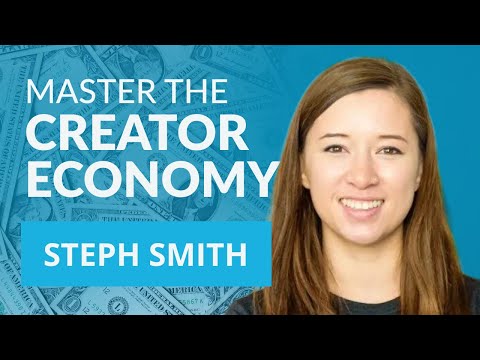
Money & The Creator Economy (How To Get Rich) - Steph Smith | Pathless Path Podcast
I had the pleasure of welcoming back Steph Smith for her second appearance, this time on the renamed “The Pathless Path Podcast.” We dove into a wide array of topics, ranging from the success of creators like Mr. Beast to the balance of side gigs and full-time work. We reflect on the scale and opportunities of content creation, with platforms now allowing creators to build empires unheard of a decade ago. Steph’s journey, marked by digital nomadism and pursuit of balance in her professional life, provided rich material for our discussion.
- 0:00 – Video intro
- 0:45 – Introduction
- 1:53 – The scripts that Steph grew up with
- 3:43 – Perceptions of money
- 5:44 – Finding work worth doing
- 7:02 – Reaching “ice cream freedom”
- 8:41 – Struggling with the scarcity mindset
- 17:43 – Information scarcity about money
- 24:33 – Struggling to leave full-time employment
- 29:29 – The Hustle
- 33:05 – Paul on writing his book
- 34:13 – Hosting a podcast
- 38:20 – Solving the life puzzle with a partner
- 44:32 – Acquiring more stuff
- 47:21 – Having kids
- 51:42 – Future worries and overplanning
- 52:51 – How not to get disappointed at your wedding
- 55:13 – Exploiting loopholes in living your life
- 55:59 – Defining what is a rich life
- 56:46 – Full-time employment and podcasting
- 58:39 – Opportunities in the creator economy
- 1:03:04 – Is Paul underpricing his book?
- 1:06:42 – The most interesting opportunities in the creator economy
- 1:09:54 – Closing remarks
A major theme of our conversation revolved around money and its complex relationship with work. I shared my own background and the scarcity mindset I grew up with, while Steph opened up about her family’s unique financial dynamics and how she eventually reached “ice cream freedom.”
We also delved into the creator economy, with Steph shedding light on the exciting opportunities available for today’s creators. She emphasized the potential of bringing a unique perspective to existing domains, exploring untapped niches, and the emerging trend of anonymous influencers.
As our conversation came to a close, we chatted about Steph’s recent gig, hosting the a16z podcast. I highly recommend following Steph as she’s one of my biggest sources of inspiration too.
Key Themes:
- Money and Motivation: How money acts as a significant motivator in people’s lives, even if it’s not always openly acknowledged. There is an exploration of personal relationships with money, shedding light on how past experiences and mindsets can shape one’s financial outlook and work ethic.
- The Creator Economy: The opportunities and challenges that come with it. There is a focus on how individuals can navigate this space, find stability, and leverage their skills and content to generate income.
- Digital Nomadism: The lifestyle of being a digital nomad, emphasizes the freedom and flexibility it offers, as well as the importance of financial stability and planning in sustaining this way of life.
- Relationships and Life Planning: Paul and Steph talk about the challenges of living an unconventional life and what that means for marriage and personal relationships
Quotes:
On The Possibilities of Today’s Creator Economy
“You never could have seen a Mr Beast 10 years ago…you’re gonna see someone probably 10x the size of Mr Beast in I don’t know in five years ten years.”
On Current Opportunities:
“There are so many opportunities to just take an existing domain and just add your own flair to it… there’s also so many niches that people are not tackling or not tackling well.”
Transcript
Steph Smith is the host of the a16z podcast and is an online creator, former consultant, former digital nomad and all-around badass. We talk about money, work, relationships, and weddings...
Read the full transcript
Paul: Welcome to The Pathless Path. I'm Paul Millerd, and in this podcast, we examine the invisible scripts that run our lives and dare to imagine new stories for work and life. Today I'm talking with Steph Smith. This is the second appearance on this podcast, formerly was called Reimagine Work when she was on it. Now The Pathless Path podcast. We're going to be exploring her path a little bit, but if you want to dig in more to her background, digital nomadism, traveling around the world, balancing side gigs, creator experiments, and full-time work, that last episode, definitely check it out.
Today we're going to talk about a bunch of different topics I'm excited to dive into. I know you're a big fan of making lists before you go on other podcasts, so I did the same with you. And I have a number of things around money, how you have navigated a podcast with your partner. Weddings, marriage, the creator middle class, all these things. Welcome back to this podcast, Steph.
Steph Smith: Thank you. It's so great to be back after a couple of years.
Paul: Amazing. Yeah. And this is one of the cool things I'm excited to sort of keep bringing back people and seeing how they're evolving along the journey.
Steph Smith: Mm-hmm. Yeah.
Paul: And so one question I've added since you came is this first question. Which is the only scripted question I'll have, which is what are the stories you grew up with around work?
Steph Smith: Oh, around work. Well, so my family was maybe not like other families. We only really had one income, which was my mother's. So that's a little different. So I grew up in an interesting environment where I saw both how someone could live a life not working, which was my dad, but then also see the pressure that someone has when they're supporting a family. And so I think I grew up in, it's not like we were poor, but definitely a household of scarcity where, you know, I didn't know if I could buy things.
And I really was motivated by this idea of eventually unfettered wealth. Now, that doesn't mean becoming a billionaire, but even just simple things like the idea of if I go to the mall, and this was really a goal of mine, if I go to the mall, I can buy ice cream without thinking about it, without thinking about the $3 or whatever and how that would hit the bottom line. And I'm just going to wait for the train to pass. It comes every podcast.
Paul: This is The Pathless Path podcast. We roll with the, uh, that's a good point.
Steph Smith: Yeah, the train is part of the path.
Paul: Um, this is part of the experience.
Steph Smith: So I guess I'm, I'm almost like evolving the question into a conversation around money, but I really feel like that's integral to my relationship with work is understanding that it can shape the way that you think about life around you and what you can spend and what you can do and the opportunities out there. And so I grew up really fundamentally believing that if I work hard, which I've chosen to do since, then I can reshape my life and maybe live a different one than I did growing up.
Paul: I think money is so intertwined with work, and it's sort of the unsaid thing that drives a lot of people's relationship with work. And I think It was interesting for me becoming self-employed to realize how many unquestioned scripts I had around money. And I saw this chart floating around yesterday. It was showing people's incomes in entrepreneurial or self-employed work mapped almost one-to-one to what they used to make in their jobs, which sort of says like there's almost this gravitational pull to money. We only think we can make what we no, we can make.
Steph Smith: Mm-hmm.
Paul: I, I'm not phrasing that perfect, but no, I know what you mean though.
Steph Smith: It's like, it, it's such a driving force and I think it's also a little taboo. A lot of people don't like to say they're motivated by money, but to your point, even when people go solo where you have a lot more freedom, where you don't have to tether to the same amount of money or the same goals, a lot of people still end up gravitating back towards a lot of the same goals because I mean, money motivates, and I think it motivates sometimes in a very underground way, as we've already talked about, or it's not front and center where you're talking to your friends and you're saying, I want to hit this exact number, but there probably is something in the back of your head that's motivating you to do certain things because trust me, if that motivation wasn't there, I think a lot fewer people would be working as hard as they are today.
Paul: Yeah. When I left, I think I discovered I had a money equals bad. Script in my head that I just had not interrogated. And if you look at my income in the first few years of working on my own, it's very low. And I was diving into the gift economy and I just had all these frames around money being bad. And the truth was I just hadn't found work I enjoyed doing, right?
So it's this really complicated give and take. Uh, when was the first time you found work you were excited about doing?
Steph Smith: Pretty early on, I think, you know, I've found myself in all different types of roles. I did my degree in chem eng and then I was in business consulting and then marketing. Now I'm a podcast host. And then even on the side, I, you know, taught myself to code. And I think, I'm not sure where this started, but I, I think really early on I just really enjoyed learning new things. And so that obviously spanned many different jobs.
Even my first full-time job was, in this pretty classic business consulting role where you spend all day in Excel and most people would find it horrendous, I loved it. And so I guess early on I found that you really can enjoy your work and make money and I, I never really struggled with that, but I did struggle with, I guess, figuring out what path that would take because, you know, ultimately when you like so many things, there's so many different jobs that you can take on. But I do think it's important that a lot of people to your point, they go down a path and then they don't like it and they realize, or they don't actually realize that you can have a positive experience with work. It doesn't have to be this trade-off of I'm gonna give my time towards something, I'm gonna hate it, and I'm gonna get money in return.
Paul: When was the first time you reached ice cream freedom?
Steph Smith: Oh, well, so I would say the day I reached ice cream freedom, because, you know, Ice cream freedom is different to everyone, right? Like some people who have negative $5,000 in their bank think they've reached ice cream freedom. But I always had this kind of tumultuous relationship with money. So for me, the day I reached ice cream freedom was the day I had $10,000 in the bank, no debt. So that actually happened. I did that business consulting job for a year after school, and I actually lived at home for that year.
So that year I was making I think $60,000 Canadian, which was— it's equivalent to $50,000 American. But that year I literally, I lived at home. I didn't really travel very much or at all. I had one trip to Europe and the whole year because I was so focused on this transition of, um, scarcity to some sort of financial stability. I spent, I checked $5,000 Canadian that entire year. And then I used the rest post-tax.
Paul: Wow.
Steph Smith: To pay off my student debt, which I think was around $30,000 Canadian. So less than a lot of people in America, but for me that was a really defining point to be like, I'm no debt. And I also, by the end of that year, I think I had, yeah, like $5,000 or $10,000 in the bank.
Paul: Yeah, I grew up with this fear of debt and I similarly aggressively paid down debt after I had it in grad school. I luckily had scholarships for undergrad and I'm a bit older, so college was a little cheaper. But what, how long did it take you to shift away from that scarcity? Like, it seems like so many of our, there are a lot of scripts around avoid debt, save money, but there's no like playbook for how to like shift to a more abundant mindset. How long did it take you to start seeing possibility?
Steph Smith: Well, I would say there's still many remnants of that scarce mindset. For example, even though I've read certain finance books like Random Walk Down Wall Street, Simple Path to Wealth, I've read parts of both of those. I've, you know, I've done the work to understand technically what you should do with your money. And I still really struggle to invest it, for example, because there's a scarce mindset of, well, if I just keep it in cash, like I know I'm technically losing more by doing that, but there's this mental frame of if I put it in the market, well, you know, it could go down not just 7%, it could go down 30%, 50%. And of course, in the long term, it doesn't. Again, I know intellectually what to do with my money, but I still really struggle with it.
I still have this scarce mindset. And I've, you know, I've made six figures for many years now, and it's still extremely hard to, you know, spend more than like $30 on a shirt or a piece of clothing. I still will find myself searching for flights. And I used to, especially when I didn't have very much money, I became this like flight maestro. I would go into Google Flights and find kind of like what something like a Kiwi might do today, but I was doing that on my own before Kiwi existed. And I still find myself doing that, trying to really like maximize, or in this case minimize, what I'm spending on flights.
And so I don't know, I really think that the relationship that I have and many people have with money is ingrained from so young that I guess the way I'd put it is I spent 20— when did I get out of debt? '21, '22. I spent 20+ years with a mindset of scarcity. And so it wouldn't surprise me if it takes many, many years to get out of that.
Paul: Yeah, it's something I've still struggled with too. And I have a variable income. I haven't had a full-time job in 6 years. And even though I've done well in the last year, It was really scary for me to both spend more and invest more. So in my first couple of years, I cut my investments to zero and I was making like $25,000 a year. And to me it was like cash, cash is freedom.
Cash is my ability to continue on this path. And like, I never wanted to go back. So I think there was some value in that. Like there's, I think there's like, I saw this thread from Calvin, which was awesome. It was the 5 kinds of wealth, I think, from a job. And one of them was like freedom wealth.
I think I might be getting this wrong, but I was like, oh, that's really interesting. Because I think I was valuing some of that and having more cash and there's actual wealth in that that I can turn into. Like time and leisure and just ability to spend time with my wife, which was abundant in the first few years of our relationship.
Steph Smith: Yeah, I mean, as we've talked about, money is such a mental thing. So even, for example, if you look at insurance on something you buy, if you do the math on that, insurance is actually probably not a good idea. These insurance companies take the delta between, you know, what they're paying out and what they're getting in. And ultimately, you're probably losing some money in that game. However, I still buy insurance on tons of things that I probably shouldn't because it's that mental offering for me to say, OK, even if I break this, if I lose it, et cetera, then I'm better off. And even if I have to pay a little more for that, I actually like that.
And some people think it's silly. And that's fine. And they don't need to buy insurance. But for me, I think— because of my relationship with money and almost like loss is, is more impactful than gain, then I'm actually okay with it.
Paul: Yeah. What's the most uncomfortable purchase you've made in the past 5 years?
Steph Smith: Oh man. Um, most uncomfortable purchase. Well, that's the thing. I don't buy anything nice because I just, not only am I cheap, I also break things and lose things a lot. So I don't trust myself. I mean, the most expensive things I own are technology, right?
So like a MacBook. Um, I bought a drone the other week, but as I said, that drone came with insurance. So even if it breaks, flies away, et cetera, um, I'm covered. I bought a camera for $1,000, um, last year. So those are the only things, like, I really can't get myself to spend more than $100 on really anything else.
Paul: Yeah, I've gotten better at this. Uh, early in my path, I remember I was going to create a course. This was 2018, and I'm standing in the aisle looking at this like 1080p camera and a 720p camera and it was like $40 more and I'm like, ah, I can't do this. And I bought the cheaper camera and it was the stupidest. It's, it's so obvious now that like you should just spend more to raise the stakes on yourself. And that was kind of the unlock for me.
And now I'm a bit reckless and I've actually tapped into, okay, how do I buy something that's like fancier to jumpstart my enthusiasm or curiosity? Especially if I'm like already down the rabbit hole. So like nicer camera, um, DJ equipment to like—
Steph Smith: that's awesome—
Paul: get more into those things. Um, but I still have a hard time buying anything else. I just bought an e-bike, which I saw you—
Steph Smith: oh yes, I did buy an e-bike—
Paul: was your top purchase from last year. How much did you spend on an e-bike? I—
Steph Smith: $1,000. I feel like there's this, this cognitive limit for me where it's like $1,000 on something important I can do that, but there are e-bikes for, you know, $2,000, $3,000, $4,000. You can really go for it. Yeah. Um, but I went for the RadRunner, which is, I think it's gone up, but when I bought it, it was around $1,000.
Paul: Yeah, mine was about $1,200 and I saw the $3,000 ones and I'm like, I probably will value this and appreciate it cuz I love bike riding so much. Um, and since I bought the e-bike, it's amazing. I love it. Um, and it's like something I love. I should have done it a year ago, but I don't know. These things are just hard.
Is it totally people like us who do the digital nomad thing and like price cash as freedom, you think?
Steph Smith: I mean, I think so. I'm sure you've done the calculus of, okay, well, if I don't buy this, that means I could live in Bali for X months or whatever, or I could retire this many years earlier living here. I mean, I've done the math on all of this. And so, yes, I do think that plays a role. But I mean, another thing to just consider, it's a very simple framing, but Ramit Sethi, who does I Will Teach You to Be Rich, something that's resonated with me, he has a podcast and he always says like, no one teaches you to spend. Everyone, when you're growing up, especially if you're living in a scarce environment, like everyone teaches you how to save and it really gets ingrained in you after 20 plus years.
And when things fundamentally shift, as they have for me, at least financially, No one taught me how to spend. It's really, it's, it's something that there's so much resistance to that it's, it's inertia, right? Like I need to literally be forced to spend sometimes. And Cal, my husband, is actually really helpful with this because I have gotten a little bit better where he's like, what? Like, why wouldn't you spend, as you said, like $40 more to upgrade something? Or why wouldn't you just get the appetizer or the meal that you actually want?
And so over time I'm getting better, but it really does take. Like relearning that skill.
Paul: I think there's things in American culture too. We're just brought up that we're always at, we're always going to be at the, like, potentially ripped off.
Steph Smith: Yeah, right.
Paul: It's like, never get ripped off. I don't know why I'm supposed to think this, but it's in my brain. And the reality is you do get ripped off being in America. Like, people are trying to take advantage of you. If you have to deal with the healthcare system, you will get screwed. But yeah, it's not a fun frame of mind for anything else that is good in your life.
Right. It's such a trap.
Steph Smith: Yeah. And it can really just take over your brain when you really could be focusing on other things. Like if you're planning a wedding or if you're going on a trip or if you're, I don't know, just trying to enjoy life, what you've, what you've earned the money for. And then if it's really all-encompassing, it can ruin things like that. So it is something that. Actively working on.
It sounds so silly, but I'm actively working on how to learn to A, spend, and then B, just focus less on money, have money be less of an all-encompassing force in my life.
Paul: So why do you think people should share more about what they're making and how they think about money?
Steph Smith: Well, I would say that, so I mentioned this before, when I started in the workforce and I had a pretty good degree and I think had one of the better jobs, at least coming outta my college, I made $50,000 US. Um, shortly after that I joined a company and that company, I, I made a lateral move in terms of what I got paid. So I also made around $50K American. And for me, that was when I was going fully remote and I was stoked. I was like, okay, so I get to make just as much. And by the way, I'm Canadian and Canadians, just the salaries there are lower.
So for me, I'm like, okay, great. $50K. I get to travel, I get to live wherever I want. And the job I was in. I had, I was on a team with two other people who were doing the exact same role and they were getting paid more than double what I was. Um, and I didn't find this out for a while.
I, I kind of had a sense for, you know, a year or so as I was getting paid less, but I didn't know how much less. And so that was one input. And then later on in my career, I also got access to be a manager and you just see so much more. You get to see what tons of people are making. You get to see how people negotiate. You get to see also the different types of value that people bring to teams and organizations.
And it's really illuminating. And I guess what I'm getting at is for the first, I'd say, 2 to 3 years of my career, I was just so blind. And I was blind because I didn't have information. I didn't know what I was worth, but I also just didn't know what people could be worth. Like, when I was paid $50,000, it was completely out of my reality to think that someone in a similar role could be paid over $100,000. Like, that just wasn't even on the table.
And since then, it's also been mind-boggling to be like, oh, actually, like, tons of people get paid much more than $100,000. They get paid $300,000. They get paid, you know, even more than that. And I think that you're seeing some pay laws come out, which is interesting, where people have to state ranges, uh, when they post jobs. But I just think it's, it's important for people to know what is out there, as simple as that sounds. And I really didn't when I was first starting out in my career.
And so I think it's, I think it's great when people are willing to share.
Paul: I know there's a taboo, but I think one thing, one thing that surprised me was how much people make 5 to 7 years into a path, which is something no one talks about in college. Everyone is so fixated on that first salary, but yeah, $65,000 is an engineer, right? You're an engineer too, is amazing. But 5 to 7 years, you might be making like $85,000.
Steph Smith: Exactly.
Paul: Whereas if you, if you start in sales, you might be at like $400,000 in some random sales job just because you're selling a really high-priced thing. And this is very hard to understand. And I wish more people did know about this.
Steph Smith: Exactly. I mean, it's just crazy. I even talk to friends back home and I see like just how much information scarce they are. Like they just don't know what they could be making and they don't know what other people are making because they've, I think being in management really does change the game because you just get access to so many more data points. And if you haven't entered that, then you, all you know really is what your salary and the few people who have opened up to you about theirs.
Paul: So once you found out people were making more money than you and you can sort of, there's room to bend reality here, how did you start playing the game a little more?
Steph Smith: Well, I think within that job, I asked for more. It took a while to get more, but I did have a place to be like, oh, I actually am contributing just as much to these other people. And so slowly and surely, I made my way up. It would be great, by the way, if at that point they were like, oh yeah, actually, let's just bump you to what everyone else is making, but companies don't tend to work that way. But I think for me, it opened up my eyes into Yeah, what I could ask in future roles that I should also say my first 2 jobs that I ever took, I didn't negotiate at all. So it's not necessarily like these companies were screwing me and saying, we know we can offer more and you're asking for more and we're saying no, I just never asked.
And so every future job I became better at negotiating to the point that Calvin is, is a very good negotiator. And you know, if, if someone who happened to hire me later is listening to this, they might laugh because what we would do is I felt really uncomfortable negotiating. I think it's just. I'm kind of non-confrontational in that sense. It makes me really uncomfortable to ask for more money. And so what we would do is I would talk to the person if I knew there was a negotiation, whether it was in a company or entering a new company, and I would make sure that I didn't agree to anything on the spot.
And so Calvin would literally be— his door— or sorry, his ear would be to the door listening to what I'm saying. And then I would be like, okay, I would make sure to say, I need some time to think about this, or can I come back to you tomorrow or whatever? And then I would go rush to him and I would tell him, this is what we said. And he could, he obviously heard exactly what I said. And he was like, okay, you can do these things better, but also make sure to ask for X or like next time you talk to them, make sure to say this exact line. And it was so uncomfortable so many times.
Cause it's like, no, I can't say that. I like, are you sure I can ask for that? And every time, I mean, he's. He's easily made me like 6 figures plus in extra income just by teaching me or coaching me to say certain things. So yeah, I think that was another part of it is, as silly as it sounds, it's just like knowing what you can ask for, which by the way, on the management thing has helped a lot because you do as a manager encourage those people who have the gumption to be like, I deserve this, or like, I'm going to leave if I don't get whatever. And you're like, oh wow, okay, I guess people do this.
And so you realize that it's not such a crazy thing for you to do, if that makes sense.
Paul: Yeah, it's funny. Once you realize the people that do that, there's always people that do that at every company. And once you realize they exist and they act this way in every aspect of your life, you're like, oh, there is like a game being played.
Steph Smith: Yeah. I also think it's, I mean, you hear all these people talk about how companies or teams are families and When I was younger, I really did feel like that. I was like, oh my gosh, these people are so— they treat me so well. And they did. But yeah, it's nonsense, this idea of like, you bring value to a company, hopefully, and then they pay you for that value. And it's really taken time for me to reorient and be like, oh, if I'm bringing a ton of value to this company, it's actually only natural for me to ask for more if my value is increasing at the same time.
Paul: So How did you think about money at this point? You just, you realized you could make more money. You asked for raises there. Were you aiming at trying to continue to increase your income through jobs?
Steph Smith: Well, it's kind of, it's been interesting for me because I, since 2019, I have said that I wanted to do my own thing next, but in every case, everyone keeps trying to hire you. I know. And the, it's not even just the money, it's more of just like a great opportunity, like Sam coming to me and being like, I have this new product Trends. I had been a Hustle reader for a long time. I was like, I can't not do this. And I feel like every opportunity, even at HubSpot, we got acquired and then I was like, oh, maybe I'll leave now.
But then they came to me and they're like, hey, can you build our creator program? And I was like, that's pretty cool that they're giving me this opportunity. And the reason I mentioned that is because every time that's happened, I've also been like, well, okay, this is like a new opportunity, more responsibility. It came with more money, but the money was never actually the driver because after I hit six figures, I was like, I was stoked compared to, you know, when I was younger, that was a huge amount of money. My mom, even though she was the single provider, I think never ended up making six figures ever. Um, she spent 20 years at IBM and never made it to six figures.
So for me, when I hit six figures and it must've been like 2018 or 2019, I was like, Holy shit. Like, sorry for swearing, but that was really the feeling of just, I made it. And so after that, even though I have continued to make more and more money with every job I've gotten, that was not really the motivation. It was more just, do I want— would I do this job? Maybe not for free, but like, would I do it for much less? Yes, I would.
Paul: Yeah, I think you've done such a good job of doing that. I think I was sort of trapped in my career. I similarly was amazed at making six figures. I thought I had made it and I looked around and everyone around me in my career world was miserable. They wanted more, they felt they were underpaid. And so I was just in the wrong environment and I couldn't actually prioritize the work I wanted.
I think you've done such a good job of sort of navigating your career around your interests and. I mean, how, how have you managed that? Have you gotten opportunities where they did offer you more money that weren't aligned, or you just keep, like, it seems like you're on this amazing path.
Steph Smith: Yeah, I would say it, I, I have received, especially, you know, in the heyday of last year before things went downhill, like the number of random job offers I was getting, I was joking to Cal, I was like, wow, I should've known we were in this big bubble just by the, the sheer number of job offers.
Paul: Content jobs?
Steph Smith: Yeah, mostly content jobs, which, um, you know, that's, that's another thing is, is because of the way that I've built things online, um, with my own following, a lot of people associate me with content. So those are, those tend to be the majority of jobs, like, hey, come lead this content team, or hey, can you even, you know, be like a content lead? And so yes, I think, you know, this is a very nice place to be, and I don't necessarily know how how to instruct other people to build the same thing. But yes, once you're in a job that you truly love, that you're not inching to get out of, that gives you some sort of freedom to build things on the side, you can really build up, uh, build yourself up to the spot where you have optionality. And that's the best place to be, right? The best, the worst place to be in looking for a job is in a rush, right?
And so since I, especially since The Hustle, I've never been in a rush to find a new job. In fact, every job that's come has kind of come naturally. And yes, there were many opportunities that came through that maybe offered, offered a little more money or were a little different, but it allowed me to say no to all those things. One, because I had time, but I would say also the other thing that now you've built too, which is, I'm sure you can speak to how, how grounding it is, is once you build your own projects and you have some sort of confidence around your ability to make money on your own. That feels like true freedom to me because even if A16Z fires me, even if no other company hires me from there on out, I feel confident that I have some sort of stability with my own skills.
And so I don't need to depend on anyone else to give me an opportunity, which was certainly not the case earlier in my career. And so that ultimately has been, I guess, what has allowed me to be, yeah, really particular about what I choose to take on.
Paul: Yeah, it's, it's really wild. It's, it's hard to communicate this. I don't think I, my former self would have even believed me if I was like, no, it's worth it, it feels so good. Like, it's different way of orienting toward life. On money a little more, did you have equity in The Hustle as well?
Steph Smith: I had very little, um, but Sam, Sam made sure that in different forms— I obviously can't reveal too much, but like whether it was offers from HubSpot or, or other things that he he made sure that we were taken care of.
Paul: That's cool. Was that a big driver for him? Like, Mark Cuban has this thing where it's like the whole point of having a company is to like get all your employees rich. Like, if you're not doing that, what's the point of making yourself rich? It seems like Sam does do a really good job of like taking care of his people and creating cool environments around that too.
Steph Smith: Yeah, I mean, I would say that I can only speak for myself. I don't know the details of other people's equity or things like that. But for me, I did feel like Sam honored the work that I had done at the company and valued it and made sure that, as I said, I was set up really nicely in several ways, including just like where I was left at HubSpot, which I think is important because many acquisitions, even if you're paid out well, you're like, well, I kind of want to leave this company or I kind of feel like—
Paul: Big head in Silicon Valley.
Steph Smith: Exactly. Like this thing that we built is like now gone. And I loved what we kind of were dropped into at HubSpot. So yeah, I think that's important. And I would also say that Sam has this thing that he likes to find people before they're quote unquote big. And then, you know, you've seen people like Trung just ascend.
But what I would say is underrated there is one of the reasons I took the job at The Hustle is because I also recognized that there was so much value outside of just money there. It was the connections, but it was also the audience. Like all of our audiences benefited substantially from being at The Hustle. And you could actually probably argue that that value, if you were to translate it into some sort of money, was worth way more than the actual amount of money that we were paid out during our time at The Hustle.
Paul: Yeah. What was in the air when you were working there? I sense that a lot of people who succeed in the creator economy spend at least a few-year period in like a, like battle-tested environment. I think for me it was strategy consulting and just like getting so many reps with an extremely high bar of excellence. Do you think that was sort of what a lot of people experienced there?
Steph Smith: Yeah, especially if you were on the editorial side because, so Trung, for example, For a period of time, we were a tiny team. When we were acquired, we were around 20 people, and I'd say half of those people were salespeople. So the editorial team was tiny, and for a period of time, Trung was writing the daily email, the full daily email by himself for like almost a year. And then I never was thrown into the ring quite to that extent, but for trends, we started with 2 analysts, one left. And so for a period of time, probably 6 months or so, I was writing the trends email. Every week, also mostly by myself.
And so, yeah, just that, as you said, like being thrown into it and being expected to hit an ambitious deadline. I mean, I could not have done the daily deadline like Trung, but having something that you have to do every single day or every single week and also put it out to a big audience. So you learn quickly what's working, what's not, and you learn to also not be precious with feedback or things like that. I think that was really important. And, and now I look back, you know, I'm sure you've had periods of this, in your life where you look back and you're like, how did I do that? Because it feels so foreign and also not like something I could do today again.
Paul: That's my book. My book feels really weird because I don't really know how it happened. It sort of seems like there's a certain amount of magic, but when you're locked into something, um, it, yeah, magic is like the only word I have for it. Yeah. But it's built on this, sort of bar of excellence I had for myself. Like, this has to be good.
I'm driving towards this finish line.
Steph Smith: Um, well, how long did it take?
Paul: 13 months.
Steph Smith: That's great.
Paul: And yeah. Um, but a lot of it was because I worked in consulting. Um, I know how to drive toward a very ambiguous endpoint.
Steph Smith: Mm-hmm.
Paul: Through like a vibe. I can like aim at a vibe I know is in the future, which I can't explain to anyone.
Steph Smith: Well, I mean, it sounds big, but I know what you mean where it's like, well, at least what it sounds like. You had a vision of something that you wanted to exist and there's this messy middle of getting there. But as long as you knew kind of concretely what the end product would be, then you figured out a way there.
Paul: How are you experiencing, uh, being a podcast host? This is sort of a new— I think people look at your path Yeah, people look at your path and they may think, oh, she's been around doing all these things, but podcasting is a whole new thing. It's, I've found it very hard. I'm like 130 episodes in. Uh, I feel like I'm improving, but I feel like I still have so much, uh, opportunity to continue. And it, that's what makes it fun for me.
How are you finding it?
Steph Smith: It's the hardest job I've ever had, but not for the reasons that people might expect. I mean, in some ways it's the easiest job in terms of like, I'm not sitting in an Excel spreadsheet. 14 hours a day and just grinding my brain away. But it's hard for many reasons. One is I think that people don't realize how difficult it is to be a host. And there are so many nuances of when do I cut someone off?
What kinds of questions am I asking? What parts of my personality am I bringing to the table? Once I get the footage, how am I editing this? How do I keep people engaged? And it sounds so simple because when you listen to a podcast, you're often listening to it passively. So you're just like, oh yeah, ding, ding, ding.
What a 'What a great podcast,' or 'What a shitty podcast,' and you don't realize the work that goes into it. And again, more of the psychology. It's not even like the nitty-gritty of how this is being produced. It's just like, man, it's your interaction with a human. There's more of an art to that than a science. And as someone who's more, I would consider myself more left-brained, it's just so hard to hone it in.
There's no right answer is what I guess I'm getting at. And tied to that, I don't know if you found this, but In other jobs, it's like very clear if I'm doing well or not. And if I'm not doing well, I know exactly how to curb things. And for the most part, I've gotten good feedback, but I've just also gotten so many different pieces of conflicting feedback. Like, for example, the most common thing I get is, hey, you should either cut people off more, or I'm so happy that you don't cut off your guests and you let them talk. And I'm like, okay, what do I do with that?
So I guess, to answer your question, it's like I said, the hardest job I've had, but mostly because there's, there's truly no right answer to it.
Paul: Yeah. Conversations are a beautiful thing. There's a million degrees of freedom. So yes, I have no idea where we're going next in this conversation as I'm saying this. And I think, I think those pieces of feedback are actually not good, neither of them. Um, I think the key is to actually just get more reps.
Steph Smith: Yes.
Paul: And with more reps comes more presence. And I think your intuition is what people are going to connect with and your curiosity. And the more you can do that, the more people are not going to care which direction that is in, whatever kind of feels right for you.
Steph Smith: Yeah. Especially cuz early on I talked to my guests about technology cuz I'm doing it on behalf of a16c, but At first I was like, okay, I need to make sure if I've, if I'm covering this guest, we cover this topic, this topic. I need to ask this question. I need to ask this question. And you're right that the more reps I've done, I think I've gravitated away from that. And it's been for the best because it comes across way more naturally and I still end up covering the most important points.
I've done the work beforehand, but I do think people gravitate towards more natural sounding podcasts.
Paul: Yeah. And I've had to become more natural over time, but it's really just like practice and becoming more aware. Like, yeah, I'll, I'll go like meta here for a second. So I had like written down, um, I want to talk to Steph about her relationship with money and how she talks about these things with Calvin. But then we went in this other direction talking about podcasting and it was like, oh, I missed that opening.
Steph Smith: Yeah.
Paul: And now I'm saying this as a way to just pivot to talking about how you talk about this with Calvin, which I think is a— this is not a smooth transition at all, but you have this amazing podcast, um, Shit You Don't Learn in School, um, with your now husband, uh, Calvin, um, which I think is awesome because me and my wife are creator weirdo self-employed couples and We're making shit up as we go about how we live our life. So it's cool to hear how you two discuss these things. But it sounds like, I mean, he's helped you negotiate money. How has that relationship gone just in terms of like, how do you guys talk about living your life? I think that's a really cool topic.
Steph Smith: How do we talk about living our life? Well, that's a broad question.
Paul: Well, I think like when you're on these paths, like being a nomad and following self-employed paths, you're sort of having to figure out life from first principles all the time.
Steph Smith: Yeah, right.
Paul: And that's a feature often for people and why they stay in the path and not a bug. But it's really hard. And then adding a partner into it means you're doing one, one person's, the other person's, and the combined planning?
Steph Smith: Such a good question. No, I get it now. It's such a good question because to your point, life is like this puzzle and most of the people I find start the puzzle when it's like 90% done and there's only so many pieces that they can drop in or change. But the way we've chosen to approach life is like, let's just take the 80, 90% of the puzzle that's already built and let's just destroy it and throw it back in the box and shake it up and figure out and get a new puzzle. And so Yeah, doing that alone is hard to a degree, but it's easy because you have complete freedom to be like, work or travel or something else is my North Star and that's all I have to optimize around. But yes, when you have a partner, especially because, I mean, I don't have data on this, but you can let me know if you agree or not.
I think that most people who choose to do what we've done, which is like chart our own path. In many aspects of life are a little more selfish. And I don't even mean selfish in a negative sense, but just we care about making our lives the best they can possibly be. And it's not to say that you can't do that with a partner, but what I'm getting at is when you, when you, yes, when you smush two lives together, which inevitably have different priorities, there's sacrifices. And so I think for us, well, one, we, we now have a therapist, not because we're struggling, but just because she really has helped us understand this concept of what you said, which is like There's like Steph, there's Calvin, and then there's like the whole, and that is almost like a separate entity that you need to optimize for at points.
Um, but I also think for us, it's about understanding what is the most important thing in each of our lives and understanding that we will make room for those things, but you also need to trade off for other things. So for example, he really wants to live in the US right now. Um, and that has to do partially with being near family and friends. And I still have this like deep urge to travel a lot more. And so we still plan to do that at some point, but that's something that like I had to kind of trade off, but that ultimately wasn't my like number one thing that I'm optimizing for right now. So it is this balance, but I, I don't know, how do, how do you guys think about it?
'Cause you also are dealing with a lot of the same things and you're not just two, soon you're gonna be three, right?
Paul: Yeah. Yeah, it's hard. It's constant communication. I think one advantage is we opted into something that had no default path in the sense that we came from different countries, right?
Steph Smith: Yep.
Paul: So there is no home. We're like, we're living in a third location. We're in Austin, but our families are in like Connecticut and Taiwan.
Steph Smith: Yep.
Paul: So. We're pretty much always going to be disconnected from family. So by nature of our relationship, we have to create our own path at all times. But it does require constant reflections. I think we got lucky. We were talking last night and I was saying, I think we got really lucky that at the same time in our lives when we were both ready for a relationship, And we were valuing certain experiences in our life at the same time.
We sort of met.
Steph Smith: Yep.
Paul: And it, it was like just so lucky. If we had met at different periods, it wouldn't have worked. Um, and it's really hard. I think we're in the US now as well. I wonder if like the longtime digital nomads are just like waiting out their time. But, um, when I was coming back to the US, I was a bit nervous of coming back here.
Like we're coming here so Angie can get citizenship, but also we found a lot of value in being around people in the US, in Austin, especially. But Angie said to me, well, we don't have to pick a location forever. I was like, oh, of course not. We can keep reevaluating every year. But when you have like a kid, people project their scripts onto you. And they assume you have to pick a location and house forever.
Yeah, right. And one, I'm going to wait and see what my daughter thinks.
Steph Smith: Yeah, exactly.
Paul: Like, I'm going to see how she reacts to the world. And if she's very uncomfortable with change, I'm not going to, like, bring her on a full nomadic adventure. But I think a lot of, like you, I just question the defaults people opt into. It's like, well, why do you have to have a house? People think you need to own a house when you have a kid. I'm not sure that's a legal requirement to have a child.
Steph Smith: It's definitely not a legal requirement. And I don't think it's a logistical requirement either. But yeah, it's just like, like I said, it's, it's, you have decided that like the 80% of things that people just assume have to happen, you at least question them, which I think is important.
Paul: How have you dealt with acquiring more stuff? This is something I've been struggling with. We're acquiring so much stuff. Is there just like a natural gravity to America that forces versus you to acquire stuff.
Steph Smith: Yes. And I think it's not just America, but I do think it's especially in America. I mean, just think about it. I have my qualms with just— the things that we do with our time when we are in America are we go out to eat or go grab drinks or we buy stuff. It's such a limited way to live. And I think obviously part of that's on us for choosing how we spend our time.
But to your point, I think there's just like a gravity towards having Amazon Prime and just like clicking things at the speed of a button or just in every, every like strip mall you go to, you go to grab a coffee and next door there's like a Target or a Lowe's or just like something to buy stuff at. And I think that it's, it's just a phenomenon. We talked about it on The Shit You Don't Learn in School, but it's so much easier to buy something and so much harder to get rid of it. And so I think ultimately that's why, like, we also have a home now. It's, we don't own it, but we have an apartment and we're moving next week and we're like, holy shit. We used to live out of one backpack each and now we probably have 100 backpacks worth of stuff and it's, it's ridiculous.
No one needs this much stuff.
Paul: Yeah. Are you dreaming of a future reset of going back on the road and getting rid of your stuff again?
Steph Smith: In a way. And, and. Cal is much better at getting rid of stuff than I am. But I think what I am capable of doing, because I've done it before, is what I struggle with is to like throw, okay, let me throw this one thing out. Let me throw this other thing out. But I can part with all of it.
I'm actually quite ready to do that. Like I can't piecemeal go through it. But if one day we decide, hey, we're just hitting the road again, we're going back to Asia, I can just say sayonara to everything in my house and actually feel pretty good about it.
Paul: Yeah, it's— there's something in the air too. I just don't have the urge to like acquire stuff in Asia, but I feel like I need stuff in the US. I think, yeah, I think one is just our apartments are— if you rent an apartment, it's empty, which is not the norm in most of the world.
Steph Smith: And you feel the need to fill the space.
Paul: Exactly. Um, yeah, just something I'm struggling with. I just acquired a stroller and a, uh, car seat yesterday too.
Steph Smith: Yeah. Just wait. Once you have a kid, you're gonna get a bunch of gifts, all these toys and yeah, you're gonna have a lot more stuff.
Paul: I have met minimalist parents though, so it, it is inspiring. There are other paths, but yeah, it, it'll be interesting. Have you guys talked about kids?
Steph Smith: We've talked, of course. Um, I'm not ready for kids. I think it's great that you're having them. I want them eventually. But I don't know. Like I said, I acknowledge the selfish part of me that is not ready for kids.
And I think there's just— I know everyone says this, but it's like there's just stuff I want to do before I have another human brought into the world. And again, recognizing that I am mentally not— I don't know. It's not so much like not giving enough, but just like there will be a time where my mind is more resolved about dedicating more of my life to someone else's.
Paul: Yeah, I think it's been interesting. I think selfish is an interesting word. It probably describes me and Angie as well. We've been very protective of our independence, our passions, and ability to travel and explore our interests. But surprisingly, I think both of us think, sort of wish we had had kids earlier.
Steph Smith: Really? A lot of people say that and I'm like, oh man, am I making a mistake? But, uh, how old are you guys?
Paul: Well, I'm 38 and she's 34.
Steph Smith: Okay.
Paul: Um, there's a certain, I don't know, there's a magical power that's happened or, and she's due in a couple weeks now. Uh, this past year has been the best year I've had working on my own. There's been an incredible clarity about what matters.
Steph Smith: Mm-hmm.
Paul: I've become like, wildly productive in terms of turning ideas into action, and I just don't waste much time. Yeah, I don't know. It just could be timing of my path too, but everything is just like coming into focus and seems simpler. And it also is like, all right, there's gonna be— people worry about like, well, what are you gonna do when you have a child? But like now having a child, it's like, oh, we'll just, protecting and taking care of the child is obvious and clear as an aiming mission or priority. Not trying to change your mind, just kind of sharing.
Steph Smith: Oh, no, no, no. I mean, I've heard similar things from many people of differing ages. And I think I've always known from when I was a kid to now that I've wanted kids. I know some people have the opposite perspective and then eventually they switch. So I've always known I've wanted kids. Been wavering for me.
It's more of just the timing. Like when I was maybe 15 or so, I was like, oh, I'll definitely have kids before 30. And then I'm hitting 30 next year and I'm like, I'm definitely not having kids before 30. So we'll see exactly where it lands. But I think, I think you're right that many people who have kids just get this new clarity around what matters. And then also that funnels into basically every other part of their life and how they spend their time.
Paul: Yeah, I think getting married, we got married 3 and a half years ago, and then we were nomadic for a few years. And we knew we wanted kids. So we spent a lot of time getting to know married with kids couples who were traveling around the world too. And I think that opened our mind a little more just to see all the different life paths people have. It's like, oh, you can just still be a human with kids. It's just that many people choose not to like, many people choose like the sacrifice script, like this, this has to suck.
Steph Smith: Yeah. And I think that, you know, to that point, a lot of people think that if you're not 100% optimizing your life around your kids, like every minute decision, then you're a bad parent. But I do think there's like, as you've talked about, like a different path where you can still prioritize your kids and their needs, but also prioritize a different kind of life for yourself.
Paul: Yeah. The projection people have about kids is far beyond work scripts from what I've experienced. It's like people, people ask me like, how are you thinking about college for your kids? It's like, I'm not, I'm—
Steph Smith: College might not even be a, a thing that A, your kid wants to do or, or something that a lot of people are doing in 20 years.
Paul: I'm thinking about feeding them first.
Steph Smith: Yeah.
Paul: I just don't think that far. But a lot of people think like that. They have these future worries, which are like— I think this is how people think about retirement too, is like there's these future worries and like the, the solution life offers you is to follow this path in front of you. And this is the path that will solve these worries. And all these paths do is promise to make the worries disappear because everyone on the path agrees not to talk about them.
Steph Smith: Yeah. Also, I think maybe this comes from the fact that we've traveled a lot, but from my traveling days, I've learned not to look much more than 6 months ahead because just so much changes. And that's not just in terms of like, oh, you can't go to this country. It's like your job might be different, who you're with might be different, you might think fundamentally differently about the world. So, yeah, I remember back when I was around 18 in college, I would have these master plans of, okay, and then I'll do this and this. And I've just seen so so many times that that has just been derailed and often for great reasons.
So it's just, I've learned from that not to forecast too far ahead.
Paul: Speaking of not having plans, do you think the key to awesome weddings is a short planning horizon?
Steph Smith: I think so. I think the, there's some saying around this, but it's like the best way to be disappointed is to get your hopes up, right? And I think that's exactly what happens at weddings. And last year, like many other people, we had this like massive wave of weddings from post-COVID. And I just went to so many of them and they were all really lovely, but they all felt like that, like a little bit of disappointment. Um, not from me, but as in from the people who spent years planning this event and having so much weight behind it, and then it just being over.
I think it's actually quite natural to be a little disappointed. And so not even speaking for them, but just the way I interpret the whole wedding industry. Um, and so for us, we got engaged and for around a year after, we actually avoided planning anything. I think partially because we knew we didn't want a traditional wedding, but we also didn't know what would come in place of that, if anything. And then one day, Cal just was like, let's get married in Vegas in like 10 days. And then we did, and we actually ended up having friends come, which was nice, but it was It was so short from idea to execution and also so little money spent.
Just all of it was just very low bar. But that meant that there was so much room on top of that bar to get excited and to feel really great about it to the point where on the ride back, because we drove to Vegas, the whole time we were like, whoa, that was kind of surprised. That was actually really fun. It was really great, which is not the response I think most people feel.
Paul: That's awesome. Yeah, we secretly eloped and then we had like 3 celebrations, uh, with different parts of our family around the world, which was pretty amazing. And, um, I think we still sort of wish we did some sort of ceremony.
Steph Smith: Mm-hmm.
Paul: But, um, you still can. Yeah. I, I, I, I think we're thinking of like maybe we'll do a 10-year thing. And I do wonder, it's like there's so much celebration of the wedding. I almost feel like you should celebrate like the longer you stay together.
Steph Smith: Yeah. No, you're so right. You should celebrate that you've made it so far.
Paul: What other interesting loopholes have you and Calvin sort of exploited in terms of like how you're living your life?
Steph Smith: Oh gosh. I'm like, should we pull up our podcast episodes? I'm trying to remember what we've talked about, but yeah, there's like, I think we, we talked about money before. We have money rules and that doesn't mean they're not as crazy as you think, but because both of us came from the land of the scarce, we, uh, we have rules. Like for example, if either of us wants to buy something under $1,000, like we don't have to check with the other person, which sounds like a lot, but because again, we're actually trying to encourage spending versus the latter. Um, we do things like that.
Um, I'm trying to think what else. We do in terms of our life together. Therapy has been huge.
Paul: Have you defined the question, what is your rich life, from Ramit?
Steph Smith: I think to a degree together, yes. And we actually have these like quarterly sessions, but they're fun. Like we have dinner, we like have wine and talk about where we are in our finances and what we want to change, if anything. And every time we talk, it's not much we need to change because I think for the most part, we're just trying to simplify right now. But yeah, we're, I think we're at this interesting place in our life where we're still figuring a lot of things out and we went from this age of complete unfettered freedom and then we're trying to figure out what the next phase looks like because we're not ready for kids, but we're also, I think, a little tired from that unfettered freedom. So we're trying to figure out how to balance some of that.
Paul: Yeah. And how does your, how is your current situation work? Like, I'm actually just curious, are you employed full-time or is it like a contract type thing? How much time are you spending on the podcast?
Steph Smith: Yeah, I'm employed full-time if you, if you'll believe it. But it's, it's because right now I'm doing everything from preparing, researching, recording. Um, I'm not the one editing, but I'm working with editors, uh, cutting it up, publishing it, promoting it. And so we're hiring a producer right now, but it is actually surprisingly a full-time role. Um, I've, it's funny, I've, in my whole career, any other job, I've never been asked that, but you were one of many who's like, is that a full-time job? Uh, I think it's just the, the title of podcast host sounds like it might not be.
Yeah.
Paul: Well, I think there's all these new roles and paths for people. It's just like money, right? It's hard for people to know that you can aim at a thing if you don't know how it's actually structured and how you get into these things, right?
Steph Smith: Yeah.
Paul: You can't just apply for your role, right? Like your work was your proof of work and like your past background. But I think there probably will be podcast host jobs that will emerge totally in the next 10 years. And you can sort of do your own internship by just creating your own podcast.
Steph Smith: Yeah. I mean, and I think that did play a role. I don't know how much, but the fact that me and Cal had our own podcast, I was helping HubSpot built their podcast network. And so, you know, it's one of those spaces where, yes, there's not many people who have like 5, 10 years of podcast experience because they haven't really been a popular thing for that long. But 5, 10 years from now, there's going to be tons of people who are like expert podcast hosts. And, um, and it'll be interesting to see how those creative roles evolve because today they are quite foreign.
Paul: Yeah. How do you think about the emerging opportunities. I think one thing I keep underestimating is how much this creator economy will grow and emerge and expand internationally and all the opportunities that emerge in different, like, tools and software I can use. It's almost impossible to predict these sort of things that will emerge around the edges that will open up future opportunities. And like, all I have to do is stay in the game, but I have a hard time thinking about like how to actually exploit or think about these opportunities? How do you think about that?
Steph Smith: Yeah, well, I mean, as we talked about, it's, it's hard to imagine the precise opportunities and I try not to look ahead and be like, 5 years from now, this is exactly what's going to happen. But I mean, there are certain macro trends. So one of them is the fact that just through the nature of technology improving our lives, many things that are related to our core survival are being abstracted and they have been for for centuries, right? Many of us don't hunt our own food. Many of us don't know how our heaters even work in our homes. And so by the nature of that, we live pretty awesome lives and there is less need to do what people might say productive work.
Now I can absolutely see the argument that a lot of creators do productive work. They provide value to the world, but there is an artistry to the work that creators do. And that artistry is becoming more and more important as more, as less people need to focus on, again, pure survival. And that's exciting because a lot of people would much prefer to talk about this niche subject that they absolutely adore versus, you know, picking rice in a rice field. And so with that, there's also the evolution of the tools, as you mentioned, that make it easier than ever to become a creator and also monetize as a creator. And so anytime you see a democratization of a particular skill or field, what you often see is just this huge ballooning of of people who participate in that field.
But ultimately, something that's important to keep in mind is that often just because there's more volume does not mean that all those people succeed. And so I do think there still is going to be a barbell between a bunch of people creating content just because they find it fun, and then some fraction at the top that reap a bunch of rewards. I mean, think about it. You never could have seen a MrBeast 10 years ago, even though he was creating 10 years ago. But you could never see him create an empire of a billion plus dollars because just the distribution wasn't there, the tools weren't there, and the audience wasn't there. And so I just think, I just think about, okay, if MrBeast exists in 2023 in the way he does today, it's like, man, you're going to see someone probably 10x the size of MrBeast in, I don't know, in 5 years, 10 years.
Paul: Yeah, it's, it's a little weird too. I think I had a tripling of my income this year, which I've shared about and wrote about. All the details are on my newsletter if people want to read that. But it also has me thinking about, okay, what if that keeps happening? How do I think about my path? I don't need all that.
How can I redistribute, like, opportunity to other people and how do I stay committed to my principles and values. I think that's one advantage of getting started in like 2017. It was just like really freaking hard to make money. Yeah. So I had to learn like why all this stuff matters to me. Um, do you think things are gonna get outta hand like that to like people that don't even expect it?
Steph Smith: Oh, you mean people making a lot more money than they— oh, absolutely. I mean, that's the nature of, again, as more people come online, as more people participate in this economy, but also more people are the consumers of this content, yes, it, it's not going to be evenly distributed. I mean, there's technology kind of inherently does this where it creates a bigger pie, but that does not mean that bigger pie is distributed in the ways that you might expect. And so, yes, I think there's going to be many creators who are shocked by how much money they make, um, or how this aspect of their career is just fundamentally different to what they encountered before. And I think that's exciting because like that is technology is that exponential capability of reaching people.
Paul: What do you think? I'm underpricing my book.
Steph Smith: What's your price right now?
Paul: It's $17.99. I'm pricing it like most other books at $9.99 on Kindle, $17.99 for paperback. I've made about $65,000 from my book. Which is mind-blowing. Um, and I'm self-publishing, so I'm capturing more, but I think you did some pretty interesting experiments selling your own book for a much higher rate.
Steph Smith: Um, well, that's the thing. I think it depends what your goal is, right? So I could see a book like yours, especially with how it's been doing, like if your goal is to just reach a bunch more people with your story and your, uh, and the, the lessons that you've shared in your book, then I would say no. I mean, there could also be an argument where you literally give it away for free. I've seen people do that. I mean, yeah, I think ultimately pricing comes down to two things.
One of them is like, what is your goal here? Is it to reach a bunch more people? Is it to maximize profit on this thing? Is it something else? And then the second thing, which is actually very important, I talk about it in my book, is how much humans associate kind of like the, uh, what you might call the category that your book is, which is a book, in terms of pricing versus the actual value. And what I mean by that is it is outrageous, or many people think it's outrageous, to spend $200 on a book.
But to spend $200 on a course, even if it's the exact same material, people are like, oh, that's, that's reasonable. In fact, people spend $2,000 on court courses, but people often spend $2,000 on cohort-based courses. And so the actual category or like framing packaging of your book matters more actually in terms of, I think, people's willingness to spend. And so I would say that if your goal is to increase your profit and increase the sheer dollar amount that you're getting from your book, then I would probably add something onto it and like rebrand it as a course. It doesn't need to be a cohort-based, it can just be something that lives online, which is kind of what I ended up doing with mine. It's like priced at much more than $17 now.
Um, it started at $10 and it was cuz I added on more things over time and it, it lives online more of a self-serve course than what I would call a book.
Paul: Yeah. And that's part of what drove me to self-publish is I can't quite predict what the future opportunities can be, but I imagine they're gonna be amazing. I just couldn't deal with the idea that a publisher would own my book.
Steph Smith: Mm-hmm.
Paul: And it's gonna be amazing just to see what opportunities emerge. And I think turning things into courses is really interesting. It kind of ties back to what we were talking about with money before. People are like, I can spend X on this, but I can't spend X on that. Like people literally drop a million dollars on a house without seeing the house and then they'll drive 5 minutes further for cheaper gas.
Steph Smith: Yes, exactly. My mom does that, the cheaper gas thing. Um, but yeah, everyone has these weird habits based on what we think we should spend on things. And so yes, I think genuinely your book probably does bring a lot more value than many courses out there, but just by the nature of it being a book, people are not used to spending more than $20, maybe $30 for a hardcover. But if you can repackage it in some way, then all of a sudden it's like, oh, $100 for a course? Like, what a steal, you know?
Paul: If you weren't working full-time, what do you think are some of the most interesting opportunities in the creator economy now?
Steph Smith: Well, is this what I would work on or what people quote unquote should work on?
Paul: It could be either. I, I think I'm just trying to steal your amazing, uh, brainstorming ideas for myself as well.
Steph Smith: Well, I think, um, ultimately, I know this is going to sound like a vague answer, but like, there are so many opportunities to just take an existing domain and just add your own flair to it. And what I mean by that is like, we've seen this so many times, like The Hustle, it covered a large area, which was business and tech news. And they just did it in a slightly different way where it sounded like your friend was telling you the news and, you know, sold for tens of millions of dollars. And so that's like the perfect archetype to just take any domain that you care about and that you know about and just make it more interesting. It's like, what, what is something about business that I could write that like McKinsey would be too afraid to write? Or like, what, what's the thing that CNBC covers every morning that I could do it in a more interesting way for people in Gen Z?
I think that's like the easiest playbook. Um, but then there's also So many, because we have worldwide distribution today, so many niches that people are not tackling or not tackling well that if you like really care about a subject, like I know people are talking about pickleball all the time these days. If you really care about pickleball, like get on that wave or insert other trend here. I also think a trend that will become way more prevalent and I'm interested to see how people are creative with is just like these anonymous. Influencers. There's tons of technology today that allows you to create these, um, these avatars, but a lot more realistic avatars.
I think Lil Miquela is an example a lot of people know, but there's also a woman, um, Code Miko, for example. And she basically has this like full bodysuit, um, that she's geared up, and then she represents herself as this like this creature, right? Or, or not a physical human online. And so I think there's gonna be tons of opportunities like that, especially for people who, uh, want to be pseudonymous or not be related to their name. So I think that's an interesting space too.
Paul: Yeah. And I'll link up, you gave a great talk where you highlighted some of this at the, uh, ConvertKit conference this past year, which is on YouTube. It's a really good, uh, comprehensive take on the creator economy. But yeah, it's, It's so hard. There's— I think I discovered this with writing about work. I just kept writing about work through my own lens, my own curiosity.
And I realized like nobody was asking the same questions I was. And it sort of shocked me. And you expect that, oh, they'll eventually talk about it. It's like, no. And then you realize there are basically millions of different ways of talking about things that are undiscovered. And we get so distracted by seeing, oh, this person is doing like this, I'm going to do it like this.
It's like, no, you need to channel your own curiosity.
Steph Smith: Paul, I do have to also jump because I know we're at 10.
Paul: Let's wrap. This was awesome. Thank you, Steph, for joining again. And loved all the topics we covered today.
Steph Smith: Yes. And congrats on your soon-to-be daughter and We'll have to do this again once you're—
Paul: I think this will get posted after the birth, so.
Steph Smith: Amazing. Okay, well let me know if I can help with anything, but yeah, thanks again. And we'll have to just do this every so often. Check back in.
Paul: Love it. Rooting for you, Steph. Keep going.
Steph Smith: Thanks. You too. All right. See ya.