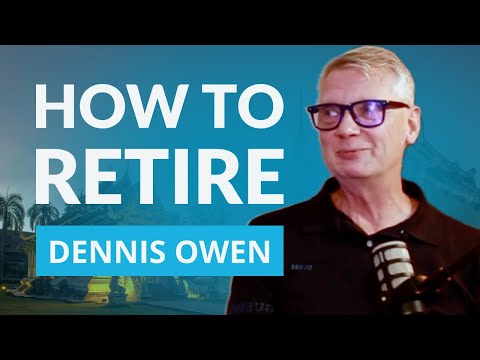
#134 The Office-Based Reality is Over - Dror Poleg on entrepreneurship in Israel, studying in Australia, working in China, Future of Remote Work and The Real Estate Business, How To Write A Top 5 Book in Almost Any Category, The Disappearance of The Middle-Skilled Job, Inequality and The End of The Offices
- 0:00 – Video intro
- 1:10 – Introduction
- 1:56 – The scripts Dror grew up with
- 5:22 – The entrepreneurial spirit in Israel
- 8:43 – Leaving Israel after military service
- 14:37 – Studying in Australia
- 17:31 – Going to China
- 20:49 – The Chinese business world
- 23:42 – Writing in Dror’s life
- 28:20 – Housing
- 35:38 – Remote work and real estate
- 40:21 – Future of remote work
- 43:01 – Using information from the Internet
- 44:52 – How can Dror write a top 5 book in almost any category?
- 45:34 – The scale of the Internet - reaching a 1000 people
- 49:09 – Abundance
- 50:35 – The disappearance of middle-skilled jobs
- 53:20 – Being eclectic vs defining yourself
- 54:32 – An unconventional path and having kids
- 55:27 – Managing risk
- 59:49 – Inequality
- 1:06:14 – Luck and generosity
- 1:10:42 – The US as a “freemium” model country
- 1:18:24 – After Office
- 1:22:27 – The challenges that need to be overcome in the US
Dror worked as a real estate private equity exec, startup founder, front-end developer, parliamentary advisor, and soldier. Having lived all around the world he is now based in NYC, writing as an “Economic Historian”.
Having predicted that remote work is going to become the new norm back in 2015, he has just published a survival guide titled “After Office”.
🎥🍿 YOUTUBE: WATCH HERE
Links:
-
Twitter: @drorpoleg
-
Website: drorpoleg.com
Transcript
Dror worked as a real estate private equity exec, startup founder, front-end developer, parliamentary advisor, and soldier. Having lived all around the world he is now based in NYC, writing as an “Economic Historian”.
Read the full transcript
Paul: Welcome to The Pathless Path. I'm Paul Millerd, and in this podcast, we examine the invisible scripts that run our lives and dare to imagine new stories for work and life. Today I am talking with Dror Poleg, one of my favorite sources of writing about the future of work, the future of housing, future of the internet, future of a lot of things. I think, uh, also informed by Dror's really interesting path. He's lived all over the world, starting in Israel. He's lived in China, Australia, France, now the US.
And I think this gives him a really unique lens too of analyzing what's happening in the US, as in sort of insider-outsider. Excited to dive in today. Dror, welcome to the podcast.
Dror Poleg: I'm excited to be here, Paul. I'm glad we're finally getting to connect like this.
Paul: I always start on all my podcasts asking people about the stories and scripts they grew up with around what are you supposed to be doing in life? So I'd love to hear what were some of the stories and scripts you grew up with. I imagine it was not go live in America and write about the future of work.
Dror Poleg: Yeah, it's quite an interesting mix, my upbringing. It's very conventional in some ways and very unconventional in other ways. I grew up in a family of, I can say, kind of public servants or government employees. You know, when I was a kid, my father was in the military. My mother was a physiotherapist for the kind of national healthcare system. So very kind of like middle class or working class becoming middle class kind of life.
And my parents assumed that, you know, people going into very stable jobs is what everyone should do. So it was kind of an implicit assumption, but at the same time, they were not very kind of pushy or ambitious in terms of like, oh, you have to get the best grades, you must get into the best school, which is partly to do with the broader context. You know, I grew up in Israel when Israel was a socialist country, mostly isolated from the world in terms of trade and in terms of like brands or stuff that you could buy. You know, we didn't have all the car brands or all the clothing brands. We just had like mostly locally produced stuff. And most people, at least most people that were visible to me, were kind of more or less like me.
No one was much wealthier or too poor. So if maybe the main thing I would say is like money or thinking about careers wasn't like a big deal. So if I was thinking ambitiously, it was like, what can I do for society? When can I become the prime minister? Or something like that. I think if my parents expected anything from me, that I would be the next prime minister maybe, or something like that, or a public servant of, of some sort.
Since you asked, I think another huge, huge, huge impact— I'm getting a little dark here, but I come from a family of, you know, descendants of Holocaust survivors. So all four of my grandparents were married and had children before the war, and they all lost their spouses and their children. So my family is like their second family. It's like they, they met each other after the war on both sides and decided to start a family and have children again. I have no idea how you can even make such a decision and how brave or optimistic or unreasonable you have to be to, to believe that, that the world is worth giving another chance to.
But that cloud of like, you know, you are a survivor, you always need to make sure there's an escape path, you always have to both seek stability but be ready to like change direction, uh, never assume that where you were born is where you're going to die, or that what you're doing today is going to be there tomorrow. That was very much always in the air. So even though my parents kind of raised me into like this kind of stable middle-class family, even socialist kind of country, there was always this like drive of like, you know, keep your options open, explore everywhere, have like, you know, live in different places, have passports, have like whatever you need to always have a hedge. So implicitly, that, that was there as well. Yeah.
Paul: So there's an underlying sort of, you should take risks, you should try things that are not conventional. This is just a good life strategy to protect yourself. And there's just so much entrepreneurship that comes out of Israel. It's a country of, I think, less than 10 million people.
Dror Poleg: Right.
Paul: And when I've traveled around the world, I meet Israelis all over. They're starting businesses. They're super optimistic about the future and building things. Has that been, is that really present in your generation? Or am I just meeting the people that are leaving the country?
Dror Poleg: Yeah, it is very present. I mean, when I look at the people that I went to school with, and, you know, I went to a public school, which is the only thing we had. And again, in not like a very affluent area, very kind of mixed city in terms of socioeconomic backgrounds and also immigrants and people that were born there. There's some incredibly successful people that have done amazing things, and I think the average American classroom, probably the average person doesn't have the same kind of roster of remarkable people that are now either like, you know, ministers in government, founders of literal multi-billion dollar companies, uh, you know professors like of cutting-edge fields all over the world. So like remarkable people. It's driven, I think, by a few things.
One, yes, that desire to, or that comfort with risk and uncertainty, not even as something that you embrace or that you kind of like, you know, gung-ho about in the way that Americans, some Americans are, but just as something that is just like, it's just the air that you breathe. You're like, it's obvious to you that you have to come up with something out of nothing. Because no one's going to give you anything and probably someone's going to take whatever you already have. So you have to push harder. There is the smallness of the country. So when I grew up, probably Israel had closer to 5 or 6 million people.
So it's just a tiny place. If you want to do anything, you have to go somewhere else and sell somebody else something. So you're always oriented towards the outside before your business barely begins, you already know that you have to sell to somebody else. So you're already oriented that way. It's a society with a lot of immigrants. I mean, it's a fully immigrant society almost.
I mean, I know Israel, people perceive it particularly, I think, in the context of the conflict with the Palestinians and the Arabs as like, you know, some kind of cohesive entity that fights other cohesive entities. But Israel itself is super diverse. Most, you know, my father grew up in orphanages in Romania. Some of my best friends came from Yemen, from Iraq, from Morocco, either were born there or born to parents that immigrated from there. So a real mix. And immigrants in general tend to be more aspirational and hungrier and generally comfortable with just showing up somewhere and assuming that they'll know what to do because their parents and grandparents have done it probably more than once in their lives.
So you kind of assume, yeah, of course I can show up in Beijing and start a business, or of course I I can go to New York and somebody would listen to my advice because why not?
Paul: Yeah, you have the proof still alive in your ancestors.
Dror Poleg: Yeah.
Paul: What led you to want to leave Israel?
Dror Poleg: Funnily enough, it almost happened by accident. So I, as you know, in Israel, you finish high school, you go to the army. Which is another thing I think that contributes to this somewhat different form of ambition. You don't go directly to university. You're not obsessed with your SATs or things like that. You know that first you go to the army.
So most people think about that, not about their career or what they're supposed to study. When I was 21, I was very much involved in the music and nightlife business. And my plan was to move to New York. And continue my kind of bohemian life in New York, get involved in music, get involved in lifestyle, get involved in art, and also just have a generally unhealthy lifestyle, like drink, do stupid things, experiment. However, a few weeks after I finished my military service and could finally travel, two airplanes hit the World Trade Center. And suddenly New York was kind of not that kind of happy, cheerful place that somebody who's interested in nightlife and parties would go to.
And all of my friends at the time were planning their kind of trips around the world, which is what people do when they finish the military service in Israel. They go for a few months if they can.
Paul: Can you say a little bit more about that? I've met a lot of people around the world on these trips. It's sort of a tradition to travel after finishing military service, right?
Dror Poleg: So you decompress, basically, you know, you go, you travel, you see the world. And yeah, it's a tradition. I don't know where it started. But, but again, that's even yet another buffer before you officially start your career. But in other ways, you're already a grown-up, you were in the army, and also you're traveling on your own and doing all sorts of things independently that I think people in other countries don't do when they're 18 or 20 or or ever. So it's almost again like an obvious thing that you do, like, hey, you know, I'm not going to school yet, so now I'm going to go travel and figure out what I actually want to do when I grow up.
But since the kind of New York option closed, all of my friends went to travel and I actually didn't want to go anywhere. I said, listen, I have a really fun life here. I get free drinks and free entry passes to all the cool parties. I hang out with beautiful people. I write. I kind of I don't think there's anywhere else that I want to be.
But my friends literally dragged me and they said, no, we're going to Thailand, come with us for a few weeks. So I went with them to Thailand and we started in Koh Samui. And after a few days you're like, okay, it's kind of boring here. There's a certain routine, but I'm like, okay, how long can I keep doing this? But then after a few days more, you're like, wow, like you get into the rhythm of the place and you're like, wow, I can stay here for a long time. And I need, you know, I need this kind of lack of stress.
I need this kind of routine, but like routine of unimportant things of like, you know, I wake up, I drive on a motorbike, go eat something, then go party with my friends and wake up again. And just do that without even knowing what day it is or where you're going or having to think about anything. And kind of when I was away, I realized how much pent-up stress and even trauma I had from my military service and how much I needed to, like, be away and take some time to process things. And from there, one thing led to another. We proceeded from Thailand to Australia. And when I got to Australia, it was a second shock.
I saw people who are my age who seemed 30 years younger than me in terms of how cynical, how unstressed, how lacking in baggage they were, and also how unambitious, or at least not feeling an urgency to decide or know an answer about their lives. I kind of hung out with people and I was like, wow, this guy, he works at a record store. He has like a clunky old car. He has a reasonable apartment with some roommates. I'm like, why can't I have that? It seems so simple.
Why haven't I thought of that? And I really fell in love with it, with the rhythm of life in Australia. And then I said, okay, I want to stay here. I want to study here. And kind of that's how it began. I can tell you the rest, but maybe I'll stop here for now.
Yeah.
Paul: So I totally relate to this, except I didn't do it until my 30s. And I think it's sort of related in the sense that we sort of delay growing up in the US. And I think going to university at 18 probably is counterproductive in terms of growing up. It's really good in terms of the labor economy, perhaps. I mean, you could make the opposite argument as well, but so much is oriented around just getting into the workforce and getting a job. But I mean, The Organization Man has this great line written in the 1960s about men no longer become adults.
They just transfer from college to the workforce. And yeah, there's something really interesting about going into military service and then being 21 or 22 or 23 when you're starting school. There's just such a deeper sense of maturity about knowing what you're aiming at and going after. But it sounds like you were a little seduced by that opposite mindset as well. What was the biggest lesson from living and studying in Australia?
Dror Poleg: So one, I want to emphasize that I realized something, but I didn't completely change my trajectory yet. I kind of understood something, but it took me another 20 years to, I think, both grow up and also get even closer. Yeah, or close enough to who I really want to be. And even now I feel like I'm still trying to get closer to that. What is the main thing? I think it's kind of the everything of it again, like seeing a parallel universe.
Like you land in Australia, first Australia itself, you know, the light is different, every day animals are different. You just feel like you're in another planet. And part of the appeal of Australia to begin with was exactly that, that it's as far as possible that you can go. Like I remember customs in Australia are very harsh. And the lady sitting next to us on the airplane brought some mayonnaise, which is like the worst thing that you can do when you travel to Australia. So they stopped her and then they started questioning me and my buddy that we're traveling with.
And then they opened our bags and they asked us, you know, why are you in Australia? So we're like, oh, you know, we dreamt of coming to Australia for 3 years. We're in the army every day. We dreamt of Australia. So he's like, okay, do you know any famous places or do you have any plans? We're like, no.
He's like, how come? He's like, no, we just wanted to get here. We don't care. We just wanted to be in the place that is so far away from where we came from. And he looked at us like, who are these two idiots? But obviously he let us in because we didn't do anything wrong.
But that's really how it was. We just wanted to be in Australia as a concept. And when we got there, that's what appealed to us. It's like a place with a different pace of life, different levels of stress. You open the news, the kind of stuff that you read about is funny and some animal got stuck somewhere and some person, like, I don't know, was rude to someone. And it just, it kind of gave me so much perspective that, like, you know, there's so many other ways to live.
And I knew, you know, I've traveled before, I kind of knew it, but then I really felt it that, like, I settled into somebody else's lifestyle, you know, hung out with people, stayed at their apartment, saw how they live. And I was like, okay, there's so much I can learn from this.
Paul: Yeah, it's such a jolting experience to really throw yourself into a different culture. I experienced this in Taiwan. After a month, you just realize a lot of the scripts and stories you have from the US, you're like absorb— observing them running in your brain as an outsider and you're saying, oh wow, this is just cultural programming. And you like, life is a lot more flexible than we think. And this is a sort of way of teeing up, okay, you were you drawn by going deeper into this because you eventually end up going to China, which is such a— I've only been to China once, but I've spent a lot of time in Taiwan and am familiar with Chinese culture. It's, it's like a complete 180 of Western culture.
What drew you to go to China and What did you learn there?
Dror Poleg: So, during that same, that first trip before getting to Australia, so we were in Thailand, then after Australia, I went to China as well to just backpack for a little bit. And I felt so fascinated again by the differentness of it, by like, I'm like, wow, there's a place here that is so different that nobody understands. I love diving into things that there's a lot to learn about. And that maybe other people don't know yet, or that I feel like I'm in a position to understand better, or to understand something about them that other people are not going to get. And in China, I kind of felt the vibe. I was like, this place is about to go off.
It's so interesting to me from all angles, and I just want to spend time here. But again, I didn't move there just yet. I first went back home, worked, saved money, got my student visa, convinced my parents to help me a little bit with studying in Australia. We kind of did a deal that I'm not going to go back to nightlife life or drink or that I'm gonna kind of go come clean. And also mostly they didn't believe that I'll do it. We kind of made a 6-month deal that if I do ABCD, they're gonna let me go and help me even.
And they assumed that in a week or two I'll forget about it, just like all the people that come back from their trips and they're like, oh, I want to live here, I want to live there, and then they'll just settle in. But I didn't settle in. I really, I was like a monk for 6 months. I woke up, I started to work in construction with a few Chinese foreign laborers. So I really, I didn't talk to anyone. I didn't reach out to my friends.
I was like still overseas as far as I was concerned. I was just saving money, getting my visa and getting ready to go. And then as soon as I could, I went and then got to Australia. And when I was done studying in Australia, I felt like I regressed a bit again. Because I was 24, I finished my degree in 2 years because I was so focused and kind of knew what I wanted. And I had like this kind of nice apartment, kind of this middle-class lifestyle again.
And it felt like, okay, this is what I want maybe when I'm 40. But like Australia, you're like too nice maybe for me at the moment. And I really felt like I either spend another year here and never get out or I go and roll the dice again. And China kind of interested me, and I had another friend who was thinking of going there for a few months for a separate business, and we kind of convinced each other and said, okay, let's just go and see what's going on there. So I just showed up one day in China, basically, no job, no relocation, just kind of said, all right, let's see what's happening.
Paul: Yeah. And I know for many people that lived in China, you sort of arrived at the right time. China was really on the rise, a lot more open to foreigners to be integrated into companies and opportunities, and people wanted to connect with the US economy and Western economies. It seems like you probably benefited from that. I mean, you're a vice president a couple of years after arriving in China, which you never know what those titles mean, but it seems like you got pretty sucked into the business world there and a lot of the the boom that was starting to emerge?
Dror Poleg: Yeah, so I kind of showed up. I was with my friend near Guangzhou at the beginning because his family had some, like, a factory there that we were kind of like— he was learning about, and I was just hanging out and trying to figure out. But I really wanted to go to Beijing because southern China first is more manufacturing-oriented. It's not, you know, it's not very Chinese culture-oriented. So I just left my friend where he was and just went to Beijing. Uh, and yes, very quickly I found a few other people that were doing related things, you know, writing, doing stuff with online media, um, and we started doing things together.
And I kind of got involved with the local advertising agency, and before I knew it, a lot of my clients were kind of large real estate developers or investors or retailers, and they started asking me for help with other stuff that we weren't selling. Yes, because I was in China in like a unique place and they didn't have anyone else to speak to. So they're like, hey, why don't you come and look at this piece of land and tell us what you think? Or why don't you come with us to the bank and help us tell this story? Or why don't you help us recruit someone? Or, you know, and very quickly I got sucked into like a real estate developer that also was just starting there.
Like, it was like officially a Dutch company, but a lot of Israeli shareholders. And so I started at the ground floor and we grew quickly. So, you know, when I joined, I was like the fifth person or something. And so when I left, we had like, I think, 400 employees across like a few different subsidiaries. So I just stayed where I was, but the company kept growing underneath me. And the pace of development in China is crazy.
So, you know, we built tens of thousands of apartments and a few shopping malls and office buildings and all in a few years. And I got all this experience that would have taken someone 20 years to get. And yeah, it was fun. It was crazy. But, but again, I found myself suddenly with aggressive careerism defining my life without me ever planning, you know, I worked so hard, I enjoyed my job so much, but I felt like it consumed all my faculties and creativity. And at some point, I asked myself, okay, is that why God gave you all these gifts so you can make some lady cry when you negotiate, like whether they're going to pay 2% of turnover or 2.2%?
And you'll make some other guy lose sleep because you didn't get back to them while you negotiate. I was kind of like, you know, why am I, why am I doing all this? It doesn't interest me. And I felt like it's really eating, eating into my soul. Yeah. So change again.
Paul: And I'm curious, when, when did your sort of curiosity about all this— you start out with your bio now, you call yourself an economic historian, and that's sort of the program you did at the London School of Economics. But I'm wondering, like, when did these seeds of curiosity about how the— I mean, it sounds like travel really ignited how does the world work, but how does work work? How does— like, when did you start thinking about these things and even writing about them? Yeah.
Dror Poleg: So first, writing was the foundation of everything I've ever done. So every job, everything I've ever done started with writing. Even the nightlife stuff that I started in high school, it started because I started writing about music and parties online. And through that, I started connecting with people that were actually producing music or producing parties and kind of working with them or for them. And the same with China. I kind of showed up, got involved with like a little kind of group blog there, started writing, got to connect with people, did things.
So it always started from writing. And back then, just like today, I think I never really clearly define what I'm writing about or what I'm interested in, but it ends up being mostly about work because work is life. It's about, you know, how do I navigate uncertainty? How do I find meaning? How do I manage my time in a way that I enjoy and that brings out, again, my gifts in a way that is good for other people and is good for me and is sustainable? So these are questions that were always on my mind somehow.
So I always feel like I'm frustrating my readers by never sticking to one topic or changing directions and then 6 months writing about something completely different and then going back to the other thing. But I think maybe they tolerate it or even enjoy it.
Paul: I love the shifting around because, I mean, that's maybe that's just cope for my own style as well. I love the range of things you cover, and I sense there's a connective tissue. You talk about housing, you talk about work, you talk about the future of the economy. But it's really like the thing that fascinates me about your writing is you're really getting to the heart of something that I like writing about as well, is that, okay, these things are happening right in front of our eyes and most people are missing them. Because they have some sort of script or story in their head about how things are still working. But a lot of those stories are just not tied to reality anymore.
Is that something that resonates with your current writing?
Dror Poleg: Yeah, 100%. And I think it's tied to the travel, to like seeing so many different ways of living and so many people that are so convinced that the way they live is just the only way that is possible, that they cannot even imagine Like, my life seems so normal to me, but I do realize that when I tell people about the places I've lived or things I've done, they're like, they can't understand. They're like, wow, how did you do that? I'm like, I don't know. Yeah. Like, what's the big deal?
And again, it's not necessarily something that I got explicitly from my parents. My father still asks me every week, okay, so like, what do you actually do? You know, don't you want to like do something like more stable or like have like a real job or? Even when I succeed, you know, I can do something amazing. I can like, hey, Dad, I just got paid, I don't know, $30,000 to give a 20-minute talk at some company. He's like, yeah, okay, but like, what's next with, you know, what's your benefits?
No. And I get it. You know, I'm not like resentful of it. I'm just like, to me, it looks like, you know, that I think in over time it became clear to me that that's the only way that I can live as well, that I can try fitting into something else, but it's just going to make me unhappy and make me compensate for it in all sorts of ways that are harmful to myself and to others. And more than anything, just waste my time, which is short. And the older you get, the more you realize, yeah, how short life is.
Like when I was 20, I didn't think, you know, I thought that I can just keep doing and doing and doing and trying again and trying again and reinventing myself. And at some point you realize that there is a cost to that. So if you must decide who you are, or who you want to be, it's better to decide to be yourself because nothing else will work. It'll be hard to change again in 10 years if you're not yourself.
Paul: So yeah, I think I was super defensive when people would question me after I quit my job. But then you realize it's mostly their insecurities, not your own. And for me, I feel way more comfortable in this current path, mostly because I'm way more excited about my life. But you realize other people can experience the thrill of that, right? So, what— maybe we use this to shift into some of your ideas. I think housing is one of your biggest ideas, and it sounds like some of your experiences in China got you into the real estate industry.
But your writing about housing has become so relevant because Over the past few years, we've had a crazy housing bubble which is starting to crash in some places, not other places. There's basically a housing crash in Austin now. New York, weirdly, no, probably regulations and stuff, but New York. Yeah, yeah, exactly. But there's also this huge looming commercial real estate bubble which nobody's really talking about. Talk to me about, uh, what interests you about housing and real estate and all this and how it shapes, um, our experience of the world.
Dror Poleg: Yeah, so I, I've always had a reluctant relationship with, with real estate as a, as a field. And as I mentioned, in China I kind of find myself slipping into it almost without intending to. And even when I was working in real estate for real and intensively so, I always thought that I'm doing something else. You know, I was really an anthropologist or a technologist. I would go to places and figure out whether they're the right place to invest and how people behave and how we should design apartments or shopping malls or office buildings for them and which locations make sense. So it always seemed to me much more like, again, like the work of an anthropologist or researcher, even a secret agent sometimes, you know, kind of go to places and figure out who's doing what and take people to lunch and sleep with them even and kind of try to get the latest information that nobody else has.
And when I left real estate, I kind of felt that that was it. I had a— I started a startup that was kind of a location-based social network. So again, very related to stuff that you're interested in. So it's kind of a tool for people that land somewhere and just want to see what's going on and meet people that are within walking distance and kind of join a conversation. But that didn't go too well. And the only people that were interested in it were real estate people that kind of said, oh, I can use this as an app for my coworking space or for my building or for my stadium or for my university campus to kind of connect people or let them book services.
This is like 7, 8 years ago. And it kind of forced me to look at both real estate and tech and tell myself, okay, you can always reinvent yourself, but it's much better if you kind of use ingredients that you already have and capitalize on knowledge and networks that you already created. So think a little bit about this connection between tech and real estate. And I started, I kind of gave myself a break from myself and went to Thailand for a few weeks and said, all right, there's a lot going on between tech and real estate, both new stuff that I kind of realized is happening and also stuff that I always worked and knew about, but I never thought about it like that in terms of like the question, you know, how will technology impact the way we live and work and what are the kind of financial, social, political implications of it.
So I gave myself a few weeks to summarize it all into a thesis, and then I just started publishing it online. I kind of shared like this really long deck and started writing short articles, and people started reaching out to me. I kind of saw that it resonated, you know, and I saw that technology is about to change how we work, the meaning of location, the meaning of accessibility and how we move around, the meaning of visibility, of physical assets online or offline, the power of regulation to determine what's allowed or not allowed to happen within a building or within a neighborhood, you know, with things like Airbnb and Uber.
Generally, the access to information or to capital that used to be very restricted and very kind of part of a small group of insiders, and now suddenly everyone can point at a building and they know exactly how much it costs and who rented it and when was it sold. Anyone, of course, can raise money online. Like, if you tell a story, you suddenly get a lot of money and you can buy buildings, which Adam Neumann kind of proved later on. So, I felt like a lot is happening to this very stable industry and that I'm in a great position to tell that story because, one, I see it, you know, it's in front of me and it's clear to me. And second, because I have credibility already in that space. I'm like, you know, I know this industry, I spent years working inside of it.
I know people, I know how it works, and I know tech, and I know online media, and I know different markets. So I have a perspective here that I need to share. So I just started sharing and sharing, and before I knew it, it became, again, unintentionally, it became my job. I was like, okay, I'm advising people and giving talks about it. And then I decided to write a whole book about it. Yeah.
Paul: And You happen to publish a few months before the pandemic, which is fortuitous timing because I think all sorts of real estate chaos has emerged over the past few years. What were some of the most interesting things that emerged quickly? I think you were one of the people writing pretty early on around how location and where people live and the office was going to change. What what did your previous research do to help you sort of see that clearly? Like the thing that comes alive in your writing is like very just clear, simple, straightforward takes. But when I'm reading like mass media, if they're not quoting you, they're mostly missing it.
Dror Poleg: Well, they should quote me more. I think my general thought process is very I try to make it very simple, just like, okay, hey, there's a line here, there's another line here, and they're about to intersect. And then I ask myself, is there any reason why they wouldn't intersect? And if I don't find a reason, I'm like, okay, this is going to happen even if it takes another 5 or 10 years. It's just going to get there. And looking at real estate, I saw a bunch of those things.
Again, the fact that people can work from anywhere, the fact that people need more flexibility in their lifestyles, the fact that people are increasingly expecting whatever they consume to say something about their values and to be tailored to their specific preferences in ways that most products are, but real estate isn't. You know, when you rent an apartment, that apartment wasn't designed for you. If it has 3 bedrooms, the developer doesn't care if it's like a grandma with an assistant or a family with 2 kids or it's 3 roommates. They used to just, you know, more or less build the same thing. Not think about it as a product or a brand. So I kind of saw all of these things coming.
And some of the main points of the book were one, a serious office crisis is coming, which doesn't mean no one will go to work anymore, but it means that if you want people to be in your building, you have to attract them every day, just like any other consumer product.
Paul: And you were seeing this in 2019 though. Yeah. What were the data points you were seeing? I mean, It, if you do track technology, I mean, when I was in an office, I can tell you, yeah, I was in an office. I look back and I realize, oh, I already was working remotely. I was just video chatting with people in the same office.
It's pretty logical step to get to work from anywhere.
Dror Poleg: Yeah. So there was anecdotal and personal experience as well of like saying, hey, I've been doing this for years. Maybe people will catch up at some point. But there was also clear data. So I started by looking at the assumptions that explain the world as it is. And if you look at urban economics 5 years ago, there was kind of a consensus that, okay, this internet thing happened already.
You know, it's been around since the '90s. People have been talking about like work from home and the end of distance and all of that, again, late '90s. And like, okay, we're over it. We, we actually saw that what what did happen was the opposite, that cities became more important, more dense, more expensive, that companies have larger offices, that it's more important for them to have all of their employees in one place and also to be surrounded by other companies in the same field. So what economists called agglomeration effects. And the theory explained it in three main ways that are not mutually exclusive.
One is that there is benefit to kind of collisions. You know, you put a lot of people in one place, innovation happens and productivity happens because they kind of bounce ideas off each other really quickly in ways that are not possible if they're distributed. The second is more of the lifestyle choice. My friend Richard Florida wrote like The Rise of the Creative Class about 20 years ago, kind of defined this idea of like this class of creative people. They like to be in cities because they like to live near people like them. They like to consume culture.
They like to be in diverse environment and kind of very liberal and open environment. And the third one was the idea of matching, of when you are inside a big labor market, which is a city, you can make matches that are much more specific between tasks and people. So a bit like it happens in the world of dating, you know, if you just want to marry someone, you can do that in your village. But if you want to marry someone, in my case, you know, who's like Jewish, cute, has some traditional values, but is not like religious, lived overseas or has like an international family, is kind of artistic, but also, you know, all of the lists that, that describe my wife, only in New York City could I have met her because New York City is big enough to create, to create those matches.
Uh, and that, according to economists, explained why cities are going to become more important, why real estate and location is more important than ever. And that's the internet. Now we, we understood it. Now we can move on to the next topic. But what I was seeing, that actually this theory itself explains why the internet is going to change things dramatically. That those agglomeration effects, the internet allows me to interact with people at a speed and an intensity that a city, even the largest one, doesn't enable me to.
And in terms of the matching, again, I can connect with people with very specific knowledge or expertise online much more efficiently than I would in a large city. So, already from the theory perspective, I had a clear critique that I thought was pointing in a very different direction towards a different future. And then in terms of data, around 2015, companies started changing their behavior in a meaningful way. They started opening or splitting their headquarters into 2 or 3 or 4, you know, like, like Amazon HQ2 or Stripe. And to someone, to a normal person or someone inside the real estate industry, it just looked like same old, same old, like, oh, this company is opening a branch or, you know, companies always had offices all over the world. But that's not what it was.
It was companies taking their core activities, their R&D, their management, and saying, okay, instead of having one office, we're going to have three offices now because we need access to a larger pool of talent to hire from and to match within, that the size of one city is no longer big enough, not because the original theory was wrong, but because the original theory was right. We need this agglomeration effects across a much larger field and we need the matching effect to be across a much larger field. And when I saw that happening and I asked that question in the book, I said, okay, if Stripe can split their headquarters from 1 to 2 to 5, where does it stop? At 10? At 20? At every— like, I don't see a limiting principle here, basically.
And, you know, that's how I explained it to myself and it worked.
Paul: Yeah, that's fascinating. And Stripe's such a good example because they're 6. Their sixth branch, right, was the remote branch, right? Where, and yeah, it, I didn't have the frameworks to see the bigger picture. I think until COVID and probably influenced by your writing because yeah, we, we were so used to seeing everything through our own lens, right? I had moved from Boston to New York and that gave me opportunity, new labor market opportunities.
And it didn't even occur to me that you could work from wherever until I quit my job and started working from wherever. Like, my clients were just like, we don't care where you are. And that was shocking to me. I think so many more people have realized this, and we're only at the start of actually building companies and organizations around this. Maybe say a little bit about that, because I think Like, I think people confuse, I don't like remote work with remote work is not going to happen, right? Remote work is just a technology that is going to continue to grow and take over, but it's going to take a while to adapt and build behaviors and norms around that.
Dror Poleg: Yeah, so there's a few points here. One, I forgot to mention, maybe the main thing that kind of helped me understand it viscerally was the fact that I'm writing online and that I've been doing it for 25 years now. And the type of connections that I created just by sitting in my room and writing is something that I felt is severely underappreciated by, by people even today. The ability to connect with people just based on throwing your ideas out there and the value that it creates is something that most people just cannot grasp. And even I forget about it often, like the fact that I can get a CEO of the largest company in my industry to reach out to me. Not that I'll get to them, but I will put something on the internet and they will reach out to me to talk to me about it.
And then there'll be dozens of them just because I'm sitting and sharing my thoughts. It's something so powerful. And again, it's not unique to me. I'm, you know, I, I write, I take it seriously, but there's, there's plenty of good writers. And also there's other ways to make yourself known and to express your expertise beyond just writing, uh, but that seems so powerful to me. It was so clear to me that it works for me.
And if it works for me, why wouldn't it work for other people? Second, yes, there is this kind of denial of or inability to imagine something working other than the way it's working for me. And overall, I think we just don't get the internet yet. Most people just don't understand the internet and what it can do. Like, we talk about ChatGPT. I still feel like I have a unique advantage of just using Google, my ability to find information.
I'm like, why? Why isn't everyone doing this? Like, it's all there. Like, you know, of course you have to vet it. You have to like, you need certain skills, but I'm like, you're talking about ChatGPT. Like, you know, there's so, there's so much information and so many people out there at the tips of your finger.
And I think most people don't think like that at all yet. Even younger people, you know, I'm not talking about 60-year-olds, like 30-year-olds, even 30-year-olds that are just not getting it.
Paul: Oh, it's, it's very surprising, right? I mean, you can, You can just figure stuff out now. And I mean, one thing that always surprises me, people will say like, I just don't think something, insert the blank, but you can like Google this and figure this out and solve this in 10 seconds. But people are just like, yeah, maybe next lifetime.
Dror Poleg: Yeah, like I think that I can write a book about almost any topic and write the top 5 book in many disciplines without ever leaving my home or speaking to anyone. And not because I'm smart or special, just because the information is there. There's a way to vet it.
Paul: I think you're right about this. And I think it surprised how well my book did over the last year. But I'm sort of like rebuilding a map to understand why that existed. And I think, one, I've sort of created a category of one. So I have a top 5 book because there are no other books in this weird category of like reimagining work, life, scripts, creativity, self-experimentation. Say, say more about what you mean.
You can write a top 5 book in any category. Like, why is that still true? Because I totally agree with it. And I think there is a shortage of people actually tapping into the power of learning and sharing ideas online.
Dror Poleg: So, I mean, the information is there. And there's signals also to help you figure out which information is valuable and mechanisms that help you kind of vet and refine that information by sharing pieces of it, by getting feedback from people, by interacting with individuals or with crowds in ways that provide feedback that allows you to learn and iterate really, really quickly. So yeah, it's all there and available. And I think people also severely underestimate the kind of notion of 1,000 true fans, you know, of like, you don't need to become Kim K. It's enough that a few people would care about your ideas or your work enough, and you can make a living on the internet and doing something that you can't even define.
You can make half a million dollars a year by just writing something that you can't even explain to people what you're actually writing about, and people will pay you to give them advice or to participate in things that they do, even when they are not able to explain what you actually do, but they just like, they get it. They're like, okay, I like the way you think. To sprinkle this ingredient into whatever I'm doing because I feel it would be valuable, and later also because I know it would be valuable based on a certain track record. So people always think— like, I'm amazed that by how unfamous I am and how impactful I can be within certain parts of, of the world on, on, you know, on very narrow things, but things that are big and end up impacting a lot of people's lives.
Again, how buildings are designed, how Cities are designed, and without being famous, without being notable, without being credentialed like too much, just for the power of ideas themselves, which is maybe the best thing about the internet. It's just like, you know, not necessarily may the best idea win because the more popular stuff would always be dumber, but may the best idea find the people who need to hear it and that value it most. So it's that matching engine. For everything. That's the beauty of that network that I'm obsessed with and I'm constantly thinking about and trying to figure out what else I can do with it.
Paul: One of the things I've noticed and I've talked about a lot on this podcast is I think people interpret the world through a mass media lens. So people will say to me things such as, well, this, what you're saying isn't good advice for most people. And it's like, correct, right? I am— my book has been sold to 10,000 people now. That is enough. If 10,000 people bought my book every year, I can sustain my life for the rest of my life.
And I'm not going to be rich, but I'm going to be able to sustain my life. And 10,000 people over 10 years is 100,000 people. There's 7 to 8 billion people in the world. That is such a small number.
Dror Poleg: Right. That's the other side of the internet that I think people underestimate. If you have 500 people who are interested in you, almost necessarily there's half a million people who are interested in you and probably 5 million as well. It's just a matter now of getting to them. So, and again, they're there, they're within reach.
Paul: Yeah. One of my favorite classes is like this online school teaching you how to be a mermaid. And it's like, that doesn't interest me at all, but it appears this person has a decent amount of followers. It's like, this is pretty amazing. And I think there's an element of our imagination is so boring about what we should do with our lives. And I think this is something travel, works with, but the future is weird.
And the weirder you're thinking, the more potential serendipity or upside you might experience in your career.
Dror Poleg: Yeah. I think another theme in my work, which ties to real estate, but also to everything else is the idea of abundance of suddenly we all have so many choices that are good enough for whatever it is that we want to do or buy or consume or even think. And in the world of abundance, people make choices based not on like the kind of traditional product characteristics, because there's a million products that meet the basic requirements and characteristics. They make decisions based on other things, based on tone, based on narrative, based on emotional resonance. So I have people come to me, my readers, and say, hey, why don't you do a course about crypto? Or why don't you do a course about AI?
Or why don't you do a course? And I'm like, you know, I'm not an expert in these things. They're like, yeah, but we want to learn from you. You know, we like how you explain it. We trust you. You'll know who to ask.
So they're not looking for, you know, the way you package it for us, we get it. Plus again, we trust you and we don't trust, I don't know who, and your incentives are aligned in a way that, you know, we're comfortable with rather than going and learning from a university professor or from a banker or someone who's like might know more than you, but he's stuck inside and maybe he has blinders on or he's selling something that you're not selling. So that's another thing, like you, you can just by having a personality and a point of view, be valuable just because of that, regardless of what you kind of attach it to specifically. Yeah.
Paul: So I'd love to shift to how you're, how you're thinking about the future of work, because I think this connects. You write, anyone mediocre is at risk. And by mediocre, I do not mean not good. I mean interchangeable. Lacking unique traits, lacking very, very specific skills that make them relevant for that particular job. And this is something that has been happening for decades.
David Autor has written pretty extensively about the disappearance of middle-skill jobs. We used to have these jobs at big companies where you could kind of just coast through a career, do stuff, not have to have deep expertise or skills. Those jobs have disappeared. Dramatically, and people don't really notice it. If you step back, you realize, oh, there's a lot more high-skilled jobs, high-wage jobs, but there's also this gutting of the middle. And I think you write very soberly about this.
This doesn't mean this is a good thing, but it is happening. How do you think about this shift and what does it mean for most people?
Dror Poleg: Yeah, so it comes back to networks again. Networks have a strange way of reshaping everything they touch. Once things are connected, they just don't behave and they're not distributed the same way that they were before. So when some people can suddenly reach many more people or leverage their skills or scale their kind of productivity 100x, 1000x, you know, it means that often that would come at the expense of someone, not because it's a zero-sum game, but just because if if someone is trying to do the same thing, they're going to now compete with the best person in the world, you know, and not with just whoever happened to live nearby or to compete with them in that small labor, local labor pool. So if they're just trying to compete directly, they're in trouble.
At the same time, it also creates this kind of long tail of people that can do variations over that thing, you know, a course on AI for moms, you know, a course on crypto for finance professionals, over 60 that have only 5 more years to work, like things that are increasingly specific, whether it is in terms of subject matter or again, in terms of delivery or style or whatever it is that the more idiosyncratic and specific, the better. Basically things that when your target customer sees them, he knows that it's for them, which to be honest, I'm not great at because I always resist being defined and defining what I do. But that's the people that I try to appeal to, you know, the people who want want to be eclectic, who want to kind of flow with whatever is interesting. They're just harder to, to find, and even they don't always understand themselves that way.
Paul: There's sort of an idea there, though, that by defining yourself, you become legible, and you sort of become, uh, disconnected from the things that matter to you. And I mean, a thing I write about is the only path is your path. Right. And there's a, there's actually a power in that. It's just that in the short term, you might not be legible enough to earn a specific salary that you're expecting on from this way of orienting towards the world, which is mostly slowly disappearing in front of us.
Dror Poleg: Yeah. So this, you know, it goes by, you and I both share a Chinese cultural heritage, right? And you know, the, the first line of the Tao Te Ching, right? Yeah. The, the way that can be named is not the eternal way, not the constant way. So once you define it, you're dead.
You're kind of not moving anymore, not changing anymore. And that's something that I feel in my bones. I know that I can define myself and exploit for 10 years, maybe for 20 years, but I feel like I have to constantly move because otherwise I'm not going to be safe. So I have to keep exploring to an extreme degree and make it hard for people to define myself, not just not help them, but make it hard for them.
Paul: But people say to me, Paul, you're going to have kids. You need to have a safer, more secure path. You should have a job. What's your experience of that? You're doing it in the US with kids. Is, is that just another script?
Dror Poleg: No, no. I'm glad you asked because I thought that I wanted to mention it at some point that, you know, everything I described involves a lot of risk. Getting through it involved a lot of luck. And just tenacity and stress and lack of comfort. That's, you know, you should know. My operating assumption is that that uncertainty is there whether you like it or not.
So you have to embrace it. But I think it doesn't mean you have to embrace it to the degree that I'm embracing it. But there's something you can do in your own life, even if it's just thinking about it and being conscious of it. Uh, so there's that.
Paul: How do you de-risk your path? Because I think a lot of, a big thing I find in people like you and me is we're actually pretty risk-averse, um, rather than risk-seeking. Uh, people see our lives as risk-seeking, but I have a lot more cash, less investments than most people would ever advise because I just don't like risk.
Dror Poleg: Yeah, so one, I started relatively late to do what I really want to do. Like, I was always on adventures, but within those adventures, there's that common theme of like going on an adventure and then settling into something comfortable and stable and kind of escaping it again and then settling in again. So it took me decades to get to a point where I'm like, no, I'm just going to keep doing this no matter what. Both to get there mentally and also to get there financially in terms of saying, yeah, I've done this enough times that I kind of have a reasonable grasp of what I'm trying to do and how it's going to work or not. I saved some money. I've made some choices in life that reflect the kind of the risks that I'm taking.
So, you know, I didn't buy the biggest house that I could and I didn't take the largest mortgage that I could. And things like that, you know, and I don't spend on certain things that other people that live immediately around me spend on or care about. And plus, I also know that, you know, I might fail and I'm kind of asking myself, what am I going to do if it doesn't work? And, you know, there's always this like get a job at McDonald's thing, which is always there available for you, at least until they automate it. But I kind of felt at some point that, you know, if you're not taking the risk of maybe ending up at McDonald's, then you're already working at McDonald's. You're already living that life just by not trying to live any other life.
So, you know, maybe I'll end up at McDonald's one day, but at least I've been to some other places. But again, I think there's different levels of comfort. There's so many— like, I still feel like there's people that are much crazier than I am. I still feel like, oh yeah, that's based on what I think I'm worth and the potential I have that I'm doing too little and taking too few risks. And that I'm kind of still not confident enough, even though I have all these signals that I'm like, hey, you know, you're doing the right thing and you're serious and you got all the, you know, you got published in the New York Times and the CEO of whatever asked for your advice and some professor quoted you in his book. Like, you must know what you're doing, you know, why are you still doubting yourself?
So I'm trying to find the middle way.
Paul: Does it?
Dror Poleg: No. So again, I'm not saying, you know, I'm like scared of doing anything, but I feel like I'm still, yeah, like you said, I'm still, I feel I feel very risk-averse in how I live compared to what I think is available for me. And I'm trying to get closer and closer to that.
Paul: Yeah, I think that's something I think a lot about too, is my ability to imagine possibilities for my life. I'm constantly having to do that. I'm always having to come up with new ideas. Well, should I do this? Should I do that? And it's a sort of constant act of choosing.
It's really hard to do that, but this is the world more and more people are going into.
Dror Poleg: Yeah. And I think also the further you go into it, the more you realize that there's more. If you would have told me 10 years ago that I would just be making a living writing on the internet basically and giving talks, I'll be like, that's it. My soul is happy now. But now that I'm doing it, I'm happy with it and I feel so blessed. But I'm also like, yes, I'm writing, but maybe I want to write about something even closer.
You know, I want to write fiction. I want to write about what I want to make peace in the Middle East. I don't know. I want to do something like even more meaningful, even more closer to like find like that drive inside of me. So even that is something that I'm constantly trying to balance again, that kind of explore, exploit, like, okay, you're somewhere, it's good, you're enjoying it, you're making a living. Don't go too crazy.
Maybe on the side, start open another kind of thread and kind of see if it grows and seems promising at some point, kind of jump. To that thread. But I think my main challenge in life is to force myself to stay with things rather than figure out how to survive once I'm forced to change.
Paul: Yeah. Inequality. You sort of have this strong take that it's inevitable. Talk to me about what that means. I think I directionally agree. And I think it's important to really call this out because there's going to need to be some sort of response.
Right. I think two of the things you outline are things like sovereign talent funds, sovereign wealth funds, where you can kind of take money and invest in public goods. But that also requires more people to live close by. The American system of just everyone having their fancy house in the suburb isn't perfectly aligned with that kind of economy. Another way is to sort of smooth out the income and labor economy in a sort of forced way, which you argue can have positive effects socially, just in terms of more people being able to make a living through work, which is a very important mode for people to be in. What this is not going to get better before it gets more challenging for society?
What is this going to look like?
Dror Poleg: Yeah, so one, you mentioned before the 1950s and '60s and the organization man and that notion of mass production and mass media. I think we're very much anchored to that world still. Oh yeah. Kind of saying, okay, why can't it be like in the 1950s? Why can't everyone have a house? Why can't we have a middle class?
Why can't we have stability? It must be some policy thing that we're doing. It must be somebody's greedy. It must be, I don't know, something, the kids, the old, the boomers, the youngers, whatever. And again, all of these things might play into it. But ultimately that moment in time, I don't know, 1945 to 1970 was a very brief and very, very unique period in history.
Like we think that our time is special. It's actually not so special in that sense. Inequality was always prevalent. It was always— if it wasn't prevalent, it was temporarily kind of stopped or redistributed by wars or by violent revolutions. But then relatively quickly, it defaulted back to, to another form of inequality. On top of that, though, we are heading into a world where there's other forces driving inequality, and that comes back to those networks again.
So once you have everyone connected and everyone competing in the same market and in the same pool, necessarily there's going to be larger gaps in income and attention and whatever it is that you value in terms of what people get. Again, it doesn't mean that there's going to be less opportunity or that people are going to be poorer or more miserable on net, but it does mean that certain people are now able to scale themselves in ways that were never possible before. Possible in history, that they can have 100 million followers or they can create a piece of software that is downloaded by a billion people or that they can launch more satellites than China and Russia combined with a company that they started 10 years ago in the case of Elon Musk.
But also at a much smaller scale, again, that like a fitness instructor on Peloton can service 2 million customers while the guy at the local neighborhood earns probably a tenth of what they earn. And so you see it in a variety of fields, just that the network enables this variance within the income distribution that necessarily basically means that there's going to be unprecedented gaps. At the same time, it also enables unprecedented opportunity because now everyone can tap into this pool and sell to a much larger number of people or match with people who are willing to pay more than anyone else on Earth for their specific blend of, you know, style or expertise or whatever it is that they're selling or that they bring to the table. So there's that.
And the third thing to make it even scarier is that the role of chance or luck plays a much larger role within this pool, which again is completely systematic. It's not about policy or anything else. It's just when, let's say if we lived in a village with 10 people and I would ask you, hey, who's the best doctor in this village? I would find the best doctor in that village within 5 minutes. When I'm in a village or a city of 10 million people and I'm trying to find the best doctor there, I'm very, very likely not to find the best doctor, to find only the third best or 20th best. Now, the 20th best within that larger pool is still going to be much better than the village doctor, probably.
But if I'm trying to find the best in such a world, it might mean that the 20th best is going to make much more than the real best. And because of those other gaps of the network, it might mean that earning much more might mean that even though they only have 20 positions within them on the kind of chart, one of them will make 100 times more than the other or 1,000 times more than the other because of those network dynamics. And so this is the kind of structure or substructure that everything we do is built on, you know, because of the internet. Now, it doesn't mean it has to be bad. Like, we just need all sorts of new social systems and ideas and even cultural shifts, you know, to like not necessarily show off too much or to value certain other traits in people's lives or to define ourselves based on other things rather than how much we earn or how much we work.
We will have to adapt to it, and we will. We've done it before, at least the societies that survived. And this too, in terms of travel, You see that, you see, again, a place like Japan used to be the wealthiest place on earth, and still there's certain humility, there's certain things that maybe even if they're not humble, they're only done behind the scene, they're not done publicly because you don't want to antagonize people that are maybe making less than you. And you can even pretend or do all sorts of things that look like, you know, they're like not truthful, but they enable society to function, they enable people to feel like they're respected. And that they're valued, even if you just pretend to be nice to them and you kind of think that they're idiots or that they're not as valuable as you are.
They develop, for example, they're like all of these very clear and different kind of cultural mechanisms that enable society to remain stable. So I'm not saying we should all do that, but I'm saying there's all sorts of ways to absorb economic and technological forces, and culture plays a big part in that and in determining who actually gets to have a stable and happy society.
Paul: Yeah, and I think one of the fundamental ideas I circle around is this reshuffling of culture has started. Uh, a lot of people are really uncomfortable with this because they are so anchored to this sort of fixed mindset of how you navigate life. Uh, and I've experienced some of this serendipity. I mean, somebody shared my book last month and it probably drove 40% of my sales in the last year. That's just luck. Somebody's making a choice somewhere.
Uh, that's not hard work. Uh, right. And the skill I've really been thinking around a lot is how do I practice generosity such that if I am the recipient of some outsized returns, I can then turn and support others. Whereas on my previous path and others around me in New York City, for example, in consulting, banking, lawyers, they're working hard every day. You're showing up, you're grinding. And so much of the narrative and the script is, I worked hard for this, I deserve it.
This is all about me. Screw the other people that are not working hard. And I, I do wonder if of like how long that will last, when people might be thinking more generously. Most well-off people in the US only give money through formal charities because it's approved by their peer set or their company, but they would never just give cash to a stranger. And I'm always thinking about, okay, how do I give cash to a stranger just to experience what that feels like? Because it feels uncomfortable, right?
And we're probably headed toward things like UBI, which trigger that same insecurity. What do you think are some of the most promising solutions for how we think about wealth and just all these different things?
Dror Poleg: I think one, we will have to make cultural changes again in terms of what we value as a society and what we celebrate and who we prop up. Second, in how we kind of flaunt or not flaunt certain achievements or how much credit we take or not take for them. By the way, regardless of whether luck did play a big role or not, it's good for society that you will say that it did, so that you will make other people feel like they have a chance and make sure that they have those chances.
Paul: Yeah. And there's a hidden side of that too. I try to talk about everything. So I also have some unfair advantages of just extreme obsession. And I went through organizations that helped me develop a sense of how to actually work hard and follow through with things and have a high quality bar. But yeah, there's, there is a growing spirit of, oh, I can make it too, right?
You called it, I think Kevin Roose called it the YOLO economy, or you were saying, Tina, there is the— what was—
Dror Poleg: there is no alternative.
Paul: There is no alternative. And that's sort of an acknowledgement of it's time to bet on yourself, right? And try things, throw a little more chaos into the world because change is information.
Dror Poleg: Yeah. But I think in terms of policy, we need to enable more and more people to be able to try and try and try because that's what success is about, increasing your surface area. I don't think that UBI per se is going to fix things. Because it doesn't address this kind of emotional, or again, there's going to be people that make much more than you and they flaunt it and their wealth means that basic things that you need are now luxuries that you can't afford. I think, so yeah, we can raise your baseline from $20,000 a year to $50,000 or to $100,000, which is meaningful as well, but the resentment and the political issues are still going to be there and it's going to remain antisocial. Sustainable.
Also because there's different economic forces that basically mean that once you give everyone $100,000 a year, all sorts of other things are going to become even more expensive than today and become unaffordable yet again relatively quickly. So, and I've written about these mechanisms. So I think it's more about building not even a safety network per se, but like, yeah, like a foundation where people get great healthcare, great education, access to basic housing, and they get basic dignity just for being alive. You know, just like that they're treated nicely, that they don't live in a society where you constantly feel like it's like everything is like freemium. You know, you get certain things, but if you really want to live, you have to pay for it. And in America at the moment, even the government operates on a freemium model.
You know, when I, when I go to the airport, I have to pay a third-party company in order to skip the line. For like national security kind of checks. And I'm like, you know, of all the things you want to privatize and make them unpleasant, why not just bring more people and make the line shorter? Or why not use technology? You know, and you see that everywhere again in healthcare, in education, you kind of feel like you can take the kind of basic tier and it's going to be crap, or you can pay the premium and then maybe you'll get something. And increasingly the premium is just like to get even the basic kind of level of service.
And the free tier is like, you know, you're screwed. You're like third world kind of standards. And that's, you know, it's not okay.
Paul: Say more about this because you're an outsider to the US and the ability of the US government to do basic things is sort of pathetic, especially compared to foreign countries where it was really shocking to me to be in places like Taiwan where the government does things for people and does it extremely well. It was just like, oh, this this is possible. And then you realize why people want to shrink the government in the US, because it's just such low bar of being able to pull things off. Um, but maybe, yeah, as an outsider, like, what, what issues and challenges do most Americans not acknowledge?
Dror Poleg: No, one, you know, my first couple of years living in the US, I, I really, I, I didn't sleep at night just worrying about healthcare costs, even though I was healthy and didn't have any issues. Just that idea that at any moment I can suddenly find myself having to shell out $30,000 or $100,000, not even when something so unusual happens, just because I broke my arm or something.
Paul: Don't we have the best healthcare in the world?
Dror Poleg: No, and we do. And we do.
Paul: That's like— We do in a way. I think that misses the point though, but that's what people say.
Dror Poleg: I think, and my natural inclinations are very much, I'm all about freedom. My name, Dror, means freedom. And I said, you know, I'm all about keeping all the options open, doing my thing, trusting myself. And, and I'm a great believer in the power of markets and the power of complex systems to allocate resources much better than any planner could. But at the same time, I think those systems need, need a bottom. And I think that bottom should be increasingly higher because we are healthier and because we are wealthier.
And more successful. I also agree that we need some sort of incentive system. You know, it's good for people to get rewarded for things that they do well and for risks that they take, and that's fine. So the way I look at it, and also I acknowledge, you know, that there's risks in the more government you have and the more power you put in the hands of bureaucrats, you're also kind of, you end up undermining the quality of your institutions and the quality of care that you get. Like, you know, America, regardless of left or right, The government is much, much, much larger today than it was 100 years ago and even 30, 40 years ago. And, you know, government is a percentage of GDP in terms of the spending that they actually make or control are much higher than they were.
So it's not like we don't have enough government. Now, I'm not saying we should have less of it, but I'm saying one of the things I'm thinking about is, for example, I call it like the, the National Success Fund. So countries like Norway, for example, when they discovered oil, they were worried that their government would become deteriorating quality because they're suddenly so wealthy and they have this explosion of wealth, you know, that the government would spend too much money, that a few people are going to get really, really rich while others don't, that there's going to be this new tier of oligarchs.
So what they said, we're going to take a lot of those profits from this kind of oil boom and we're going to put it even outside of government in a kind of quasi-independent fund that only invests invest for the long term, both like invest in community facilities and things that the people need, and also just invest people's savings to ensure that we can always provide our people with, again, basic education, basic healthcare, social support. I think America is getting to a point where it's necessary to do something similar with, with our innovation boom. This is our incredible resource. It's an incredibly diverse and dynamic country that produces the best ideas that rule the world even today, despite all the talk about China and others. And I think America will remain that place. You know, 2 years ago, we could have imagined it differently.
But now when you look at Europe, Russia, China, all of America's main competitors, it's clear that America's vibrancy and kind of capacity to innovate is unique. And that we have all sorts of other advantages. Again, we have oil. We don't have hostile neighbors. We have this huge, beautiful country that is so blessed. And all the best people in the world still want to come here and not anywhere else, mostly.
So we have to take the fruits of that, tax them away, but we need to make sure that they're created. So we have to encourage people to innovate, to celebrate it when they succeed, to let them become billionaires, but then to take a lot of their money and not just give it to the government directly to spend, like, you know, what happened in California, let's say, is the epitome of it, but find some other mechanisms to distribute it to society with a long-term view and without kind of undermining the quality of our institutions. Institutions. Because otherwise, again, you get California, which, you know, has the highest tax base, almost like number 3 or 4 country in the world, and just like messes up so many basic things and gets enmeshed both in like general ineptitude and also in their own culture war or whatever, you know.
They just— bottom line is that they cannot deliver basic things to people who live there, both the poor and even the rich, you know, that have to live in streets that are not safe. and unpleasant. So, so I'm not sure if my idea is the correct one, but I think it's time to think about these type of ideas, you know, new economic and, and kind of taxation systems, uh, beyond that kind of old argument of, oh, let's just make government bigger or smaller or give more money to this or more money to that.
Paul: Yeah, and I think there's an underlying emergent optimism. I think a lot of cynicism gets in the way of of this thinking, well, what if this bad thing happens? And I do sense there is an emergent optimism. If you can think long-term and improve things, I think a lot of people can get behind that, right? Anyone with kids does want things inherently to be better for future generations.
Dror Poleg: I'll even say, by the way, I never thought about it, but for me, the existence of Israel in my life maybe even makes it easier for me to take those risks. Risks, even though I haven't lived there for 21 years, knowing that if I ever get really sick, I can always go back and just get treated.
Paul: That's why I married someone from Taiwan.
Dror Poleg: Yeah, my wife is Swiss also, so we have that too. And that helps.
Paul: Yeah, I think more— this is why I think more Americans should travel abroad, because they might realize you could just fly to most other countries and get really good healthcare. If you had an emergency and probably live like in a nicer climate somewhere too. Yeah, but want to shift and close out with a project you're working on now, which should be out by the time this is released, called After Office. So you're going to serialize an ongoing series. This will run on your Go site, I think, drorpoleg.com, which I'll link up to. Which sort of is a roadmap, a series, maybe, maybe you could throw some fiction in there.
You said you're excited about that.
Dror Poleg: But yeah, I don't know if fiction, but, but more cultural and philosophy and even spiritual thoughts on what is after office.
Paul: And apologies to the hardcore, we must go back to the office people. Ain't happening. We're headed to a remote world.
Dror Poleg: Yeah, it's not against those people fully, but So first, it's a book, but I want to serialize it.
Paul: That's cool.
Dror Poleg: Both because I think it's fun and it's probably good business, and also because I need that discipline of people expecting me to ship something every week. So I'm going to commit to a chapter a week and promise it to my premium subscribers. And they're going to make sure that I deliver because otherwise, I'm not a good enough boss to myself to ever finish it. Like I wrote my first book before I had two kids, but now I need external pressures, so I'm trying to design my life to force me to do that. Now, the book After Office, I call it a survival manual for, for cities, companies, and humans. And it starts from the point where, you know, the office, we think of it as a place, but it's much more than a place.
It basically, it defined our world over the last century, you know. So it both like embodies our economic system and that world of mass media, mass work, mass production. It reflects the prevailing technologies when the office was, where it was invented. So the things that we could or couldn't do together and what we had to produce. And it kind of embodies a moment in time that basically has passed. So, you know, we spent a century kind of tied to our desks in different ways.
And the offices, they both dominated our skylines and defined the center of our cities. And they dictated where we lived and how far we commuted and how much time we had to to spend with our loved ones and with our friends. And even when we were too young to work or too old to work, they still defined our lives. You know, our schools are designed to prepare us for life at the office. And when we retire, office real estate kind of anchors a lot of retirement portfolios because it's expected to have those kind of stable rents that would give you those dividends that you can get every month. So the idea behind After Office is to explore the financial, the social, and even the cultural and spiritual implications of a world without office space offices at its center.
So it doesn't mean a world without offices or a world where people don't go to offices at all. But thinking a little bit, if we think of farms or factories, they still exist, but they don't define our way of living. They don't have that kind of cultural power that offices still have.
Paul: There's no pressure on you to drop out of school at 12 to work on the farm.
Dror Poleg: So trying to think what does the world look like once once the kind of the, the hold of the office over our environment and our lives, uh, once it is, it is loosened, what does the world look like? Uh, so it's kind of both for people that are planning cities, for people that are investing in buildings, but also to people who are just building their careers and making decisions about where to live, and, and also just people that are curious about history and the progression of, of technology and, and of social change.
Paul: So it seems the average American is not perfectly aligned with this. It's interesting. I sense from traveling abroad that we are deeply tied to that 20th century mindset because we were so successful and parents still like want people to get safe jobs. And what are some of the challenges you think and our default to conformism? in the US that we might need to overcome?
Dror Poleg: So ultimately, there's no conflict between these views. I think the safe job that you can give your kids or encourage them to partake is that ability to constantly learn and change and to develop networks of people around them that enable them to make these shifts, or that, uh, provide them that kind of safety that there's always going to be someone who can help me, or give me advice or connect me to my next gig. It's also about those social and kind of political choices of like, you know, the world I want to leave my kids is a world that has that safety net because I know that there's just no silver bullet solution anymore. I can't tell them, go study engineering and work for General Motors for 40 years and then retire just like I did. That option is no longer there. So frankly, the main thing that is going to change things is just like experience and probably some bitter experience.
You know, like now we're seeing people getting fired. We might see all sorts of— we'll see some upheaval over the next 10 years. And out of it, you know, our choices and preferences will kind of be reshaped. I think America is very— it's a very regimented place and surprisingly so for me. You know, when I lived in China, I spent 10 years there before living in America. And I always thought, oh, you know, China, it's so Confucian and everything is so hierarchical and people are obsessed obsessed with their test scores and with respecting elders, and life feels so structured and streamlined.
And how different things must be in America. But in America, it's definitely different on the surface, but still, that streamlined dominates people's lives so much. And in a way, they even don't notice it. The people in China, they know that they're in it, but people here, they just kind of think it's like, what is water? They just saying, oh, this is the way. Of course, I'm going to go to high school, go to college, get a job, buy a house, take a mortgage.
And of course, many people are not doing that anymore, but most people are still at least aspiring to that path. And I don't think that path leads to where people think it leads anymore. And gradually, we will be disillusioned and learn to make other choices, I think. And it might take some time, you know, maybe you can still get away with 20 years of doing the same thing in some professions and with some luck, but less and less so.