Ben Brooks on coaching, trust, the art of management & entrepreneurship
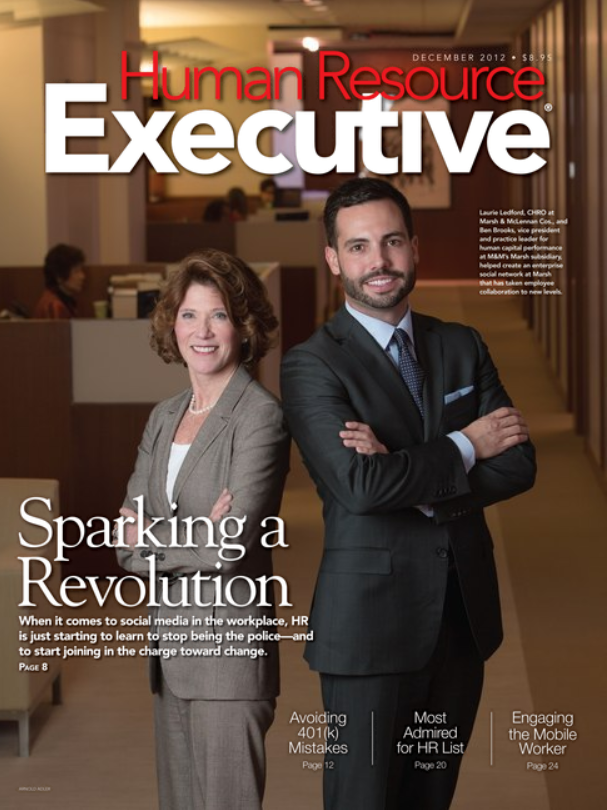
Years ago, Ben wrote that his personal mission statement was “to help people reach their full potential” and our conversation touches on this theme in many different ways. Ben is a former car rental pro turned consultant turned HR executive. His work in HR landed him on the cover of Human Resource Executive. It’s pretty cool, so I wanted to share it here:
He then decided to leave the corporate world and has been on an entrepreneurial journey for the last six years as an executive coach and startup founder. In our conversation about coaching, Ben mentioned a fact from an HBR article on coaching that I thought was fascinating.
“It’s rare that companies hire business coaches to address non-work issues (only 3% of coaches said they were hired primarily to attend to such matters), yet more than three-quarters of coaches report having gotten into personal territory at some time.”
This disparity really gets to the core of what people like Ben are about - being more human at work. Ben joked in our conversation that everyone’s real issue is with their parents. While certainly funny, this gets to a deeper point that many people are waking up that we can’t just show up as robots to work anymore. There has been a wider embrace of being our full selves at work, led by people like Ben who started the first LGBT group at his consulting firm more than 10 years ago.
Our conversation touches on a number of issues including coaching, entrepreneurship, how his relationship with work has evolves, management versus leadership and what he wants written on his tombstone. Some other topics we touch on:
- Ben’s motivation to work at Enterprise Rent-a-Car after college and what he learned
- His early entrepreneurial “ventures” starting at 12 years old
- How his mindset about work shifted as he became successful in the corporate world
- His experience hiring working with an executive coach in his late 20s
- His experience coaching and favorite exercises
- Why companies are scared of trusting their people
- Why being a manager is actually an incredible opportunity for people
- The learning and ownership upside of carving your own path
- The value of having advisors, friends of confidants to celebrate “wins”
- Balancing life & work and his personal sustainability
- Deciding to give himself a raise as an entrepreneur
Links Mentioned:
Transcript
Years ago, Ben wrote that his personal mission statement was “to help people reach their full potential” and our conversation touches on this theme in many different ways. Ben is a former car rental pro turned consultant turned HR executive.
Read the full transcript
Paul: Today I'm having a conversation with Ben Brooks, who is the founder and CEO of Pilot, a tech-based coaching platform, and he's also a business and executive coach. He was formerly a consultant, HR leader as well. And we're going to talk about people, culture, organization, coaching, and Ben's path. Welcome to the podcast, Ben.
Ben Brooks: Glad to be here, Paul.
Paul: So excited to talk to you about all that. I want to dive into your career first. And one thing that jumped out to me was you started with Enterprise Rent-A-Car. And I know a few people that have worked there, but this is actually a really interesting training program. I know it's really intense. But I know from the people that have gone through it, they pick up all these soft skills, especially in terms of sales, people management, even like crisis management, because you're basically running the show early on.
I'd love to hear what drew you to go after a program like that. Was it an accident or how'd you end up there?
Ben Brooks: Well, Andy Taylor, who— it's a family-owned company and he went to my university, the University of Denver. And so they recruited heavily and I just had heard about the sort of storied management trainee program, and a lot of people that go into pharma sales, medical device sales, get poached from Enterprise. It's sort of like a training ground in that regard. And I just, I've always liked cars, and I like fast-paced businesses, and I like business in general, so it was a really great place to learn. And Businessweek used to do a best places to launch your career list, and Enterprise is always in the top 10. And to this day, I believe they hire more college graduates than any other company in America.
And it was like you said, the things you learn are nuts. And I kind of thought of a few of them in advance of this conversation. You know, you have to be kind of a magician working there. Because as much as you think, oh, it's like with this well-oiled company, it's like the largest customer of cars, I think, in the world, right? General Motors' largest customer and a lot of other businesses. It's also super dynamic operational business.
And, you know, majority of their business is insurance replacement. You know, you total your car, you get in a fender bender, you know, But you know, you learn customer service, they were really big on satisfying customers and we had a metric and it was a 1 through 5, you know, they call customers and say, how satisfied were you with your total experience? And we got a score and it was a 1 through 4 from extremely dissatisfied to satisfied, we got zero credit. The only way you get credit was if they were extremely satisfied. And you know, and it was tough, right, because we had a very formulaic promotion, you know, whoever got promoted next was on a chart. Based upon like 20 metrics, and it was just automatic meritocracy based upon your metrics.
And, you know, there's their phrase was, you know, we'll pick you up, right? They'll go to your house and pick you up or wherever. That's for sales. So it's more like, you know, we'll sell you up is probably what I would say, because with good sales, you do discovery, you ask questions, you learn about someone, you tailor your approach based upon their needs. Well, if you go pick someone up at their house, you have a sense of probably how much money they might have. You know if they have another kind of big car or not, if they've got kids.
You find out what they're doing for the weekend. Oh, they're going to the mountains. Oh, you're taking— you're doing carpool. Oh, this is the third accident you've gotten into in the last year. Wow. Like, whatever it is, what kind of car is in the shop?
I mean, you start to learn all these things, and by the time you get back to the branch, you have a much more effective thing. Do I try to upsell them into a larger vehicle? Is there an insurance product? Is there a car sale referral? Etc., right? And so it made us much more effective, whereas if you were at an Avis or Hertz counter or Alamo or something like that, you know, you just show up and you put your credit card name and they just key it in the computer for seemingly minutes upon end and the dot matrix printer, you know, does its thing.
So it was just this really great, you know, way to learn about sales and discovery and just the agility. I mean, we'd have— I remember times where we'd have, you know, 3 people in the counter line 2 people on hold, 3 other people coming in, we had 1 car on the lot. So it was like 10 customers, 1 car. What do you do? Well, you put them in taxis, you deliver cars later, you take people to another branch. I mean, it was just this constant flexible business.
One of the most fun jobs I have ever had.
Paul: That's some sneaky sales tactics. I'm going to be a little more on guard if I use enterprise in the future. What were some of the drivers for you early in career?
Ben Brooks: Well, you know, I started working when I was 12 years old and I just always loved work. You know, I know there's a lot of people that don't like to work much. That's not me. I like working. I don't like working on just anything, but I like making money. You know, I liked having independence.
I liked feeling sort of a sense of status or autonomy or accomplishment, all of that. So, you know, I worked, I had my own lawn care business when I was like 14 and little perforated business cards on our little Epson printer at home. And I, you know, I worked for the parks department in my hometown, you know, cleaning bathrooms and preparing baseball fields and mowing lawns. And I drove a big F-350 truck every day and I was 16. I worked at the grocery store in the union and bagged groceries and helped with the greenhouse, worked at a dog kennel. I mean, I just did a bunch of different things, and I think all of those— I just, it kind of was almost like when, you know, when kids play and they're like, oh, I'm playing doctor, I'm playing house.
For me, it almost felt like playful, like I got to be this bigger person than I was based on my age, and I always got to kind of act something out, and that to me was really satisfying. And I still, I mean, I, you know, been in the workforce a long time now, and I, I still really enjoy working. And I think, again, it's the best laboratory for me to grow and to learn and to sort of realize my potential.
Paul: Did that just natural drive just to work, try new things, did that shift as you entered bigger corporations like the consulting firm? And I think you worked for a defense contractor as well. How did your mindset shift in those environments?
Ben Brooks: Yeah, it's very different when it's like I'm working my block in my suburban Colorado neighborhood in Hollywood trying to get lawn mowing jobs is very different than working for the largest defense contractor in the world on multi-billion dollar programs, you know, because the denominator was, you know, really small. So I was a big numerator, right? And then I go into like a Lockheed Martin where I'm a very small numerator against a massive denominator, right? So, you know, so my sense of importance or impact or whatever changed. And one of the things I realized over time I drove a lot of change at big companies and I worked at a big professional service, worked for the largest insurance broker in the world for a number of years. And the larger the organization, the harder it is to impact by a person by design, right?
You don't want to have JPMorgan be taken out by one person, you know, because if you could have the company be transformed and you could also have it destroyed, right, by one person. So organizations as they get larger in size are just harder to impact as an individual. So part of that is eventually what got me to be an entrepreneur. After over a decade in the corporate workforce after college, which is realizing that I did want to drive change. I didn't want to just run the machine or slightly optimize the machine. I wanted to sort of build the machine and transform the machine.
And there's just so many things that get in the way when you're at a larger organization.
Paul: Robert Leonard When did you first start to think to yourself, okay, if I want to have a little more autonomy, I probably can't make this work in a big corporation?
Ben Brooks: I, you know, it's funny, I always just thought I just need to be at a level higher.
Paul: Yeah.
Ben Brooks: I just was like, oh, I just, I just need a bigger job.
Paul: I think that was my driver too early in career, right? When we're told that once you get to this level, you'll then have control.
Ben Brooks: Totally. And I got my first vice president job and I started making six figures and then I made multiple six figures and I, you know, got an SVP job, right? And I, and what I found is like, I certainly had more autonomy, right? Budgets and I had staff staff and I had managers of managers and consulting firms working for me and all this stuff. But I still was running so much, had so much interference from different functional groups and other managers and politics and things. And so I didn't necessarily come up with the idea of being an entrepreneur.
I didn't leave the corporate America thinking I would be an entrepreneur. I just left my company needing a break after a long run there and a lot of success and some great people I worked with. I just said, let me just take a little break. And I thought, I'll work for a mid-sized company and I'll be like the head of HR instead of SVP of HR, working for the head of HR. I'll just be the top person, but a smaller company, mid-sized company. And that's the time in which I sort of stumbled into entrepreneurship.
I never desired or wanted to be— if I were to look at like old journal entries, I never wrote like, someday I'll own a business or be an entrepreneur. I always saw myself as sort of this like suit, this corporate guy. This sort of C-suite person. And I always thought kind of generally that was the game. And even my brother-in-law is an entrepreneur, my grandfather was an entrepreneur. I've got some of it in my family.
I just was like, that looks rough, you know, or that's unstable, that's anxiety-provoking, you know.
Paul: You were ignoring the genetic inevitability of your leap.
Ben Brooks: Exactly.
Paul: I talk to people in senior roles too, and I find that sometimes even the control and the rules aren't really a major issue. And sometimes it can just be these subtle norms of having to be, be like a certain type of person, talk like a certain type of person, lead in a certain way. Did you encounter any of that?
Ben Brooks: Yeah. I mean, there's certainly a level of conformity and some of it's very healthy, right? Because, you know, communities have norms and mores that help them function. But there are also, you know, when you look at generational difference, difference based on other demographics, there was some things that didn't quite sit as well for me. And I'm gay, and so that was like a thing of just like, what is it like to be a gay person in the business world? It's changed a lot in the last 10 years, I would say.
But it's certainly, there was like a level of conformity of like, don't be that, or don't talk about that. But even just being a younger person, I was always generally, you know, in the room, 5, 10, 15, sometimes I was at an offsite once with senior leadership and I think the youngest person, I was the youngest and the second youngest person was I think like 17 years older than me. And that was the young person, the spring chick. And so there was always this sort of generational difference in how I saw things and viewed the world. And I'm this, I'm a, you know, I'm a millennial, I'm on the older side of millennials, but I'm a millennial and I would bring that, you know, and then that was at a time when probably there was even more demonization of millennials and of social media and all these things people are starting to kind of come to appreciate and accept now.
We were earlier in the curve. And so it was a lot of like, oh, it's a young whippersnapper and this, you know, or, or, you know, you don't get it. You don't have perspective. You don't understand how things work. And some of that was true, right? I didn't have as much experience or perspective, but oftentimes I wasn't wrong.
I just was seeing the world kind of looking forward and they were looking at the world backwards, right? They're looking in the rearview mirror and I sort of looking out the windshield and it was just a different perspective.
Paul: Yeah, it's a good way to think about it. It's just about those diverse perspectives that I often found I'd be talking about technology and why don't we go more direct to clients? And what I realized reflecting back is I was just making people feel uncomfortable, right? They were nearing the end of their career and they really rationally don't want to do these things. I wouldn't either if I was close to the end of my career. But yeah, the age thing is interesting.
I encountered a bit of that too. I had somebody tell me, we want to bring you to this meeting and I know you're over 30, but you actually look too young. I was like, yeah, but in the long run, I'm totally fine with looking young.
Ben Brooks: Exactly. That's one of those things that it's like a short-term pain for long-term gain, you know? But I mean, I remember just even dressing up differently. I mean, I, when I started, It wasn't overly intentional to grow a beard, but one day I slept in, the next day I had a hangover, the next day I had a beard. All of a sudden I looked like 5 years older. Then all of a sudden because I have a pretty nice full beard, all these guys, "How do you get such a thing?
Do you have different colors? What do you do?" All these guys were talking to me about all this beard curiosity and envy. Guys that would never talk to me about a personal matter ever would come up and whisper in my ear about my beard. I'm going to look at it. And, you know, and your point about generational difference too, just like, you know, millennials can be typecast a certain way. I'd also find sometimes I find people that were later in their career about to retire.
And some people, to your point, want to sort of ride it out or keep it stable. I also met people that were like, you know what, this is my last chance to make an impact. I want to go out swinging. And so some of the biggest advocates for change I found were people with 2 or 3 years left in their career in their late 50s, early 60s. And they actually were like, you know what, I've seen a lot of stuff. None of this crap that we've been doing works.
Let's try something different. I'm open-minded. And so we used a lot of social media internally at our firm globally. We're on the kind of bleeding edge. We actually found some of our biggest adopters were people that were like very late in their career, which again, you know, we didn't sort of discount them in that regard. We sort of just created a level playing field and saw who showed up and that's who showed up.
Paul: That might be a good way to transition to talking a little bit about coaching. So I'd love to hear, have you coached clients like that that are near their end of the career? Or maybe even a better question is, who are some of the favorite people you've learned from and enjoy working with?
Ben Brooks: I love all my clients. If you're listening, clients, I love all of you equally. I benefited, so I had an executive coach in my late 20s. And the median cost of an executive coach in America is about $500 an hour, and typically, one's working with large companies, it's more than that. So, it's extremely atypical to have a coach. And I had a guy, Norman was his name, and a wonderful guy, and he was in his mid-60s.
He had won multiple Grammys and was in the music industry for a long time and had a PhD in psychology, and he really cracked my knuckles. My first experience really with coaching was being a coachee, not a coach. And that's where I kind of fell in love with the process, is multiple years of sort of, you know, him cracking my knuckles and holding me to account and also being a confidant and support and advisor. And, you know, when I, when I started being a coach about 6 and a half years ago, you know, the joke I tell is, you know, people have been asking me for advice since I was 12 and I finally started charging about 6 years ago. Um, and so, you know, I had always been someone who who's sought after for advice and counsel and support in a lot of different ways, and often by people, again, much older than me.
And it just felt so natural to be able to kind of have the connection and the impact and the intimacy and to navigate things in less of a formulaic way, right? Because sort of life— humans are irrational, emotive creatures, and problems and the landscape is dynamic and changing and shifting. Coaching to me is a very stimulating thing because I'm not a conveyor belt coach that always uses the same, you know, 6-part process with every client. It's very bespoke based upon their needs, which makes it really fun. And I think to your point of the kinds of profiles of people that I like to work with, I like to work with coachable people. And coachable doesn't mean do as I say, it means strongly consider what I say, right?
And, and, uh, which, which includes like, I'm not giving you the answer, I'm asking you the question. I'm giving you assignments so you can go learn and experiment and get data and grow. And so when I see clients have transformative change where their business or their relationships or who they are for themselves is completely different than when we started working together, I know that I'm part of the cause of that. You know, they did the work, but I was in the background. And that to me is way more satisfying than getting a 7% improvement on some KPI on a slide. At a corporate review.
Paul: Clients often come to coaches and they'll typically tell you, I need help with X, right? And typically that is not the real issue. There's often deeper stuff people are holding back on sharing that they're really deeply excited about, or other issues that are kind of holding them back. What are some of the surprising issues behind the issues that you've discovered through your work?
Ben Brooks: Well, it's mostly about their mother. I mean, kidding and not kidding, right? It is, you know, childhood.
Paul: Parents is a big thing for a lot of people.
Ben Brooks: Oh my gosh. And even if you had great parents, you know, not just if your dad was a drunk or your mom was absent or whatever, but, you know, I've been sort of surprised. I mean, Harvard Business School had an article I published a number of years ago, What Can Coaches Do for You? And they'd done a bunch of research. And they found that something like, for executive coaching in particular, about 3% of people when they went to work with an executive coach expected to speak about sort of personal matters, and almost 80% ended up dealing with personal matters through executive coaching. So it's sort of a bit of a not-discussed phenomenon within executive coaching that a lot of personal stuff comes up because companies in particular, they're paying for it.
This is about work and you're going to be a better manager and leader and your competencies. And that's fine. But, you know, so it's— so the outcome isn't any different, but the access often is. So what can get in the way isn't someone's necessarily their, their charisma, right, or their sense of organization or purpose. It can be all sorts of— it can be their inadequacy, right, or insecurity, or their dyslexia, right, or their addiction, or whatever the thing may be. And so it's often not a straight A to B connection between sort of what's happening.
And again, to your point, a little root cause analysis, you start to say, oh, well, you know, you're coming to me to work on increasing your stature in the industry, and that's what you want to work on through coaching. Well, tell me about your stature in the industry. And then you get into, oh, it's actually not about that at all. It's actually that they don't know what satisfaction looks like for themselves. And so they've basically used some sort of like notoriety in an industry as a proxy for success, which they think will prove to themselves that they're satisfied. And the real challenge is they have no goddamn idea what would make them satisfied.
And that's really the work.
Paul: Do you have any favorite exercises you do with clients that help people make mindset shifts?
Ben Brooks: I mean, I like, uh, you know, one-person trust falls. I'm like, I gotcha, I gotcha. You know, um, you know, I think that it's a, there's a ton of different techniques and things that coaches develop and use over time. A big one is sort of open inquiry and sort of probing. And, you know, they'll say, well, you know, I'm just not into small talk. I'm just not good at that.
And I'm like, okay, well, tell me more about that. Or what do you know about that? Or what does small talk mean to you? And you just start to frame, and it's almost like if you had a you're taking a, like a, you know, like a 3D picture of someone, right, kind of going around them, you're helping for themselves to see the whole thing. And so I think it's, it's about slowing down and not like, I don't know where we're going with it. And I think that's part of the thing that a good coach has the confidence to not necessarily know the answer.
You're not necessarily leading a horse to water, right? Sometimes you are, sometimes you lead a horse to water, you have to shoot it, you know, but you know, it's a bit, you know, but in, but this is more about saying, hey, Let's be curious together and explore. I don't know what we're going to find, but I'm pretty confident from an intuition perspective, sort of where there's smoke, there's fire. So let's dig here. But then in real time and kind of with some agility, see what we pick up and see what we pull up and then go from there. And that to me is what makes it stimulating.
Some people will specialize and say, I work with this kind of person in this industry or only this level or this sort of problem set. And for me, that's a little like sort of molded consulting, right? Just fill in the client in the mold and you know, freeze it or bake it and turn it out. That to me is very boring. I get why you get efficiencies with that and why it's profitable, but it's not necessarily interesting or meaningful for me. And I like the fact that there's a unique intellectual puzzle that is almost never solved.
It's like we're always in the process of solving it together. And you know, it's— but when you get to kind of the top of that one mountain, there's another mountain beyond that.
Paul: Yeah. I think at its best, coaching is really stepping into the unknown and having people that can help you navigate that process. I think sometimes people just want clear answers. I pretty much say, no, I'm not going to work with you if that's the kind of work you want to be doing. So I love that, that you're just willing to go and not really know where you're going to be, but know that you're going to be thinking deeply about how to help that person once you find out where that is.
Ben Brooks: Yeah. And to know too, some people say, well, I just want a plan. You know, I just, you know, Ben, I just need a session and then I need to give you a plan. I'll just work the plan. I don't need anything else, right? And—
Paul: Right, predicting the future, you can't do that yet?
Ben Brooks: Yeah, exactly. We're working on an algorithm for that, right? It'll be $100,000, and we're gonna put a red stamp on your forehead that says idiot. It's the, going to a personal trainer, right? And you're 150 pounds overweight, right? And you just say, I just need a good workout.
Well, you need more than that if you're 150 pounds overweight, right? Or maybe even you're in good shape and you want to just become more athletic, right? Or train for a marathon or something. And that's where if I sense that people aren't willing to do the work, and again, where they're sort of hasty or impatient, that's the whole thing. Like how they show up for coaching is how they show up in life. And I'm like, oh, well, they're probably hasty and impatient with everything in life, which is all of their struggles probably is about this one thing.
And so sometimes the breakthrough is, hey, we're going to get you into a structured program where we're going to work on a weekly basis for 4 or 8 months together, and you're going to commit to that, which again, they may explode. Load to try to work through whatever that takes to get there. But by doing that, they're already sort of succumbing to the fact that, oh, there's like a different way of working, which isn't always be impatient and come up with the answer in 20 minutes.
Paul: In your own coaching experience, when you worked with a coach, were there any things unlocked for you?
Ben Brooks: Oh, a million things. I still work with a coach. I think good coaches should have coaches. I worked with executive coach, I've worked with some business coaches. I see a therapist and a psychologist and, you know, I meditate on a daily basis. And so again, that puzzle that's never solved, I'm still solving my own puzzle, still figuring all sorts of things out for myself, but I don't see anytime soon running out of things to figure out.
I think there was a variety of things that I would start to understand my motivations for doing things. Oh, I'm doing this because It's, you know, I'm trying to have control over something, or I think my survival's at stake, or I'm doing this because it's a way that I manipulate people. Or I start to understand why I would do things that I would do. And I would also sort of, you know, get the, the, the, the challenge, right? Because, you know, I'm an articulate person, I'm a fast-talking person, I'm a bright person. So it'd be easy for certain people to say, oh, that sounds great.
Whereas a good coach is like, hold on a second. You did what? You said, wait, you said that? You know, like, why is that your role? Why did you pick up that mess? Wait, you're— is that— and then again, sometimes coaches will provoke, you know, so it's somebody that advises me and they'll talk about taking scraps.
They're like, oh, it sounds like you're taking scraps like a rat, you know, and they'll— and, you know, and again, I'll be like, you know, and it's a whole thing, but it gets to and probes on something where we can dig into it and go, oh, that's me. Sort of, you know, feeling inadequate or, you know, something else. And again, that's the sort of challenging nature. And that's why coaching is not a good idea for a lot of people, because unless you're willing, you know, again, in a one-on-one intensive sort of coaching manner, it sort of sounds great, but it's not, it's not taking vitamins. That's a different thing, right? That's, that's maybe microlearning or content feed or something, you know, this, this is really being challenged.
Paul: I love that. So I'd love to move over to just organizations, culture, performance. You worked as a senior executive in HR, and I'm sure you've seen a lot. I think I've had similar experience, and I think I was just shocked at seeing so many organizations trying the same things that clearly didn't work. You have this framing in a video or speech you gave where you compared a lot of the things managers do to bad parenting. Absence, bribes, distractions, control.
I love that framing because, I mean, every parent knows, right? You have to let your kid make mistakes. You hear that from every parent and every parent— I mean, kids are around long enough, they're going to make mistakes no matter what. Why are we so afraid of mistakes in the corporate world?
Ben Brooks: Well, I mean, you know, depending on the larger corporation, people want predictability. The stock starts at the stock market. If you miss your earnings per share by more than a little bit, you get really punished. Corporations are designed to be highly predictable, and it starts with their capitalization and ownership, and it trickles down. Surprises are not good. Now, tech firms have historically embraced more learning and experimentation, and that's why they often move much faster or can be much more progressive.
But if you've got a good thing going, and you're in the insurance industry, where it's an industry that's a percentage of GDP, there's very few industries that are a percentage of the gross domestic product, and you have 20%+ margins, and in good times and bad, you just mint money, the game there is called don't screw it up. Right. And, you know, and again, ride it as long as you can before it either disappears or gets disrupted, which is probably a lot further down the road than, than people may think. Right. And so what I saw in terms of, you know, the paternalistic model of employment is if you look at kind of a 50-year view of work and you talk about the future of work, I think before you talk about the future, we have to look about the kind of history of the past work. Right.
So, you know, 50-plus years ago, you know, companies gave you tooling, vehicles, housing, uniforms, food, pensions, you know, education. They paid for training in college and everything. I mean, it was a pretty— that you took care of the person. There were company towns, you know. And here we are in 2019, and you bring your own device from work to work, you know, that you paid for yourself. You work from home on your own internet connection or use some of your own software.
And you save for your own retirement and you pay for your own online classes or, you know, your education is largely your own. So we've moved to a much more sort of like unbundled DIY experience. But that's from the finance perspective. That's from the sort of like obligations and entitlements and budgetary. But our paradigms are well behind that. Our paradigms are still in a bit of this control, you know, command and control.
Paternalistic model. And again, if you dummy-proof work, you're only going to attract dummies. Reed Hastings talked about that before he founded Netflix. His last company only attracted dummies because they dummy-proofed it. And so I look at the future of work is much more self-directed. It's much more dynamic.
It's moving much faster. Flexibility isn't just an employee benefit, but it's a necessary condition for competitiveness. And agility, right? And so you need employees that are not just waiting for mother may I, you know, you need employees that are truly peers that are sort of helping to co-create and everyone takes up their adult-like role. And people will be as small as you hold them, right? If you expect someone, you know, if the expectations are low, right?
And they did a bunch of research in college classrooms about what drove academic performance. And they looked at the faculty-student ratio and the size of the class and does the person have a PhD in the subject and with their tests versus team projects and essays and all this stuff, like the only thing, number one sort of like R-squared, like highest correlated driver was the teacher's expectation of the students. And, you know, one of the big problems with work is we have low expectations of people, and so low that we only measure them once a year. We only measure them, you know, qualitatively in some like BS system or whatever else versus again, a more continual rigorous thing.
And I can tell you, you know, if you, if you were going to go, you know, build a beach house in the Hamptons and you were hiring an architect or construction firm or interior designer, you wouldn't just look at it once a year as you're building it, right? You'd be in sync all the time, seeing how it's going, giving feedback, approving things, etc. You'd be pretty hands-on. But for some reason, we'll invest way more resource than that into a team of people, and then we just sort of assume that it's just like happening, or they're following a handbook or some policies, or or a system, and we're not necessarily having them really again show up as true sort of adult peers kind of co-creating and solving problems.
Paul: That definitely resonates. I think when I reflect back to one of the best organizations I worked in, it's high expectations and it terrified me stepping into that environment. But when I made mistakes, like immediately and often, no one really said anything. They just kept pushing me to like keep improving and like say, giving me feedback and help and support. And it was so different than past environments. It's, but it's such a simple idea, right?
I think it is hard to shift some organizations that don't have that culture of high performance. And I think it can be doubly hard if you're not growing, right? I think if you continue to grow, you can continue to keep the high performance. But once you've hit a plateau or something, I think that's where people settle in.
Ben Brooks: Yeah. And growth sometimes masks a lot of lack of performance and low expectation because growth cures and covers up a lot. So part of when the music stops, when they plateau, is it actually just exposes lagging problems that have been around for a long time. But when you have 20% year-over-year growth or something like that or more, you just sort of don't notice those things or you focus on the right sort of metrics and things. And so, you know, when it comes to high expectations, I remember in management consulting, I worked for, you know, top firm and it was— I mean, I remember my first like week, I went to my hotel room and just cried. Like I just— it was so— and I, you know, come from, you know, engineering and Lockheed Martin.
It wasn't exactly like I was working at, you know, some Wall Street kind of place. And I remember I worked on this slide for like I don't know, a day. And like, and they had, you know, our slides were, you know, 6-point font and super intricate. They were like pieces of art, right? All this. I mean, I became basically a graphic designer in PowerPoint and I had it.
And I remember the partner had this like pen or Sharpie and like looked at it and was like, hmm, and sort of did this line from the lower left corner to the upper right and kind of did a loop in the middle to basically like be like, redo it. And then flip the slide over and started hand drawing. What he wanted me to do. And I was like, you know, like I'd worked on that for, you know, like, you know, all day, right? And again, in that paternalistic sort of model, I was like, ta-da, mom and dad, look at me, give me a gold star, right? And it was not at all what the partner wanted.
Now I learned more and more, like maybe I should actually sketch it out by hand just like he did and say, is this what you want? But it took me wasting half a day and then having to stay up through the night to redo the deck to sort of learn those things. And I think part of the thing is sometimes we don't want to give tough feedback, or we don't want to, you know, you know, again, from a relational perspective, I think there's a lot of folks that just want to be sort of collegial and friendly. And ultimately, the definition of management is the achievement of results through others. And so I think that, you know, I look at like changing organizations, I don't know if you can, right? I think you can change people.
I think you can change individuals because organizations are just a network of people, a network of conversations. And so I look at it more as like what people— because people are movable, right? And then the organization is just a lagging indicator of the degree to which the people have been moved or transformed.
Paul: Right. Yeah, I love that. I find the people who go really deep in their own experience and just reading about organizational change pretty much end up in that point.
Ben Brooks: Mm-hmm.
Paul: But then it leaves all the people still working on organizational change convinced that you can change an organization. So still, still some room to go there.
Ben Brooks: Oh, and it's amazing. People will be like, you know, we should change the culture around here. You know, we needed to—
Paul: and there's this like we or them or something, but I don't know who they're talking about.
Ben Brooks: Yeah. And I'm like, well, but we're all in a room right now. What are we like? You know, it's like, it's like meetings always start late here. And it's like, well, this meeting started late. Why don't we start this meeting on time.
You know, there's a, there's a kind of a lack of integrity from leading by example, kind of feel, and, you know, using a fairly low-grade definition of integrity, of the alignment of your values and your behavior, right? So we'll say we want it this way, but I'm not doing it this way, but we should do it this way. And I'm sort of like, well, cut the shit. How about you start doing it in your little corner, right? And, and really own that. And again, the idea of this sort of like top-down cascaded— I mean, I talked to a Fortune 50 company last week in a senior executive and it's just this multi— they're using a top consulting firm and they're trying to do this change in this multi-year, multi-tiered sort of rollout and these events and these summits.
And I'm thinking to myself, and my challenge was to the person, I said, why are you going so slow? You know, and you've got all these people that are engaged, but they have to just wait until they're kind of spoon-fed down the hierarchy, you know. And again, that's a classic sort of, you know, change framework or model. And I, and again, you know, people don't often trust their employees or think that they have good people. And that is like not about change. That's about talent quality and controls and oversight and transparency and a bunch of other things.
And I'm like, okay. And we, I mean, we used to do it with social media when I was at Intuit. And they said, you know, I remember we had a senior HR leader scream at me in a meeting, you know, you're handing them a loaded gun. And I'm thinking, okay, like someone get this guy some meds, right? Because there's no guns, you know, even in our Texas offices, No guns were allowed, you know, there's no loaded gun. It was an internal social media platform that was attributed to the individual with single sign-on.
It was completely traceable and we had policies around inappropriate conduct or use of company assets or harassment. Like, are people really on an internal social platform gonna like, you know, put up, you know, nudie pictures, horrible things or whatever? Like, we had literally zero instances, zero, with 25,000 people over multiple years. Zero instances of that because of a bunch of design choices we made. But it was like, we shouldn't do this because we think we have a few bad apples. I'm like, I actually think we have a company full of great people, and if we have bad apples, let's turn this on as a magnet and pull the bad apples up and like identify them so we can get them out of here rather than have to be kind of latent and secret.
Let's use this as a hygiene mechanism, right?
Paul: Well, yeah, and that comes down to one thing, right? What she is saying is, I don't want to trust people. Right? And once you run a company around trust, it's scary for people that haven't trusted people for a long time. And it's interesting, we never really teach people how to trust others, especially in the workforce. Yep.
I mean, our education system, we do a lot of stuff individuals, you can kind of get by without having to rely on others, but such a central element.
Ben Brooks: Well, and, you know, how do you establish trust? How do you restore trust? How do you, you know, forgive? How do you apologize? You know, these are some things that, again, people were scorned 3 companies ago, right? And then, but then as a result, when they're hiring, they're not hiring for people they can trust, they're hiring for people they can control.
And so then, of course, you're like, well, we can't trust these people. Well, yeah, you didn't hire people you can trust, you hire people you can control. So it's this self-exacerbating sort of death spiral of toxicity, and it creates a crappy place to work because then employees in a survey will say, "Well, I'm micromanaged. My manager doesn't trust me." And the manager's like, "Well, I can't trust them." And it's just a game of chicken and it sucks.
Paul: You quoted Clay Christensen in one of your talks, and this is also a book that was a big shift for me. There's one quote where he talks about, "If you want to help people, be a manager." And his reasoning behind this is this is essentially what we've been talking about, right? You have the direct possibility of engaging and transforming an individual and the team around you. How has that book, if it has, shaped your mindset or maybe even other books that have been more profound?
Ben Brooks: Yeah. I mean, Clay is a storied Harvard Business school professor and one of the fathers of innovation frameworks and research and an author, right? And he wrote this book, How Will You Measure Your Life? And it was a result of him having terminal cancer and evaluating sort of the KPIs and metrics and criteria upon which did he have a good life or not on his deathbed. Well, of course, he lives and then turns it into a speech and then a lecture and then a class. And it was the most requested class at HBS.
And then he talks in his book, he finally put it into a book about, you know, one of the most noble things you can do is be a good supervisor, a good manager. And just last week I led a group of people and we talked, I said, you know, would you rather be a manager or a leader? And there are about 35 people in the room. 2 people raised their hand for manager, the rest leader. And about a year ago I led another group and I had them, I said, draw a picture of management, draw a picture of leadership. And management was like this bureau desk and control, you know, handing out things and barking orders.
And then leadership was this like, you know, charisma and impact and all these things. And I think what gets so misunderstood is, is management is a, is a required element of leadership and leadership is a required element of management and they, they play well together. And leadership people confuse with authority, like a senior position. That's called being an executive. That's not being a leader because we all know plenty of people that have executive roles that are not leaders.
Paul: Right.
Ben Brooks: And so to distinguish that is key. And I think the noble element that Clay speaks to in that passage in that book is this idea that you actually, actually really, really impact someone. If someone has a great manager, their spouse and friends know about it, right? They, they, they, you know, my friend Michael once described a manager as a gem cutter. You know, they're someone shaping you, right? They can be someone that, you know, gives you amazing feedback and supports you and challenges you and encourages you.
They can be very different from you. And conversely, if you have a bad manager, they can make your life hell, right? And it's not even because they're maybe jerks. It could just be incompetent, checked out, lazy, whatever. And so you have such a high multiplier effect on someone's total quality of life in this way that is not celebrated. Inside of big companies.
No one says, hey, you're, you're a people supervisor. You could really screw someone's life up or make it amazing. What do you want to do? That's never a conversation that's had. It's always like, well, let's get them to use the goal setting thing and let's make sure everyone does their compliance training and all this stuff, which is fine. But you know, when you think about if you supervise 3 people and that's one person, you can have a huge impact on their life.
And I think great managers— I've had some bad managers, I've had some fantastic. Fortunately, I had a lot of great managers, people sometimes from very different walks of life. We didn't agree on politics. We had different— from different parts of the country or world. But that was also part of the fun of getting to know each other and working with people that were different from me and then learning from me and me learning from them, them challenging me. Flipping that slide over and drawing that line through it was devastating.
You know, and I had, I mean, dozens of moments like that in consulting. Sort of devastating moments that slowly sort of broke me down, and then because they were great managers, built me back up into a much better version of myself. And now I have a set of, you know, lifelong, you know, top-tier consulting skills that I can go into any situation, right? And I am just, you know, 3 steps ahead of a lot of people, and not because I necessarily have the answer, but I have frameworks and distinctions and tools to help organize the work, to help frame the problem, to help test the logic and use the data and all these things.
And so I just think that, you know, for people listening out there, you know, you may think you need to be in a C-suite role or own a company or whatever, but you know, if you're a team lead, you don't even have to have the direct— you can be a dotted line manager in a matrix. You can be leading a project, you can be leading a rollout. You can have a big impact on someone's life. You can have that person feel accomplished. You can have that person feel satisfied, like they made an impact. You can have them really grow.
Take a high performer, challenge them more, give them more work, give them more feedback, raise the bar. They think that they're a 9 out of 10, tell them the scale's at a 20. And all of that, again, right manager at the right time can really change a person. And good talent management organizations consider, is someone just under the wrong manager? Are they the right person, wrong manager? And they'll move someone around to test them and say, oh, well, let's see, they're under Paul now, and if they went under Sarah, would that be different?
Paul: I love that. So it becomes very obvious that you deeply believe in people and their abilities through that question. Where does that come from?
Ben Brooks: I mean, there was some Einstein quote, which is like, one of the most fundamental choices you ever make in life is to decide whether the world is like an optimistic place or sort of a scary place. Should you be excited and have an upside about it, or should you fear it? I'm definitely the former. I just believe in the goodness of people. The ingenuity of humankind is unbelievable. We'll look at an iPhone and go, isn't this incredible?
But that's created by people. The materials and the software and the ingenuity and the category killer of all these different things coming together. If you look at all sorts of great breakthroughs, and they don't have to be scientific or technological, they can be in all sorts of other realms. It always is from people. Reid Hoffman in The Startup of You talks about people always look for opportunities. Opportunities are like a red balloon on a red string tied to a wrist.
Wrists are people. You need to look for a person, not an opportunity. And so I just really look, you know, at people as the access to sort of everything. And I think it's just sort of fundamentally, we kind of go against— you took all social scientists around people, psychologists and behavior folks and learning and law enforcement and education and everyone, and you were like, well, how do you get the best out of people? And you were to design a new model, it would not look at all like our typical workforce, would not look at all like work is, because we're not doing it in ways that get the best out of people for a lot of different good legacy sort of reasons. But, but if we did, and we're starting to move towards again in that future of work, optimizing and leaning into the human condition rather than sort of resisting the human condition.
And so that's where I think, you know, when I look at my life's work, I mean, I put my life savings into starting a tech startup that would Our mission of the company is to help people feel powerful at work. Most people don't feel powerful at work, and powerful looks like a lot of different things. It's not force, but from an inside-out sort of sense of empowerment. That's sort of where we come from. And, you know, it's like when I gave a talk recently about employee experience, I said, stop designing the employee experience, start empowering it. Have people figure out their own experience, because what Paul wants versus what Ben wants at the same company are different things, and you're never going to get it top-down.
So let them figure out what a great experience is and figure that out for themselves.
Paul: So you've bet on yourself, as you were just talking about, going out and forming your own startup, Pilot. You're working as an independent coach. What has that shift been like?
Ben Brooks: Awesome, scary, hard, tedious, unexpected, delightful. I mean, a whole mix of things. It'd be sort of like if I took everything out of my fridge and threw it in a blender. You know, and it probably tastes the same, you know, like not always the best sort of combinations. But, you know, for me, I never thought I'd be an entrepreneur or necessarily aspired to be. My stage one of that was become a coach, and I built a coaching practice, and I had a, you know, I thought I was gonna be maybe homeless or something, and here I was at the sold-out practice with top-tier clients within about a year, year and a half.
But that's where I was like, well, you know, given the cost of coaching, only about 2% of people ever get an executive coach. And so I thought, how do we democratize this? How do we get this to more people earlier in their careers from diverse backgrounds and basically tell people the secret? You know, I don't know if you ever watched that movie a long time ago, The Secret, about kind of positive thinking and affirmation. Kind of the secret to work and to careers I always found is just figure it out, right? That's like the ultimate, you know, like be responsible no matter what it is.
You're not getting feedback, figure that out, right? You want to know what's next? Figure that out. You know, you're bored, figure that out. You know, whatever it is. And realizing that HR or your manager is not there to save you.
Getting back to that paternalistic model, they're not your parent. The employee looks at them as the parent as well. That's part of the problem. So to realize like, no, like take care of it yourself, be self-directed in that regard. And so, you know, I put my savings into the software to really help instill and create structure rather than just write a book about it per se. Books are great and I'd like to write a book, but to really instill on a weekly basis that sort of same cadence and drumbeat.
I will tell you that it's taken a lot more effort and time than I expected. We're in a completely different direction in terms of the method, and they, you know, good advice to entrepreneurs is always fall in love with the problem, not your solution, because your solution to the problem is almost never right because your customers or the market will give you a lot of feedback and it evolves. So the problem I fell in love with is still the same problem, which is people being empowered at work and having great careers and growing and learning, being the best versions of themselves, realizing their full potential. But the solution now being a weekly employee enterprise software coaching product is not at all where we started. But the problem is still the same.
And so having this sort of humility, the agility to overcome shame, to, you know, and again, also to distinguish sort of pressure versus stress, distinguish anxiety versus excitement. All sorts of things that the hardest thing in the entire journey has been managing this one commodity that is extremely difficult to mold, which is myself. People think it'll be cash flow, but it's actually like my own emotions, my own thought, my own patience, my own desires. That's been the number one hardest part of it.
Paul: Yeah. How has your relationship to work changed as you've taken the sleep?
Ben Brooks: Oh my gosh. It's sort of unrecognizable. I'm going into my old consulting firm on Friday to give a talk and it's LGBT Pride Month, and I helped found the LGBT group about almost 12 years ago. And now there's like, it's like completely transformed, you know, sort of almost anti-gay environment back then. And now it's like, you know, rainbow city, you know, and I'm like the old gay dad or something coming in to explain what things used to be like in yesteryear. But, you know, so I've been thinking this week in a lot of contrast and perspective, right?
And, you know, I think so much of my time at work, and a lot of studies show that there's only about 2 to 3 hours max of productive work done in an 8 to 10 hour shift. Most work time spent at work, there's nothing productive that happens. And I think that's what I found in the corporate world despite my work ethic, right? I would, I would stay and work till 10 o'clock or midnight because I could get work done after 6 o'clock, right? And in between was just run interference and email and bullshit and meetings and, you convincing people of the obvious and all sorts of different things. And so the different thing is, is I described it to a friend.
I said, it's like I took all my problems that I had when I was in corporate and I put them in a big box and I handed them in. And then life handed me a different problem. Like, oh, here's a new box of problems, right? And it's like belief in myself and it's cash flow and it's consistency and it's structure and it's, you know, overwhelm. And those are not issues I used to have to deal with before, but I think my, my confidence in myself is is much greater than it was in the corporate world. And I don't have a big brand behind me.
I don't have a, you know, although I'm the CEO of my company, that's a nice title. I don't have like sort of an anointed title given by others and recognized by others within a certain strata. And I don't have the, one of the most addictive things in the world, which is a biweekly, bimonthly paycheck. Right.
Paul: Right.
Ben Brooks: You know, and so, so that has been sort of a roller coaster to ride and, you know, thing to figure out. But, but now I also sort of just go into environments and places and I just have this kind of like, there's something we can do about it attitude. And I also am always coming up with like low-cost, quick, clever solutions, not the sort of build the Taj Mahal. And I think that's the sort of scrappy, cash-flow-centric entrepreneur that I've become. I really eschew sort of the hard-to-do, high-impact solutions, and I really focus on easier-to-do, high-impact solutions in that quadrant. Because I'm just always like, let's go and get— we can always go to the more elegant solution later, but let's get on base.
Let's get some points and let's learn and get some momentum and belief, which I've never regretted taking that approach ever on literally anything, because it doesn't mean you can't do the other. In fact, you're already on the road to the, to the, you know, to the hard-high sort of, you know, quadrant by doing the sort of easier-to-do, high-impact, you know, solution, whatever that might be.
Paul: Those two things, like taking ownership and learning, have been such a big shift for me too. And I look back and I was just bullshitting myself and thinking I actually had responsibility and was pushing my learning as far as I could.
Ben Brooks: Oh yeah.
Paul: Because what I've found is now I just have to— I can't pretend I'm learning anymore, right? For like a performance review, I need to actually learn something so that I can actually do And I just find that so rewarding because it's hard and it's frustrating, right? So it is those self-issues, that self-confidence you're managing a lot more, but it's just so much more rewarding. Are you finding similar?
Ben Brooks: Yeah, it's, it's different because the scoreboard is sort of a very private one. And, you know, when I got my SVP promotion or when I was this, I mean, or, you know, speaking at conferences or whatever it may be. I mean, yeah, I learned HR pretty quickly. I got into HR, didn't know anything about it, and all of a sudden I learned it. And then I'm a rising star in the field, and then I'm on the COVID of HR Executive magazine like 3 years into the field. And, you know, and, and I sort of like felt like I learned it.
The learning here is a little different. I don't get the validation or recognition. One of the hardest things for entrepreneurs is the lack of validation, um, because it's a human thing that we crave and we want. And so Two main ways that people manage that is raising capital, and they confuse raising capital with business success. That's just like running up a bunch of debt, basically, which is something you could— and most of the time when you raise capital, that's low probabilistic odds of success, and it only indicates your ability to raise capital, not that you have a good business or a good product. It means none of those things.
It means you know how to fundraise. The other thing is press and media. I know a lot of people who will speak at it. You know, they'll fly to some random country to talk, you know, to an audience that has nothing to do with their industry or business or that won't be customers or whatever and use their time for that or do interviews with anyone anytime because it feels like it's success. It feels validating. Right.
And so, you know what, I, you know, I'm a very, you know, I'm a self-funded business. I own 100% of my company. And so I'm, you know, my metric is cash flow. Right? Did we bring in money? Right?
And do we— and our working capital, you know, we're getting paid in advance on things and we can produce them later at lower cost. And so it's been very different in that sense of what does learning look like and what do I learn? You know, sometimes I learn about things that, you know, in the corporate world, often things that I wanted to. It was like, hmm, what would be good to learn this quarter? You know? And now I'm like in the bowels of cyber insurance security underwriting to understand if we can get higher aggregate policy limits so I can negotiate contracts related to our software as a service agreement differently.
By the way, none of that stuff I ever want to do anything with, or like, I have no desire to know any of that, but I know a lot about it now. I'm learning more, and there's probably much more to know than I know, but I'm always having to learn things that are sort of like necessary, but they're not necessarily always enriching. So I've had to find some things in my outside life, on my travels, what I consume or watch media-wise, you know, the work I do with others, or like, you know, I took improv classes, or I'm considering taking actually stand-up comedy lessons and some other things like that that are less practical in nature, but that feed that sort of like enrichment in learning that I used to take as almost like a hobby or luxury.
And now the learning that I'm, you know, it's like, oh, a product development framework and loop and, you know, feature prioritization and stuff around engineering. I mean, gosh, like Sales. And I mean, there's, you know, sales is so, you know, structured and formulaic, but I'm like on a steep learning curve around sales. And I sold things my whole career in life, but it's like I'm like starting over, you know? So that's been a difficult thing. And then when I manifest competency in something, it doesn't always result in external validation or something that I can prove.
It's just this internal thing. So it's, that's the funny thing is I just, it's like I keep getting merit badges, but like the sash is like in my brain.
Paul: I love that.
Ben Brooks: Eagle Scout here, so, you know, I'm a merit badge guy, you know.
Paul: Are there other things you do, like small things, to celebrate wins, to get that appreciation? Because I know that's just such a consistent challenge with so many solopreneurs.
Ben Brooks: Totally. I think, you know, having a good advisor or coach or confidant, um, you know, I remember for one of my coaching clients, he took a picture of the ATM receipt and they had just had a, you know, you know, 7-figure wire transfer based on a transaction they had done, you know, and he's not gonna put that on Instagram, you know, but like, but could share with me, you know, or sometimes it was like, hey, we just terminated this person and that was really scary. And, uh, you know, I was afraid to do it or whatever it is. I think a confidant, I think, is a key thing. It could be a spouse, right? It could be something else like that.
Um, but I think, you know, Centering yourself, I think, you know, you know, underrated skills is a thing that we had to kind of toy around with. And emotional intelligence and self-knowledge are kind of the two that I talk about a lot. And the emotional intelligence is sort of like when you think about dealing with others, it's the non-content related, right? It's, it's the pipe, not the fluid in the pipe, right, between two people or the conduit, you know. And, and then I think self-knowledge about what are your triggers, what are your buttons, what are your things. And I, you know, sometimes it's as simple as like, you know, you know, me just, you know, I had a good day yesterday and I went to meditation workshop and I didn't come home and work.
Instead, I went and, you know, made myself like a berry salad and I watched Big Little Lies, you know, season 2 and, you know, did my thing, you know. And so sometimes it's take care of myself and do some often little things, right? So I think one of the other things entrepreneurs expect is that others are going to sort of take care of them. And one of these things is you take care of everything in your damn business and the last thing you think about is taking care of yourself. But you gotta make it to the dentist. You gotta get your physical done.
If you, you know, like you gotta get to your psychologist. I, you know, I start, you know, I, you know, I work out with a personal trainer and just, you know, I know how to lift weights, but having the structure holds me accountable to do it and I feel good. Right. And so I think that, um, even this year I'm sort of prioritizing myself a little bit more cause I'm 6 years into the journey and I'm just feeling a lot of burnout last year, like a lot. And not like close my business level, but, but like probably one level below that. And, you know, part of that is again figuring out, well, maybe we need to grow a little bit slower pace, which I have control over.
I own the business. Or, you know, maybe I need to, you know, like I would do 3-day vacation. Now I'm like, for 4th of July, I'm going to the Azores for a full week. And it's like this breakthrough, you know, to like to take a week-long vacation, you know. And again, it can also be support, can be delegation, it can be getting, you know, hiring another assistant or something. But those are a variety of different things.
And I think it's, you know, the quote that I heard in this Startup Therapy podcast that I like listening to, they said something like, businesses don't burn out, founders do. You know, startups don't burn out, founders do. And it really hit me like a load of bricks to think about my personal sustainability, you know, health-wise, relationship, enrichment, joy and satisfaction, financially. I gave myself a raise. I hadn't given myself a raise in years and I'm paying myself, basically I'm paying myself what I made my second year out of college. And I used to make more in a month sometimes in the corporate realm later in my career.
And a lot of sacrifice and now I'm like, I need to give myself an incremental raise. My business will always have demands, but we're at a certain size and scale now where I can prioritize just a little bit for me. So I'm not always, you know, running with the fuel check engine, you know, the fuel light on my, my fuel gauge in the car. Right. Um, you know, a little bit more in the tank proverbially, and that's made a big difference.
Paul: So I'd love to close, uh, with a couple of questions about, uh, where we can find you, where we can learn more about Pilot. But I wanted to throw out a question you gave me, which was very much about like what it, What is this all for? Where is this headed? What do you want your tombstone to say?
Ben Brooks: Well, I want to be cremated, but I think we could fly a plane over with a big banner for like a month and just have it. It'll be by then electronic planes, they'll be like fuelless or whatever, right? But I think, made a huge impact, right? If I can die whenever, and if that's tomorrow or if that's in, you know, 50 years or more, if I can say that I know like at a level of kind of real resonance that I made a huge impact, that to me is satisfaction. And I think I wrote a personal mission statement a number of years ago when I started being an entrepreneur and it was about helping people realize their full potential, helping organizations, helping the planet. And I just think that we have, you know, in terms of like opportunity on a graph, you know, we have the stacked bar chart.
Here's what's realized versus the opportunity. We have way more opportunity than what's realized in humanity and in the world. And I'm excited to kind of chisel into and tap into more of that in a material way.
Paul: Where can people learn more about what you're doing and the work you're doing with Pilot?
Ben Brooks: Well, I post a lot on LinkedIn. I try to post useful things. I try to show my story in an open and honest way, including the struggles and the challenges. So, it can be the good and the bad. So, I'd love to— People connect with me on LinkedIn, Ben Brooks NY, LinkedIn.com/in/BenBrooksNY. I share also a lot on Instagram under Ben Brooks NY, the same, you know, it's on Twitter, Ben Brooks NY, NY is in New York, B-E-N-B-R-O-O-K-S-N-Y.
I share a lot of Instagram stories like what's going on, a meeting, what happened, what we tried, what we learned, you know, prototypes we're working on, etc. And then our website for Pilot is www.pilot.coach. Pilot is a coaching platform, so it's pilot.coach. We have a live chat thing there if you want to see a demo. In particular, if you work for an organization that wants to invest in your employees in an affordable way with our award-winning product, let us know. So, but, you know, I like to, you know, learn.
I follow some amazing people. I'm inspired by them all the time. One of my favorite people to follow is Sarah Blakely from Spanx.
Paul: Yeah, she's amazing.
Ben Brooks: Amazing. And I just like I have an affinity, I have like a crush on her, you know, and I'm just like, I like this woman for who she is, all in, including, you know, eating barbecue wings on the first class of an airplane and then seeing the guy at the Bill Gates dinner, you know, later that day or something like that. It just, there's something about her that's extremely authentic and also aspirational about her. And so, you know, so I love to follow other people as well, but I, you know, again, I'm very findable on the web and I got a lot of videos and other stuff out there, but If I can be of service to you, let me know.