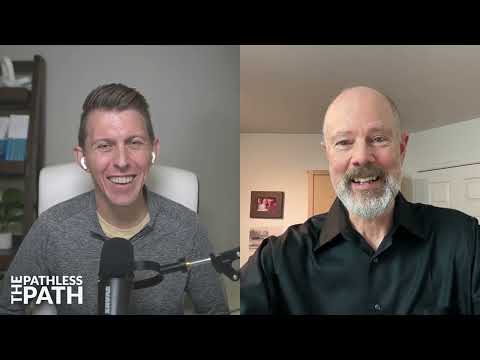
Creating Margin For Life & Running a "Calm Company" | Justin Jackson (Pathless Path Podcast
In this episode with Justin Jackson, co-founder of Transistor, we dive into his fascinating journey from early internet ventures to establishing a calm business model that prioritizes life’s margins. Justin shares his experiences growing up in a family where entrepreneurial spirit was a necessity, the lessons learned from running a snowboard shop, and how these shaped his approach to business. We discuss the value of maintaining a calm company culture, the importance of financial margins, and Justin’s vision for a business that benefits both the customer and the team. Join us as we explore how to design a life and business around what truly matters.
- 0:00:00 – Intro
- 0:00:42 – Guest introduction
- 0:03:00 – The scripts that Justin grew up with
- 0:07:52 – Lessons from running a skate shop
- 0:13:47 – Optimizing for profit in business
- 0:26:23 – The opportunities on the internet, staying in the water, the survivor bias
- 0:35:48 – Getting into digital business
- 0:42:50 – The importance of the customer support
- 0:45:09 – “A calm company” — designing the company to make their lives better
- 0:54:24 – How Transistor has changed Justin’s life?
- 0:54:47 – Having kids early and how more money actually made him happy
- 0:57:12 – How Justin approaches money
- 0:59:44 – Navigating the changes in the podcasting platforms
- 1:08:21 – The next chapter for Justin
- 1:10:15 – Where can we find out more about Justin?
- 1:11:16 – Closing remarks
Themes:
- Entrepreneurial Spirit from an Early Age: Justin’s upbringing in an entrepreneurial family and how it shaped his career path.
- Lessons from Retail Failure: Insights from the snowboard shop venture, emphasizing the importance of profitability and business model viability.
- Calm Business Philosophy: The concept of running a business that enhances the life of its founders and team by ensuring ample margins in finance, time, and emotional well-being.
- Market Dynamics and Demand: Understanding customer demand as a fundamental element of business success.
Quotes:
- On entrepreneurial upbringing: “My dad was my first ever client in almost every business I started.”
- On learning from failure: “Running that snowboard shop was about 100 times harder than running Transistor.”
- On calm business: “It is possible to make money, enjoy your life, and be around your kids.”
- On profitability: “You need margins. And then to be very clear, what we mean by good margins is 70, 80, 90%.”
- On customer demand: “The market you choose almost determines how successful you’ll be more than anything else.”
Main Guest Links:
- Website: Justin Jackson’s Blog
- Transistor: Transistor.fm
Transcript
Justin is the co-founder of Transistor, a podcast hosting platform on which The Pathless Path podcast is hosted. Justin is passionate about designing his company so that all the team benefits.
Read the full transcript
Paul: Welcome to The Pathless Path. I'm Paul Millerd, and in this podcast, we examine the invisible scripts that run our lives and dare to imagine new stories for work and life. Today, I have the pleasure of talking to Justin Jackson. I am hosting my podcast, The Pathless Path, on Transistor, and I am talking to the founder of Transistor. Not because I'm trying to suck up or get a discount, but because I think his path is fascinating. Justin has been hanging out on the internet and doing all sorts of stuff for a long time, much longer than me, at least publicly, and is doing a bunch of cool stuff.
He is the founder of Transistor, and I'm really interested to dig into his experience with that because he's embracing something he likes to call running a calm business. It is possible to make money, enjoy your life, and be around your kids. He also had kids early in his 20s and has a lot to teach me, I think, about how to do this and design a life around a family. Welcome to the podcast, Justin.
Justin Jackson: Thank you. Thank you. It's good to be here. I should clarify, I'm the co-founder of Transistor. My partner John and I started it together in 2018. And I should also— yeah, I've been on the internet a long time.
And my oldest child is 21. So that just means I'm old. I'm not that old. But I was born in 1980. So I have an interesting— you know, I grew up, I think we got our first computer in '85. But The internet kind of happened right when I was a teenager.
I think Mosaic, the first browser, came out in 2000, sorry, 1993. Wow.
Paul: Yeah, I think I, first computer and internet was around like '94, '95 for me. Prodigy, AOL.
Justin Jackson: Yeah, so you were early as well. You were early then, 'cause there was not a lot of commercial internet around that time. It was CompuServe, AOL. Yeah. And I was a CompuServe kid. You were either an AOL kid or a Prodigy kid or a CompuServe kid.
Paul: We were AOL. AOL took over pretty strong in the US.
Justin Jackson: Yeah.
Paul: But we're, but we're gonna dive into this.
Justin Jackson: Okay.
Paul: I want to dive right into it, um, into what are the stories and scripts that you grew up with. Uh, so you didn't get your computer, you got your first computer at '85, maybe that shaped things. But yeah, what are some of stories that pop to mind when you think about how you were thinking about life and work growing up? Hmm.
Justin Jackson: I mean, both my parents were teachers that worked for a private school. And so, um, I think I got kind of both sides of that, you know, like they were teachers, which is kind of a normal professional job, but they're working for a private school. And so they had, they both had to be pretty entrepreneurial. There's a lot of fundraising in private schools. There's a lot of selling. You're, you're trying to get international students.
You're trying to basically get people to pay you for education that they could be getting for free because there's the public system and the private system. So lots around growing up around the school, and because they were teachers, we got computers early. There was lots of opportunities for me to work there. Like, I was— my first jobs were like helping set up a computer lab at the school, networking the computer lab, data entry, lots of jobs. My dad gave me lots of jobs growing up, which is something that I think about all the time with my kids, just how, how beneficial that was to have all this practice on doing work at a young age, having a client at a, you know, at a young age. And actually, that continued.
Like, my dad was my first ever client in almost every business I started. And that, I think, these days, I think, you know, it's the first time in a long time he hasn't been paid, hasn't, you know, been paying me for something. But I did all sorts of stuff for him, web design and video production, building database stuff, and all sorts of stuff that it was like a nice to have a first client in my dad.
Paul: So it was one of the scripts growing up. Okay, you have to do a bunch of jobs, you have to try a bunch of things.
Justin Jackson: Uh, I mean, one script that I did grow up with was that especially like I was born in 1980 And during that time, a lot of parents wanted to send their kids to university. So one of the scripts was like, you're going to go to university. That's the path to a good job. And I was always interested in entrepreneurship. There's this amazing— I grew up in Canada. There's this amazing CBC show called Venture that came on after the 11 o'clock news, and I would beg to let my dad, you know, let me stay up and watch that show because all about entrepreneurs, like different entrepreneurs, like putting a bunch of money on credit cards and trying to make it work.
And I just thought it was amazing. But when I, you know, graduated high school, my dad like really thought I should go to university. So I went to university, got my Bachelor of Management. And then You know, they both, like I said, they work for this private school, which is nonprofit. And right out of college, I worked for a snowboard manufacturing company. But then pretty quick after that, I started working for nonprofits.
So I think that was one script, you know, that I got from my parents. And I worked for nonprofits probably till 2008. So the first like 8 years of my professional life in there, I always had side projects and I got this from my parents too. They always had side projects. So one side project—
Paul: What were some of the side projects your parents had growing up?
Justin Jackson: Oh, just like, you know, a lot of it was around the school, but the school had a lot of property. And so they said, oh, let's start a farming program. So that became, you know, they had this big farming program with cows, and they had a honey program where they were like, had bees, and were living in northern Alberta. And so they thought they'd also start a kennel program. So they had like sled dogs and all sorts of stuff like that. So the, the school was like this constant platform for side projects.
And, you that was kind of like, I think, how my dad got a lot of his like side project stuff and entrepreneurialism kind of out doing different things there. Yeah.
Paul: So it sounds like it's clearly genetic. At some point you started a skate shop.
Justin Jackson: Yeah. That was—
Paul: was that right after college?
Justin Jackson: That was about— yeah, probably right in there. I was still working full time for this nonprofit, but I had been in the snowboard, skateboard industry during college. I had snowboarded my whole teenage experience. And yeah, I just wanted to, it was like kind of a dream to like, oh, it'd be fun to have a shop. And so my friend, my brother and I started a shop in our town. And then we purchased another shop that was in the town next over and ran that for about 5 years.
And I always had a full-time income while that was going, like it was my, my buddy that was kind of managing it. But I mean, we learned tons during doing that. The event eventually that closed down, and I think I was about $80 grand in debt or something from from that shop. There are some, some hard lessons learned doing Main Street retail.
Paul: Yeah, it seemed like that really shaped how you thought about being profitable in future ventures. Is that link— is that accurate, that that link is real?
Justin Jackson: Yeah. I mean, everything's theoretical until you do something. And like, I had done other entrepreneurial things You know, in, in high school, I put on my town's first rave and that was like, you know, a real life thing that we tried. And that one just worked. We didn't think really about why it worked, but there was something about that that worked. And then the snowboard shop was— it just— I joke that I think running that snowboard shop was about 100 times harder than running Transistor, a software company.
It's just so sophisticated. Even on a small Main Street level, you have a lease, you have a location, you have to worry about theft, you have to worry about insurance, you have to worry about employees, you have to order about— worry about inventory. And inventory in itself, like you can do a PhD on inventory. When to order it, how to order it, how to manage cash flow. Cash flow is very difficult in the retail business. I mean, even with the big— like the Gap, you'll see like a couple of years ago they ran into a bunch of cash flow issues.
It's just a very difficult business. And it's a—
Paul: it's a—
Justin Jackson: some businesses are more like they're more like gambling. Every, every business is a bet, but like retail is especially like gambling because you're betting real money ordering stuff and you often have to preorder it like 6 months in advance. And so with the snowboard shop, it was like 6 months in advance. I had to bet real money on what I thought a 13-year-old might think was cool in 6 months. And It's, you know, you just learn so very difficult lessons on, oh, I think this would be cool. We'll order 100 of them.
And then you bring it in and you can only sell 2. And then you have to try to get rid of it. And it's, it's very, very difficult. And the lessons are like real and immediate. You know, as soon as you bring it in the store, is this going to sell or is this not going to sell? And I think that really shaped me and the pain of when it closed down.
And I mean, I had always— this had always been on the side for me, but when it closed down, basically my business partner couldn't like deal with it anymore. He was stressed out. And so he basically said, like, you got to take care of this. And, you know, at the time, my wife and I would have been 25. But we had two young kids. And I just remember her and I sitting on the shop floor going through all of these files of sales records.
And it was hell, honestly. And having to just figure, kind of bulldoze our way through that and then having the pain of, you know, we, we took on a lot of that debt. And maybe in retrospect, if I'd had a mentor, they would have told me, like, just, you know, you should have the company declare bankruptcy. But I felt like this, this obligation to pay our suppliers. And so we took on debt to pay our suppliers out. And yeah, it was a difficult time.
So that pain definitely taught me some lessons and After that, you know, I don't think I really start— so that was 2005. I switched to the software industry in 2008. And then I didn't really launch anything again until 2012. And I think a lot of it was based on just the pain of that and having to go through that and saying, okay, we can't have that happen again? Like, what are some principles we can put into place so that we don't experience that pain again?
Paul: Yeah, that— it sounds like you have some scars from that. But yeah, also, I think how you talk about business is really refreshing. I spent 10 years in the business world, and it sort of seemed obvious to me coming into working on my own that I should be profitable. And that I should try to make more than I spend in a year. But I've been surprised that that is not intuitive for many people. And I think because people are like, oh, I'm running a business, even if it's just them.
Justin Jackson: Yeah.
Paul: They sort of think they're supposed to like invest all their money. Yes. So it seems like running the the snowboard shop, you were like, well, maybe we don't spend all the money and we keep some.
Justin Jackson: Yeah. Yeah. I mean, the book Profit First, I think when I read that book— have you read Profit First?
Paul: I was— so my friend had it. I was at his place this weekend and I was flipping through it and it still sort of confuses me that this is not obvious.
Justin Jackson: Yes.
Paul: Like I've been doing 70 to 80% margins on all my stuff since I started becoming self-employed.
Justin Jackson: Yeah, I think a lot of it has to do with the how complex your business model is. And then margins are huge. And, you know, I went through business school. I have my bachelor's degree in business. And I think, you know, theoretically in business school, you'll go, well, you know, often a lot of your case studies are like the airline industry. Well, the airline industry's margins are— I'm just guessing off the top of my head, like 12% or 15% or something.
Paul: Yeah. No, for years they were like 1 to 2%.
Justin Jackson: Okay.
Paul: So even small, really razor thin.
Justin Jackson: Yeah. And so a lot of the case studies and examples we have are, you know, these mega mega corporations who have very low margins. And I think people, when they start their own business, they're like, oh, well, I'm going to I'm going to start a business, I'm going to make 3% on top, and then I'm just going to, you know, do enough volume, make it up in volume. But there's less people out there saying, well, hold on, actually, you can, you can actually save yourself a lot of pain if you can start a business that has really good margins. And the internet, you know, when I joined the software industry, in 2008 and my boss kind of showed me around, I was like, wow. Like, I could see it right away.
It's like you get to make—
Paul: It's a nice offer.
Justin Jackson: Well, you get to make a product once and then essentially duplicate it forever for free. It's like you make the software once, you write the code once, it just sits on a server, and then everybody accesses that code base, you know, and you don't need to— your variable cost is like nothing. Or you can write a book and sell it. You're only limited by demand. Whereas like this whole, like, again, in business school you learn about supply and demand and those dynamics are, are, are different in a digital economy because It's like I could make as many copies of this as I want. So I think there was not enough people talking about it.
Like, you need margins. And then to be very clear, like, and what we mean by good margins is 70, 80, 90%. Those— and that's like variable margins on a sale. So if you can make something and the variable cost is $1, but you're selling it for $100, those are good margins, right? And it gives independence, I think, a lot of leverage where somebody can start a business as a solo person or as a small team. And if the margins are good and there's enough demand, which is the actually the more difficult side of the equation, but if there's enough demand and the underlying kind of fundamentals of what you're selling are good, then yeah, there's— it's a lot easier.
You have a lot more breathing room when you're talking about margins that are 70, 80, 90%. Yeah.
Paul: One thing, and I do say it felt intuitive, but as soon as I quit my job, I started— I sort of flipped the equation in my head and I noticed, okay, this dinner I'm having for $25, it's not actually $25 I need. I need to adjust out taxes and expenses. And so I think that's pretty much what Profit First does. And then I'd actually need to make like $40.
Justin Jackson: Yes.
Paul: To get this. So then it was like, okay, I was at this coworking place and I ran out of consulting clients and I was spending $400 a month.
Justin Jackson: Yeah.
Paul: $400 is $4,800 a year. Back out taxes and expenses, I need to earn another $7,500. Now, if I just wipe, wipe that out, for me, it equaled like freedom and runway. So it was like, okay, that is much more time for me to figure it out.
Justin Jackson: Yeah.
Paul: And that was super valuable to me at the beginning. Yeah, that was sort of my founding. But yeah, I think a lot of people just think, oh, I'm making $100 grand.
Justin Jackson: Yes. And I think—
Paul: yeah, I think all you need.
Justin Jackson: Yeah. And I think the— what I mean, Profit First has a system for like setting up bank accounts and stuff. But I actually think the best part of the book is just the introduction where he just says, listen, the truth is most of the businesses you see on Main Street or around you, most of them are not profitable, meaning most of them would be better off getting a job than running the business. The business is grinding them down. The business is costing them way more time, energy, and focus than they would have to spend if they were just working a job. And the reason is they've never thought about profit.
Meaning a lot of people say, well, you know, I'm making $100 grand a year as a salary, and so I'll just start a business that just needs to make $100 grand. And then, you know, we're even. And that setting yourself up that way ignores a few things. First, you are making a bet and usually you need to make a series of bets before that pays off. And so as soon as you get like a baseline hit, that business that's working needs to pay you back for the other bets you made, right? There's some, there's some.
And just for the, the not only the opportunity cost, like if you quit your job, and then you start working on your own thing, but it takes 5 years to get your own thing kind of up and running, you're missing out on what you could have made if you stayed employed. And then there's also just like paying you back for the bet. You're making a bet, and for that risk, you should be rewarded with something. And so he just talks through this idea of businesses should give you more than a salary replacement. And that's the idea of paying yourself profit first. How much— like, what kind of profit do I want this year?
And he says, why don't you just start with 5%? So if you're, you know, if you're making $200,000 a year in total revenue, why don't you set a goal of 5% profit? And he says, just take that 5% every time you get paid. So if someone gives you a check for $1,000, take 5%, put it in a bank account for profit, and then take whatever it is, 15, 20%, and put it aside for taxes. And now whatever's left over is for your salary, for your expenses, etc. And that framing was powerful for me, most of all because I think I just felt seen.
I just felt like, oh wait, most businesses aren't thinking this way. Most business owners are struggling. That's the truth. Most businesses are actually grinding away on this thing that they're passionate about, but it's not actually paying them back the way it should be. And once I started thinking— yeah, and I'd experienced that. Yeah.
And even once, you know, I started launching new projects in 2012 and then eventually I wrote a book called Marketing for Developers and I released that in 2015, and that was what enabled me to quit consulting and go full-time. But that's where you really start to feel like, is there enough margin in this business? Is there, is there enough volume of interest in this business? Is there enough new sales coming in every month? What does it take to keep this machine going? And I think it was around that time that I started to think a lot more about customer demand and thinking about customer demand like a wave that you go— that you paddle out to and try to surf.
And that means you have to kind of think like a surfer. You have to learn the fundamentals. You have to be really good at paddling. You have to have, you know, a good board, a good product. But you also have to learn how to recognize good opportunities, the size and shape and momentum of good waves. And I think I, I saw— I became friends with Adam Wathan, who's the creator of Tailwind, and Taylor Otwell, who's the creator of Laravel.
These are both programming frameworks. And hanging out with those guys who do not consider themselves to be business guys or marketers. I just saw just this groundswell of demand, like volume, people wanting what they had to sell unlike I had ever seen before. And when I saw that, I'm like, wow, this is a good example of a wave of opportunity. This is a good example of customer demand and the momentum that drives it where there's just people waking up every day who are downloading— sorry, who are— yeah, who are downloading the, the, uh, the Tailwind, uh, repo from GitHub or the Laravel repo from, uh, GitHub, and they're using it. And then once with that install base, they then sell paid products on top.
And it's just like volume, volume, volume. And seeing that, seeing the power of hundreds of thousands or millions of people that just wake up every day and want what you have to sell, like not having to push it on them, not having to do a perfect launch sequence, not having to make sure that my email list is continually getting new people so that, you know, they can— so I can eventually drip sequence them something and sell them at the end. Like just seeing like, wow, there was a groundswell of demand for this thing. and, um, that has— that almost determines more of your success than anything else. The market you choose almost determines how successful you'll be more than anything else. You still have to be able to ride the wave, maybe better than anyone else.
You still have to know the fundamentals of surfing. You still have to, um, you know, there's lots of other things you need, but those things are necessary but not sufficient for there to be success.
Paul: Yeah, I think a lot of people don't— they don't have a grasp for how the nature of an industry or domain will shape their reality.
Justin Jackson: Yeah.
Paul: So I, I worked in this executive search industry and the organic growth in that industry is really slow. It's like 1 to 2%.
Justin Jackson: Yeah.
Paul: And the culture is completely different. Risk-averse, infighting, politics.
Justin Jackson: Mm-hmm.
Paul: When I was in strategy consulting, the growth rates were over 10%. Yeah. Optimism, enthusiasm, supportive, collaborative. And so the way I think about my life now is I want to do things that are involved in the internet. The internet economy, if you look at it globally, is growing like 20 to 30% a year. Yeah.
So I can, I can kind of make a lot of mistakes and still be okay.
Justin Jackson: Yeah, right.
Paul: And I love optimism, so I need to be around optimistic people.
Justin Jackson: Yes.
Paul: High growth rates shape that reality.
Justin Jackson: Yeah. And I think you also paddled out for a wave that had been growing because I'd been observing it too. And there's been, there's been a few of these waves that have come, you know, the, the You know, you could go back and say, well, there was bootstrapping, the bootstrapping wave, which would have been, you know, Peldi at Balsamiq and Patio11 with, with Bingo Card Creator and then 37signals were kind of like that wave. And that inspired this whole group of software developers and internet people to say, oh wow, like we could build something and launch it and we don't need to be you know, SAP or whatever. And there's been a few of these waves now. And I think that the funny thing is that some of these waves, like, for me, it's like, I've seen this happen.
I've been seeing this happen for decades. But there's a new generation coming online all the time. And some of these waves with, with each subsequent generation, they, they get bigger and bigger and bigger. And so this idea of like The Pathless Path of like, you know what, you get out of college and now you're working in the finance district or whatever. And guess what? Just like clockwork, you hate it and you're looking for meaning in your life.
And that group just keeps getting bigger and bigger and bigger because there's young people, hundreds of thousands that are graduating from college, you know, every year. And then you also have the bigger outside group, like this is happening in India, this is happening in Brazil, this is happening in Europe. And so these trends, some of these trends get bigger and bigger and bigger. And it's why sometimes the old crusty people of the internet get surly, 'cause they're like, man, like I tried that 15 years ago and the wave was this small. And then Paul, he just, paddles out, you know, here, and now all of a sudden he's catching this giant wave. And it's just because timing, you know, is a big part of it.
And these waves of opportunity can grow and grow and grow. And sometimes people who've been in the water a long time, they miss it.
Paul: Yeah, we can almost extend that, right? And it's sort of like, I went around the corner and found like a new surf spot. And I'm like, come over here, come over here. But like, they already have good waves, right? So they're not gonna come over. And so, I mean, people who haven't been following my path for 5 years just see the recent phenomenon, but they don't see like the hundreds of people I was talking to as sort of like experimenting and A/B testing a new language of talking about these.
Justin Jackson: Yeah.
Paul: And I'm not the developer. And like, I have an engineering background. I can code a bit, but I don't speak developer or engineer.
Justin Jackson: Yes.
Paul: I also never worked in Silicon Valley.
Justin Jackson: Yeah, yeah, yeah. I mean, this is the, the other side of the equation, which is— and again, this is all kind of like necessary but not sufficient on its own. But, you know, the surfer matters a lot. Like who you know, who knows you, your experience, your insights, the gut instincts you have developed over a decade of working somewhere. Your point of view as someone who is, you know, working in your industry as opposed to somebody else who had tried it before. All of those things actually do matter quite a bit.
And it's why it's actually difficult sometimes to teach people how to be entrepreneurs, because to unravel any success, you kind of have to go down layer by layer by layer. Like even what you were saying, like people who just see me now and they're like, oh wow, 45,000 books sold. He must have just timed it right. And you're like, well, that's part of it, but there's like a lot of layers underneath that. And to replicate that, you would literally have to be me. You would have to have my experiences, the people that I ran into, the things I tried.
This all kind of adds up to something. And it's why, like, you know, if you want to surf, it's like you got to go down to the beach every day and just be in the water. And eventually you might catch a good wave. And what happens more often is people, you know, 10 years ago, they were in the water for a couple of years and then they got out. And so they didn't see the next wave that came around. It was the people who had been waiting for that wave that saw it.
It's hard. It's hard to stick to something over and over and over again, to keep making bets that, you know, some bets pay off, some bets don't pay off, some bets are line drives, and everybody is kind of hoping for some sort of like home run that, you know, really pays them back for what they're risking. And there's also no guarantees. It's like, you know, many, many people are going to try statistically, This is why sometimes I think people go, yeah, you know, survivor bias, like, oh, you've got survivor bias. I said, well, entrepreneurship is like one of the few things where you want survivor bias because there's so many people trying. There's like, like an N of infinite of people who are trying to do something at some point in their lives.
So of course, the actual statistical successes as a percentage are going to be tiny. So you do— you don't want to pay attention to the people who didn't make it. You want to look at the survivors who made it. And there are some characteristics of those people, and one of them is they just stay in the water.
Paul: They— yeah, that's what I was going to say, is if you control for people that like don't want to give up because it matters so much to them, the survivorship rate is actually pretty high.
Justin Jackson: Yeah.
Paul: And so you can sort of predict— I've been hanging out with like solopreneurs, creators, bootstrappers for years. I sort of could tell, like my— one of my good friends, I was with him this past weekend, Johnny Miller. Yeah, I, I started on the same path with him. We had the same sort of like commitment. Yeah, 100% confident the other paths weren't going to work for us.
Justin Jackson: Yeah.
Paul: And now neither of us at the time, at the beginning, thought anything would ever happen.
Justin Jackson: Yeah.
Paul: But it was like, you're not going to give up. I'm not going to give up. Let's keep going and have some fun.
Justin Jackson: Yes. And what's interesting, because Jonny Miller is just this name that I've just seen come up over and over again. Like, I remember I have— it feels like if I searched my, you know, my index of like tweets and emails and mentions and things like I could probably find, oh wait, I've known this about this guy for a long time. And just recently, it's like he's showing up everywhere. And I think people often would look at something like that and go, oh wow, well, he's just popped off out of nowhere. And again, iteration after iteration, being in motion for a long time is kind of one of the ingredients You can't be in motion always replicating the same mistakes over and over again.
You have to eventually develop an intuition for waves, the size, shape, momentum, and opportunity for waves, and whether or not you're a good fit for it, and whether or not you have the underlying skills for it. And, you know, there's a bunch of factors in there. So being in motion is one part, the direction you're going in is another part, and then all of those fundamentals do matter. It's like, if you're just in motion, for example, by yourself in a cave where you interact with nobody, I haven't met anyone who's been successful who can't attribute a bunch of their success to meeting people. It's like, oh, I ran into this person and then they helped unlock this for me, And then they introduced me to this person and then that person. That's how it works.
And if you're not, you know, exposed, if you're not kind of constantly running into other people and the right kind of people, I have yet to see someone who's just like completely on their own, detached from any sort of connections or relationships that have made it work either. So it's all these factors kind of matter.
Paul: So when you left in 2015, before that, was your sort of mindset, I need to go do this software thing on my own? And then how long was it until you were like, this is my long game?
Justin Jackson: Yeah, I mean, I just, I desperately just wanted to have my own thing again. And part of it was who I was exposed to. So In 2012, I moved to a new town and we, we kind of got our freedom because I got a remote job and we wanted to move to a ski town. And so we did. But then I was like, I got to stay connected to the wider tech world. Started this podcast with my buddy Kyle called Product People.
And then, you know, a lot of kind of what you soaks into you. It depends on who you're hanging out with. Through the podcast, I met people like Nathan Barry, and he was at the time had released some books that were selling really well, some ebooks and some courses that were selling really well. And so that became like, oh wow, that opened up this idea of that's one path to freedom. And so I started working on my own stuff, eventually released Marketing for Developers. I think it did $60,000 or $70,000 in sales the first year on the side.
And I thought, well, here's a ticket. Like, this might be my ticket to getting, you know, freedom, flexibility, running my own thing. And, you know, the next year I went full time on it and I was able to double, you know, the revenue I was making from it. But then I learned, like, to keep that sales cycle going, was there wasn't enough underlying demand that, you know, it was just showing up at my door all the time. And then Nathan made the transition into software. And I remember talking to him at the time going, you are nuts.
Like, to go, to go full time on this ConvertKit thing. It's— it was making like he'd gotten it up to $5,000 a month and then he lost a bunch of customers. And I was like an early believer, like I I think I'm one of his longest running customers, but I was like, dude, if I was you, I would not quit. Why? Why?
Paul: What was your mental model?
Justin Jackson: Because it might—
Paul: like, you got to do digital products. Is that just—
Justin Jackson: yeah, because he was doing $300,000 to $500,000 a year in digital products. I was like, dude, why would you give that up? And I had come from the SaaS software world. I'd worked for an email newsletter company. And I just knew how difficult SaaS was. It's very difficult to grow.
And I just thought, I don't know, man, like if I was you, I would double down on what's working.
Paul: It's so funny to hear that now.
Justin Jackson: I know.
Paul: Because it's so successful. Even though I think I was an early customer before it was— I think it was still trying to break through the next— barrier.
Justin Jackson: Yeah, but having that— like, this is why relationships, I think, is so important, because he said, well, here's what I'm seeing in the, you know, in the book course space is to run a business kind of at that level. Here's what you need. Here's what the people who are doing well at it have to do. And he's like, I want— software is just more scalable. If you can get the underlying traction going. And it felt like to him like that was a good bet.
And then eventually I came to the same conclusion. I was like, for me, it was like, man, I'm— to make any money with Marketing for Developers and then some of the other things I launched, I just had to keep relaunching them. I had to keep figuring out how to attract more and more people. I thought, you know, I think I have a lot of skills that would lend themselves to the software side. I've been working in software by that point. By the time I met John, I'd been working in software for 10 years.
I thought, "Okay, it's time for that bet." Whether software or digital products or one-time sales or whatever, I think it matters less what it is and more like, can I find something that I'm interested in, I'm curious about, I'm passionate about, that also has enough underlying demand that I should take advantage of that opportunity? Like Tailwind makes most of its money off Tailwind UI, which is just a one-time downloadable product. It's not really a software product, and they're killing it because There's just like hundreds of thousands of people that want that. So it matters less about whether it's software or digital download or whatever, but what I— for me, I was just like, I think it's time to make a bet on software as a service. And I'd already been talking to John, you know, for years at that point. We tried building a few projects together.
And then he said, you know, I got this idea to do podcast hosting. And instantly I was just like, I had been watching the momentum of that market rise. 2015? 2018. Sorry, 2017 is when he started— him and I started talking about it. And that was the year that 51% of Americans had listened to a podcast.
Oh, wow. So it was finally like into the majority of Americans who had listened to one. We had Serial that had just come out. The New York Times was like doing a piece on podcasting like every single week. I was hearing more and more people mention podcasts at coffee shops. And personally, I just had more and more friends who were starting shows.
And I felt like this is something that there's momentum happening right now. We're on an upswing. And I knew that podcasting as an industry didn't have the same kind of massive appeal that maybe blogging or YouTube or, you know, some like honestly, like Tailwind or Laravel. It's never going to be that level, but it was growing 10-15% every single year in terms of listenership. And it just felt like, oh, this is like a pretty solid market. That I really understand, that I've got lots of connections to, that, you know, together, Jon and I could probably make this work.
And so, it felt like a bet, but in my gut, it felt like, I think this is a pretty good bet for us two.
Paul: Yeah, it was a pretty— I mean, I launched my podcast in 2017, and podcast hosts were not very good.
Justin Jackson: Yes.
Paul: I remember I was on a couple and I've been using Transistor for a few years now and it's great because there's a human energy behind it.
Justin Jackson: Yes.
Paul: So if I have issues, like somebody, oftentimes you will just like respond.
Justin Jackson: Yeah.
Paul: Talk to me about that sort of mindset because there are a lot of podcast hosts that got started by VC money and it's just awful being a customer.
Justin Jackson: Mm-hmm. Yeah. Yeah. I mean, I had— this is something I learned from my first boss back in 2008. I worked for this email newsletter software company called MailOut, and my boss Greg was just really adamant about customer service. And I started in customer support.
We had phone support, so we'd actually answer the phones. And I had worked my way up to product manager at that company. But we never lost this idea of customer service. Everybody answered customer support tickets, whether it was the CEO, whoever. And to me, that's like one of the best features of a product, especially a subscription product, is if you need help, you can get help. Addy Pinar, who is the founder of WooThemes, also had this old, old talk where he said you know, when people are paying for software as a service, they're really paying more for the service than the software.
Like, customer support is so important. And so, yeah, I, from the beginning, I was just like, I want us to have great customer service. I met someone else, the founder of Podia, which is a course digital download platform. I also met this guy Spencer, who's the founder of Podia.
Paul: And he used to use Podia too.
Justin Jackson: Really big on live chat. And so you can see how all of these experiences, how all of these experiences kind of shaped me, you know, and yeah, customer support and customer service, I think, is the underrated feature of a software product.
Paul: So how do you define calm company?
Justin Jackson: Calm company is having a company That's where the product is for the customer's benefit. It's to make their lives better. But the company, the purpose of the company is to make the team's life better. So the company, what's the product for? Make the customer's life better. What's the company for?
To make our lives better. And this is counterintuitive, like in publicly traded companies, those are to make shareholders' lives better. You know, it's to increase shareholder value. So who gets squeezed out of that? Often customers and often the team. It's like the stakeholders who really matter, the people working on the product and the people buying the product get squeezed out.
And, you know, John and I were in our late 30s when we started Transistor, and we'd been— we'd worked a lot of jobs. We had worked for venture-funded companies. We'd worked for, you know, all sorts of tech companies. And I said, John, I don't know if this is going to work, but I want us to be explicit from the beginning that if this works, we're going to design the company to make our lives better. And to do that, we're going to need margin, not just financial margin— that, that is part of it. That's the economic engine that kind of drives everything else— but margin for our time, margin for our emotional health, margin for our physical health.
Margin for life. And we were really, we were really— what's the word?
Paul: Intentional.
Justin Jackson: We were really intentional about that. We wrote it up in some company values that we still have to this day. And we ask ourselves questions like, if we build this or we do this, is it going to make working at Transistor more fun? More calm, or is it going to take away our calm? Is it going to add more stress? Is it going to add more weight?
Is it going to drag us down? And there's all these decisions that founders make, that entrepreneurs make sometimes just like because it's like, well, these are the kinds of things that founders and entrepreneurs do. Like if a big enterprise client comes along and they're offering you hundreds of thousands of dollars, you do everything in your power to bend over backwards to get that customer. But we were just like, no, because if we accept that enterprise customer, we're going to have to hire a bunch more people. We're going to have to have a bunch more processes that we don't care about. It's going to make our life worse.
And it allowed us to say no to a lot of things and keep the business simple, keep the business calm, keep the business with margin. And it's not perfect. You know, we're still a team of human beings that, of course, we all have, you know, our own emotional issues and our own whatever. But I can tell you that having margin in all of its different forms— financial margin, time margin, flexibility margin, energy margin, emotional bandwidth— like having bandwidth kind of everywhere just gives you calm. Because when, you know, if you do get depressed, you can make some choices. You know what, I'm going to work less today and go see my therapist, or I'm going to work less today and go snowboarding, or I'm going to work less today and book myself a ticket to somewhere sunny.
Financial margin gives you the ability to reduce the amount of things that are weighing you down. So, you know, for myself, and I think Some of our employees, they've been able to pay off student loans. They've been able to pay off lines of credit. They've been able to pay off their credit card bills. That gives you calm. It gives you margin, gives you bandwidth.
And bandwidth and margin and calm are kind of what you need because life is rocky enough as it is. And one reason I'm passionate about this is because as somebody who, again, like worked in the nonprofit sector, worked in retail, worked in all these places, where everybody just grinds themselves down to nothing in service of this thing, and it ends up costing you your life. And so I've just been like very mindful of like, life's already hard enough. Like my parents are getting older, eventually I'm gonna need to help them out. There's just things that happen. But if I have enough margin, bandwidth in my life, to ride out those waves.
And if I can reduce the weight and stress of these other things that could be like serving an enterprise client that's always emailing you and every time you talk to them is stressing you out and literally makes your life worse. If I can remove that, if I can remove, you know, that student loan, if I can remove whatever it is, give myself space, now I can deal with, you know, the challenges of life, the challenges of business, et cetera.
Paul: Have you written about this whole philosophy anywhere?
Justin Jackson: I feel like I did write about it a bit better.
Paul: I would love to see like this full thing, 'cause I wanna share it with people. I feel like this idea of margin, first with profit, but also with like, Life in Slack. Now that I've written a book, I see books everywhere. But yeah, if you want to do a guest post in my newsletter, I would love to explore this with you.
Justin Jackson: I do have justinjackson.ca/margin, which is—
Paul: yeah, I think I read that one.
Justin Jackson: Yeah. Yeah. And I think it could be fleshed out. You're right. It's just, it's hard. Business is hard.
And The actually the hardest part about this is you can want the margin, you can want the bandwidth, you can want the freedom, you can want the flexibility. The hard part is that you really do, unfortunately, first need to find an economic engine that can run everything because that engine, if that engine's not working and you see this all the time, businesses that don't have margin often have a bad economic engine or an economic engine that's predisposed to— it's kind of weak. It's predisposed to threats. And you see this all the time. You know, your boss will come in and download all of this stress onto you.
Paul: Why?
Justin Jackson: Why is your boss stressing you out? Why are they freaking out? Well, because that business doesn't have margin. That business's economic engine is either under threat or isn't very healthy. Some of these things are out of our control. You know, not every good market opportunity lasts forever.
Some of these things are in our control, which is like choosing the right market and then addressing that market in a way that gives you margin, in a way addressing that market in a way that there's consistent volume And most businesses, especially in the digital realm, are about volume. So it's less about, you know, their supply and demand, but it's more about the demand. How many people wake up every day and want this? How many people wake up every day upset at their job and they want freedom from their job that's killing them? Well, these days, a lot. It's happening every single day, right?
Right? So you've got a great flow of people that are like searching. And normally, especially for indies, I think you want to go after opportunities where people are in motion searching for a solution, searching for an answer, as opposed to like, I don't know, creating stuff that people don't even know they need yet. I think better to say, okay, what do people wake up every day, right these days, and want? Well, every day there's people looking for podcast hosting, or how do I get my podcast on Spotify and Apple Podcasts? And there are other opportunities like that that you can go after, but you need that economic engine.
It's the hard part. That's the hard part, 'cause You know, a lot of people try and to find an engine that can power your life is not easy. It might take you multiple attempts. It might take you years of betting, but once you have it, then you can focus on the other side, which is having a life that, you know, a better life.
Paul: How have you leaned into that? I know Transistor's doing pretty well. Of course, there's challenges and always changes in the podcast industry, but that is supporting your life now. How have you leaned back into life with that freedom?
Justin Jackson: Oh man, I mean, Transistor changed so much for me.
Paul: Yeah, you wrote, I wanted to call out something I thought was pretty cool that you said. I would also be remiss if I didn't mention this. Doing well financially in my late 30s and now in early 40s has increased my overall happiness. I believe having more is incredibly freeing. And the first thing you wrote was, my lifestyle is way better, so who cares about my bank balance? This is something people often believe.
But yeah, like, money and lifestyle is actually pretty good. Yes, it sort of took you a while to get there, so You probably appreciated it more too.
Justin Jackson: Yeah, I mean, I think, I think my experience was a little bit different from some people's because my wife and I had kids early and kids are expensive. And, you know, having, it was kind of like we were behind right from the beginning because we had them so young. We didn't have an economic engine that was like really working. I was new in my career. I was like working my way up, working for this nonprofit. And, you know, we made it work, but there's always this like, we're really working hard here.
And so when we got to a point where there was more financial margin, oh, it was just such a relief. And it always made me upset when people said, well, more money doesn't give you more happiness. And I'm like, I can tell you it has significantly improved my life. It's made my life better. It's dramatically reduced my stress. It's made my kids' lives better.
It's opened up all sorts of opportunities that we would have never had. I've been able to, you know, take care of family and friends. I've been able to like, it has added enormously to our lives. Now, it doesn't solve every problem, but people always say, well, it doesn't solve every problem, you know, if you got— sure, sure, sure, but it's a lot easier to go to— oh, it's the things that you need to solve. So it's like, well, you know, therapy solves a lot of problems, sure, but to go to therapy, you need money and you need margin and you need, like, you need those things. You need an engine that's working and Everything comes—
Paul: Have you had to learn how to spend money differently? Has that been a challenge?
Justin Jackson: I mean, maybe. I guess it would depend on how people would look at my books these days and what they would say. You know, I think we were always like, because we had to budget for so long, that's still in the back of my mind. And because You know, the money came relatively late in my career. I still don't have that same kind of security as some people have who have been just able to put away money for a long time. I've been able to put away a lot, but that's still— if I have any stress or anxiety, it's still like, ah, like, you know, when, when our snowboard shop failed, I liquidated all of my retirement savings.
And, uh, that's brutal. That was hard. And then I fell into that trap which is so easy to fall into, which is when you do something, when you have an event in your life like that, it just is so hard to start again. It's like I had been religiously saving for my retirement since I was 14. And so once that got taken away, I was just I kind of fell into some cynicism, I think, where I should have just gotten back on the horse. So, yeah, these days I'm trying to put away money as much as I can.
I'm trying to reinvest money as much as I can. But I'm also like, I know my life isn't going to last forever. And so, I don't want to be someone who just holds on to it. You know, for example, with my kids, with college, I've said, I would really like you to go to college because I think it's just an incredible experience for young people to go and learn about themselves and meet interesting people. But I said, I don't want you to go to college at this stage in your life with the thought of like, I really need to go and get some credentials that will help me get a good job. I would prefer that you just go and explore.
And not worry about, you know, we can fund that exploration for this stage of your life. But, you know, my oldest is 21 and my youngest is 14. So we're still on this journey. Who knows? You know, we'll have to see how it turns out.
Paul: But how are you thinking about the podcast industry? I mean, as a creator, I sort of have to pay attention to what platforms are doing. I am like not loyal to Transistor, right? I have to make the best decisions for me.
Justin Jackson: Yeah.
Paul: But yeah, it's interesting to watch because YouTube's become a lot more important in the podcasting world. Spotify is also just adding a lot of features like video and they sort of block you from getting access to those things. So how do you think about navigating this space?
Justin Jackson: You know, it's definitely in the threat category. Yeah, that's one thing I probably still use from business school is the strengths, weaknesses, opportunities, and threats. The SWOT analysis. Yeah.
Paul: Billion-dollar companies are certainly threats.
Justin Jackson: Yes, that's a threat. And any kind of underlying movement in the category is a threat. There's a— there's— there's some reasons I'm— I'm optimistic. One is that I've been on the internet for a long, long time. And I've seen this, the, this tension between open decentralized protocols like email, RSS, the web, and centralized platforms, Spotify, YouTube. And, uh, there's always been this inherent tension between those two.
And the one thing, if you look at, for example, in the software industry, if you look at the bootstrapped successes like the self-funded indie successes, MailChimp, Campaign Monitor, ConvertKit, those are all in email, which is this open, decentralized protocol that's been around since the birth of the web. And that space allowed these independents to play. Why? Because centralized platforms, big corporations, like to own it all. And, you know, there's, there's a place for that. But email, nobody owns it.
Gmail has a big footprint, but there's still Yahoo Mail and Hotmail and Hey and all sorts of other, you know, you can start your own email server. And so they can't own all of it. They still have to play ball with the open decentralized protocol. It's also true on the web, and it's also true with RSS, which is what runs podcasts. And if you look at the creator economy over the years, there's been a couple cycles of that too. So, you know, Facebook convinced everybody to create a Facebook page and they said, bring your audience to Facebook.
"Bring your, you know, delete your email list. We are just bring everybody, delete your website, bring everybody to Facebook page. We are gonna give you," the promise is always organic reach. "We're gonna give you lots and lots of organic reach." And I have a post about this. I think it's called Podcasts and Capital, where I say, those are like doing a deal with the devil, 'cause the devil promises you organic reach, and then as soon as they've locked everybody into their centralized platform, then they put downward pressure on creators. And we see this with Spotify and artists.
We see this with YouTube and YouTube creators. We see this everywhere. And then where do creators go to when they need to diversify from the centralized platforms? Well, they go back to decentralized platforms. They go back to RSS, they go back to email, they go back to the web. So I'm— I believe in the open web.
I believe in decentralized protocols. I think they're better long-term for creators. And I play on the centralized platforms. You know, I'm doing search engine optimization on Google. I'm publishing videos on YouTube. I'm doing all that stuff.
But I long-term— my long-term bet is RSS, email, the web. And those protocols don't always have all the features that the centralized platforms do. There's definitely more mess there.
Paul: It's a little bit more messy, but it's also as a, like, as a podcast host and creator, a lot of these big companies, they just decide we don't want to do this anymore.
Justin Jackson: Yeah, well, and we saw that with—
Paul: so it's like I actually have more faith that you'll keep going than Spotify.
Justin Jackson: That's right. And, you know, like Facebook went into podcasts and it was like a big deal. Like they invested all this money. People were actually getting tons of listens through Facebook and then they just killed it. And so, and I mean, this is the nature of big companies, you know, right now YouTube is on its— sorry, Google's on its like 4th or 5th bet in podcasting. They've been through multiple apps and now they're putting everything into YouTube Music.
And, you know, if that doesn't generate the big, big returns that they want—
Paul: billion dollars—
Justin Jackson: they're going to kill it again. And people, you know what, anybody listening on Google Podcasts, they're going to be able to transfer— they can export their OPML file and import it into Pocket Casts or Overcast or Podcast Addict or any of these other listening apps. There's transferability. So I'm bullish on this because I think ultimately for creators, we need both. We need these discovery platforms like YouTube, and we need these decentralized platforms that are really great with building a deep, long-running relationship with an audience. And, you know, I was listening to some friends have a podcast on Transistor, and they were talking about Twitter and they're like, man, Twitter, like, who knows if Twitter's going to be around next year.
Like, we're going to lose all of our followers. And they thought, well, but you know what? We've got our RSS feed. And you know what? The people on this RSS feed, they're the real ones. Like those, there's less of them, but they've been with us for a long time.
And if everything else crumbled, there'd still be this RSS feed. Even if Transistor crumbled, they could just forward their RSS feed. And start a new one, generate a new one. It has lots of advantages, and especially resilient creators, I think, are going to, sure, leverage Amazon, the centralized platform, but also sell things on your own and have your own channels. Right. So I'm bullish on all that.
And I think, you know, there's also the nice thing about podcasting is it's been around for a long time now. And like I said, we have this steady history of 10 to 15% growth every year in audio podcast listening, which is driven by RSS. And Spotify's got a big chunk of it, but so does Apple Podcasts, so does YouTube. And as long as there's that tension between these big multinational companies, they will all want to own it. But as long as there's You know, these decentralized protocol of RSS in the middle, none of them can as much as they try. People are still going to be able to listen to a podcast on Apple, even if Spotify wants to own it all.
So it's not to say there's not a threat, but it could, it could change. And I think the last thing I'll say, which I think is meaningful, is You know, right now people are like, young people only watch TikToks and YouTube. And to me, that sounds like the folks that said that email was gonna die because young people are only text messaging and instant messaging on Snapchat. The thing is now, you know, my daughter's 21. She moved, went to college. What's the first thing you get when you move to college?
An email address. They're not messaging you on Snapchat. Eventually my daughter's going to graduate. She's going to get a job. What's the first thing she's going to get? Well, probably a commute and then probably a corporate email address.
Well, commutes are great for podcasting, and that corporate email address means she's going to be on email. So both of those have a long, long future ahead of them.
Paul: What's sort of the next chapter for you? How are you thinking about things? Are you just trying to enjoy life now that you've sort of got a little more margin in life, or are you thinking about things differently moving forward?
Justin Jackson: Yeah, I mean, I'm still really fired up to work with Transistor. We've got a team of 6 people, lots of interesting problems to solve. That's the other nice thing about margin is it's like, like someone asked me, like, you know, before any of this happened, like if you had, I don't know, $20 million in your bank account, what would you do? And really, I just kind of wanted to be like Derek Sivers, you know, I wanted to be like writing and podcasting, working on interesting projects, working with interesting people. And it feels like I'm living that right now. So I want to keep, you know, working on stuff with Transistor.
We've got a great team, amazing people, amazing customers. Fires me up. I've always had my own company on the side, you know, right from the moment I started launching my own stuff. And I've gotten my kids involved in that. They're editing videos for me. They're helping me come up with new products.
We're gonna, you know, some of them are interested in like releasing games on Steam. And so we're making these little mini bets together as a family. And that's really fun. And I Eventually, I think, you know, I'll want to be investing in new indie startups and SaaS companies and things like that. But I'm still like, I love writing for my blog. I love podcasting.
I love making things. It's, it's still kind of like the journey. And now at this stage in life, I can be a little bit more like Derek Sivers. I can like work on the stuff that really fires me up.
Paul: I love that. Where can people follow along your journey?