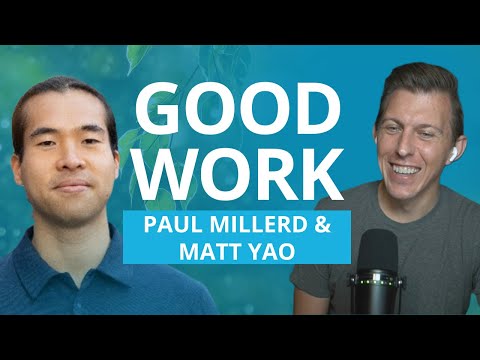
#112 The Power of Play In Work & Life - Gary Ware is Leading A Playful Rebellion
- 0:00 – Teaser
- 0:30 – Introduction
- 1:26 – What was Gary like as a child?
- 3:37 – :The scripts Gary grew up with
- 4:34 – :Gary’s transition to adulthood
- 7:43 – :How the environment changes us
- 11:48 – Losing intrinsic motivation over time
- 14:24 – The crossroads
- 17:38 – Living with his parents again
- 21:18 – The micro, macro and meso breaks
- 25:18 – Rediscovering playfulness
- 27:05 – Why do many adults fear play?
- 30:56 – Archetypes and the definition of play
- 37:42 – Seeing work as play
- 39:08 – “Injecting” people with playfulness
- 42:08 – Common sense is not common practice
- 44:08 – Songs Gary that inspire Gary
- 46:35 – Playfulness in the virtual environment
- 50:07 – Rapid fire questions with Gary
- 54:32 – Where can we learn more about Gary?
Gary Ware is someone that inspires me. I’ve seen him give two walks, both at the World Domination Summit in 2018 and then in 2022. In each, he stood out for his ability to show up as himself and share playful and powerfully true stories about his journey. I love when I get to meet people like Gary and this interview was no different. You can feel his positive energy flowing through the screen (or earbuds!).
🍿🎞️ Watch This Episode on Youtube
Links Mentioned:
-
📕Gary’s book: Playful Rebellion
-
Gary’s Site: Breakthrough Play
-
Follow Gary on Twitter:
-
Freestyle love supreme (Hulu)
-
Web Hosting: Skystra Fast WordPress Hosting
-
Host your own community” Circle 14-day free trial
Transcript
Gary Ware is someone that inspires me. I've seen him give two walks, both at the World Domination Summit in 2018 and then in 2022. In each, he stood out for his ability to show up as himself and share playful and powerfully true stories about his journey.
Read the full transcript
Paul: Welcome to The Pathless Path. I'm Paul Millerd, and in this podcast, we examine the invisible scripts that run our lives and dare to imagine new stories for work and life. Today I'm talking with Gary Ware. I first became aware of you, Gary, at World Domination Summit in 2018, and I wrote a note to myself. I was like, I have to talk to this guy. So I'm excited we're doing this today.
You are the founder of Breakthrough Play, and you've just written a book called Playful Rebellion. This should be out like right around you're launching that. So go buy Gary's book. It's going to be a lot of what we talk about today, but so much more. I just finished it. It's awesome.
And he does a lot of work with individuals and companies helping them unleash their creativity and play in their lives. But more importantly, he does a lot outside of work with his family, learning magic or often an adventure with his wife Courtney and sons Garrett and Cameron. Welcome to the podcast, Gary.
Life: Hey Paul, thank you so much for having me. I'm so excited to dive in.
Paul: So I typically start exploring people's childhood and you wrote a lot about this in your book, but would love to just start. One thing you've described yourself growing up with was as someone that was goofy. Maybe you can tell us a little bit about who young Gary was.
Life: Yeah, um, young Gary was extremely curious, um, loved making people laugh. And if you ever read the Curious George books, I, I think that is me in a nutshell. Um, I never had ill will with my curiosity and the pranks and stuff that I did. I was just always like, oh, I wonder what will happen if we do this. And oftentimes that did get me into a lot of trouble. One funny thing— I don't even talk about this in the book.
So for you listening, you're getting a little, a little teaser glimpse into my childhood and the silly things that I did just because. And I had to have been around 5, Yeah, probably about 5. And I had a bike. And I was just like, oh, look at this. And in my head, something popped up. It was like, I wonder what will happen if I take this needle and stick it into the bike.
And then sure enough, I did. And oh, wow. All right, now air is coming out. And then my dad was just frustrated. He's like, what? You just stuck a needle into your bike?
Yeah, I just want to see what happened. And yeah, I learned that, yeah, hey, look, you stick a needle in there, and the air comes out. And so then I also learned how to change a tire. My dad got me one of those little fix-a-flat things for tires. And we fixed it together. But he was kind of frustrated that he's like, really?
You just popped this? And those are the types of things that I would get into. And then on top of that, because I love making people laugh, I like pulling pranks on people. I said 4th of July. Sorry, forgive me. April Fool's Day, one of my favorite holidays.
Just because, you know, it gives us permission to cause mischief.
Paul: What were some of the scripts you grew up with, either from your parents or just absorbed from society at large, that you started to become aware of as you got a little older?
Life: Yeah, well, the big one, and I talk about this in the book, is that you can only play once the work is done. You know, my dad being a hardworking individual, you know, instilled that in me at a young age. I didn't always like it. However, it served me growing up. It gave me some structure. You know, you can play when the work is done.
All right, cool. I come home, do my homework. It motivated me to get the work done so I can go and play and do the things that were enjoyable. It didn't serve me so much when I got older when there's an unlimited supply of work that could be done. So that's one of the biggest grips that stand out. Yeah, I'll stop with that.
Paul: Yeah, that's, it's such a common theme I hear from so many people I talk to is that, okay, you have these scripts, you grow up with them, they're probably very useful at some point, but then they stop being useful, right? You go into the workplace and you have this idea, okay, you need to be serious. You can't play, you can't be creative, you can't go around the rules. And like you said, like there's literally infinite work to be done. So you sort of like just forget like who you were. Talk to me a bit about kind of like your transition into like adulthood, maybe after school and what that was like.
Life: Yeah. So my training is in marketing communications. I went to the Art Institute in Los Angeles and, you know, went into work. I, you know, wanted to design websites. You know, I wanted to, you know, be a creative. Um, and again, you know, that voice, uh, my dad's voice in the back of my head, hey, you can play when the work is done.
Um, it was a great catalyst because it got me, you know, it got me started. It kept me hungry. Um, you know, not gonna lie, I think because of that You know, I did excel in my career, um, pretty quickly. And one thing that I didn't know that I know now is that the work can be seen as play. And so every job that I went into, I started with that sort of, you know, seeing the lens, you know, seeing the world through the lens of a playground of opportunities. I'm like, oh wow, I'm so excited.
You know, it's fresh and it's new and I dive into it and then it quickly turns into seeing the world as a proving ground. Uh, then I'm like, oh, you know, is this good enough? Especially if you're in, in any sort of creative field where it's subjective. Any one person can say this work is amazing and someone could equally say this sucks. And so I quickly found myself, you know, trying to prove myself. And it's probably trying to prove myself to myself that I'm good enough, that I deserve to be here in this room, you know, doing this work and that turned into even more work.
The problem is we live in a society where that's celebrated. No one's going to say, you know what, you are working way too much, you need to pump the brakes. They're gonna— they're like, wow, look at, look at Gary, he, he is, you know, he is working a lot. He, you know, and that phrase that my, you know, my dad, you know, taught me, you know, hey, you can play when your work is done, uh, was, was there. And, and at that point, it's more like an unconscious response. I'm not necessarily even conscious about it.
It's just ingrained in me. And this extremely playful guy, myself, like, I started turning into someone that I didn't even recognize. I'm like, who am I? You know, I'm, I'm not, you know, you know, being as mischievous. Um, you know, I'm, you know, I'm more serious. Uh, and You know, part of me felt broken, if I was completely honest.
Paul: I resonate with that so much. I think I did— before I became self-employed, I had like 5 jobs, grad school, 4 different internships in like 12 years. And first month Paul is like, I'm like, yes, life's so good. I'm learning so much. I'm like, able to like be myself. And then like 6 months in, and I think similar to you looking back, it's like, Oh, our environments change us so much more than we think.
Like, I think we have this idea when we're young that we can sort of go in with who we are and we'll win out, but we sort of underestimate the power of the people around us and like the incentives. What were some of the things that made you shift from like that first month playful Gary to like the one year in like, well, I shouldn't be doing this anymore? Was it just the energy of the people around you, things people said?
Life: Yeah, that— you hit the nail right on the head. The environment will always win. So if you— you could be the most playful person in the world, and if you're in an environment that isn't conducive to that, you will conform to, you know, the environment that you're in. And so This is again one of the crappy things with, you know, with, um, work in general, is corporate work life and, and whatnot, is that I wouldn't say people are intentionally exploited, but the, you know, the goal here is, oh yeah, you should always be going above and beyond. And when the work is play, when you can see the work as play, challenges that show up as opportunities and you have that mindset, well, it's effortless because you just want to get into it. However, if the environment is not tapping into your intrinsic motivators, more of the extrinsic motivators, so emotional.
So a lot of this stuff that I'm talking about is in this amazing book called Prime to Perform. It talks about—
Paul: Yeah, I've read it.
Life: Yeah. How to, how to be, you know, you know, high performer and talks about high performing teams and they talk about intrinsic versus extrinsic motivation and most environments are, you know, trying to, you know, get you to work based on extrinsic motivators. And that is great for tactical work. You know, if you're, if you're building widgets and you need to be very repetitive. However, if you want to be creative, if you are trying to, you know, sort of solve problems and challenges, you— that can only get you so far. And so in these environments that I was in, Um, you know, there was the emotional pressure of you can't make a mistake.
You make a mistake, you know, client's gonna be mad, all these other things. All right. That's gonna make you feel more cautious. Uh, you, you're going to like sort of doubt yourself. And then economic pressure, you know, either, you know, bonuses of like, hey, look, if we sign this client, you know, we're gonna get, you know, we're gonna get X percent a bonus, or you don't perform, you're fired. You know?
So there we go. Like we, we have things that are outside of the work that are motivating us, and then we quickly, you know, shift from seeing this as a playful endeavor to, oh, there's so much stress. And those— and that's the challenge with stress. It is lo-fi. I call it lo-fi stress, where you're not being attacked by someone that's trying to kill you. Um, you know, you're, you're not in danger.
However, those stressors are there. They're in the back of your mind. It's the emails that are popping up, deadlines, all of those things, and they're never resolved. And because that stress is constantly there, you are— your resilience is going down, you know, and you're on the path to burnout. And it happens so in such like minor doses, you don't even see it until it's too late.
Paul: Yeah, it's— I talk with so many people, it fades. You have this intrinsic motivation. We almost all start our careers with intrinsic motivation, and then we're in the same environment 10 years later. So we think it's still there, but like really a lot of what's happened is what you're saying is like this slow, like subtle drip of like this emotional coercion replaces that intrinsic driver. And it was actually pretty hard for me when I became self-employed to realize a lot of what was motivating me was just like the fear of not disappointing others, which is when you suddenly don't have those people, you suddenly need to like rediscover that intrinsic motivation, which I think for me has been an experience of like getting in touch with play again. Did you, I'm wondering, did you, and we'll go back into the story a little more too.
I have a couple other things I want to ask you, but did you have a similar challenge when you became self-employed of like, oh, I need to like, yes.
Life: Oh man. All right. Let me sort of dive into that. Because I've had, I have two stories of self-employment later in my career. Um, the first one was when I got brought on as a co-founder, uh, for a digital marketing agency. Um, and that wasn't as much self-employment like as it was just joining a venture that was like already sort of started.
Um, and there was a lot of structure there. Yeah. And it was something that I, at that point, you know, I had been in my career for, you know, over a decade. And, you know, my job was to, you know, you know, delight clients, grow the team, all those things. And that was, you know, in the beginning it was a honeymoon again, just like what you said. It started as fun.
It started as play. But then, you know, we had our struggles. And just like any business, you know, when you, when you hit that, you really understand, like, deeply who you're working with. And I found out, you know, my business partner wasn't necessarily the person that I should be in business with. Unfortunately, he made the choice to remove me from the situation before I did. And then I was sort of left at a crossroads.
And I like to say, looking back, you know, that was the best thing that could have happened to me because we probably wouldn't be having this conversation had that not happened. How in the— Yeah, right.
Paul: So I'd love to like— you wrote this in the book and I was like, I need to ask Gary about this. Like, so you show up to his office and he has a check written to you. Is this the same story?
Life: Yep, same story.
Paul: Um, he has a check written to you to like buy you out. Um, so two questions, like just like what, what did that feel like? And then I think the more reflective question, which is where you were headed, is like, did he know you were ready for the next chapter before you were?
Life: Yeah, I, I doubt that. However, you know, the universe works in mysterious ways. Um, so, uh, to give, uh, our, our listeners some, um, some sort of, uh, backstory. Yes. At— this is the agency I, I helped co-found. We had been in business for, at this point, almost 5 years.
Um, and the things that I was doing with Play was just a hobby. I was using it as a way to be a better leader. But then, you know, I was using my spare time to, to like research it. And I was taking people on retreats. And this was right after I did a retreat for— well, it wasn't for my birthday, but it was around my birthday. So I like to say it was a birthday present for me.
And there were about 6 of us. We were in Nicaragua. You know, we did some playful adventures and we did a service project. We did all kinds of really cool stuff. And that last day on, uh, on the island, on, on Nicaragua, um, I was looking at the sunset and I, I was like, wow, I did it. I, I, I have that harmony where I have a job that is supporting me, that gives me the, the flexibility and freedom to do something like this.
And sure enough, that Monday I go in, I'm checking in with my co-founder, like, what we normally do on Mondays, and specifically for this one because I've been out for a week, you know, want to see what did I miss. And yes, he had a check for me and he basically said we need to go our separate ways. I was devastated. I was, I was caught off guard because I, I, I was like, what? Like, this makes no sense whatsoever. You know, is what it is.
You know, I don't like to speak ill will for people, so I'll leave it at that. And then To make matters worse, right when I got home, our landlord— actually, it was on the way home. My landlord called me and said, me and my wife, we had about 40 days to move out of the house that we had been renting because he's going to sell it. And so my wife wasn't working. We just had my oldest son. He was about to be 1.
And so I'm the only person in the family who's working. Now, yeah, I'm unemployed and we're about to be homeless. And so I, you know, was at a crossroads. What do I do? And like I said, I don't think he, you know, saw that in me. It's like, oh, I'm just going to release him to the wild.
There's some other stuff that I'll just leave it. I'll leave it at that. However, that was the catalyst for me to really just own this and dive into it. And here we are. It's been a little over 5 years.
Paul: So yeah, that, that's such a powerful, like, tension of, like, that moment in Nicaragua and then the brutal corporate world. But it fits so well to, like, where you are today. So you ended up moving in with your parents. What was that like? Because, I mean, It's interesting. Your parents, similar to mine, didn't go to college.
And it sounds like you liked your childhood. They generally let you be who you wanted to be, but still had these very like, okay, this is what you do in life. Here's, here's the, the roadmap you follow. And I think I grew up with a very similar thing. So like, what was it like to be moving in with your parents and like heading in the opposite of The opposite of the opposite of work is play.
Life: Yeah. So I feel like because it happened later, like in my career, I've shown that, hey, look, I can hold a job. I've had a career. I'm on to something. My parents, I think, were a little bit more forgiving and wanted to help. And plus, I— It was an excuse for them to spend more time with their grandkid.
So, you know, it's a win-win in that situation. However, you know, I did feel like all the emotions of like, oh my gosh, I'm like, what is it, 38, moving in with my parents and my wife. Like, what is going on? And again, the Gremlins, like in my head is like, You, you wanna start a business, you should just go get another job. Like you went to school for marketing, you, you should just go get another job. Um, and you know, how are you gonna support your fam?
Like all, all of that sort of negative chatter was there. Uh, but then, uh, and I talk about this in the book too, of we have a few knobs, you know, because we think about like what's in our control. All right. It wasn't in my control that my business partner, um, you know, um, said we need to go our separate ways. Uh, it wasn't you know, that was out of my control that our landlord, um, you know, had to sell the house. Um, and normally we turn up the anxiety knob, we crank it to 11.
Uh, you know, and anxiety— so, you know, anxiety gets a bad rep. Um, however, it is just an emotion. It is just giving us, um, sort of clues. However, we can go down this irrational thinking path, and it's not necessarily as helpful. Another knob that is underrated that we don't think about is curiosity. That is a knob that is in our control.
We can be curious, we can ask questions, we can bring back that sort of childlike wonder, um, and, you know, see where it's going to lead us. Now, again, I'm not saying that, you know, we should overlook our responsibilities and stuff like that. No, we still have responsibilities. There's things we need to do. Um, I was fortunate that my parents were like, yes, you can you know, you can, while you're figuring this out, you can move in with us. Um, and I had the support of, uh, of my wife, uh, you know, so there's that.
It's still scary though. Um, and I think, you know, if I didn't have that, I probably wouldn't, again, given the situation, I probably wouldn't have just gone all in, you know. I, I would have, again, you know, just found another job. Um, because, you know, I, I don't want to, you know, sort of neglect my responsibilities as a husband, as a father, and whatnot. So, um, yeah, I think I answered your question.
Paul: Yeah, the— so in, in my book, I actually write about this research from, uh, these two professors where they talk about the tension of our ought-to self and our ideal self. Have you, uh, read this research?
Life: Yeah, yeah, yeah, yeah, yeah.
Paul: And it's like our ought-to self is like basically always there. So we, as we sort of find our footing in life, it makes more sense to lean more into that ideal self. But I think a thing that you hit on, uh, which a lot of people don't talk about is you actually need to cultivate a sense of wonder, which is like, if I do this thing, sure, my brain can generate all the bad things that can happen because we're excellent at that. But like what, good might happen, and that needs to actually be exciting to people. And one of the things you talk about is taking like these macro breaks, which is like a disconnect from work. Was that something that this space from work enabled you to get in touch with, that curiosity that you clearly had as a kid and sort of remember, oh, here I am, I've always been here?
Life: Yes. And so you bring up a good point. I— and to be honest, until you mention it this way, yeah, yeah, that was one of the things that I think I needed to make that next step. And so prior to, like, me really diving down this, I didn't know about this research. And this is something that I included in the book. It was something that I learned during the pandemic was the 3 types of rest.
We have macro, which is sleep. We have micro, which are the itty-bitty breaks in between the work, you know, that most people ignore and they don't take. And then we have mezzo. Mezzo breaks are the breaks where we step away from the work. It could be a vacation. It could be just a day off, or in my case, an extended day off.
But you are not doing the work. You're allowing yourself, you know, to just follow your compass of joy. What are the things that bring you joy? Here's the exciting thing. That's where the magic happens. Your brain is always working on things.
When you are stepping away from the work, you give your brain, um, you actually, what happens to your brain, you go into the default node of your brain. That's the imagination. That's the daydreaming. That's where creativity happens. And your brain is making connections and associations and then, you know, You can have amazing, you know, sort of revelations from that. Think about any idea that you've ever had.
I don't think you had that idea trying to come up with it. It's usually, you know, people report, oh yeah, I was in the shower, or I was on a jog, or I was sleeping. Think about the play Hamilton. You know, Hamilton is, you know, still pretty big and fresh. Lin-Manuel Miranda came up with the idea, the concept of Hamilton while he was on vacation and he was reading the biography of Alexander Hamilton. It didn't even start as the play, you know, that it ended up.
He wanted to just create, like, he called it a mixtape, you know? And then, you know, that was the kernel of the idea. And so my point here is, you know, how can you create those spaces where you can have that insight? You know, I, you know, for me, you know, it happened in a situation that, you know, was less fortunate. However, again, like what you said, how can we tap into that curiosity? Um, because if I was just in that sort of anxiety-ridden, you know, thing, I, I don't necessarily think that I would've came up with, um, actually I know for a fact because when you're in, when your brain is in fight, flight, or freeze, you're not using, uh, the prefrontal cortex, the part of your brain, uh, where, um, you know, creativity comes from.
You know, you're in the limbic system, you're in the sort of lizard brain, which is just survival.
Paul: Did— before you left the, the agency you founded, it's— so you were on this retreat in Nicaragua. Did you have like these parallel tracks that had started to emerge? And like, where did that like, um, wonder around, uh, playfulness emerge? Was it improv, or was it other things, um, that really started planting that seed Yeah, yeah, for me, it—
Life: improv was the catalyst that helped me rediscover play. Um, I don't have a background in theater. Um, I— growing up, I— you would think that I did because I did all kinds of like crazy like little skits and stuff with my cousins. Um, and my background was in music. I, I played clarinet since I was in 5th grade and was in a band and played saxophone and all kinds of stuff like that. And so When I invite people to take a play history, you know, I ask like, what sort of things did you do that brought you joy?
And so for me, like performance and, you know, things like that, if you sort of deconstruct the things that I did, was there. I got invited to take an improv class as a way to become a better public speaker. It wasn't even for play. Like, it's very funny, you know, now that I think about it. Like, something that people like doing, it's very playful. I wanted to do it to optimize my career.
Uh, anyways, so, but when I did it and I took that class and I was in that theater and for hours at a time we were playing these silly games, it was play. It like reignited that playfulness inside of me, and that was the thing that I wanted more of because play is naturally desirable. Like, it feels good, it's pleasurable, uh, and when we are in a play-like state, we want more of it. And I I was hooked.
Paul: Yeah. What do you think's so scary about play for so many adults?
Life: I think the biggest thing is when you are in play, you are vulnerable, um, because you are immersed in that experience. You, uh, uh, a mentor of mine, her name is Gwen Gordon, uh, she says play is our unbounded true nature. So for adults, a lot of things, you know, to truly play, a lot of things need to happen. You need to give up control. Adults sometimes have challenges giving up control of like, you know, I don't know what's gonna happen. Um, And also you look silly sometimes.
And so depending on who you're with, you might not want to look silly. That's why sometimes it's a challenge when I come into organizations and I bring these playful activities for people to really get into it because they're like, oh my God, these are my coworkers. I'm going to do this silly thing. What are they going to think about it? However, like, and so that's, I think the biggest challenge. And then two, they forgot it's atrophied.
We haven't played in so long. We forgot what it's like to play. And then going back to scripts, one of the biggest scripts is that play is childish. It's something that kids do. As adults, you shouldn't do it. However, we're wired for play.
We are neotenous creatures. If you don't know what that means, it just basically means we remain our juvenile features into adulthood. So it's in our DNA to play. And we're blocking that.
Paul: So that's— I've never heard that before. Can you say a little bit more about that? I'm just curious.
Life: Yeah, neoteny, um, is just basically a scientific term, uh, that says, uh, creatures that, um, have that trait, um, when they reach adulthood, they still retain juvenile features and characteristics. So playfulness, yes, starts when we're young. And it is very important when we're young because everything as we're growing is done through play. And when you do things through play, you learn faster. Your brain is simulating, it is, it is molding. So oftentimes people think, well, you know, yes, it's for kids, but now I'm an adult, so I need to let go of that.
However, scientists have shown that, you know, adults who play, you know, they learn faster. Their brain is still, you know, molding. You know, you're creating these new synapses. Synapses in your brain. So it, it's necessary, you know. There's so many benefits to play.
Like, when I read off— when I do workshops and whatnot, oftentimes I just read off the benefits of play. I was like, how many people would like to have these things, you know? Lower blood pressure, uh, deeper connections, you know, um, creativity. Like, all these things, people like hands up. And then I say, do you know what the fastest path to getting that? And they're like, no.
I was Play, play is how— and then this is where I gotta be productive.
Paul: I thought one of the helpful reframes in your book was the certain archetypes of play.
Life: Yes.
Paul: And even like, I think I've really tried to embrace playfulness in my journey over the last 5 years. It's been basically the source energy like for like keeping me going and keeping me motivated and connected to who I am. But I still like, I think when I think of play, I have this like vague notion of like, I still have the script probably of like, oh, that's silly. Like people aren't going to think good things of you. And maybe some of that is true, but I loved the archetypes because I instantly connected with artistic creator and then connector. Like seeing, like connecting people and bringing people together and like doing things like that.
Yeah. That's creativity and that's a form of play. Um, maybe can you, uh, share a bit more about some of the archetypes and which ones you resonate most with?
Life: Yeah. And so you bring up a really good point. Um, the, and so first I want to start to define play, uh, because that's where we first have an issue. Most people, when they think of play, oh, it's something that kids do. Play is an activity. Or something that you're involved with where time passes, uh, very quickly.
You're completely immersed in the experience and you want to do it just for the sake of doing it. That sounds awesome. And in fact, it is very similar to the definition of flow by, uh, researcher Mihaly Csikszentmihalyi. Uh, where you're being such a good pronunciation, by the way. I've been practicing that for a long time and, and To be honest, I— someone had to say it to me because if you just look at, you know, if you know, you know, if you know who Mihaly Csikszentmihalyi is, you probably have seen his name and you're like, how do you pronounce that? So anyways, uh, he researches flow and, and how flow is the path to peak performance.
And his definition of flow is very similar to play. So once you Get that out of the way. That's the definition of play. And then you also realize that play is an activity, but it's also a state of mind. It's a way of being. Then you start to like— these are breadcrumbs to get you like towards what I call the playground of possibilities.
So, you know, art play is something that is enjoyable, that I love to do just for the sake of doing. It's also a way of being. And there are different ways that you can play. So once you realize that, it blows the doors way open. There's so many different possibilities there because like you said, if you only have a single view of play, then it's kind of hard to like, no, no, you know, I don't, I don't wanna play. So, um, researcher, uh, Dr.
Stuart Brown, he wrote this amazing book on play and he talked about the different archetypes, um, you know, that you can embody when you're playing. And, um, you know, the one that most people think of when they think of play. Well, there's two. Um, there's the competitor, because you think of, you know, sports and whatnot. And so, yeah, yeah, it makes sense. You're, you're, you're competing.
You're a competitor. Like, you're very competitive. Uh, so, you know, that archetype is, you know, you're playing to win. You want to, like, be better, you know, than, um, you know, be better than yourself, or, you know, compete against others. Is all about what are the rules, you know, you know, and all like organized sports and stuff like that, you know, fit into that. Um, and then, you know, there is, um, the, the jokester, you know, uh, you know, that is mischief and that is practical jokes.
That, in case you didn't know, that is one of my dominant play personalities. Um, so when people think of play, they think of those two things, and if that doesn't, you know, spark joy for them, then they're like, no, I don't play, like, because No, it doesn't fit with them. But then there are so many others. Another one is, is all about kinesthetic, so movement. So if that is your dominant play personality, you may like things like sports, but playing to win is not the objective. It's the movement.
It's being, you know, it's being out, you know, maybe in nature. It's moving your body. It could be yoga. It could be all kinds of things. So that's one. Another one is the collector.
And if the Collector, you know, whets your whistle as far as play, you like to collect things, maybe as memorabilia, maybe it's stamps on your passport, you know, that brings you joy. Another one, Storyteller. So you get lost in stories. Maybe you do improv, maybe you do theater, maybe you go to movies. That could be play. The Director.
My 5-year-old, this is his play personality currently. And if the director's your thing. You like organizing. You like telling people what their roles are. You like being not necessarily the center of attention, but you like to orchestrate everything that is going around. And when I play with my son, he's basically like a movie director.
He's basically, all right, here's the game that we're playing. This is your role. You need to do it like this. You know, and he loves it. That's his jam. Then we have the artist and the creator where you like to like use your hands.
You like to create things. Maybe it is works of art, you know, maybe it's crocheting or whatever it is. And it doesn't mean that you need to sell it. But for you, that is play. And also you mentioned, you know, the connector. Oh, what is it?
We got the collector. Is there another one? Am I missing one? Um, all right, uh, there is the Joker, there is the Kinesthetic, there is the Competitor, there is the— oh, Explorer. Explorer, uh, that's the one that I'm missing. And with the Explorer, you like to explore, you know, uh, maybe it's new lands, maybe you like to explore, like, you know, this is where scientists and stuff, like, you know, different worlds through biology and stuff like that.
Maybe Explore for you is through psychedelic drugs, I, I don't know. But, uh, you know, for that brings you joy, that gets you lost in the experience. And yeah, and we have the connector, the person. For them, it's play of connecting people, you know, you know, going to like, you know, ceremonies like Burning Man and, and being part of a community and stuff like that. So those are the different archetypes. And as I was going through it, I'm pretty sure there are a few things that, you know, you're like, oh yeah, that's me.
One of the cool things about this, and this is where curiosity comes into play, what if, you know, you can explore some other ones? Like, oh, this is interesting. Oh, I haven't really been a collector. Maybe I should. Maybe, you know, maybe that might, that might bring something out. I don't know.
Uh, but when you start going down that path, um, you, you can explore new things. You can get to know people. This is a great way to connect. You know, I, when I work with people in their own relationships, romantic relationships or whatever kind of relationships, I say, you know, explore your partner's play personality with them. That's going to bring them so much joy. Doesn't mean that you need to convert to it, but just being open, having that empathy, trying to see the world through their eyes means a lot.
Paul: Yeah, I was thinking this, uh, this play— these play archetypes could be like a good, um, relationship quiz type thing, like love languages. Yeah, um, I could definitely see this taking off. So maybe that's an interesting idea for you.
Life: Oh, good idea. Yeah, yeah, yeah. And then for, for teams too. So yeah, when I talk about play And I say your work can be play. And there's, you know, different types, like there's remedial work. Yes, you can make that play.
But just the thing that you love doing. We talked about that at the top. Every job that we jumped into, it's seen as play. We're excited about it. And there's something about rekindling that, you know, seeing it through that lens of like, oh yeah, because especially since we know play is like flow and when we're in flow, we do our best work. So how can we see our work as play?
So like diving into it and like, oh yeah, how am I solving, you know, problems and challenges? How, like, especially if I know, you know, what brings me joy as far as play, how can I bring that to my work? And it may require a little bit of creativity. It may not necessarily be, um, you know, as, you know, simple, you know, for some jobs it's challenging. But if you can do that, you can get into flow. You can enjoy it more and you're more creative and you, you know, prosperous and all that other stuff.
Paul: What are some of the things you do now to inject that in the people you work with? I don't know if you have a— I know you, one of your teammates, Hannah, I met at the conference, but do you inject that with the people you work with?
Life: And yes. So, oh, cliffhanger. From before, bringing it back. So you had asked me about when I got out on my own, how did I— how do I manage? And when I started working, truly working for myself, I was just like you of like trying to, you know, that recovering people pleaser. It was really hard to stay focused because, you know, I'm not reporting to anyone and all these other things.
And then I actually had to pause and breathe and say, all right, How can I make this more like play? Um, you know, how can I make this a quest? You know, adding playful elements to it. Um, that really helped me shift my mindset and again, get into, um, that flow state. Because when you work for yourself, you, you know, there's the thing that you like doing that probably made you wanna work for yourself. And then there's everything else.
And the reality is the thing that you really enjoy doing, you you don't do as much as you would like when you're working for yourself. It's just, it's just, you know, how it is. Um, and when you're starting out, you don't necessarily have the resources to hire people at first, and you have to do all those tedious things. And so, uh, for me, um, you know, uh, I took a, you know, page out of, uh, the famous Mary Poppins book: for every job that must be done, you add an element of fun, and snap, the job's a game. Um, you know, that allowed me And gave me the strength to do those tedious things like invoicing or, um, you know, sourcing, you know, new clients and, and things like that. So that is me personally, you know, how I use play as a way to be productive.
And then on top of that, you know, the stages of rest and putting that into my calendar. Um, and then for people that I work with, um, I just like what you said, you know, knowing people's love languages. I do love, you know, understanding, um, you know, what are people's play personalities? Because if I can, you know, do that, then I can, you know, help connect. So one of my dominant play personalities is the connector. So I like to know what other people's play personalities is because I like connecting with them.
And so it helps me connect with them, especially when I'm thinking about gifts and stuff like that. I'm like, oh, this person is a creator. All right, cool. You know, You know, it's their birthday, you know, maybe I should get them, you know, a wine and painting class, you know, that might be cool. Or, you know, you know, they know they're more introverted. All right, cool.
Like, I'll get them like, you know, a subscription to MasterClass or something, you know, something like that. So that's how you can deepen relationships.
Paul: I love that. Uh, have you had any— have you continued to have, uh, surprising reflections on your own connection to play and curiosity as you've, um, like even in the last year?
Life: I, I have. One thing to note, because I get this a lot, oh, you, you have it all figured out, you know about play. Just because you know doesn't mean that you do. Uh, common sense is not always common practice, and, and that's what I'm continuing to be reminded is that, like what we said at the beginning, the environment always wins. Um, and sometimes we're in environments that aren't necessarily conducive to play. Sometimes there's, you know, stressors and stuff outside of my control.
And so it's helped me have more of an awareness of my current state because before I just was almost like blind to it, like sort of unconscious to all of that. And so I'll get into like a stressed out state and I would let that linger for longer than it should. And then that sort of bleeds into personal relationships and then I'm not as productive in the work environment and then it's a hot mess. So now some of the things that I do, and this is because of play, is sort of checking in with myself. All right. You know, all right, how am I currently feeling?
All right, cool. All right. Where would I like to be? All right, I'm not there yet. All right, cool. What do I need to do to get there?
And that's where play and playfulness really helps. Because I talked about this in my book, too, you know, power-ups and power-downs. You know, the work has to be done. And sometimes, you know, we're not always, you know, wanting to do it, you know, for whatever reason. So I'm I'm like, all right, instead of forcing myself to this, let me just get through it. All right, cool.
What state do I need to be in? How can I get myself there through some sort of playful action?
Paul: I love that. Uh, do you have a go-to song you use or something to power you up?
Life: Yeah, yeah, I have a few. I have a whole playlist, uh, and that's one of the things, um, that, uh, that I listen to. So one of the One of the songs that I like to listen to is by, um, uh, uh, who's it? I think it's T-Pain, and it's, uh, All I Do Is Win. I don't know if you— yeah, of course, if you heard that song. Uh, and so that one, one of the reasons why I like it so much is that, um, when I was, uh, when me and my family would, uh, play, we were very competitive around each other.
Um, one of the songs that I would play when I win Uno was that song. And so it brings back memories. And so, uh, so I, I love, I love playing that song. Um, and also, uh, what's another one? Um, uh, if you've seen the, uh, Spider-Man: Into the Spider-Verse, uh, the animated one, uh, there's a song called, uh, What's Up Danger. That song just gets me hyped.
Um, what else? Uh, Lose Yourself by Eminem. I know that's like a default. Um, Thunderstruck by AC/DC, Black Skinhead by Kanye West, TNT by AC/DC, stuff like that just like gets me, gets me hyped. Um, now music, you know, is so powerful. Music and smell, they have the power to transport you.
So, uh, you know, that's like if I want to like elevate my, my, uh, sort of mood and energy. Now That's not always great for work if I need to be focused. That is not necessarily going to help me like stay like, you know, dialed in. And so I have like, I like to listen to like lo-fi music if I need to focus. And I grew up playing video games and I found this playlist of lo-fi video game songs.
Paul: I love it. Some IGS action?
Life: Yeah, exactly. Yeah, yeah, yeah. Like, you know, they, they have in there like, um, like, uh, Legend of Zelda type songs and like, you know, it's all lo-fi and I would listen to that, um, when, um, when I need to like focus and, and I like, I have a, you know, a playlist just of that. Love that.
Paul: I'll have to link up, uh, some recommendations in the notes.
Life: Yeah.
Paul: One thing I wanted to ask you about, we were talking about the environment, um, is powerful. Um, you wrote about how you were kind of frustrated shifting to virtual because so much of what you did was in person. What have you learned about injecting, uh, playfulness in the virtual environment?
Life: Yeah. Uh, that was a big lesson, uh, because I had the, yeah, like you said, I had this perception. That if you really wanna connect, you have to do it in person. And what I learned from forced, you know, having to stay home, um, and, and do everything's in a virtual environment. And that's a really good thing about creativity. Um, creativity happens when you have, when you give yourself parameters.
So that was again, not my intention. Um, however, you know, um, but the parameters were, Hey, you still have to do your job. You have to do it virtually. How can you still make it as impactful? And, um, I'm gonna be honest, in the beginning I wasn't necessarily that good at it, but we are resilient beings and I, um, got better and I learned about intention. And, and so again, thinking about emotions, uh, the emotions that you want people to have, um, I took that into account.
So when I, when I, um, would do these experiences, I realized before, like when it was in person, there was this unspoken thing that happened. That naturally got people connected. They were just sort of mingling and sort of chatting before we got started, and that helped reduce the butterflies and, you know, and then we would get started and everything's fine. So I said, how can I manufacture that in a virtual environment? So for every virtual thing that I did, I made sure that there was space for people to like get warmed up, to feel comfortable, um, to create that, uh, sense of psychological safety. Um, and so I would I'll take a pulse, either in chat or sometimes I use tools like there's a tool called Mentimeter where you can do word clouds and stuff like that.
And I'll ask people, how are you currently feeling right in this moment? Or how have you been feeling? And we acknowledge that. Again, because we're virtual, we don't know where people came. They could have came from a stressful meeting. They could have came from dealing with their kids, so many other things.
So I take stock of that. And then I create an environment where they can let that go so that they can be focused. And everything that I do in my virtual experiences is very intentional, from the music that I would play to switching things up so that we are switching up the modalities so people aren't starting to get fatigued from staring at a screen for so long. We'll do things in the chat. We'll do things in small groups. you know, we'll do things with cameras off, you know, things of that nature.
Um, and I did find that, um, in the virtual environment, one of the things that I learned is that it allowed for more voices to be heard. Um, oftentimes when I'm doing things in person, we, you know, the people that are more outspoken, you know, tend to speak up, and then the people that are not sometimes just fade into the back and they can easily be overlooked. By inviting people to use the chat, now we have the people that might be a little bit more introverted a chance to, you know, sort of have their voice be heard.
Paul: So I want to do a couple rapid-fire questions.
Life: Throw it at me.
Paul: First one I ask people is, do you have a path role model, somebody whose path is interesting or you've kind of taken inspiration from?
Life: Man, that's a good question. Oh, path role model.
Paul: Oh, man.
Life: Someone that comes to mind, one of the first people that comes to mind. Well, Gwen Gorton. I mentioned her before. She is amazing and she taught me a lot about play and playfulness. You know, she worked for companies like Well, first she was on Sesame Street. She created puppets and whatnot.
She worked for IBM and all these things. Very creative. But she, you know, at one point realized, I want to explore play and playfulness. And she did a lot of experimentation. And I was fortunate to be in some of her playgroups. And that's how I met some amazing friends because of Gwen.
So, yeah, I admire Gwen and I admire that she's always reinventing herself.
Paul: Amazing. What is one piece of media, maybe about podcast, a book, movie, it could be anything that's inspired you in the last 6 months? Hmm.
Life: There's this group, it's called Freestyle Love Supreme. Speaking of Lin-Manuel Miranda, he is one of the co-founders of Freestyle Love Supreme and my friend Anthony Veneziale. It is— Freestyle Love Supreme is an improvised hip-hop musical, which means it's completely made up. It is like— so it's improvised, um, and they do hip-hop. They, they, they rap, um, and they was on— they were on tour for the last, um, 8 months, and I was fortunate to see them multiple times on tour. Um, but the thing that was inspiring is a few things.
One, they're an ensemble, so they support each other. And I love that about having each other's back. And then two, they are very observant because every show is made up. So they get suggestions from the audience, verbs, stories from their life, and they incorporate that into something that is entertaining. And so I love the, the aspect of taking disparate things from different pieces and putting it together and creating something. So that is something that has been very inspiring.
And to see, again, multiple shows, every show is different, like, and then they are so vulnerable, so raw. I like, I leave feeling so inspired every time.
Paul: That's so cool. I'm excited to check that out.
Life: Oh, and if you want to learn about their backstory because they're— the tour is over, so I don't know the next time they're going to perform, but it's on Hulu. Uh, it's We Are Freestyle Love Supreme, so you can learn about how they got started and, and all that good stuff.
Paul: Amazing. Uh, so final one, you can go back in time to your 21-year-old self, and I, I don't like the question of like, what advice would you give yourself? It's too changing the timeline for me, too risky. But, um, you can plant a seed of like thought. In your head, so you can like leave a clue for yourself or like plant a seed in your, in your mind at that age, what might you plant or try to nudge?
Life: I agree, like, yeah, we don't want to change the timeline. But I think you are enough. Just, you are enough. And the, the words of Dory, just keep swimming. And, and I know my 21-year-old self's gonna like, really? This, this is it?
This, this the wisdom that we get? I'm like, yeah.
Paul: That's awesome. I love that. Um, where can people learn more, Gary, about what you're doing? And, uh, definitely plug the book a little.
Life: Yeah. So if, if you heard this and you're like, wow, this is really interesting and you wanna keep in touch, um, my website is breakthroughplay.com. That's where you can go and find my book, uh, Playful Rebellion. Um, So by the time this is out, the book will be out, um, in all formats, Kindle, um, physical copy, audiobook. Um, and I'm on the social medias @GaryWear. You can find me, um, say hi, uh, let me know what you think.
Let me know how you're being playful. Um, I love having conversations. So yeah, reach out.
Paul: Amazing. And definitely I wanna plug your website because going there, I just have a good energy. I like, that made me feel good. Going to your website. It's very energetic and like the play comes through the page. I love it.
Life: Yay.
Paul: Thank you for chatting with me today, Gary. It was an absolute pleasure.
Life: Oh, Paul, thank you for having me. I, oh man, I'm energized just chatting with you. So this is great.
Paul: Amazing. See you later.
Life: Bye.