Jen Morilla on breaking plates, grief and traveling the world with purpose (Episode 14)
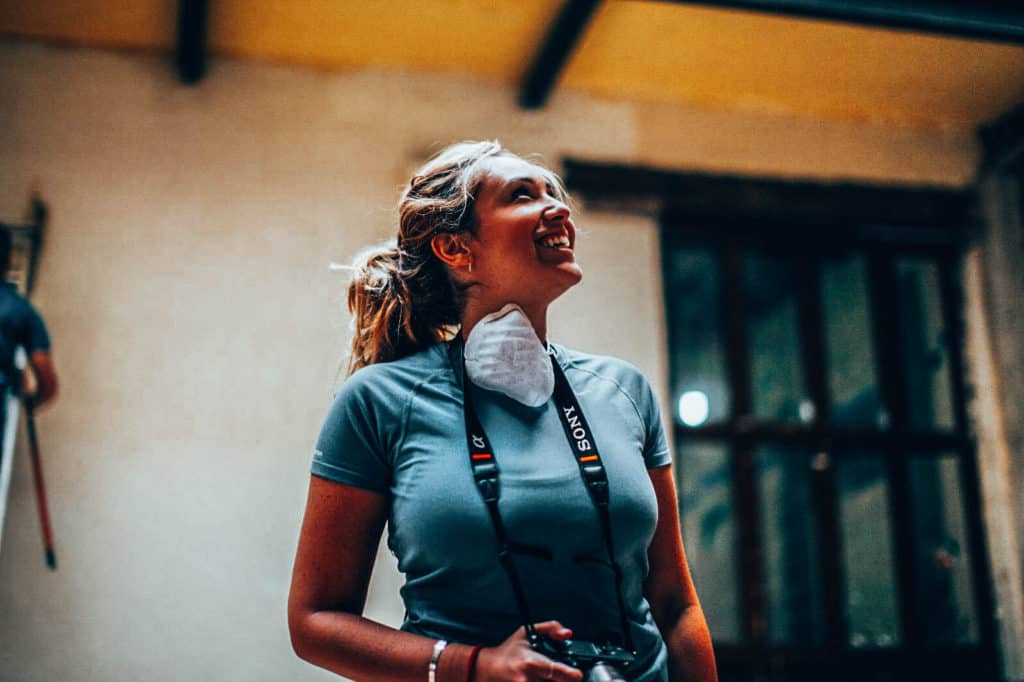
Jen Morilla is an impact travel influencer. What does that mean? It means she travels the world and writes about her experiences but also has a central mission. At first, she started out with the mission to “change the world” which has since gotten more specific. She has been bringing water filters to many different villages across the globe and impacted an estimated 12,000 people globally What has been meaningful for her is not bringing the water filters, but teaching people how to solve problems. Her own journey is an experience of learning as well - spending time on YouTube and learning from others to develop skills in video editing, writing, and more. She never saw this as a risky move and saw that if she was at the same job in five years (although her view of the Empire State Building was pretty nice!), she would always regret not having tried.
Listen Now: Itunes • Stitcher • Google Play • Overcast • Spotify
Find Jen Here:
- Social Girl Traveler
- Instagram - @thesocialgirltraveler
- Twitter - @socialtraveler
Organizations She Admires:
Influences:
- Tim Ferris
- Tony Robbins
- Jay Shetty, Wisdom Influencer
- Nas Daily
- Oprah (no link needed)
Her Book Recommendation:
- Grit by Angela Duckworth
Transcript
Romy is an employee engagement consultant turned coach. She built her career consulting for and working in Fortune 100 companies on all challenges employee-related.
Read the full transcript
Paul: Welcome to The Boundless Podcast. I'm Paul Millerd, and I created this podcast because I'm passionate about making sense of the future of work and having conversations with the innovators, creators, and thought leaders who are carving their path in today's fast-changing world. You can check out the podcast and more on boundlesspod.com. Today I talk with Romy Rost, who a couple years ago took the leap similar to me to become a coach. She works with managers, leaders, and people throughout their career to help them make sense of what they can do to make big changes in their lives and at work. She's fascinated with how do you drive behavior change and how do you be more human at work.
2 topics I'm super excited to talk to her about. If you're listening, thank you for being a supporter of the show. I'd love if you could take a second to share the podcast on social media, leave a review on iTunes, or just send me a note and tell me what you're enjoying about it. It's always great to hear what's resonating and what you guys are enjoying. Enjoy the pod. Have a good day.
Romy, welcome to the podcast.
Romy Rost: Hey, it's great to be here.
Paul: Awesome. So I'm excited to talk to someone else that is also excited about organizational change and just understanding how do we fix organizations? How do we make them more human? And we'll definitely dive into that. Also talk a little bit about how you got into coaching. But first, just wanted to start with a question.
So today, Recording this from Boston and it's snowing outside. And a lot of people are asking me yesterday, do you have a day off? In the freelance world, I don't really have days on or off. And I find I'm just trying to figure out how to spend my time on most days. Would love to get your reaction to that. So is today an off day for you or how are you thinking about spending your time?
Romy Rost: Well, we're on the phone, so I guess it's an on day. It is snowing here. I'm looking out my my office, um, and it's snowing. And, uh, that's a good question. I mean, you know, as a, as, as an independent person, as a freelancer, you have all the benefits of flexibility and setting your own schedule, but you also have all the same challenges of that, um, in that you, you know, you're in the driver's seat, so only you can really manage what needs to get done in a day. Um, I even hear some people I coach, you know, they say, oh, it's a snow day and I worked more than I ever work if I go into the office.
And I always kind of chuckle a little bit because it really is true. You know, even, you know, people who do have a corporate snow day, there's something about you wake up and you feel like you have to get going right away when otherwise you might be commuting or, you know, getting yourself ready. So, you know, a long way of answering that is today's an on day, and every week I kind of look ahead and have to determine what that work-life balancing act is going to look like. And it really is kind of a daily decision, uh, or it's like a daily plan. Um, each week looks different than the week before.
Paul: Yeah. So how are you thinking about spending your time these days? How do you decide what to work on and what not to work on?
Romy Rost: Hmm. Um, well, I have sort of, I have some life parameters like many people do. So, um, I have a kid, so there's some built-in parameters there in terms of how I've decided to set my schedule. So I work pretty full 4 days and take a day off. And so what that looks like is, for me, I have found that I have big plans, right? I have big goals in terms of what I want to complete in a quarter and in a year, but really what it, comes down to usually for me is more of like a weekly basis.
So I decide on Sunday what, um, you know, what meetings I'm going to go to, what networking I'm going to do, what I'm going to write. Um, and, and build in, like, I like to cluster things. So if I'm going to be doing a lot of coaching, I prefer to cluster them early in the week, early in the day, because I just know that that's where, um, my mind is sharpest and I need to be really sharp. There. If I'm creating training and creating content, I know that I can probably do that more in the afternoon and sometimes even in the evening when it's just a little quieter. I need like more quiet space to be able to create those, those trainings.
Um, and emails, I really, um, I just try and not be always on. It kind of comes back to this idea of like, in a way, social media and how we're always on and we're always checking and we don't even realize we're checking. I think the same thing happens with email. So I try and be pretty I try to be more mindful about checking my email and responding and blocking time in my calendar to do it versus always doing it. Cuz then you sort of get, um, sucked in and whatever you've planned.
Paul: So I'd love to go back to college. You majored in—
Romy Rost: Oh, me too.
Paul: Same here. So I'd love to talk about college. So you majored in management at, I believe it was Emory, right? And yes, I'd love to hear how you were thinking about your career at that point.
Romy Rost: So yeah, I went to Emory University and they have an undergraduate and a graduate business program called Goizueta, and you have to apply to that your sophomore year, which means like, you know, going into that, you have to have some idea that that's what you really want to do. And honestly, I had no idea what I wanted to do. So going into the business school, I was kind of a bit of like a default answer for me. I think that I was actually debating going into psychology, which is funny because a lot of the work I do now sort of come— it does come back to— has a psychology component to it. And for some reason that I wish I could really pinpoint, I decided not to do that. And not because I regret it today, but I, you know, just for whatever reason, decided that business was more my path.
So I did— I went to the business school, and I eventually focused in on organization and management and consulting. And while many of my friends were doing finance and accounting, which I was horrible at, like very, very, very bad— and that trend continues in my managing life— that was not going to be an option for me. I knew I wasn't going to go there. And so again, And I sort of like defaulted, like life sort of pointed me in this like people-focused space. And when it went time, when it was time to apply to jobs in my junior and senior year, I applied to Deloitte in their strategy and operations group. And I always remember they came back to me and they said, we don't think that you're a good fit think this is a good fit for you, but we have a group called Organization and Talent at the time that we actually think you'd be great for.
And of course I took a look and I realized that that was just way more my, my style, more my vibe, right? So, and that built on the classes I was taking. I was learning about talent development, I was learning about the principles of change management, I was learning about like some system implementation type things, like how you create more efficient HR organizations, how you create more efficient organizations. I was learning about the psychology a little bit, um, in terms of what, you know, the people component, the, the, the people component of business. And so all that sort of built up to this organization, um, group within Deloitte. And, uh, you know, that turned out to be actually a great move for me.
And that, that took me into that practice where I did some shifts there as well. But that's really how I got through kind of university. I, I, I kind of kept saying no, no, no, and then I would get pointed into a certain direction. And then I would say, oh, I want to do this, but then the universe sort of pointed me somewhere else and it always took me back to the more people side of business, which really does make sense with my personality.
Paul: That definitely resonates with me. It was more of a series of getting rejected from things or saying no to a bunch of things before I found what I was—
Romy Rost: Right.
Paul: Excited about. What were some of your reflections learning about people in organizations and then actually being in a big organization for the first time?
Romy Rost: You learn all these principles in school, and look, there's a lot of, you know, there's a lot of benefit to doing that. Of course, that's important. But then you step into the workplace and you're like, whoa, you know, talk about like on-the-job learning, especially in consulting. You learn very quickly, you know, no matter what you're doing, whether— and for me it was, we were doing a lot of like HR system implementation, like PeopleSoft and Taleo. And I was just, you know, implementing the system and I'm checking for, you know, when someone goes and submits a performance review, like, what, what does that look like? Does the right screen pop up?
It was very, very technical, which frankly wasn't quite what I was expecting. But what I had to keep taking myself back to was that someone was going to be doing doing this. Someone was going to be doing this on behalf of an employee. A manager was going to be doing this. Their life, their day was going to be hard or easy depending on how much, how easy the system was. And so the more I kept bringing myself back to the fact that organizations are just a bunch of people that are operated by people, not by a system, it helped me kind of stay connected to the work even when I was feeling a little, I don't know, disenfranchised or maybe not as motivated by it.
I just kept reminding myself that everything that happens is done by a person and their experience and their emotions, which cannot be discounted, um, and their actions. And so I, I kind of quickly learned that everything I was doing was really about the people, which continued to propel me in a fur— further into like a people career.
Paul: I mean, I'm definitely aligned with that, and you would think that's where most people would end up, but it's so easy to gravitate to those technical analytical things. I think one thing that surprised me in my consulting work is there'd be so much work around designing change program, and then you try to implement it, and then you actually have to deal with humans, and then everything starts going haywire, right? Because everybody wants to do slightly different things.
Romy Rost: I think that's a really important point. And like, how having a great system means absolutely nothing if you are not bringing people along the journey. And even in some ways involving them in the right ways, having them be a part of something, having them give feedback, having them help test, having them kind of be a part of the process, actually involving them and engaging them creates a higher trust, a higher sense of accountability, a higher sense of pride in the work. And, you know, that was a little bit harder as an analyst at Deloitte testing a system for like 30,000 people. Like, I didn't really get that connection.
But yes, as I went along further in my consulting career, it became very clear to me that me sitting in a room by myself developing something, creating a deck, you know, working out a system, was going to do absolutely nothing when it came time to hit— to say we're going to go live, or to say, you know, here's the new competency model. People will just look at you, you know, with blank stares. So I, I totally agree. It's— and people just interpret things differently, so you have to account for different styles, you know, to some extent.
Paul: Was there a moment for you when you were kind of looking at your career? I mean, a lot of people early in career, it's easy to follow a track, but did you start questioning, okay, maybe this isn't a place I want to be long-term? Like, I want to start thinking about carving my own path.
Romy Rost: Gosh, I actually do remember it pretty clearly. A lot of what I did, I tended— I tend to be given the acquisition projects or joint ventures, whenever there were two companies coming together or being bought by one another. Like, that sort of became my specialty somehow, which I actually ended up loving. I just found them really interesting. So I worked on some of the biggest acquisitions, um, joint ventures, spin-offs, like, that are out there. I got to work on some of those, which was really cool.
And I remember sitting with, um, the CEO of one company and the COO of the other that were coming together. I was in a flour mill in the middle of nowhere, um, talking about the strategy. And I was speaking to them, and I was like, I almost didn't recognize myself, um, and, you know, that I was speaking to these very, very senior people, and they were listening to me, and they liked what I said, even though frankly I didn't probably know a lot of what I was saying. I was just I was just speaking from experience and really kind of just speaking about what I think was needed to make this joint, very big joint venture be successful. And I just remember being the only one talking for some reason and them just kind of soaking it up. And then of course, you know, it became more of a dialogue and I walked away and I flew back home.
And I remember thinking, I think that I just need to be more one-on-one. I just want something that feels more personal. I want to speak to and interact with the person who's really the person changing or being affected. And it occurred to me in that moment that I needed to go do something on my own. And then I began exploring what that could be, and which landed me in the coaching arena. And that's really like, that was the moment where I said, okay.
Paul: Right.
Romy Rost: I want more autonomy here and I just want, I want this one-on-one period.
Paul: And did you also realize just being in a big organization, I think this is something for me, I mean, the more successful you are, you often have to do a lot of different things that aren't those one-on-one or aren't the deep work. Did you realize that that was kind of inevitable in your path?
Romy Rost: Yeah. I mean, I would still need to set up meetings. I would still need to create big awful training decks that just— I knew no one was gonna, no one was gonna do that stuff. I wouldn't sit for it. Um, actually, that, that stands out in particular. I was on a project that was like—
Paul: how long was the training?
Romy Rost: Oh my gosh. I mean, it was about clicking through screens and like, I don't know, I— we had a spreadsheet of how many decks we had to create and each one was like 50 to 100 slides.
Paul: Oh geez.
Romy Rost: And I actually thought I was gonna lose my mind. Um, I think I left my job before I had to finish the project, which I always felt a little bit bad about, but also I didn't. Um, and yeah, it was, there was no way I was going to always be able to sit with, um, and it doesn't have to be a senior person. That's really actually not, not the point. The point was that I had some con— it gave me some confidence. Um, but it was the one-on-one and it was, um, being heard and being able to ask good questions, but that was not going to be my full-time.
That if I stayed where I was, I wasn't going to have a lot of that. Those were unique opportunities.
Paul: So you started thinking about coaching, taking a little bit more of an entrepreneurial path. What was one of the first steps you took to pursue or experiment with coaching?
Romy Rost: Well, I mean, I had the first— for me, I knew that it was going to be important that I, I wanted to do a coaching program and I wanted to become certified, which is not for everyone and it's certainly not necessary, but just it aligned to what I wanted. And so I began looking at different programs, um, and I, you know, came across, uh, Coach's Training Institute. And it was something that I was going to be able to do. It was a training like Friday through Sunday, all day long, for 5 months, and like one of those weekends each month. So I had to take 5 Fridays off of work, and I just knew that I could work that out, like I could make that work. Um, so I went into the training program and I did that, and you know, I did a lot of coaching simulations.
You basically learn all of the coaching skills through the program. And then I stayed with, with CTI and did their certification. You could go elsewhere to be certified, but I, I did their program and about a year later, after some exams and writing and, you know, all that, I was certified and Through their program, they kind of forced you. You had to have like so many coaching hours, so it forced me to have to get out there and send emails basically to kind of like my inner circles, my first and second kind of degree people, and say, hey, I'm doing this thing called coaching, to which everyone's like, what the heck is that? And I need, you know, to do sample sessions, and I had to get, you know, long-term clients, or at least through the duration of my program.
And so it basically forced me, someone who actually fairly introvert, forced me to go out there and basically kind of put my shingle up in a way and say, here's what I'm doing, you know, come on, one, one, come one, come all. And like, people trickle in for this opportunity that I thought was so great. I was offering free coaching, right? Um, and that really got me going. Like, that got me started, that got me, um, into the rhythm, and I started to actually be able to apply my skills.
Paul: What were some of the first lessons in some of those early coaching sessions? I know for me, when I started, it was realizing I wasn't very good at it and I was moving up the learning curve fast and also just trying to figure out who are the types of people I wanna work with. I think those are the biggest reflections for me, but I'd love to hear how you learned at the beginning of that.
Romy Rost: Well, for me, I think one of the biggest things that came up was that I had these like frameworks to follow and these cornerstones and these principles, and I found myself so rigid in all of that, that actually made it hard for me to be in the moment. Moment coaching and to trust myself. Um, and don't get me wrong, like all the things that I learned I use now, but it's just a much more fluid process in my coaching of managers and leaders. Um, so I really had to like, um, take a step back and just be listening at the highest level possible and be interested and be curious and be caring. Um, about what the other person's saying. And it was from that place that I could ask the right questions, that I could pick up on things, that I could sense things, that I could know where to, where to dig a little bit.
Um, which really is what coaching is about. It's about being present with someone and seeing them and hearing them, um, and helping them kind of find the way. Uh, but that took me a little while. It did take me a little while to get comfortable. Like, oh, where are my note cards? Oh, what question am I supposed to ask?
Which, um, Right. You quickly learn that that's just not, you know, that's not, that's not the way it works.
Paul: Is there a framework for you that has been the most impactful that you've kind of made your own?
Romy Rost: You know, I really do lean deeply into the frameworks that I was, that I was taught. But the most important things that come up for me, and it's actually, I create quite a few manager programs around like teaching managers how to coach. Really like the heart of what I love to do, or taking the skills that I learned and saying, hey guys, you can do this. We can walk out of this room, you can start doing these things, and I promise you it will make a difference. And that's asking more questions. You know, I think that we're all often going around kind of saying our thing, and we have an idea, and we have a lane, and we know so much, but we miss so much by not asking other people what's going on for them, what they think, what they would do.
And so asking questions is like, frankly, in my career, in my personal life, and my clients too, they say, hey, like, I'm doing this with my family or my friends, my significant other. Um, just like kind of getting out of your own head and being present with someone else is really like the number one thing for me as a coach and what I think is important for for managers, for leaders.
Paul: That's pretty cool. I, I often get the response, nobody's ever asked me that before. Um, I, I love coming up with the questions that really push people to think.
Romy Rost: You can stop someone in their tracks by asking them a question. Um, A, just the fact that you're asking them something versus telling them something is like the first, whoa, what's going on here? And then, you know, especially if you have some You know, there are so many questions out there that are simple. Actually, the simplest questions are the ones that elicit some of the greatest insights. And I hear what you're saying. Yeah, you can ask a question and someone's going to say, wow, like, that's so obvious, but I never thought about it.
I never thought to answer that question, which is kind of the beauty of just being, you know, present.
Paul: I love it. So let's shift to leaders. It's something we've talked about. Before, but, and we'll definitely dig into some of the opportunities, but what has been your biggest reflection on just leadership in the corporate world? I feel like we're in a crisis moment of leadership. Organizations are just not set up to enable or incentivize leadership.
But what's going on in today's organizations?
Romy Rost: Oh boy. That's a big question. I think there's a lot going on. Um, look, I think that, you know, the world is changing rapidly. People have more information at their fingertips— consumers, customers, clients. Everyone is just more well-informed.
If you like something, the world can know about it. If you hate something, the world can know about it. And so all of this puts just more pressure on organizations. And it puts organizations in situations they've never been before that they have to respond to, to the marketplace, to consumers, to me and to you. And so I, what I, what one of the things that I keep seeing is that leaders at a certain level, and really this can kind of cross all levels, but Feeling like they have to know everything, feeling like they have to have all the answers. And what that leads to is, you know, people feeling like they, like leader, if leaders just have all the answers and maybe they don't, you know, maybe they don't know everything.
They may, they don't know the right way and they're not bringing their people in to think about things and brainstorm and be open to other ideas versus just kind of putting on this very like stoic, like, oh, we know what's going on. And then there's like a crisis going on. The best leaders are the ones who can say, I don't, I don't actually know what we should do here. What do you think? Or here's what I do know, why don't you go work on this part of the problem? Instead, they feel like they have to have the answers and that that is true leadership, and that they, that they can't bring other people in to help them solve problems.
And so I continuously see this happen over and over where there is not as much of a collaborative approach as there could be. And we're not bringing in, incentivizing, rewarding, applauding people at lower levels of the organization who actually have some of the best ideas. Maybe they're even closest, closer to problems. Yeah.
Paul: And so, so often those people, they'll, they'll try to put that idea out there and get shut down quickly. And that can be it for like the last time they're actually share, share a new idea. Have you seen organizations that do well at just giving leaders permission to be more vulnerable, or just say, I don't know, or ask, ask people that might be lower level in the organization for their viewpoints?
Romy Rost: I have a little bit. They tend to be organizations that are a little more progressive, that sort of understand the consumer, understand employee behavior and the emotional side of work, which gets just totally like blown over. Whereas bigger— some organizations that are bigger that have been around much longer, that maybe even it's been a certain way for many, many years for a leader who's been there 10, 15, 20, 30 years, has gotten away, gotten by leading in the way that they have, but that no longer works. So it's smaller companies, it's sometimes more progressive companies or tech companies, startups.
These companies under— well, maybe it's not startups all the time, but these companies tend to kind of understand a little bit more about what true leadership is and what it takes to have an engaged and enabled workforce versus continuing to reward old behavior that actually doesn't work anymore, right?
Paul: So in your coaching work, you come in and start working with leaders. Where do you start to kind of just build a foundation around changing the discussion?
Romy Rost: You know, the most important thing in the beginning for me is to just gauge their awareness around what's working and what's not working. So I can usually pretty quickly tell if a leader understands that being like all-knowing and, you know, being a leader in its most like kind of archaic form, if that's okay, if they think that that's okay, then I know we have a little bit more work to do to kind of say, okay, to open up eyes and say, is that really the best way to get the most from your team? Is that the way to build trust? So I do tend to— I'm not big on assessments, to be, to be quite honest. I mean, if people have assessments, I love to see them, but my My biggest thing is to ask them, like, what skills do you think are most important for you to be successful? And where are you today?
And where do you think you need to be? And when I see, when it feels like we're on the same page, that, you know, things like managing people well, using good coaching skills, Being collaborative, getting ideas from my team. Like when there are certain skills like that that are showing up, I know we're in the right space. And if not, it's like a little bit more work to create awareness. And you need to be quite honest, sometimes it, you know, there is such a big gap between what's going on where they need to be and that takes a little bit more work. But by and large, the people that I am brought in to coach, they tend to be like directors and VPs and they're people that have a pretty high awareness.
Which I thank the organizations for. I mean, I think the L&D teams or the business partners or the senior leaders who have said, okay, we know this person has a few areas that they need to work on. Like, they're right, the foundation is there, but we need them to get to another place.
Paul: How do you introduce just the word of coaching? I've, I've had managers in the past that will say, okay, I'm gonna give you coaching, and it's not actually built on a foundation of what I'm trying to improve on, or anything that's going to help me improve. It's more just pointing out, okay, here are mistakes you made. Have you had, have you had success changing the frame around what coaching actually is in an organizational context?
Romy Rost: I was actually like a week ago, I was leading a training for a group of HR business partners. And one piece of my training was, of course, around coaching. And I actually, I had them rate strategic HR business skills, one of which was coaching, around how well they are at it. And they rated themselves highest in coaching, to which I said, huh, okay, like maybe, you know, maybe they, they know a whole bunch about this and they really get it, and that's great. Like, I always, you know, want to give people the benefit of the doubt. And when I got into that portion of the training and I started to hear what coaching was to them and the examples you were giving, you know, there was like a big pause and they said you know, this is, this is coaching, kind of like, like you're on your way a little bit.
But what I'm hearing you say, there's a lot of like directives here, there's a lot of pointing things out to people, there's a lot of saying here's how to do it, here's the template, um, there's even feedback in there, none of which is coaching. And so I usually say to people, I was like, I say to them, and I said to this group, Do you care about your people? And I say, how much do you care? Like, how, how important is it to you to care about people? And ultimately, to me, being a manager who coaches, being a leader who uses coaching skills, it's because you actually care about someone. And not to throw the term around, which gets overused, but actually helping people reach their potential that maybe they haven't before because they don't have someone to help them get there.
And that doesn't mean that they're not completely stellar contributors. It just means that no one has taken the time. No one has taken an investment of 5 minutes to have a small coaching moment versus to just say, here, go do it this way. Here's the template. And so I always say, how much do you care?
Paul: And what was their response to that?
Romy Rost: You know what, what was actually great in the session was that they all really did care. They just didn't have the tools to enable other people. They just— they're also very, very, very time-crunched. And I even actually saw this meeting, like people were being pulled out by— people were being pulled out by their leader to go deal with fire drills, the very leader who called me in. To do this training. Okay, I was like floored.
Um, you know, so here was like a very good example of people, you know, just, you know, some disorganization. Uh, but they, um, they really did care. And what I said to them is, I'm just asking you to invest even 4 or 5 more— 2, 3, 4, 5 more minutes with someone to ask a question, to really listen, to frame what you're hearing, to play it back to them, you know, some basic coaching skills. You can do it. You can spare those few minutes and there is going to be a payoff in the future. And I think that's when they actually really got it.
They understood that what they were doing was managing or directing or telling or giving feedback versus stopping and thinking, okay, I really care about this person. I'm going to actually give them a moment here to come up with something better, to come up with a better idea that maybe I don't have. And I always talk about it as a few minutes investment. Like, can you afford a few minutes in your day?
Paul: Right.
Romy Rost: And most people will say yes.
Paul: Right. There's always that time. But I like you, like you saw in your session, there's, there's always that crisis or the— it's kind of similar to checking your email constantly, right? There's always something you can be doing, but so much information now. But this work, often you just have to— the first thing you have to do is just slow down and just reflect on like what you're— what we're actually doing here. And the fact that we're all humans and we just— we need to build relationships before we can get anything done.
Romy Rost: Yeah, it— so much of it comes down to like a sense of control, like how much control do you have over your day and over how you spend your time. And, you know, yeah, the reality is you are going to get pulled out of meetings from time to time. You're going to have an idea of what you're working on today, and that's going to totally go, go by the wayside, but something else bigger comes along. And that's unavoidable. You know, I wish I had an answer for how to solve that, but still, when you have your time and you have any management responsibilities, I just really want people to realize that they can own those moments. They could own that time.
And we're really just talking about spending a few more minutes with someone versus just having them come into your office, tell them what's up, and they go off. And their sense of autonomy, connection, ownership is so much less when they're just told what to do.
Paul: So you also do career coaching as well now. What, what are some of the biggest challenges people are coming to be with that they're looking for help with?
Romy Rost: Yeah, so actually, like, this— my whole coaching career started in kind of the career space because that was— it was just easier to get people to do free coaching with me or, like, you know, pay a nominal fee when it was a little bit more in, like, career or life or relationships. Like, I use the same skills no matter what kind of the, the context, you know, looks a little different, but The career side of things, I think that one thing is kind of back to this idea that the world is just changing. You know, jobs look a little bit different. The head of marketing at one company is very different from the head of marketing at another, or social media looks— fits in one way one place and in one way another. And it's in— it's just in helping people really get clear about what like they're good at and what they want to do, which can be two different things.
So I have had people come in and say, oh, I'm really great at finance, and that's been what my career is all this time, and it turns out they actually don't really like it. So you have to help people get what they want to do with their life. And look, I'm not like, you know, an idealist. I don't say that you're gonna love every day of your job because it's it's still a job, but you can be in something that you feel more connected to. So my role usually in the career coaching space is to help people figure out what they, what they really want to do versus what they're good at.
Paul: And if somebody came to you now and was thinking about following a similar path to you, going out to work on their own further along in their career, what would you be telling them to focus on now?
Romy Rost: I would tell them that— I mean, I would tell them to try and get pretty clear about what kind of work they want to do, what they want their— you know, are you someone who wants to be face-to-face with people all the time, so you're building your business a little bit more offline, you're doing a lot of networking? Are you someone who wants to be writing a lot? Maybe a lot of your business is online. So I think like that's I think that's like logistically, frankly, a very important thing to determine upfront. And I would also say that like be ready for rejection. It just happens all the time.
You just have to keep going at it because your likelihood, your odds increase as you keep pounding the pavement. And so like network, networking and connecting with people just to even hear what they're up to, to understand what their problems are. Take a coaching perspective to that, like ask questions. Don't be there to just give your spiel because people will tune out. So it comes back to really caring about other people because when you create those kinds of relationships to networks, it will come back to you. I'm a big, big like, you know, reconnect with people, like it's not too late.
It's been a few years, no problem. Like find something you can say to introduce yourself you know, you know, introduce yourself back into a conversation with them. Like, it is always possible and people are open to it, and we're just kind of afraid.
Paul: And what's the best thing you're finding about working for yourself?
Romy Rost: I mean, I think that there's just something really beautiful about creating your own work. You know, the hard days are hard, and the successes feel that much better. And for me, it is, it is just about impacting people, helping them make a difference, being able to see the fruit, the fruits of my labor versus, you know, writing RFPs or writing, you know, kickoff decks. Like, that wasn't doing it for me anymore. I wanted to kind of bypass some of that. And so, you know, for me, the best part is just that I, I get to create it all, but that's also the hardest part.
As you know, like it's a lot of work, which I would tell anyone as well.
Paul: Yeah. Well, what would you say the most challenging part of it is?
Romy Rost: Um, the most challenging part is sometimes you just feel like you're like a dime a dozen, you know, there's other people out there doing it. And what I have to tell myself, which is what I tell people I coach who are doing these kinds of transitions too is that nobody will do it like you. Literally, there is nobody in the world who will approach a situation, have coffee with someone, write an overview of what you're going to provide coaching for. No one's going to do it like you. No one's going to do it like me. And so once you really own that, it just gives you a sense of, okay, I have something special to offer to the universe, and I'm just going to go out there and put it out there and keep doing that, you know, as much as I need to, and it will return.
Paul: I love that. Yeah, I think that's definitely one of the challenges of creating your own content or materials or work is you're constantly questioning, is this good enough? Is it going to be well received? But you have no choice but to own it at the end of the day, which is also one of the best one of the best things about working for yourself, I think.
Romy Rost: You know, there are times in my business where I'm like, yes, this is like the amount of work I want. This is great. It's the kind of work I want to be doing. And then there are times when I'm like, either I don't have enough work or, oh, I really— these kinds of consulting jobs, like, I left my job so I don't have to do this. Why am I taking this on? So, um, you know, it's just, it is a reality of the situation.
It is a lot of work to build, and I go through my own dips. You know, from time to time, for sure. And you just have to kind of, you know, know that there are going to be peaks and valleys and roll with it.
Paul: If you had to give one message to leaders of organizations today, what would you tell them to think about?
Romy Rost: I would tell them to get more real with your people. And by that, I mean, tell people when things aren't working. Say when you don't have the answer. If someone does a great job, say you kicked butt and say it in front of a group of people. Just get more real and get more human. And that doesn't mean you're a bad leader.
That doesn't mean people are going to look at you like you aren't the expert in the room. You don't have to be the expert in the room every time. Tenure and experience will give you that over time. But not always. And I would just say be more open, engage your teams, and give, give people, give credit where credit is due. I think it's just about getting a little bit more open and real and honest and transparent versus being like the leader in the room who knows everything.
That's very old school.